By [Your Name/Journalistic Desk]
Updated: October 2, 2026 | 16:06 CEST
The landscape of contemporary photography is undergoing a profound transformation, one driven by a generation that views the camera not merely as a tool for documentation, but as a scalpel for social dissection. This year’s Deutscher Jugendfotopreis (German Youth Photo Prize) has served as a powerful barometer for this shift, showcasing the work of 1,236 participants aged up to 25. The jury’s final selection—a curation of 40 prize-winning entries—reveals a collective of young photographers who are as comfortable with the raw intimacy of the smartphone as they are with the deliberate craft of analog techniques.
What defines this year’s cohort is not a singular stylistic aesthetic, but a shared commitment to "political courage." The winning works move away from aggressive, performative social commentary, favoring instead quiet, observational, and deeply personal narratives that challenge established norms.
The Evolution of the Youthful Gaze
For over 60 years, the German Youth Photo Prize, organized by the German Children and Youth Film Centre and supported by the Federal Ministry for Family Affairs, has provided a platform for the next generation of visual storytellers. However, the nature of the submissions has changed drastically.
Karen Fromm, a professor of photojournalism and documentary photography at the University of Applied Sciences and Arts in Hannover, notes that the "classic reportage" that dominated the early 2010s has given way to a hybrid landscape. "Today, we see a vast coexistence of mediums," Fromm explains. "There are documentary long-term projects, staged series, and extremely quiet, introspective observations. It is no longer possible to categorize ‘youth photography’ under one umbrella."
This diversity is reflected in the technical choices of the entrants. While the influence of Instagram and the vertical orientation of the smartphone camera are undeniable, there is a counter-movement. Many young photographers are retreating into the tactile, slow-paced world of analog photography and hand-built pinhole cameras. For these artists, the ubiquity of instant digital images has paradoxically fueled a desire for the deliberate, the physical, and the experimental.
Intimacy as a Political Act: The Case of Anna Lotta Maria Schulze
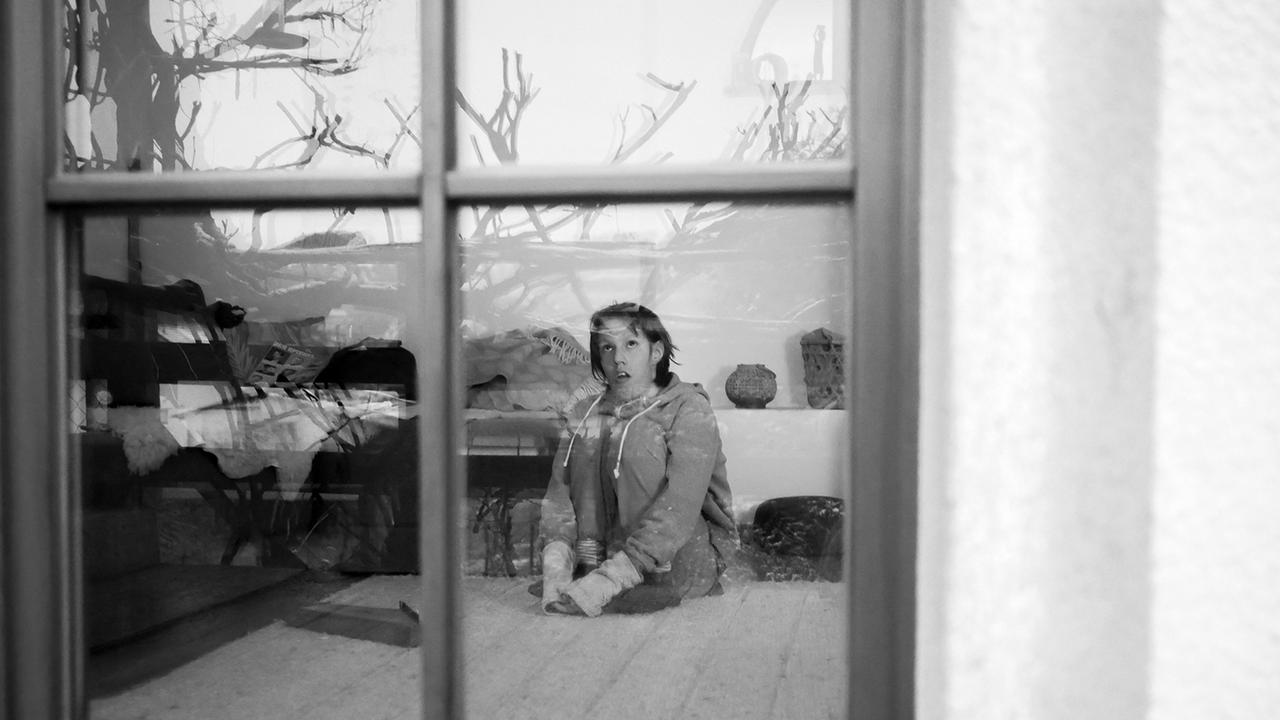
Among the standout winners is 22-year-old Anna Lotta Maria Schulze, a student of photojournalism in Hannover. Her series, Lina, is an intimate, black-and-white exploration of her relationship with her younger sister, who lives with a severe disability.
The project is remarkable for what it avoids: it does not seek to "expose" the disability, nor does it look at the subject from an external, clinical perspective. Instead, it documents the shared space between two siblings. In one striking photograph, the viewer sees Lina through a glass door, trees reflected in the pane, creating a visual metaphor for the barriers and connections between the photographer and the subject.
"Trust is the most important element of my work," Schulze says. The photos were taken for her sister, not about her. This ethical framework—the question of who has the right to document whom and at what cost—is a recurring theme among the 2026 winners.
Exploring the Margins: Jasper Hill’s Industrial Landscapes
While many students stick to the "comfort zone" of their immediate peer groups, others are venturing into territories that are starkly unfamiliar. Jasper Hill, 22, spent over 18 months documenting the potash mining industry in Thuringia and Lower Saxony. His series, In the Land of the White Mountains, captures the intersection of heavy industry, local labor, and the environment.
Hill’s work is a testament to the power of persistent, long-form journalism. He captures the surreal sight of theater performances staged in front of massive, snow-white industrial salt heaps, as well as the subterranean reality of life 750 meters below ground. For Hill, the camera is a bridge to places he would otherwise never access. His work bridges the gap between the aesthetic and the analytical, forcing the viewer to confront the industrial backbone that sustains modern life.
The Personal is Public: Nele David and Frieda Wagner
The power of the 2026 prize lies in how it navigates the boundary between private life and public display. Nele David, another winner, explores the lives of young Muslim women in her series Start with Bismillah – In the Name of God. David, who converted to Islam herself, uses a mix of analog and digital techniques to dismantle stereotypes. One image shows two women in full veils wearing modern sneakers, laughing as they walk toward a shop. It is a mundane, joyful scene that acts as a quiet rebellion against the often-politicized discourse surrounding Muslim women in Europe.
Similarly, the work of Frieda Wagner, 21, addresses the invisible. Living with ME/CFS (Myalgic Encephalomyelitis/Chronic Fatigue Syndrome), Wagner has spent the last two years mostly confined to her bed. Her series, I Want What You Take for Granted, consists of over 150 smartphone self-portraits.
"I wanted to document this reality," she explains. By turning the lens on herself, Wagner regains agency over her own narrative. Unlike traditional portraits, she is the one who decides how much of her pain, her exhaustion, and her strength is revealed to the audience. The images do not claim to speak for all those suffering from chronic illness; they simply state: "This is my life."
Official Responses and Juror Insights
Katharina Klapdor Ben Salem, the director of the German Youth Photo Prize, has praised the "courageous and committed" nature of this year’s submissions. She highlights that the political nature of these works is not found in slogans or protest posters, but in the deliberate selection of subject matter.
"These photographers are acutely aware of the power dynamics of the image," Klapdor Ben Salem notes. "They are constantly asking: ‘What role do I play as the photographer? What am I allowed to show, and why?’"
This reflection suggests a shift in photographic education. Professors like Karen Fromm report that students are arriving at university with a much higher level of visual literacy and a deeper understanding of the ethical weight of their medium. They are no longer content with "capturing" the world; they want to engage with it, question it, and sometimes, redefine it.
Implications: The Future of Documentary Practice
The 2026 German Youth Photo Prize confirms that the future of photography is deeply humanistic. As AI-generated imagery and algorithmic content dominate the digital feed, the value of the "authentic" human gaze—with all its vulnerabilities and biases—is rising.
The implications for the broader field of photography are significant:
- The Return of the "Long-Look": The success of projects like Jasper Hill’s mining series proves that there is still a massive audience and critical appreciation for long-form, investigative documentary work.
- Ethical Curation: The emphasis on consent and the relationship between photographer and subject will likely become the standard for future institutional grants and prizes.
- The Hybrid Medium: Future photographers will be expected to master the ease of digital tools while maintaining the rigor of traditional photographic craft.
The winning works will be on display at the "KIT – Kunst im Tunnel" exhibition in Düsseldorf until November 15, 2026. For those who visit, the exhibition offers more than just a collection of images; it provides a window into the minds of a generation that is watching the world with unprecedented focus.
In the end, the "political courage" identified by the jury is not a sudden eruption of activism, but a sustained, thoughtful engagement with the truth of individual and collective experiences. As these young photographers continue to grow, their work serves as a reminder that the most radical act one can perform with a camera is to look closely, listen intently, and show the world exactly as it is—without fear, and without compromise.