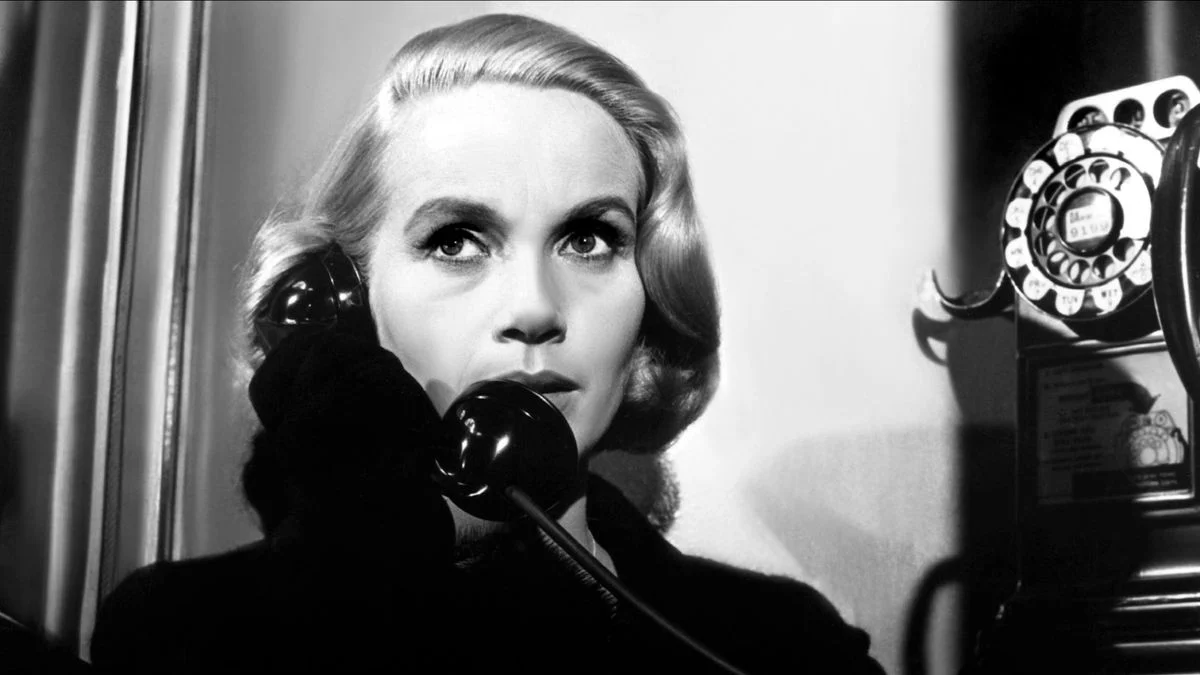
Eva Marie Saint, the luminous actress whose career spanned eight decades and bridged the gap between the raw intensity of the Actors Studio and the polished glamour of classic Hollywood, has passed away at the age of 102. A spokesperson for the family, Jeff Sanderson, confirmed that the legendary star died of natural causes at her home in Los Angeles, surrounded by her loved ones.
With her passing, the film industry loses one of its final living links to the "Golden Age" of cinema—a time of studio titans, method acting breakthroughs, and the birth of modern celebrity. Saint was a performer of remarkable versatility, capable of projecting both vulnerability and steely resolve, qualities that made her an essential collaborator for some of the greatest directors in history, including Elia Kazan and Alfred Hitchcock.
A Meteoritic Rise: The "On the Waterfront" Era
Eva Marie Saint’s entry into the pantheon of cinema greats was not a slow climb, but a sudden, brilliant explosion. Born in Newark, New Jersey, in 1924, Saint began her journey in the performing arts on the stage and in the burgeoning medium of live television. However, it was her feature film debut in 1954 that would forever cement her status as a screen icon.
In Elia Kazan’s On the Waterfront, Saint played Edie Doyle, the grief-stricken but resilient love interest of Terry Malloy, portrayed by Marlon Brando. The film, a gritty, neorealistic exploration of corruption on the New Jersey docks, was a departure from the escapist fare of the time. Saint’s performance was hailed as a revelation; her ability to hold her own against the volcanic, unpredictable energy of Brando was a masterclass in subtlety and emotional intelligence.

The film swept the 1955 Academy Awards, winning eight Oscars, including Best Picture, Best Director for Kazan, and Best Actor for Brando. Saint herself secured the Academy Award for Best Supporting Actress, a rare and prestigious feat for a debut performance. This win did not merely launch her career; it defined the "Method" era’s influence on the silver screen, proving that authentic emotion could be as compelling as the most elaborate spectacle.
Hitchcock’s Muse and the Thriller Genre
If On the Waterfront established Saint as a serious dramatic force, her 1959 collaboration with Alfred Hitchcock in North by Northwest solidified her as a quintessential Hollywood leading lady. Cast alongside the debonair Cary Grant, Saint played Eve Kendall, a woman whose true allegiances remain shrouded in mystery for much of the film’s runtime.
Under the "Master of Suspense," Saint traded the drab, somber tones of the waterfront for high-fashion, high-stakes intrigue. The film, a quintessential "wrong man" thriller, remains a cornerstone of the genre, famous for its witty dialogue and iconic sequences, such as the crop-duster chase and the climactic struggle on Mount Rushmore. Saint’s performance—cool, composed, yet deeply human—provided the necessary anchor for the film’s frantic pace.
Following North by Northwest, Saint’s career became a tapestry of high-profile collaborations. Throughout the 1960s and 70s, she worked alongside the industry’s most revered leading men, including Montgomery Clift, Henry Fonda, Paul Newman, Gregory Peck, Richard Burton, Warren Beatty, and Burt Lancaster. She navigated the transition from the studio system to the "New Hollywood" era with grace, consistently choosing roles that challenged her range, even as the landscape of American film shifted beneath her feet.

Chronology: A Lifetime of Performance
- 1924: Born in Newark, New Jersey.
- Early 1950s: Gains experience in live television and theater, honing her craft for the transition to film.
- 1954: Makes her cinematic debut in On the Waterfront, immediately winning the Academy Award for Best Supporting Actress.
- 1959: Stars in Alfred Hitchcock’s North by Northwest, cementing her status as an international star.
- 1960s–1980s: Maintains a prolific career in film and television, working with legendary directors and actors.
- 1990: Wins a Primetime Emmy Award for her work in the miniseries People Like Us.
- 2005: Appears in Wim Wenders’ Don’t Come Knocking, demonstrating her continued relevance in the 21st century.
- 2014: Marks her final film appearance in the fantasy-romance Winter’s Tale.
- 2024: Passes away at age 102 in Los Angeles.
Stability Amidst the Spotlight: The Marriage to Jeffrey Hayden
While her professional life was marked by the shifting tides of fame, Saint’s personal life was a testament to extraordinary stability. In 1951, she married director and producer Jeffrey Hayden. Their union, which spanned 65 years, was a rarity in the ephemeral world of Hollywood.
The couple raised two children together, balancing the demands of their respective careers with a grounded domestic life. Hayden, who directed episodes of iconic series such as Leave It to Beaver and 77 Sunset Strip, remained a constant source of support for Saint until his death in 2016. The longevity of their marriage was often cited by Saint as the bedrock upon which she built her professional success. She navigated the pressures of stardom by keeping her private life intensely guarded, a quality that helped her avoid the pitfalls that claimed many of her contemporaries.
Later Career and Legacy
As the decades passed, Saint proved that her talent was not tethered to the conventions of the mid-century era. She moved seamlessly into television, earning five Emmy nominations throughout her career and taking home the trophy in 1990 for People Like Us.
In the 21st century, she remained active, working with modern auteurs like Wim Wenders in the 2005 film Don’t Come Knocking. She also appeared in the 2006 blockbuster Superman Returns, playing Martha Kent, and in 2014, at the age of 90, she shared the screen with Colin Farrell in the fantasy film Winter’s Tale. These later roles showcased a woman who never stopped evolving, who approached acting not as a vanity project, but as a lifelong discipline.

Implications for Modern Cinema
The death of Eva Marie Saint marks more than just the passing of an individual; it signifies the closing of a chapter in American cultural history. She represented a generation of actors who prioritized technical craft, vocal training, and psychological realism. As modern film leans increasingly into CGI, digital de-aging, and franchise-driven narratives, the legacy of performers like Saint—who relied on the quiet, human connection between the actor and the camera—serves as a reminder of the foundational principles of cinematic storytelling.
Historians and film critics alike note that Saint’s career trajectory—from the gritty realism of Kazan to the stylized suspense of Hitchcock—perfectly mirrors the evolution of the American film industry itself. She was the witness to the decline of the studio contract system, the rise of the independent filmmaker, and the globalization of the Hollywood brand.
Official Responses and Tributes
Following the news of her passing, tributes began to pour in from across the entertainment world. The Academy of Motion Picture Arts and Sciences released a statement honoring her as "a foundational talent whose work defined the highest standard of acting."
Colleagues and historians have praised her not only for her professional accomplishments but for the dignity she maintained throughout a century of living. Her family has requested privacy during this time, with further details regarding memorial services to be announced in the coming weeks.

As the lights dim on one of the longest and most storied careers in the history of the medium, the films of Eva Marie Saint remain as vibrant as ever. From the haunting, wind-swept docks of New Jersey to the dizzying heights of Mount Rushmore, her work remains a permanent fixture of the American landscape—a testament to a life lived in the service of art, excellence, and the enduring power of the moving image.