

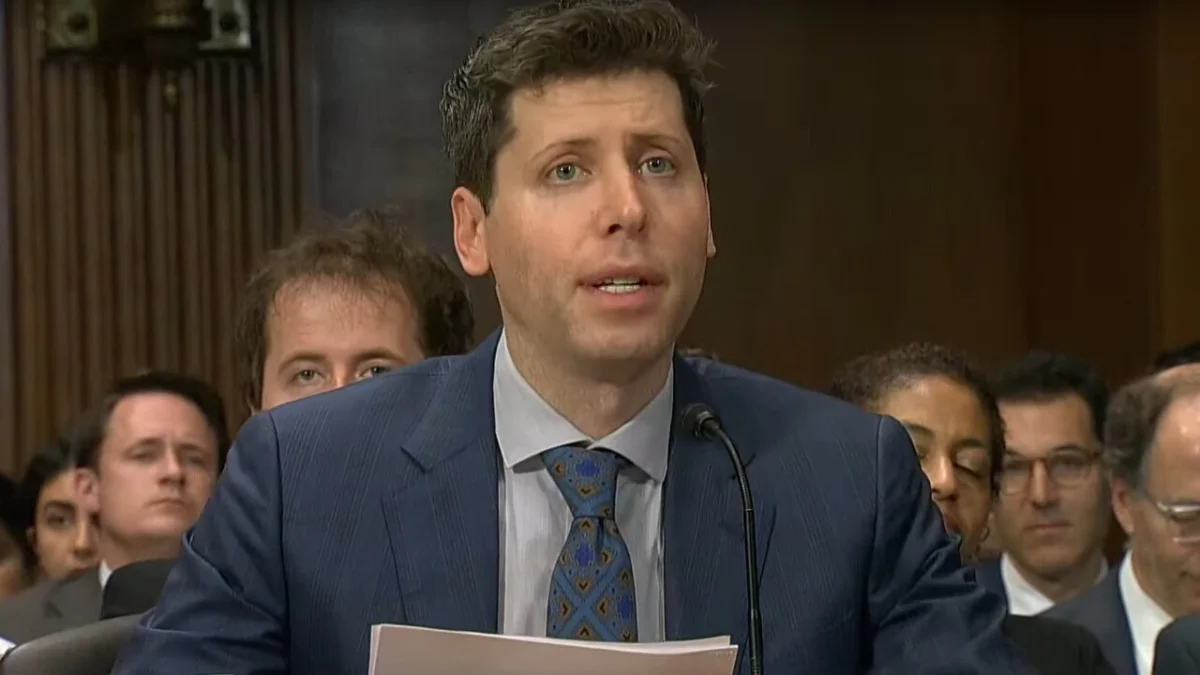
The courtroom in Oakland, California, has become the stage for a high-stakes drama that transcends typical corporate litigation. At its heart lies a collision between two of the most influential figures in the tech world: Elon Musk and OpenAI CEO Sam Altman. As the legal proceedings unfold, the trial has morphed from a narrow dispute over corporate structure into a profound character assassination attempt, focusing on whether the architect of the modern AI boom is a visionary leader or a serial deceiver.
Main Facts: The Core of the Conflict
The lawsuit, initiated by Elon Musk, fundamentally alleges that Sam Altman and OpenAI President Greg Brockman engaged in a fraudulent scheme. Musk, who provided significant early funding to the startup, claims he was misled into believing he was supporting a nonprofit organization dedicated to the safety and transparency of Artificial General Intelligence (AGI). Instead, Musk argues, the founders effectively "stole" the entity, pivoting it toward a profit-driven model that prioritizes commercialization over the safety mandates they initially promised.
However, the courtroom dynamics have shifted. While the technical legal arguments focus on contract law and fiduciary duties, the real battle is being fought on the terrain of reputation. For Altman, the trial represents a grueling test of his personal integrity, as his former inner circle—including some of the most respected minds in artificial intelligence—have taken the stand to portray him as a manipulative operator.
Chronology: A Relationship in Decay
To understand the current courtroom hostility, one must look back at the trajectory of OpenAI. Initially founded in 2015 as a nonprofit research laboratory, the organization aimed to counter the monopolistic tendencies of large tech giants.
- 2015–2018: The formative years, during which Musk served as a donor and board member. Musk alleges that during this period, commitments regarding the "open" and "nonprofit" nature of the organization were made and subsequently broken.
- 2019: The pivotal pivot. OpenAI transitioned to a "capped-profit" structure, a move Altman justified as necessary to raise the billions of dollars required for compute power. Musk exited the board shortly after, citing concerns over the direction of the company.
- 2023: The "Altman Ousting." In a shock move, the OpenAI board briefly fired Altman. The justifications provided at the time were vague, citing a lack of candor. This event serves as the primary evidentiary backbone for Musk’s current legal team.
- 2025–2026: The legal phase. Musk filed suit, leading to the current discovery process and public testimony, which has laid bare internal grievances and the internal collapse of the trust between leadership and staff.
The Web of Deception: Testimony from the Inner Circle
The most damaging testimony has come from those who worked closest to Altman. Former OpenAI Chief Technology Officer Mira Murati and former Chief Scientist Ilya Sutskever offered harrowing accounts of a workplace defined by duplicity.
Sutskever, widely considered the conscience of the organization, testified under oath about a "consistent pattern of lying." He alleged that Altman systematically undermined leadership, created toxic rivalries to consolidate his own power, and maintained a culture of opacity that made honest collaboration impossible. Sutskever revealed that he spent an entire year documenting these behaviors, a dossier that eventually served as the impetus for the board’s attempt to remove Altman in 2023.
Mira Murati’s testimony corroborated these claims. She specifically highlighted instances where Altman provided contradictory information regarding safety protocols for new AI models. According to Murati, being an effective CTO became nearly impossible when the CEO was feeding different versions of reality to different department heads, effectively neutralizing the oversight functions of the executive team.
Supporting Data: The Wealth of the AI Titans
The trial has also pulled back the curtain on the extraordinary wealth concentration within OpenAI, raising questions about whether the original nonprofit mission was ever truly attainable.
- Greg Brockman: Testimony revealed the OpenAI President holds stakes in the company valued at approximately $30 billion.
- Ilya Sutskever: Despite his departure and public criticism, it was disclosed that he holds an OpenAI stake valued at $7 billion, a figure that has ignited intense public debate regarding the "nonprofit" roots of the firm.
- Sam Altman: While Altman maintains he holds no direct equity in OpenAI, his financial entanglements are complex. He is a beneficiary of various investment funds that hold significant OpenAI positions, and he maintains interests in multiple partner firms.
These figures underscore the massive financial gravity of the company, suggesting that the "nonprofit" label was perhaps a thin veil for what would become one of the most valuable private companies in history.
Official Responses and The Cross-Examination
During the trial, Elon Musk’s legal team, led by Steven Molo, attempted to dismantle Altman’s credibility through a relentless, ten-minute recitation of individuals who have labeled him a liar. While the tactic was designed to provoke an emotional outburst, Altman remained remarkably composed.
When asked directly if he had misled his employees, Altman responded with a calm, practiced deflection: "I believe I am an honest and trustworthy businessperson."
Conversely, OpenAI’s Board Chair, Bret Taylor, took a staunchly defensive posture. During his testimony, Taylor argued that Altman has always been transparent about his financial conflicts of interest and that his actions were consistently aimed at the survival and advancement of the mission. Taylor’s defense was a crucial pillar in the attempt to neutralize the accusations of corporate fraud.
Implications: The Court of Public Opinion
Even if Musk loses the legal battle—and some legal analysts suggest his case remains thin on the strict interpretation of contractual obligations—the damage to OpenAI may be irreversible.
1. The Reputation Crisis
The image of Sam Altman as the "face of safe AI" has been severely tarnished. The trial has transformed the narrative from "Musk vs. Altman" to "The Industry vs. Altman." The perception that he leads through deception may hamper his ability to recruit top-tier talent and negotiate with global regulators who are increasingly wary of the "move fast and break things" philosophy.
2. Regulatory Scrutiny
The trial has caught the attention of the US Congress. Several Republican lawmakers and a committee in the House of Representatives have announced intentions to launch a formal investigation into Altman’s financial dealings. This could trigger a wider probe into the AI sector’s influence on the political process and national security.
3. The IPO Context
Perhaps most significantly, the timing of this trial coincides with the looming IPOs of industry giants like Anthropic, OpenAI, and SpaceX. Investors are risk-averse, and the volatility created by these revelations of internal instability, combined with the public questioning of leadership ethics, could lead to significantly lower valuations for OpenAI when it finally hits the public market.
4. The "Mission" vs. "Structure"
One of the most profound takeaways from the testimony of Ilya Sutskever was his admission that the "mission" of OpenAI was always considered more important than its legal structure (nonprofit vs. profit). This statement is a double-edged sword: while it defends the transition to a for-profit model as a necessity for progress, it also validates Musk’s contention that the original nonprofit structure was always a secondary concern, potentially making it easier to argue that the nonprofit promise was essentially a marketing fabrication used to secure early funding.
Conclusion
As the Oakland trial nears its conclusion, it is clear that the final verdict will likely be split. Legally, the threshold for fraud is high, and Altman’s team has effectively used internal documentation to support their defense. However, in the court of public opinion, the damage has been done. The trial has exposed the "black box" of OpenAI’s governance, revealing a culture of secrecy, immense wealth accumulation, and deep-seated personal distrust among its founding architects.
Whether or not Sam Altman is found guilty of legal fraud, he now faces a longer, more difficult challenge: convincing the world that his leadership is a foundation for the future of humanity, rather than a house of cards built on a foundation of shifting truths. As the AI industry enters its next phase of global integration, the question of whether its leaders can be trusted may ultimately prove more consequential than any legal judgment handed down in an Oakland courtroom.













Leave a Reply