By MDR Science Desk
Updated: October 15, 2026
In a significant conservation milestone, the House Martin (Delichon urbicum) has been crowned "Bird of the Year 2027." The selection, determined by a robust public democratic process organized by Germany’s leading nature conservation organizations, NABU (Nature and Biodiversity Conservation Union) and the LBV (State Association for Bird and Nature Conservation), highlights the precarious state of a species that has long been considered a permanent fixture of the human landscape.
With 67,050 votes—representing 45.2 percent of the total turnout—the House Martin soundly defeated four other notable candidates: the White-throated Dipper, the Common Raven, the Common Crane, and the European Pied Flycatcher. This choice reflects a growing public awareness of the threats facing urban wildlife and underscores a collective desire to preserve the natural heritage living directly under our eaves.
The Core Facts: A Symbol of Urban Coexistence
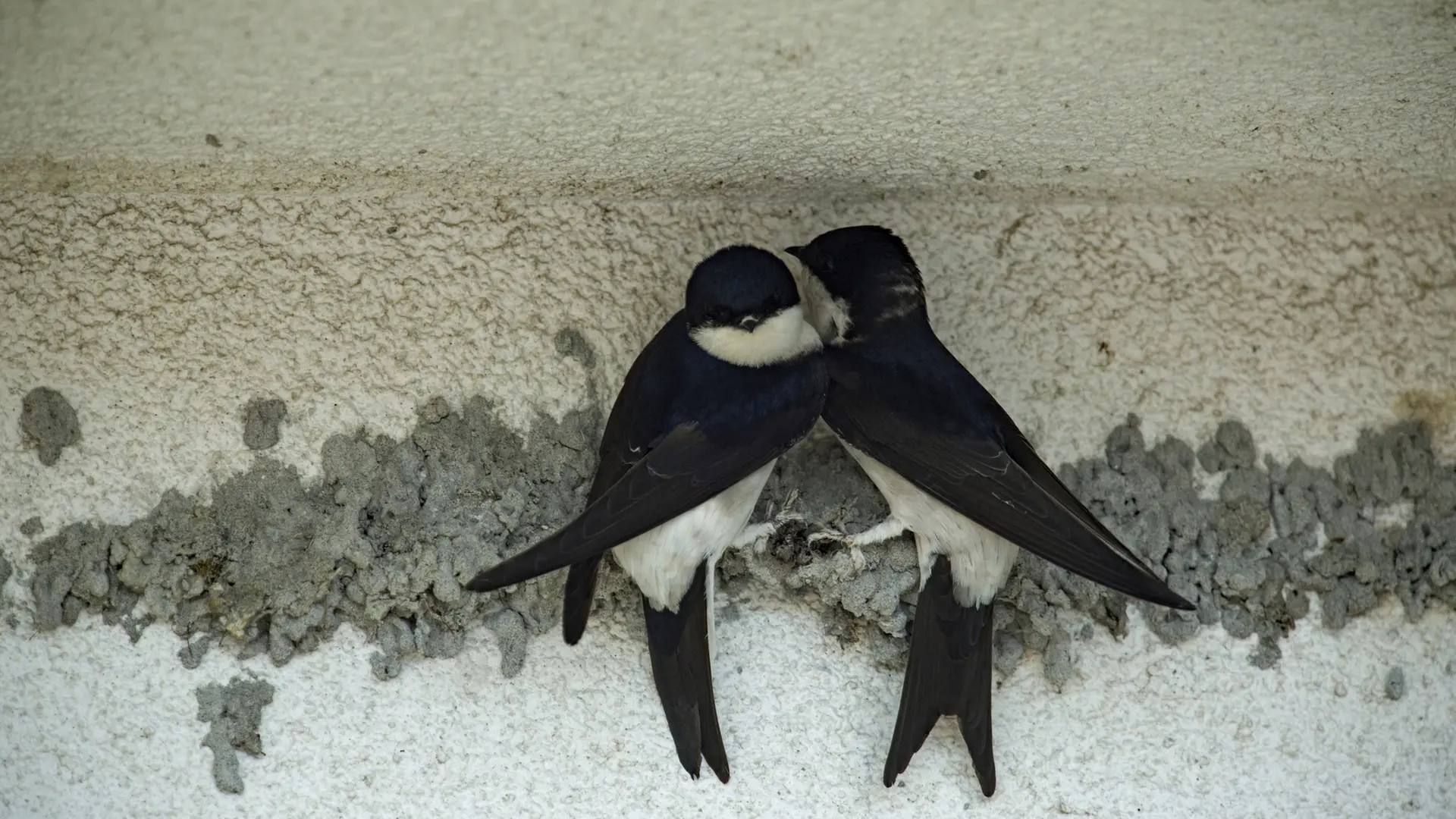
The House Martin is an iconic avian species, immediately recognizable by its distinct physical features. Measuring approximately 14 centimeters in length, the bird possesses a short, slightly forked tail and a plumage characterized by a striking contrast: a deep, iridescent blue-black on its upper body and wings, paired with a stark, "floury" white underside and rump. It is this snowy white lower half that earned the bird its German name, Mehlschwalbe (literally "Flour Swallow").
Beyond its appearance, the species is celebrated for its remarkable architectural abilities. These birds are master builders, constructing intricate, nearly enclosed nests from up to 1,500 individual mud pellets. Their biology is inextricably linked to human infrastructure, as they prefer to build these homes under the eaves of buildings, creating a unique, centuries-old symbiosis with humanity.
Chronology of a Campaign: The Path to the Title
The journey to the 2027 title began months prior, with conservationists identifying five candidates based on ecological urgency and public visibility. The nomination process was designed not just to pick a winner, but to educate the public on the diverse challenges facing bird populations in the 21st century.
- Initial Nominations: Conservation experts selected five species representing different habitats and threat levels.
- The Campaign Phase: Throughout the summer of 2026, the House Martin’s campaign, under the slogan "On Good Neighborhood Terms" (Auf gute Nachbarschaft), gained significant traction. Advocates utilized social media, local community outreach, and educational programs to highlight how humans can actively support these birds.
- The Vote: Between August and mid-October 2026, thousands of citizens cast their ballots online and through regional nature centers.
- The Verdict: On October 15, 2026, the final tally was announced, solidifying the House Martin’s status as the focal point for conservation efforts in 2027.
Supporting Data: Why the House Martin Needs Our Help
While the House Martin is a common sight for many, its population trends tell a more troubling story. Currently listed on the German "Red List" of endangered species, the House Martin is facing a decline driven by a "perfect storm" of environmental stressors.
The Impact of Climate Change
One of the primary threats identified by ornithologists is the increasing frequency of extreme heatwaves. As summers become longer and more intense, the mud required for the birds to repair and build their nests dries up prematurely. Furthermore, these heatwaves can cause the interior of nests—often located on sun-exposed walls—to reach temperatures that are lethal for developing chicks.
Habitat Loss and Modern Construction
The "modernization" of building facades has inadvertently contributed to the decline. Smooth, sleek materials often prevent the mud nests from adhering properly, leading to structural failure. Additionally, the increasing trend of sealing building gaps and "renovating" traditional eaves often results in the destruction of long-standing nesting sites.

Population Trends in Central Germany
Data from the "Hour of Garden Birds" (Stunde der Gartenvögel) census shows a nuanced picture in states like Saxony-Anhalt, Thuringia, and Saxony. While the House Martin remains a relatively frequent visitor, consistently ranking in the top ten (in Thuringia, it reached 7th place in the most recent count), the long-term trend indicates a downward trajectory. The cumulative loss of nesting sites and a fluctuating supply of aerial insects have resulted in a measurable reduction in the overall population density across Central Germany.
Official Responses: A Call to Action
The designation of "Bird of the Year" is far more than an honorary title; it is a catalyst for policy change and public action. Franziska Back, spokesperson for the LBV, emphasized the responsibility that comes with this title.
"The House Martin has lived with us for centuries, quite naturally, under our roofs," said Back. "However, the species is now in a critical state. We are asking the public to look up and consider the neighbors they might not even notice. Helfing the new Bird of the Year is simple but requires a shift in perspective: we must learn to tolerate and protect their nests on our homes."

Conservationists suggest several actionable steps for the public:
- Nest Retention: Avoiding the removal of active or dormant nests during renovations.
- Mud Provision: Creating "mud puddles" in gardens during dry spells to provide the essential building material for these avian architects.
- Artificial Nesting Aids: Installing artificial nests on buildings where natural nesting is difficult due to smooth masonry.
Implications: Looking Toward 2027 and Beyond
The selection of the House Martin serves as a barometer for the health of our urban environments. Unlike birds that inhabit remote forests or wetlands, the House Martin lives in the heart of our cities and villages. Its struggle is, therefore, a direct reflection of how we manage our living spaces.
A Legacy of Advocacy
The "Bird of the Year" program, initiated in Germany in 1971, has evolved from a scientific advisory list into a robust, participatory democratic event. By involving the public in the selection process since 2021, organizations like NABU have successfully turned conservation into a communal endeavor. The House Martin joins a distinguished lineage of previous winners, including the Common Redstart (2025) and the Grey Partridge (2026), each of which brought attention to specific ecological crises.
The Broader Ecological Picture
The decline of the House Martin is also a symptom of a larger collapse in insect populations. As specialized aerial insectivores, House Martins are highly sensitive to the availability of flies, beetles, and midges. Their struggle highlights the urgent need for pesticide reduction and the creation of insect-friendly green spaces within urban planning.
Future Outlook
As we look toward 2027, the success of the House Martin will depend on the synthesis of individual action and municipal policy. If citizens can be encouraged to tolerate the messiness of nesting birds in exchange for the biological diversity they provide, there is hope for stabilization. The campaign aims to turn the House Martin into a symbol of urban resilience, proving that human development and nature are not mutually exclusive, but rather, partners in a shared habitat.
In conclusion, the House Martin’s victory in the 2027 vote is a reminder that we are never alone in our cities. From the mud-built homes under our eaves to the high-altitude insect hunts that define their flight, these birds are an inseparable part of our cultural and natural landscape. The year 2027 will be a pivotal chapter in their history—a year where the call for "good neighborhood" is transformed from a slogan into a tangible, nationwide conservation effort.

This article was prepared by the MDR Science Desk, dedicated to reporting on environmental issues and the preservation of biodiversity in Central Germany.