

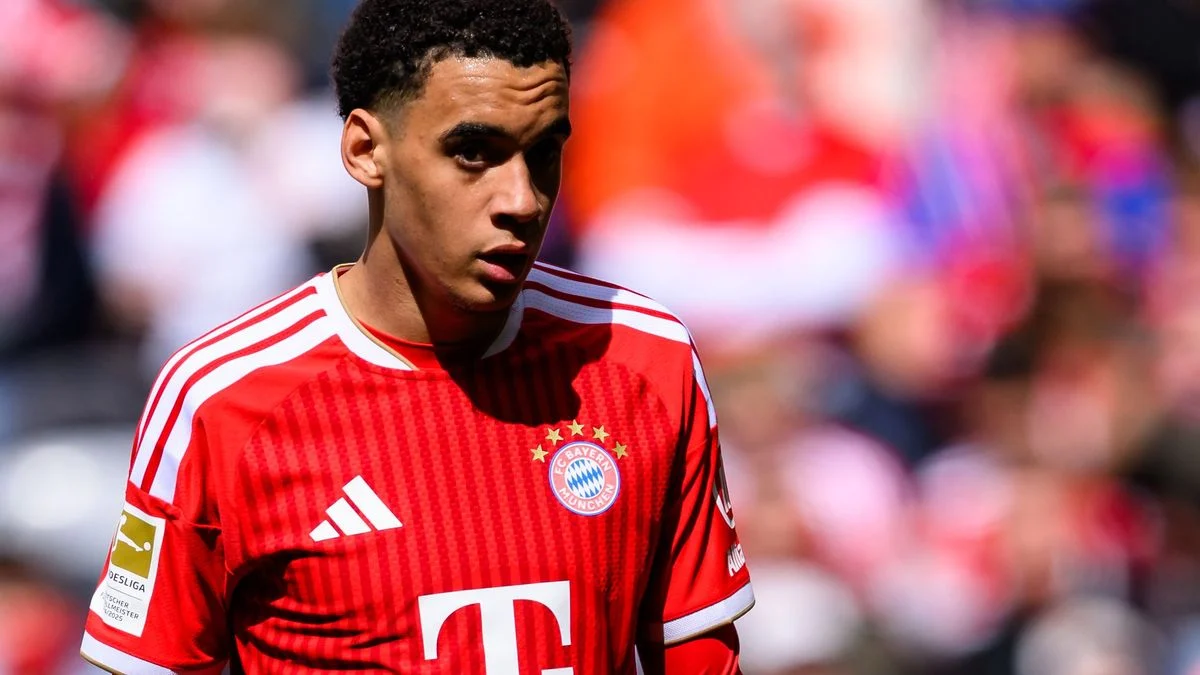
The recent public discourse surrounding Bayern Munich and German national team star Jamal Musiala has shifted from the pitch to the clinic. While Musiala is celebrated for his mesmerizing dribbling and tactical intelligence, the intersection of his career and the broader medical discussion regarding neurological health in professional football has become a flashpoint for debate. At the heart of this discussion are "absences"—a form of epilepsy—and the long-term, cumulative risks posed by repetitive heading of the ball.
The Intersection of Neurology and Professional Sports
In the world of elite athletics, the margin between peak performance and physical decline is often measured in milliseconds. For a player like Jamal Musiala, whose style of play requires extreme spatial awareness and cognitive processing speed, any disruption to neurological function is significant.
Neurologists have long scrutinized contact sports, particularly those involving impact to the head. While concussions are the most frequently discussed injury in this category, there is growing evidence regarding the "sub-concussive" impact of heading a ball. In professional football, a player may head the ball dozens of times during a single training session, accumulating thousands of micro-traumas over the course of a career.
Defining Absences and Epilepsy in Athletes
"Absence seizures" (formerly known as petit mal seizures) are characterized by brief, sudden lapses in consciousness. During these moments, an individual may appear to be staring into space, completely unresponsive to their environment. For an athlete in a high-intensity environment, such an event is not merely a medical concern; it is a profound safety risk.
While Musiala’s specific medical history has sparked curiosity, experts emphasize that epilepsy is not a barrier to elite-level performance provided it is managed under strict medical supervision. The challenge lies in the triggers: fatigue, physical stress, and intense neurological exertion—all of which are staples of professional football—can potentially lower the threshold for seizure activity.
A Chronology of Concern: From Pitch to Diagnosis
The scrutiny surrounding head injuries in football has evolved significantly over the last decade. Historically, players were encouraged to "walk off" dazed states. Today, the protocol is far more rigid, though critics argue it remains insufficient.
- The Early 2000s: The medical community begins to document the long-term cognitive decline in retired players, drawing parallels to Chronic Traumatic Encephalopathy (CTE) found in boxers and American football players.
- 2017: FIFA and various European leagues introduce stricter concussion protocols, allowing for temporary substitutions to assess players who have taken a blow to the head.
- 2021: The English Football Association (FA) implements guidelines limiting "high-force" headers in training sessions for professional clubs, a move that signals a tectonic shift in how football views the physical toll of practice.
- Present Day: High-profile cases, including that of Jamal Musiala, bring the discussion into the mainstream, forcing clubs to balance the competitive need for tactical training with the ethical duty of player welfare.
Supporting Data: The Physics of the Ball
The risks associated with heading are rooted in basic physics. A regulation football weighs between 410 and 450 grams. When struck at high velocity—often coming from long crosses or goal kicks—the force exerted on the brain can be significant.
Recent studies conducted at the University of Glasgow have provided harrowing data:
- Increased Risk: Former professional footballers are 3.5 times more likely to die of neurodegenerative disease than the general population.
- The "Header Effect": Players who frequently engaged in heading during their careers showed higher markers of cognitive impairment compared to those in positions with less aerial involvement, such as goalkeepers.
- The Impact of Wet Balls: Studies have shown that when a ball is wet, its weight increases significantly, and the force of impact on the skull increases proportionally, further elevating the risk of brain trauma.
These statistics have led to a movement within the sport to introduce "concussion substitutes," a rule that allows a team to replace an injured player without using one of their standard substitution slots, ensuring that medical staff have the necessary time to conduct a thorough neurological assessment.
Official Responses and Regulatory Shifts
The governing bodies of football—FIFA, UEFA, and the DFB (German Football Association)—have found themselves in a difficult position. On one hand, they must preserve the fundamental nature of the game; on the other, they face increasing pressure to protect the long-term health of their most valuable assets.
The DFB’s Stance
In Germany, the DFB has been proactive in integrating neurological screening into the standard medical examinations of professional players. A spokesperson for the DFB stated, "The health of our athletes is the highest priority. We are continuously reviewing our training protocols to minimize unnecessary aerial impact while maintaining the tactical integrity of the sport."
The Club Perspective
Bayern Munich, known for its world-class medical facilities, has maintained a policy of discretion regarding Musiala’s health. However, behind the scenes, club physicians have implemented rigorous monitoring. Modern sports medicine now utilizes neuro-cognitive baseline testing, which creates a "map" of a player’s brain function during their healthy state. If a collision occurs, this baseline is used to determine when it is truly safe for the player to return to the pitch.
Implications: The Future of Football
The discussion surrounding Musiala is a microcosm of a much larger question: Is football inherently dangerous to the brain, and if so, how much are we willing to change the game to mitigate those risks?
Tactical Changes
If heading were to be significantly restricted or banned in training, the tactical landscape of football would change. Managers would need to prioritize ground-based passing, and the role of the "target man" striker might become obsolete. While some purists argue this would ruin the aesthetic of the game, others argue that the survival of the sport depends on its ability to evolve alongside medical science.
The Human Cost
Beyond the tactics and the headlines, there is the human element. For a player like Jamal Musiala, the focus remains on his immense talent and his contributions to the sport. However, the shadow of neurological health is a reminder that professional athletes are not mere avatars of skill; they are individuals susceptible to the long-term consequences of their profession.
The medical community is advocating for a "culture shift." This includes:
- Standardized protocols: Ensuring that every league, from the Premier League to the Bundesliga, adheres to the same strict concussion guidelines.
- Longitudinal studies: Tracking players from their academy years through their retirement to better understand the cumulative effects of sub-concussive impacts.
- Technological innovation: Improving the materials used in footballs to dampen impact, without sacrificing the ball’s flight characteristics.
Conclusion: Balancing Performance and Protection
The debate surrounding Jamal Musiala, absences, and the hazards of heading is far from over. It is a necessary conversation that challenges the industry to reconcile the thrill of the game with the reality of human biology.
As football enters an era where data-driven insights are applied to every aspect of the game—from diet to training loads—neurology must take center stage. Protecting the cognitive longevity of players like Musiala is not just a medical imperative; it is a moral one. The goal is a future where the beauty of the sport is not written in the neurological decline of its icons, but in the sustained brilliance of their performance.
For the fans, the takeaway is clear: appreciate the genius on the pitch, but understand the fragility that makes that genius possible. As the sport moves forward, it must do so with a heightened sense of caution, ensuring that the legacy of players like Musiala is defined by their achievements, not by the hidden costs of their dedication to the game.
This article is intended for informational purposes and reflects the current state of medical discourse within the professional football industry. For further in-depth reporting on sports medicine, physiological breakthroughs, and the evolution of player welfare, stay tuned to our ongoing investigative series.