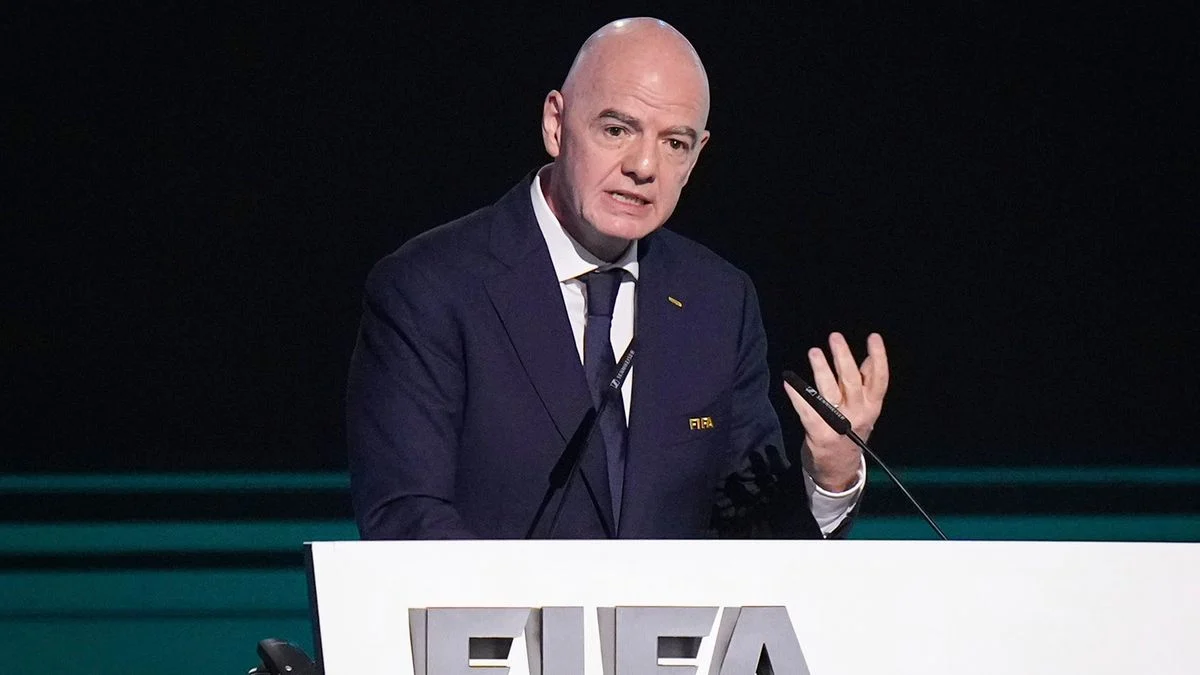
The world of international football governance is currently navigating its most significant internal turbulence in years. At the center of the storm is FIFA President Gianni Infantino and a controversial, multi-billion-dollar proposal to bring private equity investment into the heart of the global game. While Infantino has attempted to walk back the narrative with a series of conciliatory gestures and formal apologies, the leadership at UEFA remains unconvinced. This standoff marks a pivotal moment in the power struggle between the world governing body and its most powerful confederation, highlighting deep-seated tensions over the future commercialization of the sport.
The Core Conflict: Privatizing the Global Game
At the heart of the dispute is a secret plan—first leaked to international media—that detailed FIFA’s intent to secure a multi-billion-dollar injection from private equity firms. The proposal aimed to restructure the commercial rights of various FIFA tournaments, effectively handing a degree of financial autonomy to external investors in exchange for an immediate, massive capital infusion.
For FIFA, the move was framed as a necessary step to modernize its operations and provide financial stability to smaller member associations. For the UEFA leadership, however, the proposal was perceived as an existential threat. European football administrators argue that such a deal would undermine the integrity of the sport, prioritize short-term profit over long-term sporting merit, and irrevocably erode the influence of traditional governing bodies.
Chronology of the Confrontation
1. The Genesis of the Investor Plan
The conceptual framework for the investment plan began in the corridors of Zurich early last year. Faced with the economic uncertainty of a post-pandemic world, FIFA’s executive committee explored avenues to diversify revenue streams. The objective was clear: raise a "war chest" to fund the expansion of the Club World Cup and other initiatives that would solidify FIFA’s dominance over the global football calendar.
2. The Leak and the Public Outcry
The plan remained shrouded in secrecy until details surfaced regarding a potential partnership with a major private equity firm. The revelation triggered an immediate backlash from the European Leagues and UEFA, who expressed profound concern that they had been kept in the dark regarding plans that would directly impact the value of their own competitions.
3. Infantino’s Attempted Pivot
Recognizing the diplomatic disaster, Gianni Infantino moved to contain the damage. In a series of private meetings and public statements, he offered an apology, framing the investor plan as merely "exploratory" and "preliminary." He insisted that the interests of the confederations—specifically UEFA—would remain paramount and that no deal would be signed without broad consensus.
4. The UEFA Rebuttal
The apology was met with skepticism in Nyon. UEFA officials, led by President Aleksander Čeferin, issued a firm rebuttal. The message was clear: an apology does not resolve the fundamental conflict of interest inherent in the proposal. UEFA has made it clear that they view the involvement of private equity as a "Trojan Horse" that could eventually lead to the loss of control over the game’s regulatory framework.
Supporting Data: The Financial Stakes
To understand the intensity of this conflict, one must look at the numbers. FIFA generates billions in revenue every four-year cycle, primarily through the World Cup. However, the organization faces rising costs associated with its expanded tournament formats.
- The Investment Target: Reports suggest that FIFA sought an initial injection of approximately $2 billion to $4 billion.
- The Revenue Gap: UEFA generates significantly higher annual revenues than any other confederation. The fear is that by inviting private investors into the global structure, FIFA intends to "cannibalize" the commercial success of European tournaments to feed its own new, expanded club competition formats.
- The "Club World Cup" Factor: Central to the rift is the expansion of the FIFA Club World Cup. UEFA fears that a private-equity-backed tournament will directly compete with the UEFA Champions League, the most lucrative club competition in the world.
Official Responses and Diplomatic Manoeuvering
The FIFA Position
FIFA maintains that its governance is transparent and that its duty is to the entire global football family, not just the wealthy European elite. Supporters of Infantino argue that the investment would allow FIFA to redistribute wealth to Africa, Asia, and the Americas, thereby leveling the playing field. They frame the resistance from UEFA as a form of "protectionism" aimed at maintaining the status quo of European hegemony.
The UEFA Position
UEFA’s official stance is that private equity firms, by definition, seek a return on investment that necessitates the aggressive commercialization of the sport. They argue that this model is incompatible with the "European Sports Model," which emphasizes solidarity, promotion and relegation, and merit-based qualification. Their officials have emphasized that "football is not for sale," a slogan that has resonated deeply with fan bases across the continent.
Implications for the Future of Football
The ramifications of this dispute extend far beyond a boardroom disagreement in Zurich.
1. The Fragmentation of Global Governance
If this conflict continues to escalate, it could lead to a formal fracture within FIFA. There is increasing speculation that the major European leagues could consider forming a breakaway organization or, at the very least, drastically reducing their cooperation with FIFA’s central initiatives.
2. The Role of Private Equity in Sport
This standoff is a microcosm of a broader trend: the influx of private equity into professional sports. From Formula 1 to the NBA, private capital is reshaping how sports are packaged and sold. Football, as the world’s most popular sport, represents the final frontier for these firms. The outcome of the FIFA-UEFA struggle will set a precedent for how other governing bodies approach external investment.
3. The Future of the FIFA Club World Cup
The viability of FIFA’s expanded tournament plans now rests on the success of these negotiations. If UEFA continues to boycott or distance itself from these initiatives, the tournament may lose its credibility and, consequently, its commercial value. The struggle for the soul of the sport has effectively turned the Club World Cup into a proxy war.
4. Regulatory Governance vs. Commercial Interests
Perhaps most importantly, this conflict raises questions about the dual nature of governing bodies like FIFA. Are they regulators, or are they commercial promoters? When a regulator seeks to become a promoter funded by private equity, the potential for conflicts of interest is immense. The current crisis forces a long-overdue conversation about whether the structure of modern football governance is fit for the 21st century.
Conclusion: A Turning Point
The apology from Gianni Infantino may have cooled the immediate headlines, but the underlying tensions remain at a boiling point. The rift between FIFA and UEFA is not merely about a specific financial proposal; it is a fundamental clash of philosophies.
As the sporting calendar moves toward another cycle of high-stakes tournaments, the world of football finds itself at a crossroads. Will it allow the traditional, merit-based governance model to persist, or will it succumb to the irresistible gravity of private equity and the promise of endless, rapid growth?
For the fans, the players, and the smaller clubs that form the bedrock of the sport, the answer will define the landscape of football for generations to come. The "apology" provided by FIFA was a tactical retreat, but for UEFA, the battle to protect the European footballing identity is only just beginning. The coming months will likely see further legal challenges, intensive lobbying, and a defining struggle that will ultimately determine who truly owns the future of the beautiful game.