Introduction: A Life Defined by Excess and Ambition
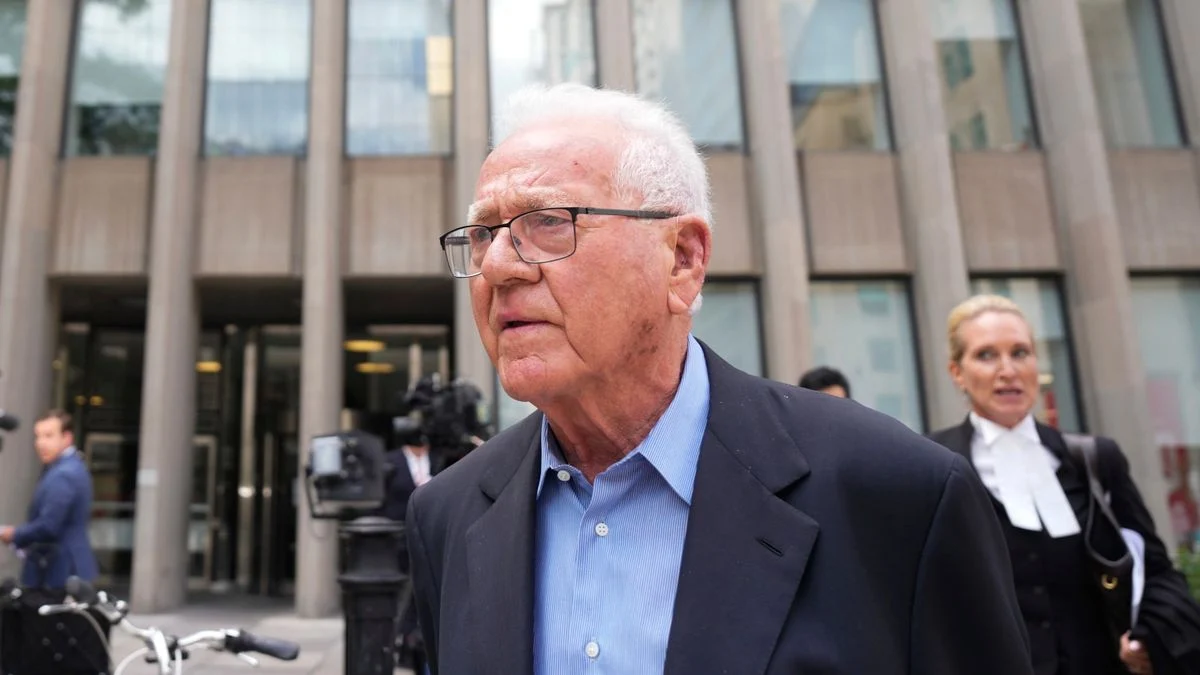
Frank Stronach, the Austrian-born billionaire who transformed from a penniless immigrant into the founder of one of the world’s most powerful automotive supply empires, now finds his legacy indelibly stained. Once celebrated as a self-made industrialist who built Magna International into a global juggernaut, Stronach’s final chapters are being written in courtrooms rather than boardrooms. His recent conviction on charges of sexual misconduct marks a dramatic, somber conclusion to a life that has long straddled the thin line between eccentric genius and controversial power-broker.
The recent legal proceedings in Canada have laid bare a history of allegations spanning decades, stripping away the veneer of his philanthropic and political personas to reveal a deeply troubling pattern of behavior. As the dust settles on the verdict, it is clear that Stronach’s reputation—once bolstered by immense wealth and political maneuvering—has suffered a collapse as profound as the failure of his many pet projects.
The Legal Reckoning: Verdict and Allegations
The recent criminal trial was a watershed moment, bringing to light allegations that dated back as far as 1977. Seven women stood as complainants against the billionaire, detailing a harrowing array of accusations including rape, forcible confinement, and sexual assault.
A Partial Conviction
Despite the gravity of the testimony provided by the seven accusers, the court delivered a nuanced and, for many, a deeply contentious verdict. Stronach was found guilty on only two counts: "indecent assault" and "sexual assault." The limitations of the legal outcome were underscored by several factors:
- Credibility Gaps: Three charges brought by one complainant were dismissed entirely, as the presiding judge deemed the woman’s testimony not credible.
- Insufficient Evidence: A significant portion of the remaining charges were withdrawn by the prosecution due to a lack of corroborating evidence, a common hurdle in cases involving incidents from several decades prior.
- The Defense’s Stance: Throughout the trial, Stronach vehemently denied all allegations, maintaining his innocence and suggesting that the accounts of his accusers were fabricated or misinterpreted.
The contrast between the sheer volume of accusations and the limited nature of the conviction highlights the immense difficulty of seeking justice for crimes that occurred in the distant past, leaving a divided public to grapple with the truth of his conduct.
Chronology of a Meteoric Rise and Erratic Descent
To understand the man behind the headlines, one must look at the trajectory of his life—a story of rapid ascension followed by a baffling decline into public absurdity.
1957–2012: The Magna Empire
Stronach’s story began in Canada, where he founded Magna International in 1957. Under his leadership, the company became a titan of the automotive industry, eventually standing as one of the largest suppliers of car parts in the world. For over half a century, Stronach was the face of Canadian industrial success. At the age of 80, he stepped down from his executive role, signaling an end to an era of unparalleled corporate influence.
2012–2018: The Austrian "Exile" and Eccentricities
Upon returning to his native Austria, Stronach attempted to reinvent himself as a populist visionary. However, his projects were characterized more by hubris than innovation:
- The Failed Theme Park: Stronach famously attempted to build a massive amusement park in a flood-prone area near Vienna, a project that was widely mocked and eventually abandoned.
- The Bundesliga Dream: In an effort to dominate the sporting world, he proposed a radical restructuring of the Austrian Football Bundesliga, claiming his methods would lead the national team to a World Cup title. The plan was dismissed as unrealistic by experts and players alike.
- "Frank’s" Energy Drink: Attempting to take on Red Bull, Stronach launched an energy drink under his own name with the slogan, "Keeps you yodeling all night long." The product failed to gain traction and eventually disappeared from shelves.
2012–2013: Political Turmoil
In 2012, Stronach founded the "Team Stronach" political party in Austria. His brief tenure in politics was defined by bizarre televised outbursts, including attacks on journalists and a controversial demand for the reinstatement of the death penalty for "professional murderers." The party, lacking a cohesive ideology and plagued by the erratic behavior of its founder, dissolved shortly after its inception.
2018: The Intra-Family Legal War
Long before the sexual assault trial, Stronach’s personal life was already in the public eye for the wrong reasons. In 2018, he initiated a massive $500 million lawsuit against his own daughter, two of his grandchildren, and his former business partner, Alon Ossip. Stronach alleged that they had mismanaged the family fortune—a move that shocked the business community and signaled a deep-seated fracturing of his personal support systems.
Supporting Data and The Business Context
The sheer scope of Stronach’s influence cannot be ignored. At the height of his career, Magna International employed over 100,000 people across dozens of countries. His wealth allowed him to exert influence that few individuals in the private sector could match.
However, his business philosophy, which often favored absolute control and top-down management, mirrored the behavior described by the victims in his criminal trial. Experts in organizational behavior have noted that the "cult of personality" surrounding figures like Stronach often creates environments where accountability is nonexistent and power is abused. The 2018 lawsuit against his family provided a rare glimpse into the internal dynamics of his world, where personal loyalty was routinely tested against the pursuit of control and wealth.
Official Responses and Public Reaction
The legal community has remained relatively tight-lipped, adhering to the standard protocols of the judicial process. However, the verdict has sparked a firestorm of discussion regarding the statute of limitations and the standard of proof required for historical sexual assault cases.
- Victim Advocacy: Organizations supporting the complainants have highlighted the courage required to testify against a man of such extreme wealth and influence, noting that the conviction—even if partial—serves as a vindication for the victims.
- Corporate Distance: Magna International has largely distanced itself from its founder, emphasizing that the current leadership bears no responsibility for his personal life or legal troubles. The company has focused on maintaining stability for shareholders and employees, effectively treating Stronach as a relic of a bygone era.
Implications: A Legacy Under Scrutiny
The legacy of Frank Stronach is no longer one of industrial triumph. It is now a case study in the dangers of unchecked power and the long-term impact of personal misconduct.
The Erosion of "The Self-Made Man" Myth
For years, Stronach was the poster boy for the "self-made" immigrant success story. This narrative served him well in both business and politics, allowing him to command respect even as his behavior grew increasingly erratic. The recent trial has effectively dismantled this narrative, forcing a re-evaluation of how society rewards and protects men of immense wealth.
A Warning for Future Generations
The implication for future business leaders is clear: the accumulation of wealth does not grant immunity from the laws of common decency. The legal system, though imperfect, has demonstrated that even the most powerful individuals can eventually be held accountable for actions taken decades prior.
As Stronach enters his final years, the focus has shifted from his automotive innovations and his failed energy drinks to the individuals he harmed. The story of Frank Stronach will likely be remembered not for the parts he manufactured, but for the moral failures that defined his later years. In the end, the billionaire who once tried to change the face of Austria and the world of global manufacturing is now defined by the court’s gavel—a stark reminder that wealth cannot buy a clean conscience, nor can it permanently bury the truth.
Conclusion
Frank Stronach’s life remains a cautionary tale of hubris. From the assembly lines of Ontario to the political stage in Vienna, his journey was marked by a refusal to adhere to the boundaries that govern others. While he once stood at the pinnacle of global industry, his final legacy is one of litigation, controversy, and a profound sense of wasted potential. As history begins to catalog his achievements, the shadow of his criminal conviction will undoubtedly serve as the primary lens through which his complex, and ultimately tragic, life is viewed.