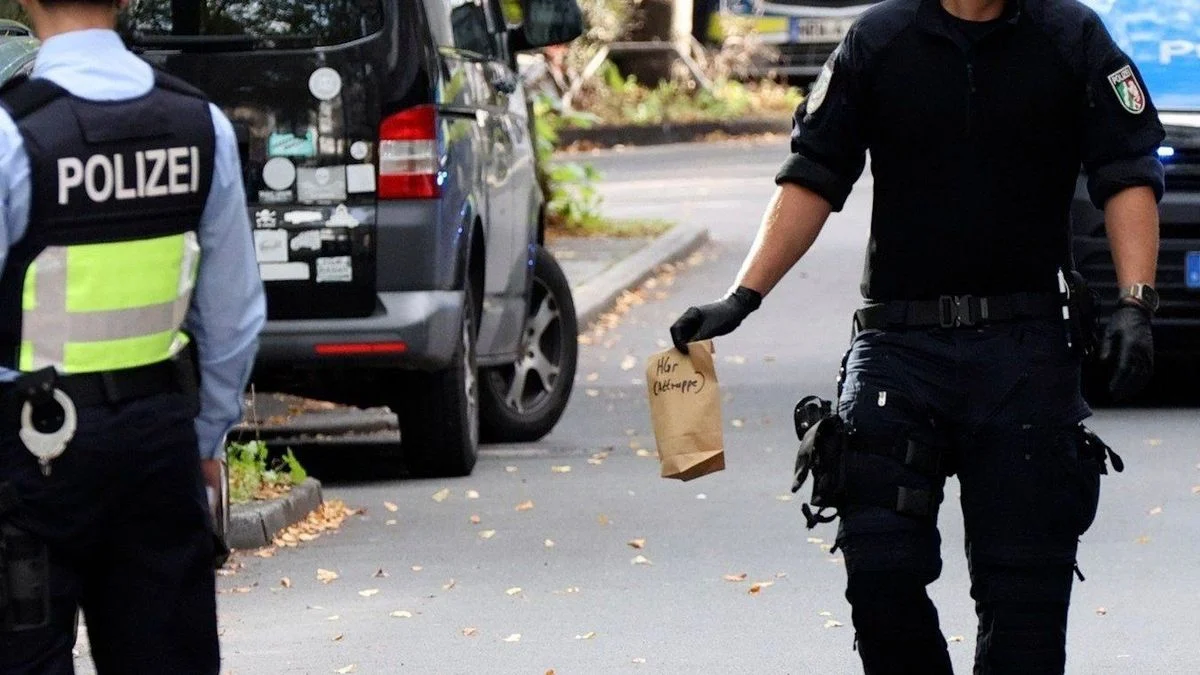
The recent violent escape of a prisoner in Essen has sent shockwaves through the German justice system, triggering a massive manhunt and sparking a fierce debate over the security protocols governing the transport of high-risk detainees. As the search for the perpetrators enters its critical phase, questions regarding the vulnerability of public judicial procedures remain at the forefront of the public discourse.
1. Main Facts: A Calculated Strike
The incident, which took place in the heart of Essen, was characterized by its tactical precision and sheer audacity. During a routine transfer of a prisoner—a standard procedure usually considered low-risk by local authorities—unknown assailants orchestrated a violent ambush.
According to preliminary reports from the Essen Police Department, the perpetrators utilized force to overwhelm the guards before fleeing the scene with the escapee. The incident did not result in immediate fatalities, though injuries were sustained by law enforcement personnel during the scuffle. The escapee, whose identity and criminal background have been flagged by the North Rhine-Westphalia (NRW) Ministry of Justice, remains at large, with authorities describing him as potentially dangerous.
The brazen nature of the attack, occurring in a public space during daylight hours, suggests a level of planning that indicates the involvement of organized crime elements. Investigators are currently scrubbing surveillance footage from the vicinity, analyzing digital footprints, and interviewing witnesses who may have observed the getaway vehicle.
2. Chronology: A Timeline of the Ambush
To understand the gravity of the breach, one must look at the sequence of events as they unfolded on the day of the escape:
- 09:00 AM: The transport vehicle departs from the local detention facility, following standard security protocols for a transfer to a judicial hearing.
- 09:45 AM: The vehicle arrives at the designated location in Essen. As the prisoner is being escorted from the vehicle, a secondary vehicle pulls up, blocking the path of the escort team.
- 09:46 AM: Masked individuals emerge from the secondary vehicle. Using pepper spray and physical force, they confront the judicial officers.
- 09:48 AM: The prisoner is successfully extracted from the custody of the guards.
- 09:50 AM: The perpetrators flee the scene in a high-powered vehicle. A major police alert (fahndung) is issued across the Ruhr area.
- 10:30 AM: Roadblocks are established at key transit points, and helicopter support is deployed to track the suspect vehicle.
Since the initial escape, the police have expanded the search radius beyond the state of North Rhine-Westphalia, coordinating with federal police (Bundespolizei) and international authorities, given the potential for the escapee to flee across national borders.
3. Supporting Data: The Statistics of Prison Security
The Essen incident is not an isolated event, but it is one of the most high-profile security breaches in recent years. Data from the German Federal Ministry of Justice indicates that while prison breaks from within facilities are statistically rare, escapes during transport represent a significant operational challenge.
- Risk Assessment Discrepancies: Critics argue that the risk classification of the prisoner in question may have been underestimated. Statistical data shows that in approximately 12% of transport escapes, the prisoner had been incorrectly categorized as "low risk," allowing for a smaller, less-armed escort team.
- Staffing Shortages: The judicial transport service in North Rhine-Westphalia has faced chronic staffing shortages over the past five years. Budgetary constraints have led to longer shifts and higher caseloads for officers, potentially leading to fatigue and diminished alertness during high-stakes transfers.
- Equipment Upgrades: While digital surveillance tools have improved, the physical security of transport vans remains largely unchanged for decades, leading to calls for armored, reinforced vehicles that are better equipped to withstand external attacks.
4. Official Responses: A Call for Accountability
The political fallout has been immediate. The NRW Minister of Justice has faced intense questioning in the state parliament, with opposition leaders demanding a full inquiry into the security lapses.
"The safety of our citizens and the integrity of our judicial system were compromised in an unacceptable manner," stated a spokesperson for the Ministry. "We are conducting a comprehensive review of all transport protocols. Any officer found to have neglected procedure will face disciplinary consequences, but we must also acknowledge that the state is facing increasingly sophisticated criminal networks that are willing to use extreme violence."
The Police Union (GdP) has been more vocal, highlighting that the incident is a symptom of a systemic "devaluation" of judicial security. They have called for an immediate increase in funding for special escort units, arguing that the current model is no longer sufficient in an era of organized, militarized criminal activity.
5. Implications: The Future of Judicial Transport
The Essen escape has implications that extend far beyond the city limits. It has triggered a "security reset" across the German judicial landscape.
A. Tighter Transport Protocols
Future transports of high-risk individuals are now expected to involve increased police backup, potentially including tactical units from the Spezialeinsatzkommando (SEK) for specific high-profile cases. The use of armored vehicles is expected to become the new baseline for inter-city transfers.
B. The Intelligence Gap
There is a growing concern that organized crime groups are monitoring judicial schedules. This suggests a potential "insider threat" or a breach in digital security where case files and transport dates might be accessible to unauthorized parties. The Ministry of Justice has launched an internal audit of its digital communications infrastructure to ensure that sensitive scheduling information remains classified.
C. Public Safety and Public Trust
Perhaps the most damaging outcome of this event is the erosion of public trust. When an escape occurs in broad daylight, it fosters a sense of insecurity among the populace. The authorities are now faced with the dual challenge of recapturing the fugitive while simultaneously convincing the public that the judicial system can effectively hold those who break the law.
Conclusion
As the manhunt continues, the city of Essen remains on edge. The events of this week serve as a sobering reminder of the volatility inherent in the judicial process. While the search for the escapee is the immediate priority, the long-term task of reforming how the state handles its most dangerous individuals has only just begun. The question remains: can the state adapt quickly enough to stay ahead of those who are determined to subvert the rule of law?
The investigation continues, and for the residents of Essen, the return to normalcy is contingent upon the swift resolution of this case—a resolution that the state is under immense pressure to deliver.