Introduction: The Final Chapter of a Summer Tragedy
More than a year after he vanished beneath the surface of the iconic Starnberger See, the body of a 23-year-old Indian student has finally been recovered. The discovery, made on a quiet Wednesday afternoon, brings a somber conclusion to a search operation that has haunted the local community since the summer of 2025.
The recovery was made possible by the deployment of a specialized underwater drone, operated by a Munich-based technical firm. As the robot emerged from the depths of the Starnberger Bucht, it brought with it the remains that authorities have identified, based on initial evidence and circumstantial findings, as the missing student. This tragic event serves as a harrowing reminder of the dangers lurking beneath the deceptively calm waters of one of Germany’s most popular recreational lakes.
Chronology: A Day of Leisure Turned to Nightmare
To understand the gravity of this incident, one must look back at the events of June 2025. What began as an idyllic afternoon of leisure for three friends turned into a struggle for survival in a matter of minutes.
The Boat Excursion
The 23-year-old student, who was residing in the Munich area, had taken a boat out onto the lake with two companions. The weather was favorable, and the trio decided to take advantage of the refreshing water. They followed a common practice among lake-goers, anchoring the vessel to dive into the water. According to witness statements, the three friends alternated between swimming and boarding the boat, enjoying the freedom of the open water.
The Critical Moments
After approximately 30 minutes of activity, the atmosphere shifted from joy to terror. It was at this point that the 23-year-old—who, it was later revealed, did not possess swimming skills—failed to make his way back to the safety of the boat.
The struggle that ensued was desperate. His two companions immediately recognized the danger and moved to assist him. However, the dynamics of a drowning victim are often misunderstood by the public; in a state of panic, the student instinctively clung to his rescuers. The force of his grip was so overwhelming that the two friends found themselves being pulled under as well. Fearing for their own lives and unable to haul the struggling man back into the vessel, they were forced to break free. In those final, frantic moments, the student slipped beneath the surface, disappearing into the depths of the Starnberger See.
The Search Operation: A Race Against Time and Physics
The immediate aftermath of the incident triggered a massive search-and-rescue operation. When the emergency services were alerted, the response was rapid and multi-faceted.
Initial Response
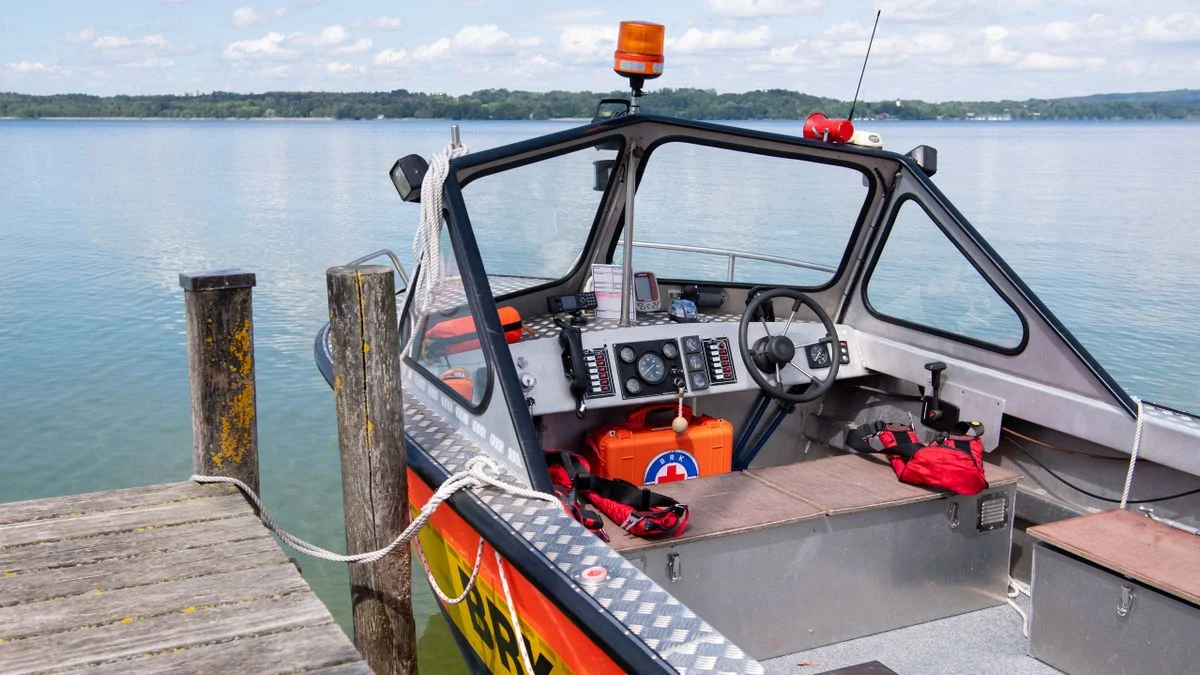
The Wasserwacht (Water Rescue Service) and the Starnberg Water Police arrived at the scene within minutes. They utilized every tool available to modern emergency response units. This included:
- Sonar Technology: Specialized boats equipped with side-scan sonar were deployed to map the lake floor, which features uneven terrain and deep pockets that make visual spotting impossible.
- Aerial Surveillance: Drones were flown over the area to search for any signs of surface disturbance or debris that might indicate the location of the victim.
- K-9 Units: Specially trained search dogs, capable of detecting scents from the water surface, were brought in to narrow down the search radius.
Despite these extensive efforts, the lake remained silent. The depth, the temperature variations, and the complex underwater currents of Starnberger See proved to be formidable obstacles. As the days turned into weeks, the mission shifted from a "rescue" to a "recovery," and eventually, to a long-term search for closure.
Supporting Data: The Dangers of Starnberger See
Starnberger See, while a jewel of the Bavarian landscape, presents unique challenges that even experienced swimmers often underestimate.
Hydrographic Characteristics
The lake reaches depths of up to 127 meters. Sunlight struggles to penetrate the deeper strata, and the temperature at the bottom remains near freezing year-round. These conditions lead to "stratification," where the upper, warmer water layers are separated from the cold, dense water below by a "thermocline."
For a drowning victim, these factors are critical. Bodies that sink into the deeper, colder layers of the lake often do not rise to the surface due to the lack of bacterial decay—the very process that typically causes remains to float. This explains why the recovery took over a year, requiring the use of a sophisticated underwater drone (ROV) to systematically scan the lake bed in the specific area of the disappearance.
Statistical Context of Water Accidents
The Starnberg region sees thousands of visitors annually. Statistics from the German Life Saving Association (DLRG) indicate that drowning remains one of the leading causes of accidental death in Germany. Often, the victims are not expert swimmers who miscalculate their stamina, but individuals who lack basic water safety skills and underestimate the psychological impact of sudden immersion in deep water.
Official Responses and Procedural Investigations
The Bavarian police have treated this case with the utmost sensitivity, balancing the need for a thorough investigation with the privacy of the grieving family.
The Role of the Munich Technical Firm
The recovery operation involved a high-tech approach. The firm contracted for the mission utilized a Remotely Operated Vehicle (ROV) equipped with high-definition cameras and precision manipulators. The recovery was conducted with legal oversight to ensure that the process adhered to the necessary forensic standards.
"The recovery of the individual provides the finality that the family has been waiting for," a police spokesperson stated during the press briefing. "While it is a tragic conclusion, it allows for the legal and emotional processes of mourning to begin in earnest."
Legal Implications
Following the recovery, the Public Prosecutor’s Office in Munich has reviewed the case file. Under German law, the investigation focuses on whether there was any negligence involved in the boat excursion. However, based on the statements provided by the two friends who survived, authorities have noted that this was a tragic accident. The actions of the friends—who attempted to save the victim at risk to their own lives—have been documented, and no criminal charges are expected to be filed.
Implications: Lessons for Water Safety
The death of the 23-year-old student has sparked a renewed conversation about safety on Bavaria’s lakes.
The "Non-Swimmer" Risk
The incident highlights a recurring issue: the presence of non-swimmers on watercraft. Experts are urging rental boat companies and tour operators to enforce stricter safety protocols. These include:
- Mandatory Life Jackets: Even for adults who claim to be "proficient enough" to be on a boat, wearing a personal flotation device (PFD) should be non-negotiable.
- Safety Briefings: Renters should be briefed on what to do if someone falls overboard, emphasizing the importance of using buoyancy aids rather than direct physical contact, which can lead to a "double drowning" scenario.
Psychological Impact on Survivors
The two friends who witnessed the event carry a heavy burden. Counseling services have been made available, and local community groups have emphasized the trauma associated with witnessing a drowning. The "survivor’s guilt" in such cases can be profound, and the medical community in Munich is increasingly focusing on post-traumatic stress support for those involved in recreational accidents.
Conclusion: A Community in Mourning
The recovery of the student brings the search to an end, but the impact of this loss remains. For the Indian student community in Germany, the event has been a devastating blow, highlighting the risks that international students face when exploring their new home.
As the authorities conclude their formal reports, the Starnberger See returns to its role as a place of recreation. Yet, for those who knew the young man, the waters will always hold a different, more somber meaning. The case serves as a permanent, tragic reminder that nature, no matter how serene it appears, demands respect, preparation, and an acute awareness of one’s own limitations. The recovery of his remains is a final act of mercy for his family, ensuring that he can finally be returned home, away from the cold, deep silence of the lake.