By Investigative Desk
September 30, 2026
The European Parliament is currently reeling from a profound digital crisis that threatens to undermine the foundations of political representation in the 21st century. A damning new report from the think tank Agora Digitale Transformation has revealed that 147 Members of the European Parliament (MEPs) have been targeted by sophisticated, AI-generated non-consensual sexual imagery. The findings have ignited a firestorm of outrage, forcing a critical debate on the intersection of artificial intelligence, gender-based violence, and the erosion of democratic integrity.
The Scope of the Crisis: A Targeted Attack on Women
The report confirms that of the 147 affected MEPs, a staggering 138 are women. This disparity is not merely a statistical anomaly; experts describe it as a calculated weaponization of technology designed to silence, demean, and exert control over female politicians.
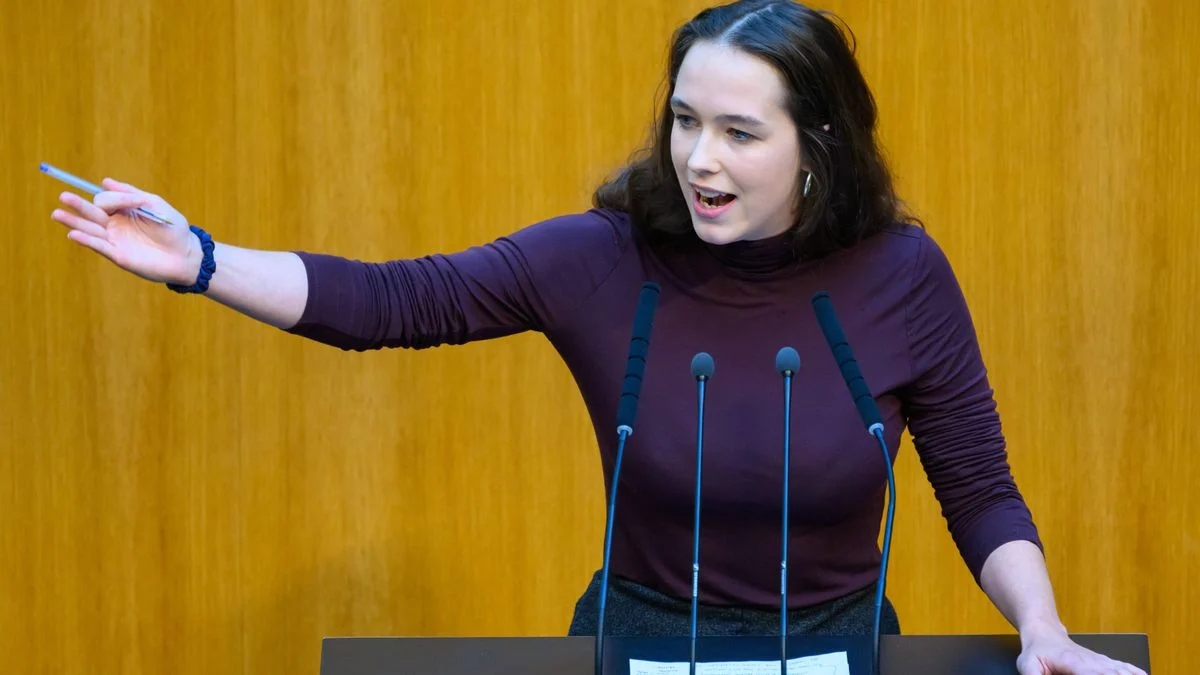
Lena Schilling, a Green Party MEP from Austria and one of the many victims of this digital assault, has become a vocal face of the resistance against this trend. "Man hat uns gegen unseren Willen ausgezogen" (They have stripped us against our will), Schilling stated, highlighting the visceral violation felt by the victims.
The mechanics of these attacks are relatively simple but devastatingly effective. Using "nudifier" applications—AI software trained to remove clothing from images—perpetrators can create hyper-realistic, albeit entirely fabricated, pornographic content. Once these images are uploaded to the dark corners of the internet, they are often disseminated via social media, messaging apps, and specialized forums to humiliate targets and diminish their professional credibility.
Chronology of the Escalation
The normalization of AI-driven digital violence has been a slow-moving disaster that reached a boiling point this week.
- Pre-2026: While AI-generated imagery existed, the technology for high-fidelity "nudification" remained niche. Throughout 2025, anecdotal reports of digital harassment against female politicians increased, though they were often treated as isolated incidents of cyberbullying.
- Early 2026: Brussels launched an investigation into the AI chatbot Grok, hosted on the platform X, following reports that the tool was being used to generate non-consensual imagery. This signaled that the problem had moved from obscure forums to mainstream platforms.
- May 2026: The European Parliament and the Council of the EU reached a milestone agreement to ban "nudifier" apps as part of the broader EU Artificial Intelligence Act.
- September 2026 (Current Week): Agora Digitale Transformation publishes its comprehensive audit, revealing the systematic targeting of 147 MEPs.
- September 30, 2026: 119 MEPs from across the political spectrum—including leaders of the Socialists, Liberals, Greens, and the Left—issue a joint letter to European Commission President Ursula von der Leyen, demanding immediate, concrete enforcement of existing bans.
Supporting Data: The Gendered Nature of Digital Violence
The data provided by the Agora report serves as a chilling indictment of current digital safety standards. According to the study, women in the political arena are 33 times more likely to be targeted by non-consensual AI-generated sexual imagery than their male counterparts.

This phenomenon is part of a broader trend of "technologically facilitated sexual violence" (TFSV). For many women, the threat of such imagery is now a calculated risk of entering public life. "If women have to expect that AI-generated nude images of them will appear as soon as they enter politics and become publicly visible, then we have a democratic problem," Schilling noted.
The psychological impact on the victims is profound. Beyond the initial shock, these women are forced to engage in a grueling game of digital "whack-a-mole." They must identify the source of the imagery, issue takedown requests to platforms that are often uncooperative, and deal with the permanent stain of these images on search engine results. This creates a barrier to entry that disproportionately keeps women out of the halls of power.
Official Responses and the Failure of Paper Legislation
The cross-party coalition of 119 MEPs has made it clear: they have lost patience with performative legislation. Their letter to the European Commission explicitly states, "A ban on paper protects no one, as long as it is not enforced."
The Call for Structural Change
The MEPs are calling for three primary interventions:
- Administrative Resourcing: The signatories argue that the EU must ensure national authorities are fully equipped with the technical expertise and legal mandate to enforce the AI Act when it comes into force in December.
- Platform Accountability: Using the Digital Services Act (DSA), the Commission is urged to force large online platforms and search engines to proactively filter for and remove non-consensual AI imagery. Currently, the burden of reporting lies entirely with the victim; the MEPs want the platforms to bear the cost of detection.
- National Harmonization: The European Parliament is pressuring member states to fast-track the implementation of a 2024 EU directive that criminalizes the creation and dissemination of non-consensual deepfake pornography.
Implications for Democracy
The implications of this scandal extend far beyond the immediate trauma of the 147 affected representatives. If the democratic process is allowed to be corrupted by the fear of digital violation, the composition of future parliaments will shift.
The Deterrence Effect
The fear of being targeted by AI-generated sexual content serves as a powerful deterrent for young women considering a career in politics. As Schilling pointed out, "That cannot become the new normal." If the cost of serving the public is the loss of one’s dignity at the hands of anonymous, AI-powered trolls, many talented individuals will simply opt out.
The Erosion of Truth
Deepfakes do more than harm the individual; they poison the information ecosystem. When the public is conditioned to believe that any image of a politician—no matter how compromising—might be real, it becomes increasingly difficult to distinguish between legitimate scandals and fabricated character assassinations. This "liar’s dividend" allows bad actors to dismiss genuine evidence of wrongdoing as "fake," further destabilizing public discourse.

A Test for the European Commission
The upcoming months will serve as a litmus test for the European Union’s regulatory model. The DSA and the AI Act were designed to make the EU a global leader in digital safety. However, if these laws cannot protect the very people who drafted them from systemic digital violence, their credibility will be shattered.
Looking Forward: A Path to Restoration
As the European Parliament enters the final quarter of 2026, the demand for action is deafening. The coalition of MEPs has made it clear that they expect the Commission to move beyond administrative rhetoric.
"Women want to see results," the letter concludes. This means more than just fines for tech giants; it means a fundamental restructuring of how digital platforms handle non-consensual content. The era of self-regulation for social media companies is effectively over in the eyes of the European Parliament.
The challenge for the EU is to create a digital environment where the protection of human dignity is not an afterthought of innovation, but a primary requirement for participation in the digital age. For the 147 MEPs, and for the countless women across Europe who face similar digital threats in their professional and private lives, the coming legislative enforcement is not just a matter of policy—it is a matter of basic security and the future of their participation in democracy.
The scandal has forced the issue into the spotlight, but the resolution will require sustained political will, aggressive enforcement against tech platforms, and a cultural shift that recognizes AI-generated sexual violence for what it is: an attack on the integrity of our democratic institutions.