

On July 16, 1945, at 5:29 a.m. local time, the trajectory of human history shifted irrevocably. In the remote Jornada del Muerto desert basin of New Mexico, the United States military, under the scientific direction of Robert Oppenheimer, detonated the world’s first nuclear device. The "Trinity" test, as it was codenamed, was the culmination of the Manhattan Project—a clandestine, multi-billion-dollar endeavor that mobilized the greatest scientific minds of the era to harness the power of the atom.
The resulting explosion did not merely destroy a target; it heralded the birth of the Atomic Age, forever altering the geopolitical landscape, the ethics of warfare, and the fundamental relationship between humanity and the natural world.
The Witness Perspective: A Glimpse into the "Ocean of Light"
Among the few who witnessed the dawn of the nuclear era was Joan Hinton, a young physicist who had been working in the laboratories of Los Alamos. Despite official restrictions on who was permitted to be present at the site, Hinton and a companion ventured near the Alamogordo testing grounds on a motorcycle, driven by a mixture of scientific curiosity and youthful defiance.
Her later accounts of the event remain some of the most harrowing descriptions in historical records. She described the immediate sensation of heat searing her skin, followed by a brilliance that was almost impossible to process—a "vast ocean of light" that seemed to engulf her from every direction. The silence of the blast, she noted, was perhaps the most unsettling aspect; the massive mushroom cloud rose into the sky—dark and crimson at its base, illuminated by the sun at its summit—well before the thunderous roar of the shockwave reached her ears.
Chronology of a Cataclysm
The success of the Trinity test was the result of years of meticulous, often agonizing, labor.
- 1942: The Manhattan Project is officially launched under the leadership of General Leslie Groves and J. Robert Oppenheimer. The goal: to develop an atomic weapon before Nazi Germany.
- 1943-1944: Construction of the secret city of Los Alamos, New Mexico, begins. Thousands of scientists, engineers, and military personnel move to the high-desert mesa to solve the complex physics of implosion and fission.
- Early 1945: The "Fat Man" design, a plutonium-implosion device, is finalized.
- July 16, 1945, 5:29 a.m.: The Trinity device is detonated atop a 30-meter steel tower. The explosion releases the energy equivalent of roughly 20,000 tons of TNT.
- August 1945: Less than a month later, similar weaponry is deployed against the Japanese cities of Hiroshima and Nagasaki, leading to the end of World War II and the start of the Cold War.
The Physical Legacy: Trinitite and the Scarred Earth
The force of the Trinity detonation left more than just a psychological scar on the world; it physically transformed the desert floor. The bomb created a crater approximately 1.5 meters deep and 80 meters in diameter.
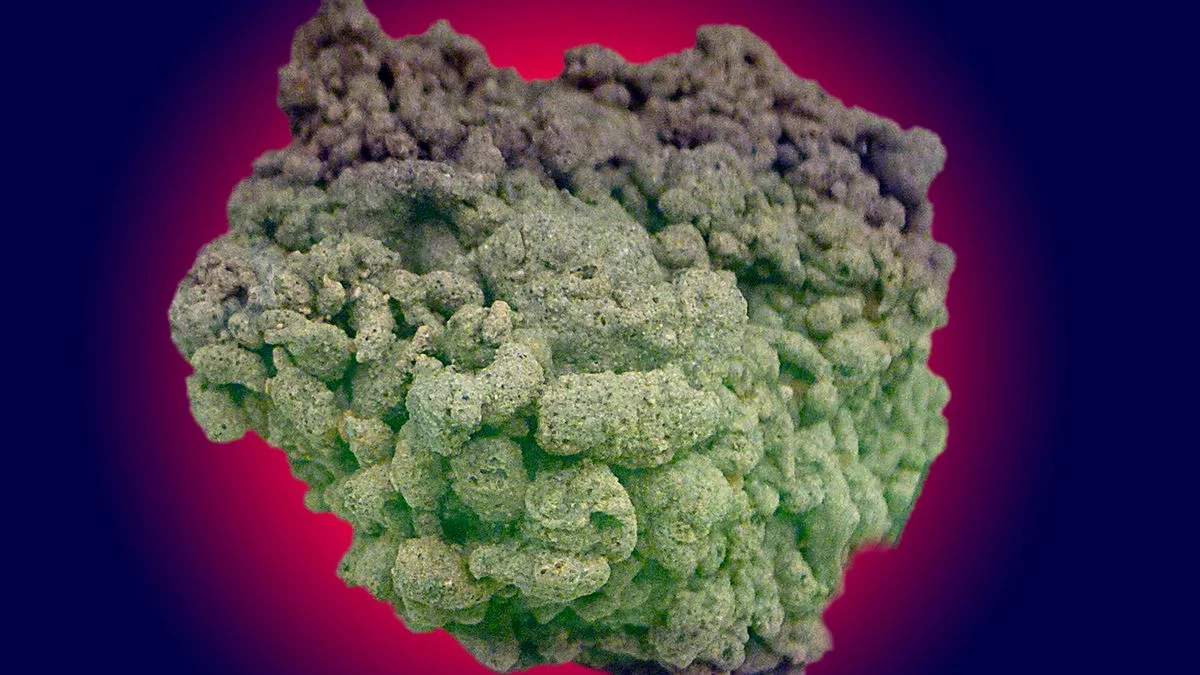
The intense heat of the explosion—estimated to be several thousand degrees Celsius—melted the desert sand, fusing it into a substance now known as "Trinitite." This glassy, often greenish material covers the site of the detonation. While it remains weakly radioactive, it serves as a permanent physical archive of the event. For decades, it was collected as a macabre souvenir by visitors, though the site is now protected and strictly regulated.
Beyond the glass, the blast forced scientists to confront the unintended consequences of their research. The radioactivity released during the test was not fully contained, and researchers continue to study the long-term environmental impact of the fallout on the local ecosystem and the health of the "downwinders"—the populations living in the path of the radioactive debris.

The Scientific and Ethical Dilemma
The scientists at Los Alamos were driven by the fear that Adolf Hitler’s Germany would achieve the atomic bomb first. However, by July 1945, Germany had already surrendered. This prompted a significant internal debate among the researchers: Should the bomb be used against Japan?
Oppenheimer himself famously recalled the words from the Bhagavad Gita upon seeing the test: "Now I am become Death, the destroyer of worlds." This sentiment reflected a growing realization that the genie could not be put back in the bottle. The development of the atomic bomb had transitioned from a necessary wartime project into a permanent existential threat.
The Trinity test demonstrated that the physics of the subatomic world could be weaponized on a scale that rendered traditional warfare obsolete. The transition from chemical explosives to nuclear fission meant that a single device could now level a city. This prompted a frantic, decades-long arms race, as the United States and the Soviet Union scrambled to build arsenals capable of "Mutually Assured Destruction."
Official Responses and Global Implications
The U.S. government’s initial response to the test was one of tactical secrecy. President Harry S. Truman, who was at the Potsdam Conference when he received word of the successful test, viewed the bomb as a "master card" in negotiations with Joseph Stalin. The official narrative at the time emphasized the "successful" nature of the test and the potential to end the war quickly.
However, the international implications were immediate. The Trinity test was the starting gun for the Cold War. It effectively ended the era of traditional European hegemony and initiated a bipolar world order defined by nuclear deterrence.
In the decades that followed, the legacy of Trinity became a centerpiece of international law and diplomacy. The creation of the International Atomic Energy Agency (IAEA) and various non-proliferation treaties were direct reactions to the terrifying potential revealed in the New Mexico desert. The fear instilled on that July morning in 1945 remains a cornerstone of international relations today.
Conclusion: The Unending Shadow of Trinity
As we look back at the events of 1945, the Trinity test stands as the definitive marker of the Anthropocene—the epoch in which human activity became the dominant influence on the climate and the environment. The desert sand, fused into glass by the power of the atom, serves as a warning of our capacity for both innovation and destruction.
The story of Joan Hinton on her motorcycle, looking out over an "ocean of light," is not just a historical anecdote; it is a reflection of the human condition in the 20th and 21st centuries. We are a species that has learned to unlock the most fundamental secrets of the universe, but we remain, as we were in 1945, struggling to master the wisdom required to live with the consequences of that knowledge. The legacy of Trinity is not just the memory of a blast, but the ongoing challenge of ensuring that the dawn of the Atomic Age does not become the sunset of human civilization.








Leave a Reply