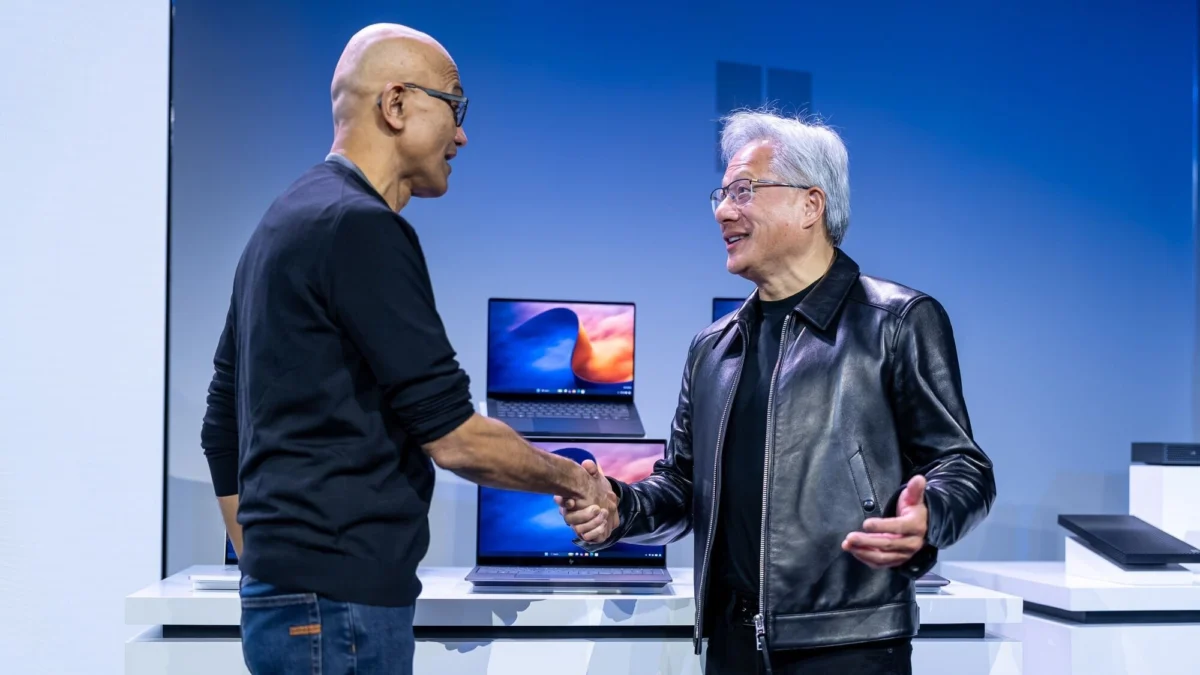
In a landmark collaboration that signals a seismic shift in the personal computing landscape, tech titans Microsoft and Nvidia have taken the stage in San Francisco to unveil a product that promises to redefine the boundaries of artificial intelligence: the “Surface Ultra.”
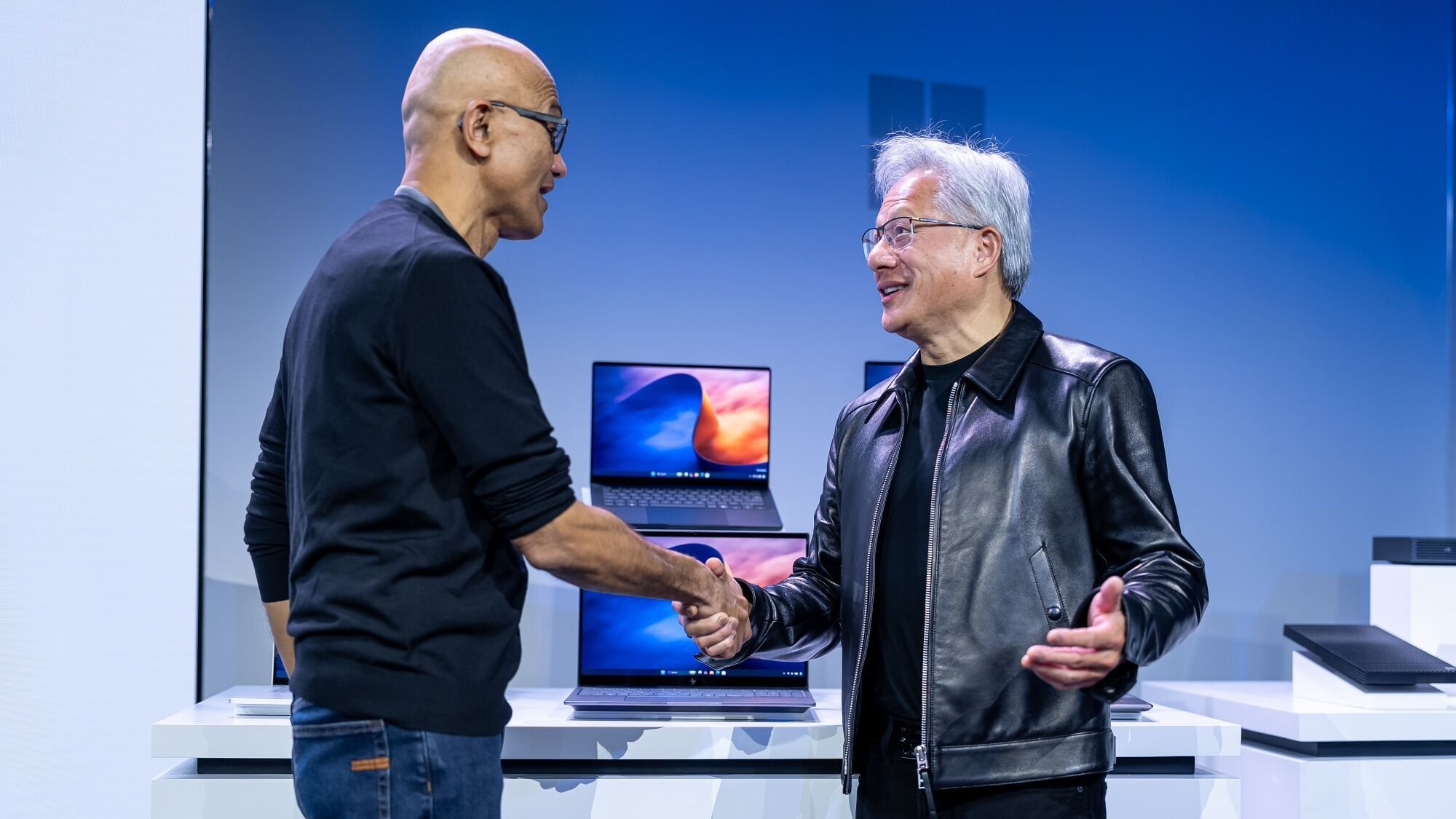
The joint presentation, led by Microsoft CEO Satya Nadella and Nvidia CEO Jensen Huang, was more than a hardware launch. It was a strategic declaration of independence from the cloud-reliant architecture that has defined the generative AI era thus far. With a combined market capitalization of approximately $9.5 trillion, the two companies are positioning the Surface Ultra as the cornerstone of a new era of “Hybrid Intelligence,” where high-stakes AI computations are performed locally on the device, independent of an active internet connection.
The Core Concept: Localized Intelligence
The central innovation of the Surface Ultra lies in its integration of Nvidia’s proprietary “RTX Spark” architecture. While traditional laptops rely on cloud-based servers to process complex AI tasks—a process that introduces latency, security vulnerabilities, and data privacy concerns—the Surface Ultra is designed to handle these workloads on-device.
By leveraging the sheer processing power of the RTX Spark chip, Microsoft is effectively transforming Windows 11 into a native platform for “AI Agents.” These are not merely chatbots or search assistants; they are sophisticated, automated programs capable of executing complex business workflows, writing and debugging software code, and managing multi-faceted projects with minimal human intervention.
“We are building the most secure platform for agents,” stated Satya Nadella during the keynote. His emphasis on security is deliberate. In the corporate sector, the transmission of proprietary data to the cloud is a primary barrier to the adoption of generative AI. By keeping the processing local, Microsoft is betting that enterprises will feel more comfortable integrating AI deeply into their operational structures.
A New Chronology of Innovation
To understand the significance of this launch, one must look at the rapid evolution of the partnership between Redmond and Santa Clara.

- Late 2023 – Early 2024: Microsoft and Nvidia intensify their cooperation, focusing on data center infrastructure to power Azure’s massive AI needs.
- Mid-2024: Rumors emerge of a “Project Spark,” a clandestine effort to bring high-end GPU power to mobile form factors without the traditional thermal limitations of standard laptop hardware.
- October 2026: The official unveiling of the Surface Ultra. The event serves as the public debut of the “RTX Spark” chip, representing a breakthrough in power-to-thermal efficiency for silicon.
- Post-Launch Strategy: Microsoft outlines a roadmap for “Agent-First Windows,” where AI-driven task management becomes the default user experience for business users by Q3 2027.
Technical Performance and Market Positioning
The Surface Ultra is not a budget device; it is a high-performance machine aimed squarely at the professional and enterprise markets. Microsoft’s internal benchmarks, shared during the presentation, paint a compelling picture of dominance.
According to company data, the Surface Ultra handles local queries to large language models (LLMs) at speeds twice as fast as the current industry leader, Apple’s MacBook Pro M5. Perhaps more impressively, the device’s capability for local video generation and complex rendering tasks is reportedly six times faster than the Cupertino-based competitor.
Jensen Huang, ever the showman, summarized the shift succinctly: “We have completely reinvented the personal computer. It is no longer just a window to the internet; it is a cognitive partner that works even when you are disconnected from the grid.”
Technical Specifications Summary
- Processor: Custom Nvidia RTX Spark Architecture (optimized for neural processing).
- Operating System: Windows 11 (Agent-ready distribution).
- Primary Capability: Offline, secure local AI agent execution.
- Target Demographic: Enterprise architects, software engineers, data scientists, and creative professionals.
Industry Implications: The War for the Desktop
The move is a direct challenge to Apple’s Silicon strategy, which has focused heavily on unified memory architecture and power efficiency. By partnering with Nvidia, Microsoft has successfully leapfrogged the traditional x86-vs-ARM debate by introducing a third variable: the dedicated AI-silicon co-processor.
1. The Decline of Cloud-Dependence
For years, the industry narrative has been that “the cloud is the computer.” The Surface Ultra challenges this by arguing that for privacy-sensitive and latency-critical tasks, the local machine is superior. This could force a re-evaluation of data privacy regulations and corporate IT policies, which have been overly focused on cloud-gating.
2. The Rise of the “Agentic” Workforce
Microsoft’s vision is that users will soon stop “using” apps and start “delegating” tasks. An AI agent on a Surface Ultra could theoretically monitor an entire project board, draft responses, run code tests, and organize scheduling without the user needing to open a single application window. This represents a fundamental shift in the UI/UX paradigm of the modern workplace.

3. Security as a Competitive Moat
By emphasizing local processing, Microsoft is positioning the Surface Ultra as the safest computer in the world for sensitive data. In an era where AI hallucinations and data leakage are primary concerns, the ability to “air-gap” an AI workload is a massive selling point for government, defense, and high-security financial sectors.
Official Responses and Expert Analysis
Industry analysts have responded with cautious optimism, acknowledging the technical prowess of the device while noting the high price point.
“Microsoft and Nvidia have essentially created a mobile workstation for the AI era,” says tech analyst Dr. Elena Vance. “The question is not whether the performance is there—it clearly is. The question is whether the software ecosystem for these ‘agents’ will mature quickly enough to justify the price premium.”

Microsoft representatives have been quick to point out that the Surface Ultra is not meant to replace the entire Surface lineup, but rather to act as the “North Star” for what Windows hardware can achieve in the next decade.
Challenges Ahead: Energy and Adoption
Despite the fanfare, significant hurdles remain. The first is thermal management. Despite the efficiency of the RTX Spark chip, running high-intensity AI models locally consumes significant power. While the Surface Ultra features advanced cooling technology, critics point out that battery life under heavy "agent" workloads remains an unproven variable.
Secondly, there is the issue of software support. While Microsoft is providing the framework, the success of the “Agent” concept relies on third-party developers creating agents that can reliably operate on local hardware. If developers continue to prioritize cloud-based API calls, the Surface Ultra’s greatest advantage—local processing—could remain underutilized.

Conclusion: The Path Forward
The unveiling of the Surface Ultra marks a departure from the “thin and light” trend of the last decade, moving toward a “powerful and autonomous” future. By merging Microsoft’s software dominance with Nvidia’s hardware superiority, the two companies have created a machine that feels like a glimpse into the late 2020s.
As users begin to move away from manually clicking through interfaces and toward a model of interacting with autonomous digital agents, the hardware that hosts these agents will become the most important real estate in the tech industry. With the Surface Ultra, Microsoft and Nvidia have secured their claim to that ground.
Whether this marks the “end of the PC as we know it” or merely a high-end niche for power users, the message from San Francisco is clear: The future of artificial intelligence is not just in the cloud—it’s on your desk.