By Investigative Journalism Desk
Updated: June 21, 2026
The FIFA World Cup stands as the pinnacle of global sport—a month-long festival of human endurance, tactical brilliance, and unparalleled drama. Yet, behind the roar of the stadiums and the gloss of the marketing campaigns, a persistent, uncomfortable question lingers: Is the world’s most popular sport truly clean, or is it merely protected by a system that refuses to look too closely?
While FIFA consistently touts its anti-doping initiatives as "some of the most comprehensive programs in the history of the game," leading experts and anti-doping veterans are sounding the alarm. They argue that the football governing body’s approach to performance-enhancing drugs (PEDs) is characterized by a lack of transparency, insufficient testing frequency, and an institutional aversion to scandal that borders on negligence.
The Statistical Impossibility: A Legacy of "Cleanliness"
The most glaring anomaly in football is not a specific drug test, but the lack of them. Since the inception of drug testing at the 1966 World Cup in England, there have been exactly three documented doping cases during a final tournament. Ernst Jean-Joseph (Haiti, 1974) was caught with ephedrine; Willie Johnston (Scotland, 1978) tested positive for a prohibited stimulant; and Diego Maradona (Argentina, 1994) provided a sample containing a "cocktail" of substances.
For over 30 years, the World Cup has been, by official records, a pristine environment. To Richard W. Pound, the founding president of the World Anti-Doping Agency (WADA), this is not a triumph of clean sport—it is a statistical absurdity.
"I have no other explanation than that FIFA simply does not want the World Cup to be brought into disrepute by doping cases," Pound stated in an exclusive interview. "To suggest that in a multi-billion dollar, high-stakes global sport, there has not been a single doping violation in three decades… I’m sorry, but that is simply not credible."
For perspective, consider the World Athletics Championships. While held every two years compared to football’s four-year cycle, the track and field governing body has recorded over 160 doping violations in a similar timeframe. At the most recent World Athletics Championships in Budapest, officials conducted 550 tests. In contrast, during the 2022 World Cup in Qatar, FIFA conducted 369 tests—a figure that many experts find strikingly low given the physical demands of modern football.
The Modern Football Myth: Why Doping "Doesn’t Work"
A common refrain among football traditionalists is that "doping doesn’t help in a sport as complex as football." This narrative suggests that because football requires technical skill, tactical awareness, and teamwork, steroids or blood boosters are irrelevant.
Lars Mortsiefer, head of the National Anti-Doping Agency of Germany (NADA), rejects this entirely. "Doping in football is fundamentally just as plausible as in any other sport," he says. Modern football is a game of high-intensity aerobic and anaerobic output. Data points such as total distance covered, high-speed running, and the sheer volume of sprints per match are critical performance indicators that can be significantly enhanced through pharmacological intervention. To claim that performance-enhancing substances have no place in a game that has become increasingly defined by physical output is to ignore the reality of modern sports science.
Analyzing the Data: A 0.09 Percent Hit Rate
Beyond the World Cup, the global anti-doping work of FIFA appears equally lethargic. Data from WADA’s public statistics between 2013 and 2023 shows that out of approximately 40,000 tests conducted by the global football body, only 36 resulted in doping violations.
This translates to a hit rate of 0.09 percent. For context, the average positive test rate across all sports monitored by WADA sits at approximately 0.6 percent. FIFA is operating in a different, far cleaner reality—or, as critics suggest, they are simply failing to catch the cheaters.
"I believe the controls managed by FIFA are not targeted enough and do not exhaust the potential for analysis," Mortsiefer argues. "Other associations are significantly further ahead."
One of the most glaring failures is the under-utilization of EPO (Erythropoietin) testing. EPO, a substance that boosts endurance by increasing red blood cell production, is a gold standard in endurance sports doping. Under current WADA minimum requirements, only one in ten tests in football is required to screen for EPO.
The case of Mario Vušković, the Croatian defender who tested positive for EPO while playing for Hamburger SV, serves as a grim reminder of what is possible. Without that positive test, Vušković would almost certainly have been a key player for his nation in the current World Cup cycle. Experts like Mortsiefer emphasize that a body with FIFA’s immense financial resources should be leading the way in cutting-edge analysis, not performing the bare minimum.
Institutional Opacity: The "FIFA Way"
When questioned about their anti-doping strategies for the current tournament, FIFA remains notoriously tight-lipped. The organization declined interview requests regarding the specific nature, frequency, and quality of their testing procedures. In a brief statement, FIFA promised "one of the most extensive anti-doping programs in the history of the game," while noting that they would provide more details "towards the end" of the tournament.
This "wait and see" approach is characteristic of an organization that, according to Richard Pound, keeps all its cards close to its chest. Unlike the International Olympic Committee (IOC) or organizations like World Athletics, FIFA maintains near-total control over its own anti-doping management.
"It is their sport, their institution, their tournament," says Pound. "They own everything, and they apparently cannot tolerate anyone from the outside telling them what to do."
Perhaps the most troubling aspect of FIFA’s regulations is the lack of mandatory public disclosure during the tournament. If a player were to test positive today, FIFA is under no obligation to inform the public until a full legal process is completed—a process that can take months or even years. As stated in their own regulations: "In the case of a player controlled by FIFA, only FIFA has the right to publish the test results and corresponding measures."
Case Study: The "Papu" Gomez Precedent
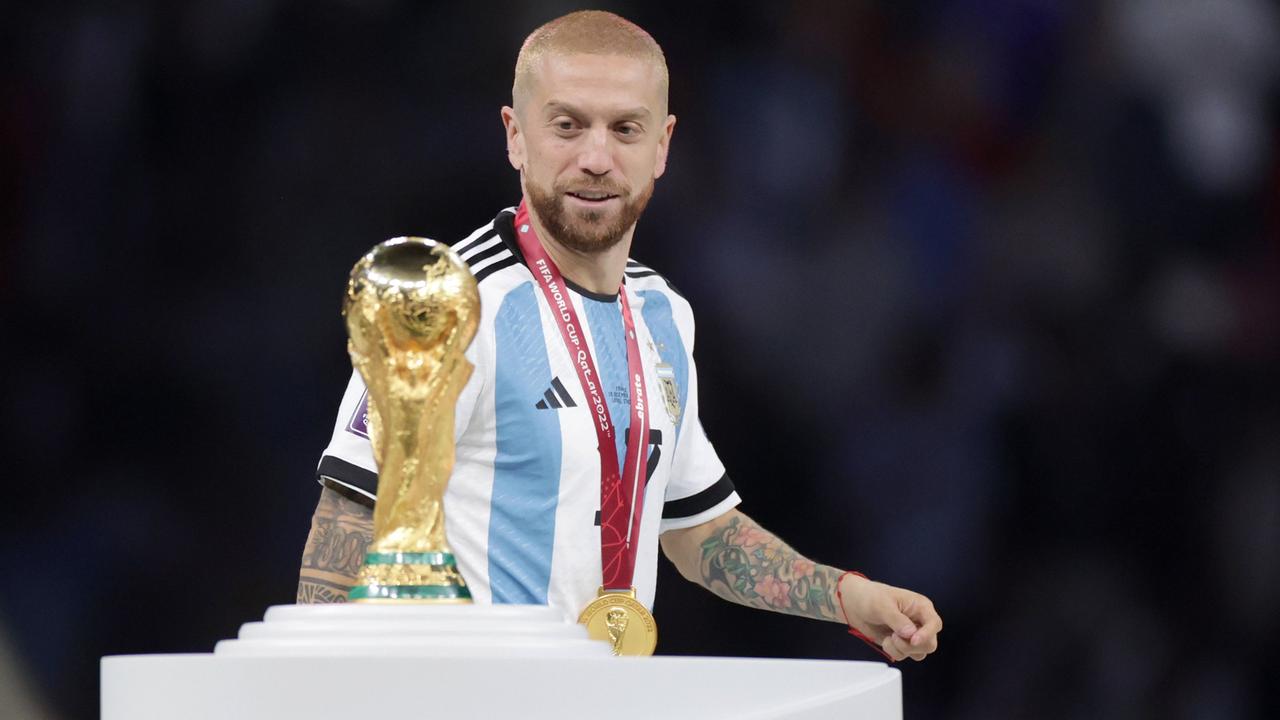
The 2022 World Cup in Qatar highlighted the dangers of this lack of transparency. Argentine attacker Alejandro "Papu" Gomez was part of the squad that lifted the trophy. Yet, it was later revealed that four weeks before the tournament, Gomez had tested positive for the prohibited substance terbutaline during a control conducted by the Spanish Anti-Doping Agency (CELAD).
Because the substance was not on the immediate "banned under any circumstances" list that triggers automatic provisional suspensions, Gomez was allowed to continue his career. Neither FIFA nor CELAD offered a transparent explanation as to why he was permitted to play in the World Cup while a doping investigation was looming. Gomez played in a group stage match and a Round of 16 game before his eventual two-year ban was made public in October 2023—nearly a year after the tournament. The fact that a player with a positive test could influence the outcome of the world’s most prestigious event without the public’s knowledge remains a stain on the integrity of that cycle.
The Pogba Connection and the Influence of "Fitness Gurus"
The case of Paul Pogba also raises questions about the intersection of football and external "health" industries. After testing positive for DHEA, Pogba successfully argued to the Court of Arbitration for Sport (CAS) that he acted in "good faith" on the advice of a doctor associated with the "10X Health System," a firm founded by fitness influencer Gary Brecka.
While Pogba’s suspension was reduced from four years to 18 months, the case highlights how elite athletes are increasingly turning to private, unregulated wellness companies for supplements and treatments. The U.S. Anti-Doping Agency (USADA) has remained notably quiet regarding whether they have investigated the practices of such companies, despite their headquarters being located in the very cities that host World Cup matches.
The Road Ahead: Transparency or Stagnation?
As the current tournament unfolds, the world watches the pitch with a mixture of awe and skepticism. Are the performances we see the result of pure talent and grueling training, or is there a sophisticated pharmacological element hidden behind the curtain of FIFA’s opaque bureaucracy?
Richard Pound remains pessimistic about the possibility of change from within. "A good sign for me would be if FIFA simply became more transparent," he notes. Until then, the "Beautiful Game" must contend with the fact that its greatest tournament is also its least scrutinized.
For the fans, the hope is for the thrill of the goal. For the integrity of the sport, however, the hope must be for a system that values the truth over the image—even if that truth is uncomfortable. As long as FIFA continues to act as both the referee and the gatekeeper, the shadow of doubt will remain, waiting for the day when the next "clean" record is finally, inevitably, broken.