The unveiling of the 114th Tour de France route in Paris has sent a clear signal to the cycling world: the 2027 edition is a tribute to the "complete" rider. Spanning from July 2 to July 25, the race promises a grueling test of endurance, balancing historical reverence with modern tactical complexity. With a total of 53,450 meters of vertical gain over 3,479 kilometers, race director Christian Prudhomme has crafted a course that refuses to favor one specific archetype, instead demanding excellence in time-trialing, climbing, and explosive punchiness.
The Grand Départ: A British Odyssey
The 2027 Tour breaks from its traditional mainland start, choosing instead to pay homage to the passionate cycling culture of the United Kingdom. The Grand Départ will commence in the historic Scottish capital of Edinburgh on Friday, July 2. This early start, a strategic decision to accommodate the logistical requirements of the opening stages, signals a high-intensity beginning.
The peloton will navigate three distinct stages through Scotland, England, and Wales. From Edinburgh, the riders will head to Carlisle, followed by stages ending in Liverpool and the Welsh capital, Cardiff. This opening weekend is far from a simple procession for the sprinters; with approximately 2,000 meters of climbing on the opening day alone, the peloton will be tested immediately. "These are days where the sprinters must suffer," noted cycling legend and 14-time Tour stage winner Marcel Kittel. "It isn’t a walk in the park, but it is an opportunity for a versatile sprinter to pull on the first Yellow Jersey of the race."
Following the intense opening in Britain, the race will witness an unusually early first rest day on Monday, July 5, allowing the riders to recover before the brutal transition to the French mainland.
A Chronological Breakdown of the 2027 Route
The 2027 parcours is a masterpiece of distribution, featuring seven flat stages, six hilly stages, six mountain stages (including three summit finishes), and two pivotal individual time trials.
The Opening Week: The Battle for Seconds
The early stages are designed to keep the general classification (GC) contenders on high alert. The transition from the UK to the Normandy region sets the stage for a series of unpredictable battles. The first nine days are meticulously structured to encourage frequent shifts in the leadership, with terrain that remains open to tactical maneuvering. By the time the riders reach the Jura mountains for the ninth stage, the leaderboard will likely be in a state of flux.
The Mountain Tests: Grand Colombier to the Pyrenees
The high mountains of the 2027 Tour are concentrated into a series of punishing blocks. The first major summit finish occurs on Stage 9 at the Grand Colombier, a climb that has become a modern classic. Following this, the race heads into the Alps. Stage 11 marks a historic milestone for the race, featuring the first-ever summit finish at Les Saisies, an ascent that promises to redraw the GC landscape.
The final week shifts the focus to the Pyrenees. Stage 18 serves as the undisputed "Queen Stage." Spanning 174 kilometers and featuring a staggering 5,450 meters of climbing, the route traverses the iconic Col du Tourmalet before concluding with a brutal 16-kilometer final ascent to the Col du Portet. This stage is expected to be the final crucible where the champion of the 114th Tour is forged.
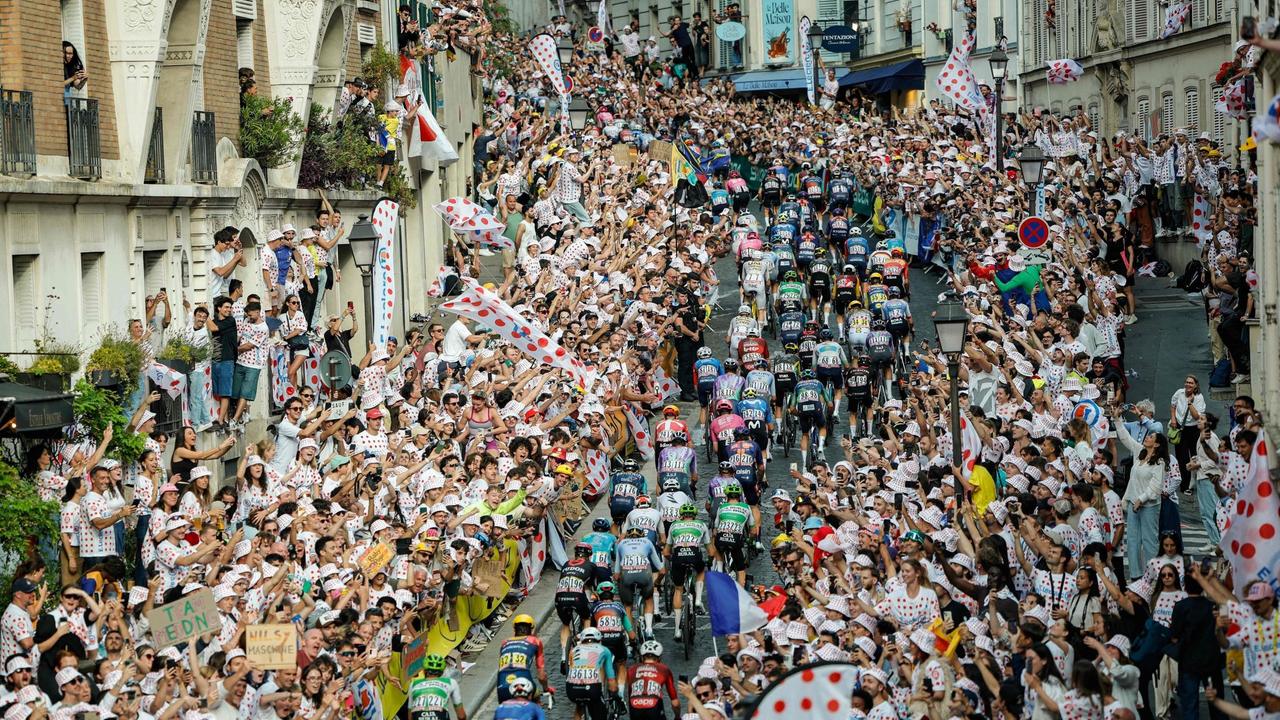
The Grand Finale: The Return of Montmartre
In a nod to the spectacular finishes of 2025 and 2026, the 2027 Tour will conclude in Paris with a finale that includes three ascents of the Butte de Montmartre. This unconventional finish has transformed the traditional "procession to the Champs-Élysées" into a tactical thriller. By forcing the peloton to navigate the short, sharp climb of the Parisian landmark, race organizers have ensured that the final day is as much about tactical aggression as it is about celebration.
Strategic Implications: The Return of the Time Trialist
One of the most notable features of the 2027 route is the return of significant time-trial mileage. With 71 kilometers against the clock—the most since 2012—the route heavily rewards specialists like Remco Evenepoel. The presence of two individual time trials (Stage 7 in the Loire Valley and Stage 16 in Toulouse) effectively forces the pure mountain climbers to attack with greater urgency in the high peaks.
For a rider like Tadej Pogačar, who enters the 2027 season as the three-time defending champion, this route is perfectly suited to his multifaceted skillset. The 28-year-old Slovenian is poised to chase his sixth overall title, a feat that would cement his status as the greatest rider in the history of the Tour de France. However, the shadow of uncertainty looms over the German camp; with Florian Lipowitz coming off a difficult 2026 season marred by injury, the team’s strategy remains fluid, with the Giro d’Italia being weighed as a potential alternative.
Official Perspectives and Expert Analysis
Tour de France director Christian Prudhomme has been vocal about his desire to keep the race unpredictable. "The first ten days are designed to allow for a constant changing of the jerseys," Prudhomme stated during the presentation in Paris. "The terrain is left open, and the lack of a dominant, singular mountain block allows for different styles of racing to flourish."
Cycling analysts have praised the balance of the route. By integrating the long time-trial kilometers with the punishing final-week Pyrenean stages, the organizers have effectively neutralized any single-style dominance. The inclusion of the Montmartre circuit further highlights the shift toward "spectacle-based" route design, ensuring that even the final stage retains a competitive edge.
Statistical Overview: A Quantitative Look at the 2027 Tour
To understand the sheer scale of the 2027 challenge, one must look at the data:
- Total Distance: 3,479 km
- Total Elevation: 53,450 m
- Time Trial Kilometers: 71 km (across 2 stages)
- Mountain Stages: 6 (with 3 summit finishes)
- Rest Days: 2
| Stage | Start/Finish | Length (km) |
|---|---|---|
| 1 | Edinburgh – Carlisle | 184 |
| 7 | Blois – Chambord (ITT) | 38 |
| 9 | Villars-les-Dombes – Grand Colombier | 162 |
| 16 | Toulouse – Toulouse (ITT) | 33 |
| 18 | Pau – Col du Portet | 174 |
| 21 | Saint-Quentin-en-Yvelines – Paris | 116 |
Conclusion: The Ultimate Test of Versatility
The 2027 Tour de France is a race defined by its refusal to compromise. It demands that the winner be a master of all terrains—a rider who can hold their own against the wind on the flats of England, maintain a steady rhythm in the flat-out intensity of the time trials, and survive the absolute brutality of the Pyrenean giants.
As the cycling world turns its eyes toward the summer of 2027, the narrative is already clear: the path to the Yellow Jersey in Paris has never been more complex. With the legacy of Pogačar at stake and a new generation of challengers eager to dismantle his reign, the 114th edition of the world’s greatest bike race is set to be a seminal moment in sporting history. Whether it is the tactical intrigue of the early stages or the high-altitude dramas of the final week, the 2027 Tour promises to deliver everything that makes cycling the most demanding and beautiful sport on the planet.