


Portadown, Northern Ireland – September 27, 2026 – A volatile standoff has erupted in Portadown, Northern Ireland, as thousands of residents, including the region’s First Minister, have converged to block a contentious parade by the Protestant Orange Order. The planned march through the Garvaghy Road, a historically sensitive and predominantly Catholic area, has reignited deep-seated sectarian tensions, threatening to derail fragile peace efforts and recall the darkest days of the Troubles.
The confrontation stems from a controversial decision by the Parades Commission to grant the Orange Order permission to traverse the Garvaghy Road, a route denied to the organization for nearly three decades. This decision, perceived by many in the Catholic community as a provocative act, has been met with fierce resistance, manifesting in a mass blockade of the road, with demonstrators vowing to prevent the parade from proceeding. The echoes of past violent confrontations on this very street resonate strongly, casting a long shadow over the current impasse.
The Spark: A Controversial Parade Route
The heart of the current crisis lies in the Orange Order’s long-standing desire to march along the Garvaghy Road. Historically, this route has been a flashpoint for sectarian strife. In the late 1990s, the Drumcree standoffs, centered around the Garvaghy Road, became emblematic of the deep divisions and violent clashes that characterized the Troubles. For 28 years, following intense unrest, the Parades Commission had prohibited marches by the Orange Order along this particular stretch, a tacit acknowledgement of the road’s potent symbolism and the risk of renewed conflict.
However, this year marked a significant departure. The Parades Commission, in a move that has been widely condemned by nationalist communities and leaders, granted the Orange Order permission to proceed. This decision, reportedly made after legal challenges by residents to prevent the march were unsuccessful, has been interpreted by many as a deliberate provocation, ignoring the historical context and the potential for significant unrest.
A Community United in Opposition
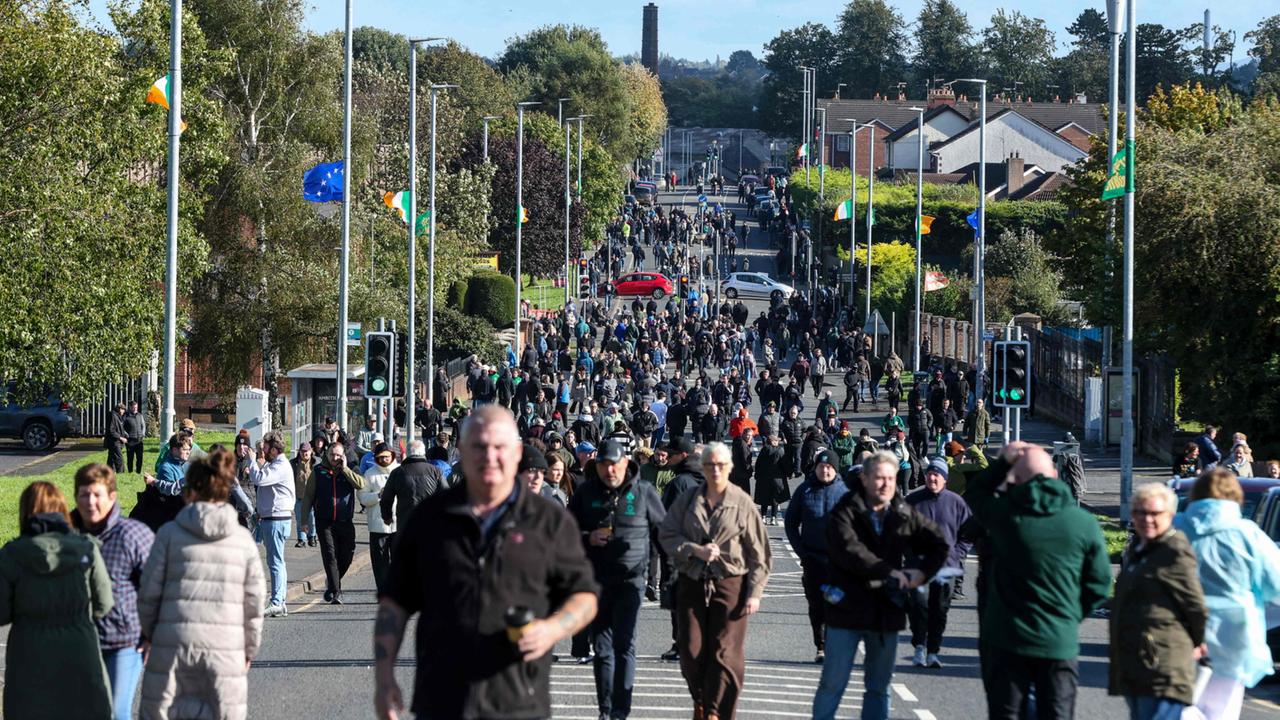
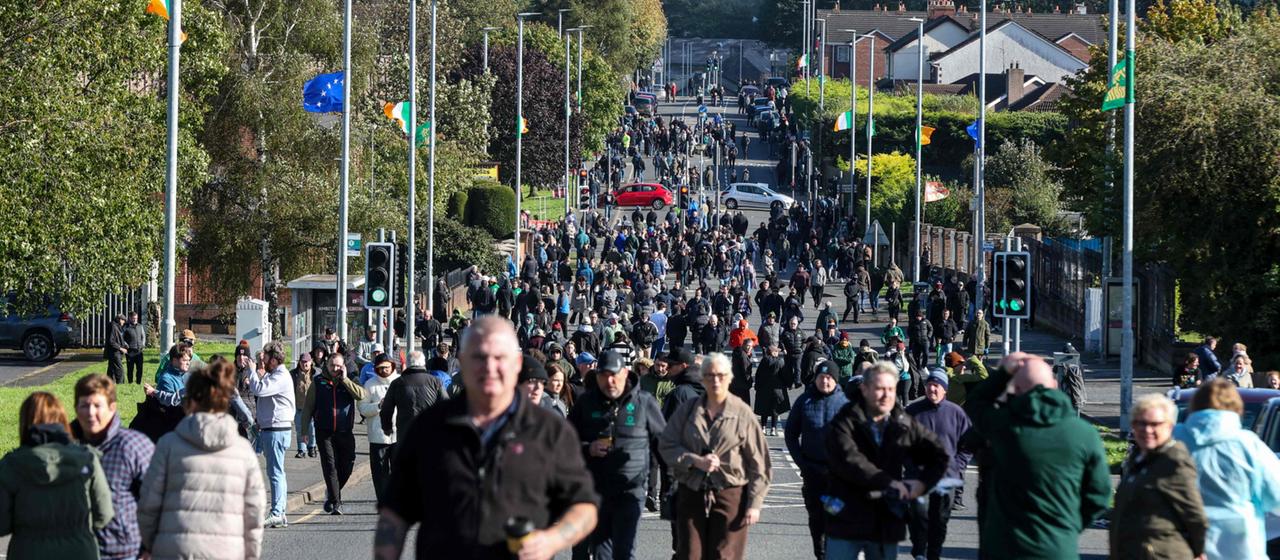
The response from the local community has been swift and resolute. As dawn broke, thousands of residents, undeterred by the persistent rain and the early hour, had already established a formidable blockade on the Garvaghy Road. The sheer scale of the demonstration underscores the depth of feeling and the unified opposition to the parade.
Among the protestors was Northern Ireland’s First Minister, Michelle O’Neill, a prominent figure from the Irish nationalist party Sinn Féin. Her presence at the forefront of the demonstration sent a powerful message, signaling the government’s solidarity with the community’s concerns. O’Neill articulated a clear stance, emphasizing the importance of building on peace and progress, and rejecting any attempts to force a march against the will of the local populace.
"Our focus is on building on peace and our progress, and not allowing anyone to drag us back," O’Neill stated emphatically. "My gaze is firmly fixed on the future. But I tell you this, what has absolutely no place in our community is a march that is forced through against the wishes of this community. That will not be tolerated anywhere." Her words resonated with the protestors, highlighting the broader implications of the parade dispute for the future of Northern Ireland.
Echoes of the Past: Garvaghy Road’s Tumultuous History
The Garvaghy Road is not merely a street; it is a historical battleground steeped in the trauma of the Troubles. In the late 1990s, this road was the epicenter of violent confrontations between Catholic, Irish Republican sympathizers and Protestant, British Unionist loyalists. The Drumcree parades, particularly the events of 1997 and 1998, became synonymous with sectarian conflict, drawing international attention to the enduring divisions in Northern Ireland.
These parades, organized by groups like the Orange Order, are deeply rooted in the Protestant community’s cultural and historical identity, often celebrating Protestant heritage and the Glorious Revolution of 1688. For many in the Catholic and Nationalist community, however, these marches through their neighborhoods are seen as triumphalist displays of dominance and a painful reminder of past oppression. The denial of passage along the Garvaghy Road was a hard-won concession, a fragile peace dividend that many now fear is being eroded.
The decision to grant the parade permission this year has been met with disbelief and anger, with many questioning the rationale behind a decision that appears to disregard the lessons of history and the potential for renewed violence.
Unionist Response and Accusations of "Fearmongering"
The escalating tensions have also drawn sharp reactions from the Unionist community and its political representatives. DUP MLA Jonathan Buckley, a prominent Unionist politician, has accused Sinn Féin and, by extension, First Minister O’Neill, of deliberately stoking fear and creating a climate of panic.
"The Orange Order will abide by the law. Now it is up to others, in high political office, to demonstrate their competence in matters of law and order," Buckley stated, framing the situation as a test of governance. He suggested that the nationalist community’s opposition was being amplified by political leaders for their own gain.
Members and MPs from the DUP have also traveled to Portadown, lending their support to the Unionist position. The political rhetoric surrounding the dispute underscores the deeply entrenched sectarian divide, with each side accusing the other of exacerbating the situation.
Official Calls for Calm and De-escalation
In an attempt to defuse the volatile situation, senior political figures from both the UK and Ireland have issued urgent appeals for calm and restraint. Chris Bryant, the British Minister for Northern Ireland, who is responsible for overseeing relations between London and Belfast, implored politicians from all sides to temper their language and actions.
"I say to every single politician, whatever their background: Please, please, please, moderate your language, moderate everything you do by ten percent, by twenty percent. Just be calm and think about the impact of your words on others," Bryant urged, highlighting the critical role of political leadership in preventing further escalation.
The sentiment was echoed by UK Prime Minister Andy Burnham and Irish Prime Minister Micheál Martin. Martin, in particular, described the Parades Commission’s decision to allow the Orange Order route after 28 years as "incomprehensible and wrong," signaling a clear divergence from the commission’s ruling and a recognition of the deep-seated concerns within the nationalist community.
Policing Dilemma: Negotiation Over Confrontation
The role of the Police Service of Northern Ireland (PSNI) in this unfolding crisis is particularly sensitive. Faced with a determined and massive blockade, the police are in a precarious position. Unlike in the mid-1990s, when forceful evictions of protestors were a common tactic, the PSNI appears to be adopting a more restrained approach, prioritizing negotiation and de-escalation.
"The police officers are absolutely not prepared to copy the old tactic and forcibly remove the residents and their supporters from the road, as was the case in the mid-1990s," commented Mark Devenport, a former BBC correspondent with extensive experience covering the Northern Ireland peace process. "Instead, they have tried to negotiate." This shift in policing strategy reflects a broader evolution in security approaches in Northern Ireland, aiming to avoid the kind of heavy-handed tactics that often inflamed tensions in the past.
However, the protestors on the Garvaghy Road have shown no inclination to yield. Despite repeated appeals from the police, the blockade remains firmly in place, a testament to the community’s unwavering resolve. The situation remains a delicate balancing act for the PSNI, tasked with maintaining order without resorting to actions that could reignite widespread violence.
Broader Implications: A Test for the Peace Process
The events in Portadown are far more than a localized dispute over a parade route. They represent a significant test for the enduring peace process in Northern Ireland. The fragile power-sharing arrangements, the ongoing efforts to address historical grievances, and the very fabric of sectarian relations are all being scrutinized in the wake of this confrontation.
The decision by the Parades Commission, regardless of its legal justification, has undoubtedly stoked anxieties and re-opened old wounds. It raises crucial questions about how sensitive historical issues are managed and whether sufficient weight is given to community consent and the lessons of the past.
The coming days and weeks will be critical in determining whether this dispute can be resolved peacefully. The calls for calm from political leaders, the restrained approach of the police, and the continued determination of the protestors all point to a complex and deeply challenging situation. The hope is that cooler heads will prevail, and that the hard-won peace in Northern Ireland will not be fractured by the echoes of past conflicts. The eyes of the nation, and indeed the world, are on Portadown, as it navigates this latest, deeply unsettling, chapter in its history. The resolve shown by the residents of Garvaghy Road, united in their opposition, serves as a potent reminder of the ongoing journey towards reconciliation and the challenges that still lie ahead.






