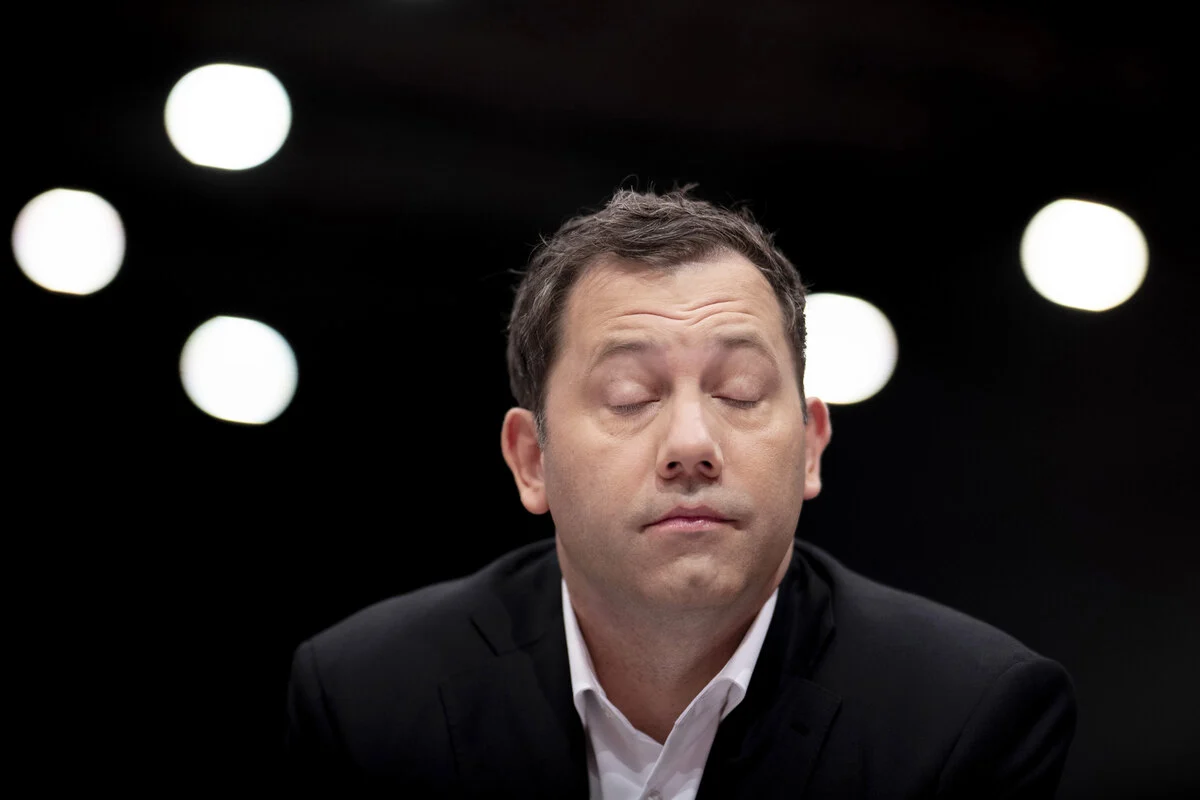
"At the party conference, we cannot walk through the ranks of our delegates, campaign for Lars – and guarantee that he will be elected," warned a prominent NRW comrade, encapsulating the profound dissatisfaction gripping the party’s largest state association. With approximately 80,000 members, the NRW-SPD commands nearly a quarter of the delegate votes, granting it immense power to shape the party’s future direction and leadership. The impending federal party conference, scheduled for January 16 and 17 in Bremen, is therefore poised to become a decisive battleground for the party’s soul, with Klingbeil’s continued leadership far from assured.
A Party in Turmoil: Bas’s Reported Resignation Ignites NRW-SPD’s Fury
The political landscape within the Social Democratic Party has been significantly altered by the reported departure of Bärbel Bas, a move that has sent shockwaves through the party ranks, particularly within the powerful North Rhine-Westphalian (NRW) contingent. Bas, who according to reports held the dual portfolios of Federal Minister of Labour and co-chair of the SPD, reportedly cited profound personal grief over the death of her stepdaughter, coupled with "public attacks on me, unfortunately also from the ranks of the coalition partner," as the reasons for her stepping down. This sudden exit has not only created an immediate vacuum but has also served as a catalyst for long-simmering resentments and strategic anxieties, primarily directed at the remaining federal co-chairman, Lars Klingbeil.
The anger emanating from NRW is palpable and multifaceted. It stems from a perception that Klingbeil’s leadership has failed to adequately protect party figures from external assaults and has overseen a period of declining influence for the party’s most populous and historically significant regional branch. The direct challenge to Klingbeil’s electability, as articulated by a leading NRW "Genosse," is a stark indicator of the depth of this discontent. The sentiment suggests that the NRW-SPD, a bedrock of social democracy in Germany, is no longer willing to unconditionally endorse the federal leadership, especially when its own strategic interests and representation are perceived to be eroding.
The upcoming federal party conference in Bremen is not merely a routine gathering; it is rapidly transforming into a pivotal moment for the SPD. With NRW accounting for nearly a quarter of all delegates, its leverage in any leadership contest or policy debate is undeniable. The prospect of Klingbeil failing to secure re-election as party leader, a scenario deemed "not unlikely" by party insiders, underscores the severity of the challenge he faces. This internal rebellion from NRW signals a demand for a fundamental re-evaluation of the party’s direction, its leadership structure, and its ability to effectively represent its diverse membership. The stage is set for a dramatic confrontation that could redefine the future trajectory of one of Germany’s oldest political parties.
Chronology of Crisis: A Series of Departures and Growing Discontent
The reported resignation of Bärbel Bas, citing both personal tragedy and relentless public assaults, particularly from within the governing coalition, has brought to a head a series of unsettling developments within the SPD leadership. Her departure follows a discernible pattern of high-profile female leaders stepping away from key federal party roles under Lars Klingbeil’s co-chairmanship. This trend has not gone unnoticed and has significantly amplified the internal criticisms facing the party’s federal executive.
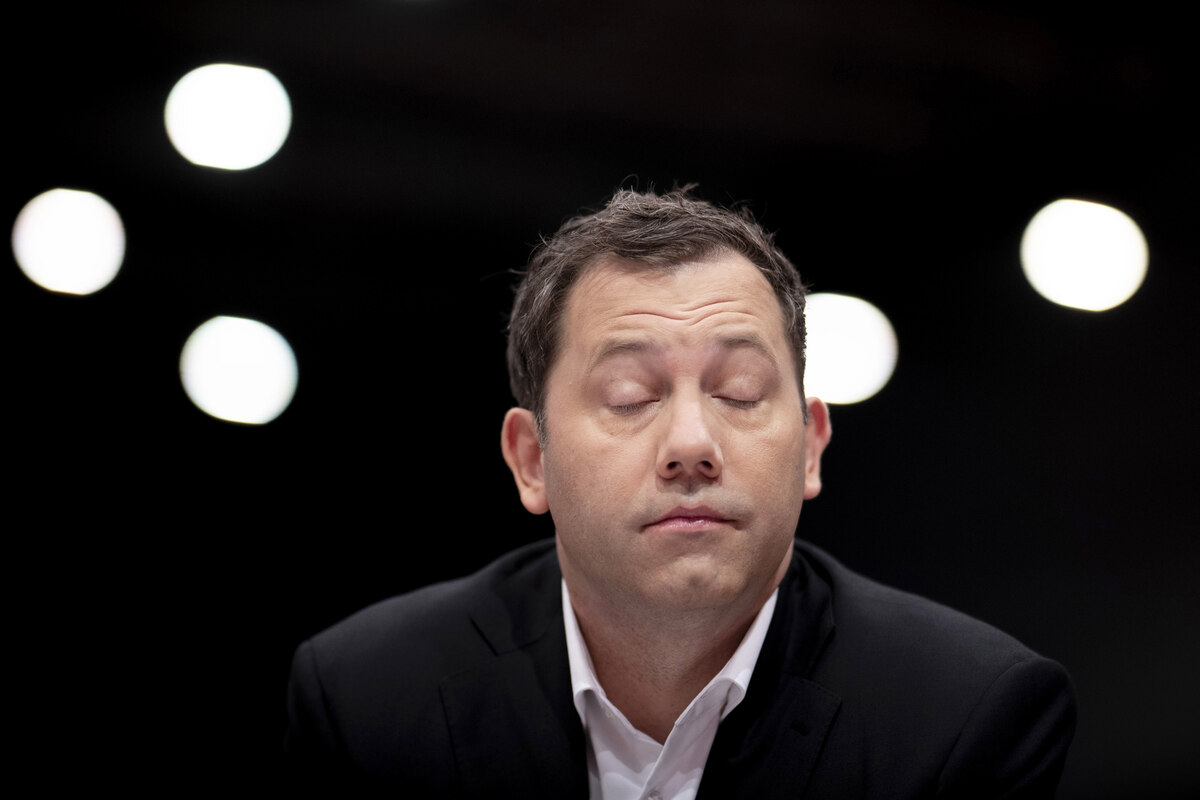
Bas’s decision to step down, reportedly announced on a Monday, immediately triggered a wave of reactions, highlighting the intensity of the political climate she described. Mecklenburg-Vorpommern’s Minister-President Manuela Schwesig was swift and unequivocal in her condemnation, accusing CDU leader Friedrich Merz and his party of "inhumane" and "ruthless" conduct in their political attacks. Schwesig’s strong words not only defended Bas but also underscored a broader frustration within parts of the SPD regarding the tone and nature of political discourse, particularly when directed at female politicians.
While Klingbeil himself acknowledged the CDU’s attacks as "indecent," his response has been perceived by many as insufficient or belated, failing to quell the mounting internal dissatisfaction. This sentiment is particularly strong among women within the SPD, who note with alarm that Bas’s reported resignation marks the second time a high-profile female leader has stepped back from federal party leadership roles during Klingbeil’s tenure. This follows the withdrawal of Saskia Esken from the party leadership in June 2025 (a date that suggests a previous or anticipated departure in the original text’s context, implying a pattern rather than a current event). This succession of departures fuels concerns about the party’s commitment to gender equality in top leadership positions and raises questions about the supportive environment for women at the highest echelons of German politics.
The impending federal party conference in Bremen, scheduled for January 16 and 17, now looms as a critical juncture. It is not merely an administrative meeting but a forum where these accumulated grievances, concerns about leadership stability, and the future direction of the party will inevitably converge. The timing of Bas’s reported resignation, so close to this pivotal event, ensures that the issues of leadership, representation, and the party’s internal cohesion will dominate the agenda, potentially leading to significant shifts in the SPD’s power structure.
Supporting Data and Deep-Seated Frustrations
The internal crisis within the SPD, ignited by Bärbel Bas’s reported resignation, is underpinned by a confluence of strategic anxieties, electoral pressures, and fundamental concerns about representation. For the North Rhine-Westphalia (NRW) SPD, these issues are particularly acute, threatening to undermine their standing both within the federal party and in their upcoming state elections.
The 2027 state election in NRW represents a monumental challenge for the SPD. The party is keen to reclaim ground and, in this context, the leadership of Jochen Ott, the state parliamentary group leader and designated top candidate, is paramount. Ott’s strategy centers on addressing the everyday concerns of working people and families, aiming to contrast with the policies of the CDU Minister-President Hendrik Wüst. However, this strategy is critically hampered by a perceived disconnect between federal SPD policies and the needs of its traditional voter base. There is a palpable concern in Düsseldorf that federal reforms, particularly those pertaining to pensions and care, are being interpreted by the public as "savings measures" that disproportionately burden social democratic voters. This perception risks alienating the very demographic Ott seeks to galvanize, making his campaign an uphill battle if the federal party fails to project a coherent and supportive image.
Beyond electoral strategy, a deep-seated frustration in NRW stems from what is perceived as a significant erosion of the state’s federal influence. As the party’s largest state association, NRW has historically played a central role in shaping national SPD policy and personnel. Bas’s reported resignation means that NRW no longer boasts a federal minister, a symbolic and practical blow to its representation at the highest level of government. Furthermore, among the deputy federal chairpersons of the SPD, only Achim Post hails from North Rhine-Westphalia. This stark underrepresentation has led to alarm among leading NRW comrades, one of whom starkly warns, "We see our position breaking away." This feeling of marginalization fuels the current unrest and underscores NRW’s determination to reclaim its rightful place within the federal party structure.

The issue of gender equality also emerges as a critical fault line. Christin-Marie Stamm, the chairwoman of the SPD Women’s Working Group in NRW, articulated a clear demand: "If a strong woman leaves the political top, it must not lead to women losing influence." She emphasized that "equality is not a fair-weather promise but must apply precisely when power and responsibility are redistributed." This statement highlights a broader concern that Bas’s reported departure, following the earlier withdrawal of another high-profile female leader, could inadvertently set back the cause of female representation at the party’s apex. The SPD, traditionally a proponent of gender equality, now faces internal pressure to demonstrate this commitment tangibly in its leadership succession planning, reinforcing the "unthinkable" notion of a sole male leader at the party’s helm. These intertwined issues of electoral viability, federal influence, and gender parity collectively define the complex and challenging landscape currently facing the SPD.
Official Responses and Internal Debates
The aftermath of Bärbel Bas’s reported resignation has seen a flurry of official and unofficial responses, laying bare the deep divisions and strategic maneuverings within the SPD. These statements, both public and privately circulating among party circles, paint a vivid picture of a party grappling with its identity, leadership, and future direction.
Lars Klingbeil, the embattled federal co-chairman, found himself in a defensive posture following Bas’s stated reasons for stepping down, which included "public attacks… also from the ranks of the coalition partner." While he acknowledged the "indecency" of the CDU’s attacks, his response has been critiqued for not adequately addressing the underlying causes of internal dissent or for providing a sufficiently robust defense of his party colleagues. Furthermore, Klingbeil’s deliberate ambiguity regarding his own intentions to seek re-election at the upcoming federal party conference has only exacerbated the uncertainty, fueling speculation and creating a leadership vacuum that rivals are eager to fill. His hesitant stance, rather than projecting stability, seems to signal a recognition of the formidable challenge he faces from within.
In contrast, Manuela Schwesig, the Minister-President of Mecklenburg-Vorpommern, has emerged as a vocal and decisive figure. Her sharp criticism of CDU leader Friedrich Merz and his party for their "inhumane" and "ruthless" conduct was not just a defense of Bas but also a strategic move. Schwesig has previously been critical of Berlin’s austerity policies, a stance that resonates strongly in state associations like NRW. Her forthrightness positions her as a potential unifying force, capable of articulating regional grievances against federal policies, and perhaps signaling broader federal ambitions beyond her state role.
The North Rhine-Westphalian SPD, feeling increasingly marginalized, has been particularly vocal, albeit often through anonymous "leading comrades." These insiders have not shied away from expressing the difficulty of campaigning for Klingbeil, highlighting the practical challenges of mobilizing support for a leader whose mandate is perceived as weakened. The stark warning that "we see our position breaking away" underscores the profound sense of loss and frustration within NRW regarding its federal representation. This collective sentiment suggests a strategic imperative for NRW to assert its influence and demand a stronger voice in the party’s national affairs.
The demands from the SPD women’s working group in NRW, articulated by Christin-Marie Stamm, are clear and uncompromising. Her insistence that "equality is not a fair-weather promise" and that women must not lose influence after a high-profile female departure serves as a direct challenge to the party’s leadership to prioritize gender parity in any new appointments. This is not merely a symbolic demand but a call for concrete action to ensure that the party’s progressive values are reflected in its highest echelons.

From Düsseldorf, the strategic concerns of the state parliamentary faction are focused on the practicalities of electoral success. The worry that federal reforms are being misconstrued as "savings measures" that hurt core social democratic voters is a direct criticism of the federal government’s communication and policy impact. This indicates a strong desire for federal policies to be more attuned to the economic realities and perceptions of the working-class electorate, a demographic crucial for the SPD’s long-term viability. These varied responses and internal debates collectively underscore the deep-seated tensions and the high stakes involved in the upcoming leadership decisions for the SPD.
Implications: The Future Leadership and Strategic Direction of the SPD
The current turmoil within the SPD extends far beyond the immediate aftermath of Bärbel Bas’s reported resignation; it signals a fundamental juncture for the party’s leadership structure, strategic direction, and electoral future. The discussions and maneuvers now underway will inevitably shape the SPD’s ability to navigate the complex political landscape and regain the trust of its electorate.
One of the most immediate implications is the entrenched consensus that a male-only leadership for the SPD is "unthinkable." This ensures that, regardless of Lars Klingbeil’s ultimate fate, the party will continue with a dual-leadership model, underscoring its commitment to gender parity, at least structurally. This imperative will heavily influence the selection of any new co-chair, ensuring that a woman is nominated to serve alongside the male leader.
The potential pool of successors and the intricate power plays among factions are now central to the internal debate. Manuela Schwesig emerges as a formidable contender for the co-chair position. Her strong performance as Minister-President of Mecklenburg-Vorpommern, coupled with her willingness to openly criticize federal austerity policies, has garnered her significant support, particularly from NRW. Her candidacy could represent a strategic pivot for the SPD, signaling a more assertive stance on social justice issues and a greater responsiveness to regional concerns, potentially unifying various internal factions. Her perceived strength and clear political profile could provide the stability the party desperately needs.
Conversely, the prospect of Hubertus Heil, the former Federal Minister of Labour, aspiring to a federal party leadership role is met with considerable resistance, particularly in NRW, where he is reportedly considered "spent." This perception highlights the challenge for any candidate not seen as offering fresh perspectives or a clear path forward, indicating that the party is yearning for rejuvenation rather than a return to past figures. Heil’s potential candidacy thus opens the door for alternative, more palatable options, such as Jochen Ott.
The consideration of Jochen Ott, the NRW state parliamentary group leader and top candidate for the 2027 state election, as a "compromise candidate" for a federal leadership role is a testament to the strategic calculations at play. While Ott’s primary focus must remain on the demanding state election campaign, party strategists in NRW recognize the immense benefit a federal presence could offer him. As one leading NRW comrade rhetorically questioned, "What helps more in an election campaign – handing out roses in a pedestrian zone in Bochum or sitting in a talk show like Markus Lanz as a party leader?" This sentiment underscores the belief that a national platform would significantly elevate Ott’s profile, providing him with invaluable visibility and credibility that could translate into electoral success at the state level.

Furthermore, the NRW-SPD is firm in its demands for increased federal representation. Should Manuela Schwesig and Lars Klingbeil ultimately form the new leadership duo, NRW insists on having at least two deputy federal chairpersons from its ranks. Marc Herter, the Mayor of Hamm and a projected strong performer in the 2025 municipal elections, and Wiebke Esdar, a Member of the Bundestag from Bielefeld, are being actively discussed for these roles. This demand illustrates NRW’s unwavering determination to regain its federal standing and ensure its voice is heard at the highest echelons of the party.
Ultimately, the SPD faces a broader challenge that transcends individual leadership choices. The party is grappling with a crisis of identity, policy coherence, and electoral appeal. The need to balance the responsibilities of federal governance with the immediate concerns of local voters, to articulate a clear and compelling vision for Germany’s future, and to project an image of unity and strength, will define its trajectory in the coming years. The upcoming federal party conference is not merely about electing new leaders; it is about charting a course that can restore the SPD’s relevance and rebuild its foundational support across the nation. The stakes could not be higher for the future of German social democracy.