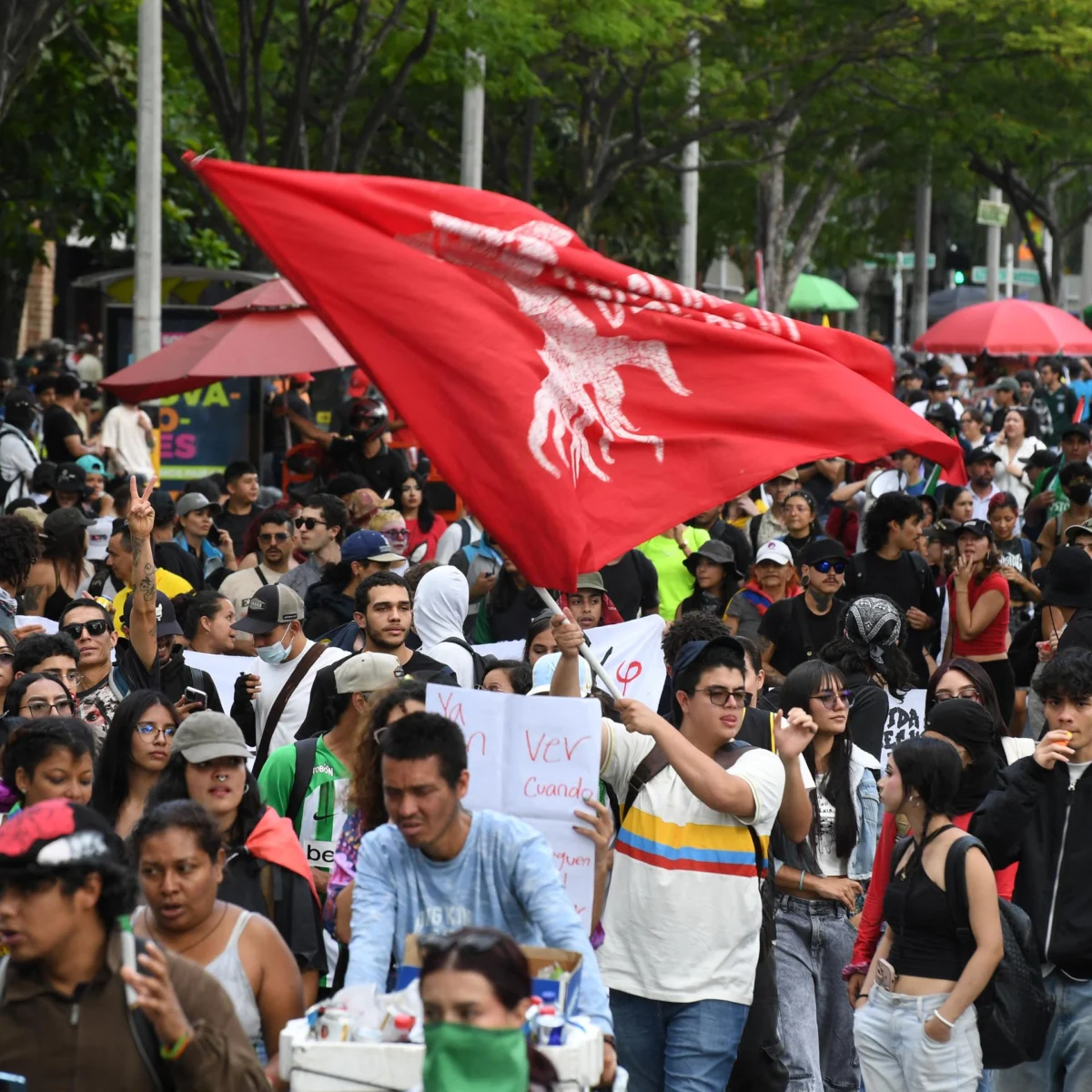
BOGOTA, Colombia – October 15, 2026 – Thousands of Colombians took to the streets across multiple cities today, marking the first major nationwide action against the policies of the right-conservative President de la Espriella. Led by former President Gustavo Petro, a broad coalition of opposition parties, labor unions, indigenous communities, student groups, and feminist organizations mobilized to voice profound discontent with an administration they accuse of jeopardizing the country’s fragile peace process, undermining minority rights, and exhibiting increasingly authoritarian tendencies.
The demonstrations, which saw protestors waving national flags and brandishing placards condemning the government, represent a significant challenge to President de la Espriella, who only assumed office in early August. His tenure, defined by a hardline stance against guerrilla groups and drug cartels, has quickly ignited a polarized political climate, drawing sharp criticism from a diverse array of civil society actors and the political opposition.
Main Facts
On Thursday, October 15, 2026, thousands of citizens participated in coordinated demonstrations across Colombia, protesting the nascent government of President de la Espriella. The protests, organized as the "first day of action" by the opposition under the leadership of former President Petro, united a wide spectrum of Colombian society. Among the key participants were powerful labor unions, historically marginalized indigenous communities, university students advocating for social justice, and feminist organizations championing gender equality.
The collective grievances center on several critical issues. The opposition vehemently argues that President de la Espriella’s policies are actively destabilizing the delicate peace agreement reached with the FARC guerrillas, a landmark accord that ended decades of armed conflict but remains contentious in its implementation. Furthermore, protestors accuse the administration of systematically eroding the rights of minority groups and displaying worrying authoritarian tendencies that threaten democratic freedoms. President de la Espriella, a self-proclaimed right-conservative, took office in early August with a clear mandate to wage an uncompromising war on illegal armed groups and drug trafficking, a platform that has garnered support from conservative sectors and aligned him closely with US President Donald Trump.
Chronology of Discontent
The seeds of today’s widespread protests were sown even before President de la Espriella’s inauguration, but the swift implementation of his agenda has accelerated the public’s disquiet.
Early August 2026: De la Espriella Takes Office
President de la Espriella’s ascent to power in early August was marked by a clear and uncompromising rhetoric. Having campaigned on a platform of "law and order," he promised a relentless crackdown on residual guerrilla groups, particularly the ELN (National Liberation Army) and FARC dissidents, as well as the powerful drug cartels that continue to plague the nation. His electoral victory, while reflecting a segment of the population’s weariness with ongoing insecurity and the perceived failures of peace implementation, also signaled a decisive shift away from the more conciliatory approaches of previous administrations. His open alliance with US President Donald Trump underscored his commitment to a hardline security agenda, raising expectations – and fears – about the direction of Colombian foreign policy and domestic security strategy. From the outset, critics expressed concerns that his "zero-tolerance" approach might prioritize military solutions over social and economic reforms crucial for long-term peace.
September 2026: Initial Policy Rollouts and Opposition Warnings
In the weeks following his inauguration, the de la Espriella administration began to unveil its legislative and executive priorities. These included proposals to re-evaluate or significantly alter key components of the 2016 peace accord, such as rural land reform initiatives, reintegration programs for ex-combatants, and the transitional justice system. Simultaneously, reports emerged of increased militarization in rural areas, often impacting indigenous and Afro-Colombian territories. Former President Gustavo Petro, a prominent figure on the Colombian left and a key architect of the opposition’s strategy, quickly emerged as a vocal critic. Petro began to rally diverse groups, warning that the new government’s actions were not merely policy shifts but fundamental threats to the democratic gains and peace dividends achieved over years of arduous negotiations.
October 15, 2026: The "First Day of Action"
Today’s nationwide demonstrations represent the culmination of these escalating tensions. From the bustling streets of Medellín, as captured in widespread imagery depicting citizens marching with flags and placards, to the capital Bogotá and other major urban centers, thousands participated in organized marches. The scale of the mobilization underscores the deep-seated apprehension among broad sectors of Colombian society. The coordinated nature of the protests, bringing together disparate groups with specific grievances under a common banner of opposition to de la Espriella, highlights the growing political unity against his government. This "first day of action" is not merely a single event but a strategic opening salvo, signaling a sustained period of political activism and resistance if the government does not address the protestors’ concerns. The widespread participation indicates that the opposition has successfully tapped into a vein of public anxiety regarding the future trajectory of the nation.
Supporting Data and Grievances
The diverse coalition protesting President de la Espriella’s government brings a multitude of specific grievances to the fore, each contributing to the collective alarm over the nation’s direction.
The Fragile Peace Process: A Precarious Balance
At the heart of the opposition’s concerns is the perceived threat to Colombia’s 2016 peace accord with the Revolutionary Armed Forces of Colombia (FARC). This historic agreement, which formally ended over 50 years of internal armed conflict, was never universally embraced and has faced immense challenges in its implementation. Key pillars of the accord include comprehensive rural reform, political participation for former combatants, drug substitution programs, and a transitional justice system designed to provide truth, justice, reparations, and guarantees of non-repetition.
President de la Espriella’s "uncompromising fight" against guerrilla groups, while popular with some, is viewed by critics as undermining the spirit and letter of the accord. Policies such as the proposed cuts to funding for rural development projects, which are vital for integrating ex-combatants and addressing the root causes of conflict, are seen as direct attacks on the peace process’s economic and social pillars. The rhetoric emanating from the administration often blurs the lines between FARC dissidents and former combatants committed to peace, potentially criminalizing social leaders and communities in former conflict zones. The fear is that a renewed emphasis on military solutions without concomitant social investment could reignite violence, push disillusioned ex-combatants back into illegal activities, and empower new armed groups, thereby undoing years of painstaking peacebuilding efforts.
Erosion of Minority Rights: Voices from the Margins
Indigenous communities and Afro-Colombians, who have historically borne the brunt of Colombia’s internal conflict and systemic discrimination, are particularly vulnerable under the current administration. Their concerns are multifaceted:
- Land Rights: Indigenous and Afro-Colombian territories are often rich in natural resources, making them targets for illegal mining, logging, and large-scale agricultural projects. The government’s push for economic development, coupled with a perceived weakening of environmental and social safeguards, is seen as threatening ancestral lands and collective rights. Indigenous leaders report increased incursions and violence in their territories, often linked to land disputes and the presence of illegal armed groups or economic interests.
- Cultural Autonomy: Fears exist that policies prioritizing national integration and security might undermine cultural diversity and the autonomy of indigenous governance structures.
- Protection from Violence: Despite the peace accord, social leaders, human rights defenders, and environmental activists from these communities continue to face alarming levels of threats and assassinations. Critics argue that the de la Espriella administration’s security strategy does not adequately protect these vulnerable populations and may even exacerbate their risks by increasing militarization without addressing underlying socio-economic inequalities.
Authoritarian Tendencies: A Threat to Democratic Space
The accusation of "authoritarian tendencies" is a grave one, signaling concerns about the health of Colombian democracy. This claim stems from several perceived actions and rhetorical patterns:
- Suppression of Dissent: There are fears that the government may use its security mandate to restrict legitimate protest and criminalize social movements. Increased police presence and potentially heavy-handed responses to demonstrations are seen as indicators.
- Control of Institutions: Critics worry about potential attempts to exert undue influence over independent institutions, such as the judiciary, the attorney general’s office, or electoral bodies, thereby weakening the checks and balances essential for a healthy democracy.
- Rhetoric Against Opposition and Media: The administration’s dismissive or accusatory language towards political opposition, civil society organizations, and critical media outlets is seen as fostering a climate of intimidation and narrowing the space for public debate.
Specific Grievances of Participating Groups:
- Labor Unions: Unions are protesting against potential reforms that could weaken labor rights, promote precarious employment, and reduce social benefits. They also express concern over privatization initiatives and economic policies that they argue disproportionately benefit corporations over workers.
- Student Groups: Students are primarily demonstrating against proposed cuts to public education funding, rising tuition fees, and a perceived lack of investment in higher education infrastructure. They also advocate for greater academic freedom and a more inclusive educational system.
- Feminist Organizations: Feminist groups are protesting against perceived setbacks in women’s rights, including potential threats to reproductive health services, inadequate responses to gender-based violence, and a lack of meaningful representation in government and decision-making processes. They advocate for policies that promote gender equality and protect the rights of LGBTQ+ individuals.
This confluence of concerns, articulated by a diverse and robust coalition, underscores the profound challenge facing President de la Espriella’s administration and highlights the deep divisions within Colombian society regarding the nation’s future direction.
Official Responses
In the immediate aftermath of today’s nationwide protests, President de la Espriella’s administration moved quickly to offer its official response, largely dismissing the scale and motivations of the demonstrations while reaffirming its commitment to its current policy trajectory.
A spokesperson for the Presidency, speaking from Bogotá, downplayed the numbers of protestors, suggesting that media reports had exaggerated the turnout. "While we respect the right to peaceful assembly, these demonstrations do not represent the majority of Colombians," the spokesperson stated. "They are largely orchestrated by political opportunists seeking to destabilize a legitimately elected government and obstruct the necessary reforms we are undertaking for the nation’s security and prosperity."
The government reiterated its unwavering commitment to its core platform: an uncompromising fight against illegal armed groups and drug trafficking. "Our administration was elected on a clear mandate to restore order, dismantle criminal organizations, and protect our citizens," the spokesperson affirmed. "These efforts are not undermining peace; they are building a true, lasting peace founded on the rule of law and the full authority of the state across our entire territory. To suggest otherwise is to ignore the ongoing threats faced by countless communities."
Regarding the accusations of endangering the peace process, the administration maintained that it is merely "adjusting" the implementation of the 2016 accord to ensure its effectiveness and prevent any loopholes from being exploited by criminal elements. "We are committed to the reintegration of those who genuinely seek peace, but we will not tolerate those who pretend to lay down arms only to continue their illicit activities," a statement from the Ministry of Interior read. There was no direct acknowledgment of the specific concerns raised by indigenous communities or feminist organizations in the initial government response.
On the allegations of authoritarian tendencies, the government spokesperson firmly rejected the characterization. "Our administration operates strictly within the bounds of the Colombian Constitution and democratic principles," they asserted. "Any measures taken are aimed at ensuring public safety and maintaining order, particularly when confronted with actions that could escalate into vandalism or violence." The government indicated it would investigate any instances of public disorder associated with the protests, emphasizing the need for protestors to adhere strictly to legal frameworks.
President de la Espriella himself has yet to make a public statement directly addressing the protests. However, his social media accounts have featured posts highlighting recent successes in anti-drug operations and emphasizing the need for national unity in the face of security challenges, subtly signaling his steadfastness in the face of dissent. The government’s overall tone indicates a firm resolve to continue its current policies, viewing the protests as politically motivated attempts to derail its agenda rather than a reflection of legitimate public grievance.
Implications
The widespread protests against President de la Espriella’s administration carry profound implications for Colombia’s immediate future and long-term stability across several critical dimensions.
Political Polarization and Governance Challenges:
The "first day of action" has starkly illuminated the deep ideological chasm within Colombian society. The government’s dismissive response to the protests is likely to further entrench this polarization, making consensus-building and effective governance increasingly challenging. The opposition, now unified under the prominent leadership of former President Petro, has demonstrated its capacity for mobilization, suggesting that future protests and political resistance are highly probable. This could lead to a period of sustained political gridlock, hindering the administration’s ability to pass key legislation or implement its agenda smoothly. The de la Espriella government, by portraying the protests as politically motivated destabilization efforts, risks alienating a significant portion of the population and exacerbating social divisions.
Future of the Peace Process:
Perhaps the most critical implication lies in the fate of the 2016 peace accord. The government’s hardline approach and its perceived reluctance to fully implement or even actively undermine crucial aspects of the agreement could have dire consequences. If rural development programs are cut, if former combatants feel abandoned, or if security forces disproportionately target communities in former conflict zones, the risk of a resurgence of violence is significant. FARC dissidents and other armed groups like the ELN could exploit this vacuum, recruiting disillusioned individuals and consolidating control in areas where state presence and social investment are weak. This would not only unravel years of peacebuilding efforts but also condemn Colombia to a renewed cycle of conflict and suffering. The international community, particularly the UN and countries that supported the peace process, will be closely watching for any signs of its erosion.
Human Rights and Democratic Freedoms:
The accusations of authoritarian tendencies are particularly concerning. If the government escalates its response to dissent, potentially restricting protest rights, increasing surveillance, or cracking down on social leaders, Colombia’s democratic credentials could be severely tarnished. The safety of human rights defenders, journalists, and environmental activists, already a persistent concern in Colombia, could further deteriorate. Any perception of state overreach or suppression of fundamental freedoms would draw sharp criticism from international human rights organizations and potentially strain relations with democratic allies beyond the US. The government’s handling of future protests will be a critical test of its commitment to democratic principles.
Socio-Economic Stability and Development:
The protests highlight deep-seated socio-economic grievances related to labor rights, education funding, and the economic marginalization of vulnerable groups. If these concerns are left unaddressed, they could fuel further social unrest, potentially disrupting economic activities and deterring foreign investment. A climate of instability and conflict is detrimental to sustainable development, particularly in rural areas that are still struggling to recover from decades of war. The government’s focus on a security-first agenda, if it comes at the expense of social investment and equitable development, could perpetuate the very conditions that have historically fueled conflict in Colombia.
International Relations:
President de la Espriella’s close alliance with US President Donald Trump suggests a strengthening of bilateral ties, particularly in security and anti-narcotics cooperation. However, his policies’ potential impact on human rights and the peace process could create friction with other international partners, especially European nations and multilateral organizations that have heavily invested in Colombia’s peacebuilding efforts. Colombia’s standing as a regional leader in peace and democracy could be jeopardized if the international community perceives a rollback of democratic freedoms or a failure to uphold human rights commitments.
In conclusion, the protests of October 15, 2026, are more than just a momentary expression of dissent; they represent a critical juncture for Colombia. The path chosen by President de la Espriella’s administration in response to these grievances – whether it be a doubling down on its hardline approach or a genuine attempt at dialogue and policy adjustment – will profoundly shape the country’s trajectory for years to come, determining whether Colombia progresses towards lasting peace and stability or slides back into cycles of conflict and division.