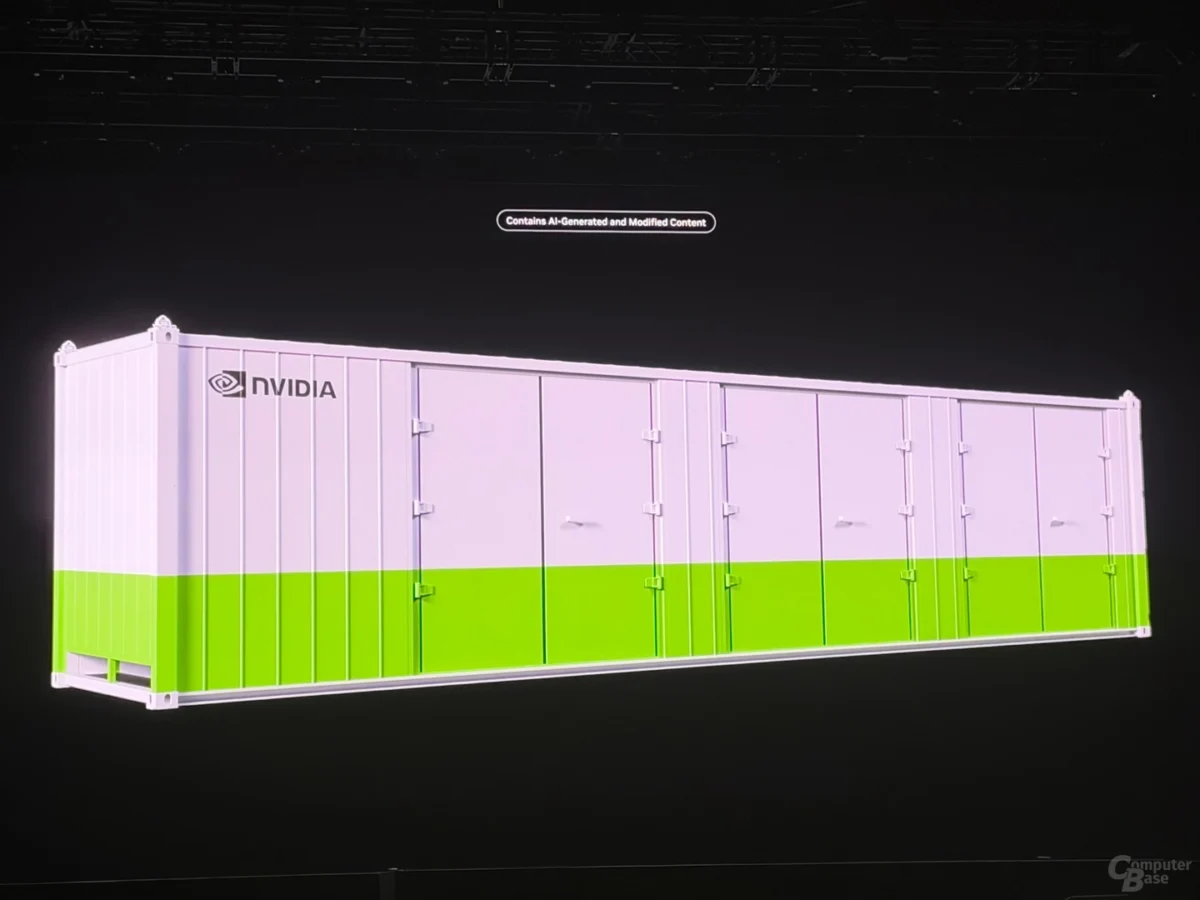
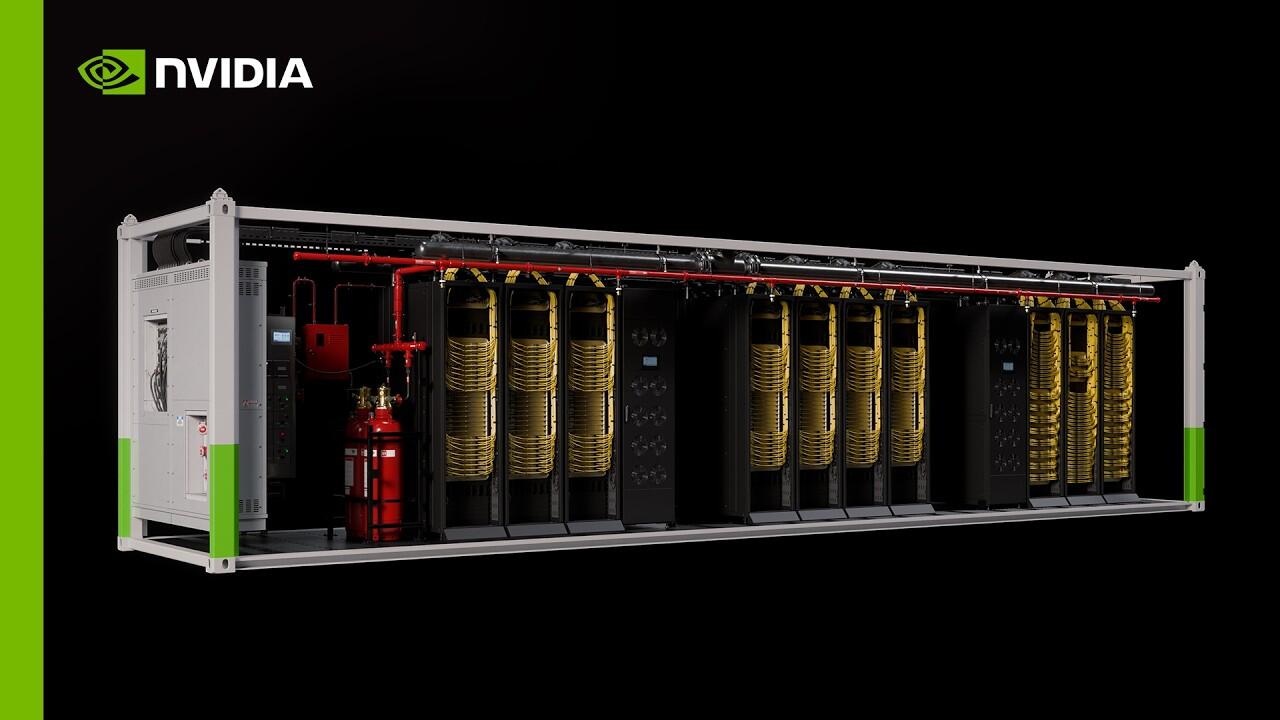
In a move that promises to redefine the landscape of global artificial intelligence infrastructure, Nvidia has unveiled its DSX (Data Center Scaling Architecture) platform. The centerpiece of this announcement, made at the GTC in Berlin, is the DSX Pod—a revolutionary approach that packages entire "AI factories" into modular, pre-fabricated, and pre-tested shipping containers. By shifting the complexity of construction from the field to the factory, Nvidia aims to cut the deployment time of massive AI data centers from the traditional six months to a mere 14 days.
Main Facts: The Architecture of Speed
At its core, the Nvidia DSX initiative is a comprehensive reference architecture designed to treat the data center not as a collection of individual servers, but as a holistic, integrated machine. Traditionally, building a data center requires the independent orchestration of compute, networking, storage, cooling, and power delivery systems—a fragmented process prone to supply chain delays and integration bottlenecks.
The DSX Pod fundamentally changes this paradigm. By leveraging Nvidia’s upcoming Vera Rubin platform (the successor to the Blackwell architecture), these Pods arrive on-site fully equipped with GPUs, CPUs, liquid cooling infrastructure, and networking fabrics.
The Key Components of the DSX Ecosystem:
- DSX Reference Design: A library of validated configurations that ensure interoperability.
- DSX Sim: A digital twin environment that allows operators to simulate the thermal and electrical performance of a facility before a single cable is laid.
- DSX OS: An orchestration layer designed to manage the lifecycle of the infrastructure.
- DSX MaxLPS & Flex: Advanced power management tools that optimize energy distribution and synchronize power consumption with grid availability.
- DSX Exchange: A specialized interface that bridges the gap between high-performance computing (HPC) stacks and building management systems.
Chronology: From Concept to Deployment
The road to the DSX Pod has been paved by years of modular experimentation in the high-performance computing sector.
- Pre-2024: The industry struggled with "Time to First Token"—the metric representing the time elapsed from project inception to the moment a system begins generating meaningful AI inference or training data.
- 2024–2025: Nvidia deepened its collaboration with global infrastructure leaders, observing the modular successes of projects like the Jupiter Supercomputer in Jülich, Germany. Jupiter, Europe’s first Exascale system, demonstrated that housing thousands of GPUs within a cluster of containers was not just possible, but highly efficient.
- 2026 (GTC Berlin): Nvidia officially unveils the DSX Pod. The architecture is refined to support the high power density required by the Vera Rubin platform.
- Early 2027 (Projected): The first commercial DSX Pods are scheduled to roll out from manufacturing partners, marking the start of a new era in rapid-deployment AI infrastructure.
Supporting Data: Why 14 Days Matters
The economic implications of the "14-day installation" target are staggering. In the current market, the cost of capital is high, and the pace of AI model development is frantic. A delay of six months in bringing a data center online can result in hundreds of millions of dollars in lost opportunity costs.
Comparative Efficiency Metrics:
| Phase | Traditional Build | DSX Pod Build |
|---|---|---|
| Site Preparation | 2–3 Months | 2–3 Months |
| Integration/Cabling | 3–4 Months | 2–3 Days |
| Testing/QA | 1 Month | 4–7 Days |
| Total Deployment | ~6 Months | ~14 Days |
By performing the complex wiring, plumbing, and rack integration in a factory setting, Nvidia eliminates the variables of on-site human error and climate-related construction delays. Each container is subjected to rigorous stress tests—including full-load thermal testing—before it ever leaves the manufacturing facility.

Official Responses and Strategic Partnerships
Nvidia is not embarking on this journey alone. The success of the DSX Pod relies on a robust international partner network, including industry stalwarts such as Dell, HPE, Lenovo, Gigabyte, Quanta Cloud Technology, and Wistron.
The Infrastructure Pillars
The hardware is complemented by the integration expertise of Schneider Electric and Vertiv, who are providing the essential cooling and power-distribution infrastructure.
"The goal is to simplify the complexity," says a spokesperson from the Nvidia infrastructure division. "By partnering with these firms, we ensure that the DSX Pod is not just a theoretical model, but a commercially viable product that can be ordered, shipped, and activated anywhere in the world with a standardized power and network hookup."
The move also signals a strategic shift for companies like Bull, which are increasingly focusing on the intersection of European sovereignty and AI capability. By utilizing modular designs, these companies can deploy high-performance clusters in regions that previously lacked the specialized labor required to build them.
Implications: The Democratization of AI Infrastructure
The introduction of the DSX Pod has far-reaching implications for both the tech industry and the broader global economy.
1. The "Time to First Token" Imperative
In the AI race, the ability to train models faster is the ultimate competitive advantage. By slashing the deployment time, Nvidia is ensuring that its customers—ranging from sovereign states building national AI clouds to hyperscalers scaling their LLM capabilities—can iterate at the speed of software rather than the speed of construction.
2. Reducing Dependence on Specialized Labor
One of the largest bottlenecks in modern data center construction is the shortage of specialized electrical and cooling engineers. Because the DSX Pod is pre-integrated, the on-site requirement for high-level specialized labor is drastically reduced. The role of the on-site team shifts from "builder" to "connector," plugging the pre-tested modules into the facility’s main utility feeds.
3. Energy Resilience and Grid Integration
With the inclusion of DSX Flex, Nvidia is addressing one of the most critical concerns of the modern era: energy consumption. By coordinating the power demand of the AI factory with the fluctuations of the regional power grid, these Pods can operate more sustainably. This feature is particularly vital in Europe and other regions where grid stability and carbon footprints are subject to strict regulatory oversight.
4. A Template for Modular Future-Proofing
The Jupiter Supercomputer in Jülich stands as a testament to the power of this modularity. By housing the system in approximately 50 containers, operators were able to create an Exascale-capable environment that is easier to maintain and upgrade. The DSX Pod takes the lessons learned from these "Super-Containers" and applies them to the broader commercial market. It suggests a future where data centers are not static, monolithic buildings, but living, breathing, and swappable ecosystems that can be upgraded in modules as chip technology advances.
Conclusion
As the world moves toward the era of the Vera Rubin platform, the physical limitations of our data centers have become a bottleneck to innovation. Nvidia’s DSX Pod is the company’s solution to this physical constraint. By turning the construction of an AI factory into a repeatable, modular, and rapid industrial process, Nvidia is not just selling chips; it is providing the blueprint for the next decade of digital transformation. For developers, researchers, and enterprises, this means the future of AI is arriving much faster than expected—14 days from the moment the containers hit the slab.