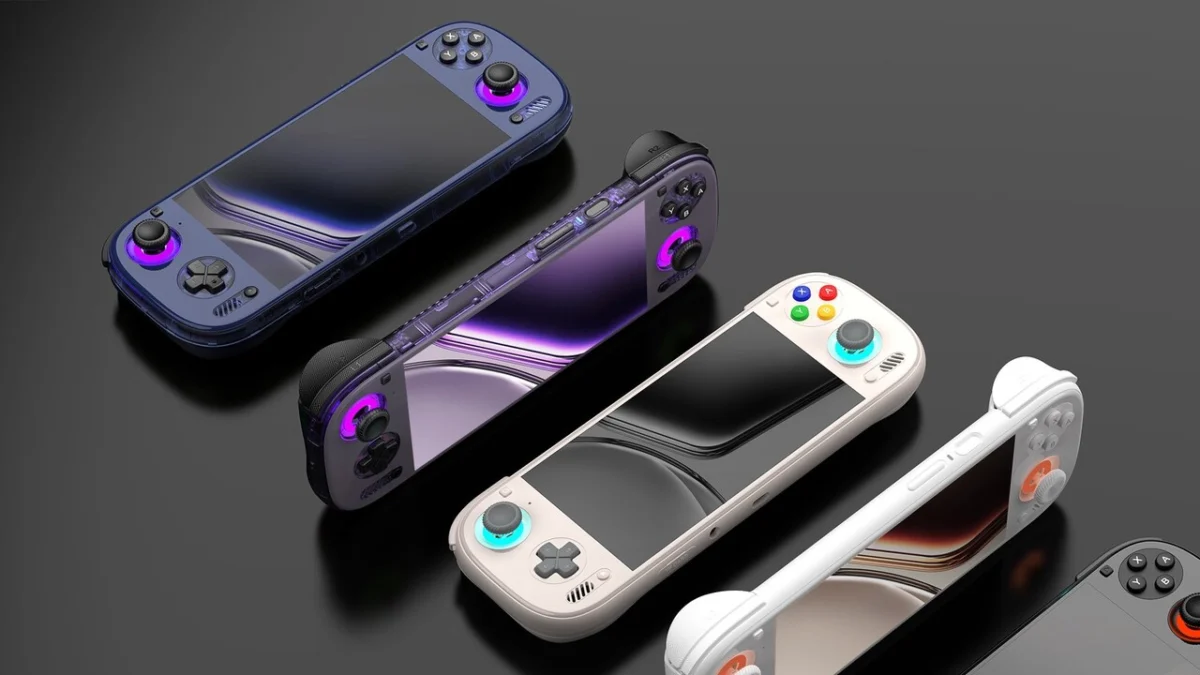
In a landmark move that has sent ripples through the retro-gaming and portable hardware communities, Retroid has officially opened the door to Mainline Linux support for its latest generation of handheld gaming devices. For years, the community has clamored for an alternative to the rigid, Android-centric ecosystem that defined Retroid’s product line. Today, that request has been answered—not through a consumer-ready software update, but through the release of essential kernel components and source materials that empower power users to transform their devices into versatile Linux-based machines.
This development affects the Retroid Pocket 6, the Pocket Nova, and the Pocket Duo. By facilitating compatibility with Linux Kernel 7.3, Retroid is effectively handing the keys to the kingdom to developers and enthusiasts, signaling a potential paradigm shift in how we perceive budget-friendly emulation handhelds.
Main Facts: The Technical Foundation
The scope of this release is surprisingly comprehensive. Retroid has not merely provided a "proof of concept"; they have published a robust suite of drivers and configurations that cover nearly every hardware subsystem of their newest devices.
The kernel support targets the Qualcomm QCS8550 platform, which powers the Pocket 6 and Pocket Nova, as well as the specialized "Eliza" platform found in the Pocket Duo. Key hardware features now supported under Linux include:
- GPU & Display: Full GPU acceleration is enabled, ensuring that the interface and emulators run with expected performance. Video decoding and encoding blocks are also functional.
- Connectivity: Wi-Fi and Bluetooth are supported via the WCN7850 chip (Pocket 6/Nova) and WCN7750 (Duo).
- I/O & Storage: UFS storage and microSD cards are recognized, while the USB-C port supports DisplayPort Alt-Mode, allowing users to output video to external monitors or docks.
- Audio Ecosystem: The audio stack includes support for built-in speakers, headphone jacks, internal microphones, headset microphones, and audio output via DisplayPort.
- Peripheral Control: The touch-screen gamepad functions through the RSInput driver. Additionally, users can control the PWM-managed cooling fan and even customize the RGB lighting on the joysticks for the Pocket 6 and Nova.
Chronology: A Long-Awaited Community Milestone
The path to this announcement was paved by years of community advocacy. Since the release of the original Retroid Pocket, users have frequently expressed frustration with the limitations of the Android operating system. While Android provides a user-friendly interface for casual gaming, it introduces latency, background bloat, and limitations in system-level optimization that enthusiasts often find stifling.
- The Android Era: For several years, Retroid solidified its reputation by creating high-quality, Android-based hardware. While these devices were critically acclaimed, the "closed" nature of the software became a point of contention among power users who preferred the lightweight, highly customizable nature of Linux distributions like JELOS or ArkOS.
- Increased Pressure: As competitors began offering Linux-native handhelds, the community’s demand for an "open" Retroid device grew louder. Developers within the open-source handheld community began experimenting with various kernel hacks, often struggling against proprietary drivers.
- The Breakthrough: Retroid’s decision to publish their kernel trees on GitHub represents a tactical shift. By releasing the
retroidpocket/v7.3branch, the company has officially acknowledged the value of the Linux community in extending the longevity and utility of their hardware.
Supporting Data: Understanding the GitHub Ecosystem
For those ready to dive into the technical requirements, Retroid has made the necessary components available via their official GitHub repositories. It is important to note that this is not a one-click installer. It is a modular toolkit for developers and experienced Linux enthusiasts.
The primary components provided include:
- The Kernel: Hosted under
RetroidPocket/linux(Branch:retroidpocket/v7.3). - Audio Topologies: Essential for hardware-level sound processing, hosted under
RetroidPocket/audioreach-topology(Branch:retroidpocket/v1.0.5). - ALSA Configuration: The Universal Control Module (UCM) configuration is located at
RetroidPocket/alsa-ucm-conf(Branch:retroidpocket/v1.2.16).
The company has explicitly stated that for audio to function correctly, the user must install both the topology and the UCM configuration. Failure to do so will result in a non-functional sound system, underscoring that this is a project intended for those comfortable with command-line interfaces and firmware compilation.
Official Responses and Strategic Positioning
Retroid has been careful to manage expectations regarding this release. The company has clarified that this is not a move toward a full, pre-installed Linux product.
"We are providing the foundation," a company representative implied, "but we are not becoming a Linux distribution vendor."
The "Hands-Off" Policy
- No Consumer Support: Retroid will not provide technical support for users who encounter issues while running Linux. If a device is "bricked" or behaves unexpectedly during a custom installation, the user is largely on their own.
- Android Remains King: There is no indication that future devices will ship with dual-boot capability or Linux-first firmware. Android remains the primary platform for the Retroid ecosystem.
- Community-Led Development: By keeping the installation process complex, Retroid effectively filters for the "power user" demographic. This allows the company to benefit from the community’s optimization efforts without the financial and logistical burden of maintaining a separate software operating system.
Implications: The Future of Handheld Gaming
What does this mean for the industry at large? The decision by Retroid to "open" their hardware—even if only at the kernel level—has profound implications.
1. Longevity and Hardware Preservation
By allowing the community to install Linux, Retroid is ensuring that these devices will have a "second life" long after the manufacturer stops supporting the underlying Android version. When Android support eventually ceases, the community will be able to maintain these devices through mainline Linux kernels, preventing them from becoming electronic waste.
2. The Rise of the "Enthusiast-Grade" Handheld
We are seeing a convergence between the world of cheap, mass-produced Android handhelds and the world of high-end, open-source Linux gaming machines. As developers gain access to the raw hardware, we are likely to see highly optimized Linux distributions tailored specifically for the Retroid Pocket 6 and Duo. This will likely unlock performance levels that were previously unattainable under the overhead of Android.
3. A Blueprint for Other Manufacturers
Retroid’s strategy serves as a potential blueprint for other handheld manufacturers like Anbernic or Ayn. By releasing the kernel source and necessary drivers, these companies can satisfy the enthusiast market without needing to hire a full team of software engineers to develop and support a custom Linux OS. It is a "win-win" scenario: the company reduces its software development overhead, and the community gains the freedom they have long sought.
4. Challenges for the Casual User
It is worth reiterating that for the average consumer, this announcement changes very little. The "barrier to entry" remains high. Those who simply want to pick up a device and play games will likely find the Android experience—with its plethora of emulators and frontends—more than sufficient. However, for those who value the "hacker" ethos of handheld gaming, the ability to run Mainline Linux is a game-changer. It transforms a device from a locked-down appliance into a versatile piece of computing hardware.
Conclusion: A New Chapter
The release of Mainline Linux support for the Retroid Pocket 6, Nova, and Duo is a historic moment for the brand. While it does not represent a full abandonment of Android, it signifies a newfound maturity. By acknowledging the power of the open-source community, Retroid has cemented its position as a hardware leader that respects its user base.
The coming months will be critical as the community begins to port various Linux distributions to these devices. We expect to see custom kernels, improved battery management tweaks, and perhaps even dedicated frontends built specifically to leverage the hardware acceleration of the QCS8550 and "Eliza" platforms. For the tinkerer, the developer, and the retro-gaming purist, the Retroid Pocket series just became the most interesting hardware on the market.