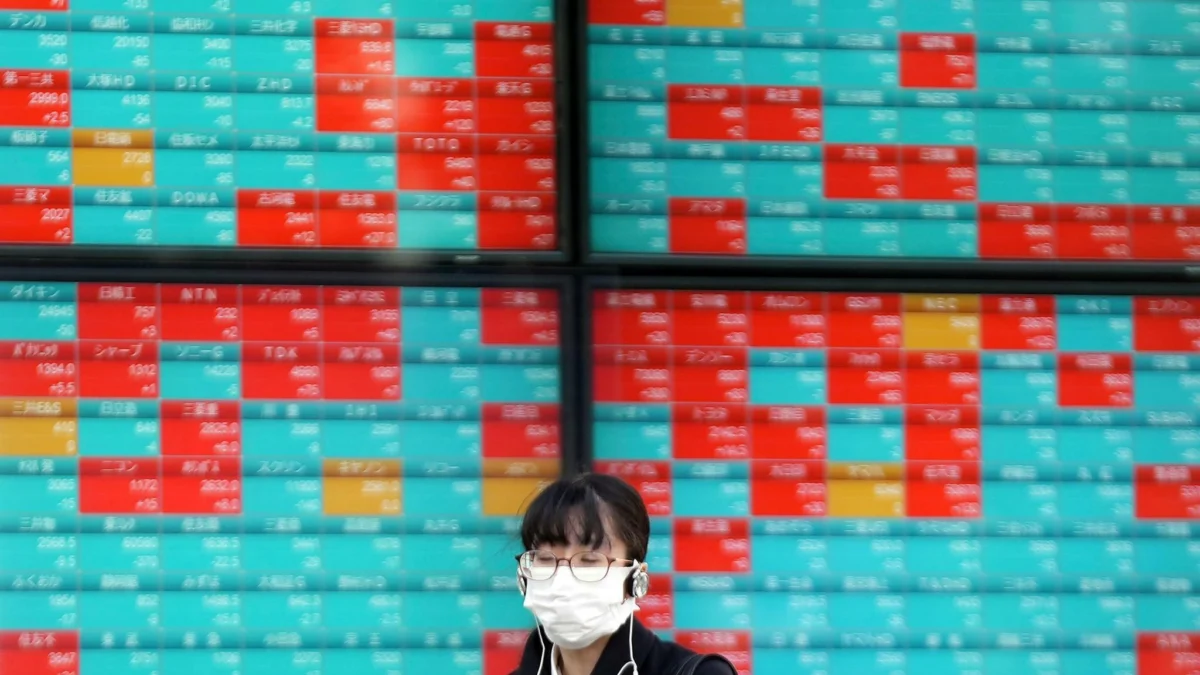
TOKYO/SYDNEY/SHANGHAI — Asian stock markets faced a significant downturn this Friday, as a potent combination of a heavy sell-off in US technology stocks and escalating geopolitical tensions shattered investor confidence. The wave of selling, which originated in the overnight sessions on Wall Street, rippled across the Pacific, forcing major indices in Tokyo, Shanghai, and beyond into deep red territory.
As markets closed for the week, the sentiment among traders was one of heightened caution. The convergence of macro-economic uncertainty and regional inflationary pressures has created a challenging environment, leading to a flight from growth-oriented tech assets toward more defensive, consumer-staple sectors.
Main Facts: A Broad-Based Retreat
The trading day was characterized by widespread losses, marking one of the most bearish sessions in recent weeks.
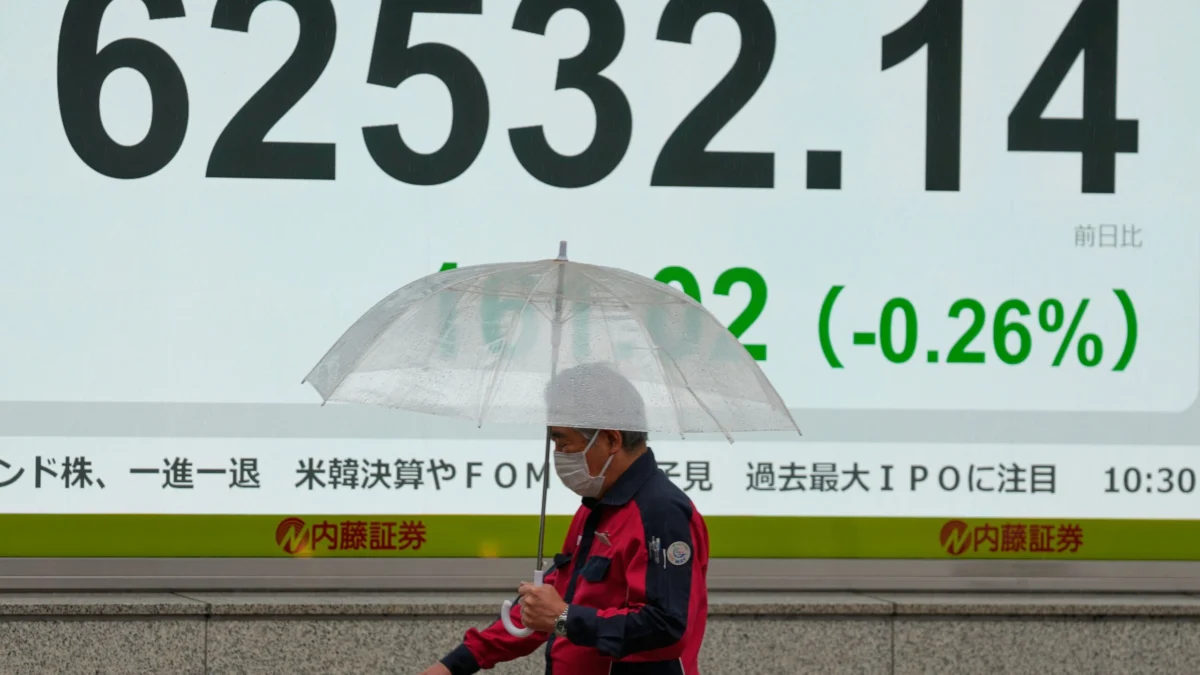
In Japan, the benchmark Nikkei 225 index dropped 1.7% to settle at 61,825 points. The broader Topix index followed a similar downward trajectory, shedding 1.8% to end the day at 3,925 points. The sell-off was particularly brutal for the semiconductor and artificial intelligence sectors, which have served as the primary engine of growth for the Nikkei throughout the year.
The malaise extended to mainland China, where the Shanghai Stock Exchange fell 1.5% to 3,605 points. The CSI 300, which tracks the largest listed companies across both Shanghai and Shenzhen, declined by 0.8% to 4,003 points. Analysts noted that despite various stimulus measures introduced by Beijing, investor sentiment remains fragile, struggling to overcome the gravitational pull of global tech volatility and ongoing concerns regarding the domestic real estate sector.
Chronology: The Anatomy of a Market Slide
The descent began in the early hours of Friday, following a brutal session in the United States. Investors reacted negatively to earnings reports and guidance from key US tech giants, which raised questions about the sustainability of the "AI hype cycle."
- Pre-Market Sentiment: Early trading in Asia signaled a gap-down start, with futures contracts anticipating heavy selling pressure as the session opened.
- Morning Session: The Nikkei 225 opened sharply lower, breaking through key support levels within the first hour of trading. Tech stocks, particularly chip manufacturers, led the decline as institutional investors began offloading positions.
- Mid-Day Pressure: As the Shanghai markets opened, they immediately mirrored the regional weakness. The influx of negative economic data regarding Japanese inflation exacerbated the mood, prompting a further sell-off.
- Afternoon Consolidation: By the final hour of trading, the markets had largely established their lows. While there was a slight rotation into defensive stocks—specifically food and retail companies—the overall trend remained resolutely negative until the closing bell.
Supporting Data: Inflationary Headwinds in Japan
The market downturn was not merely a reaction to external shocks; domestic factors played a critical role in Tokyo. Data released Friday morning revealed that Japan’s core inflation rate rose to 2.1% in September.
This figure is particularly significant because it exceeds the long-standing target set by the Bank of Japan (BOJ). For years, the BOJ has maintained an ultra-loose monetary policy to combat stagnation. However, with inflation now persistently above the 2% threshold, market participants are increasingly convinced that the central bank is nearing a pivot point.
The Interest Rate Conundrum
The prospect of a near-term interest rate hike by the Bank of Japan serves as a double-edged sword. While it signals economic normalization, it also threatens to increase borrowing costs for businesses and potentially cool the equity market. Higher rates typically compress the valuation multiples of high-growth tech firms, explaining why the sector took such a disproportionate hit during the session.
Official Responses and Expert Analysis
The consensus among market analysts is that the current volatility is likely to persist until there is more clarity on US tech sector earnings and the trajectory of the Middle East conflict.
Masato Koike, a senior analyst at the Sompo Institute Plus, provided a sobering outlook on the inflationary environment. "The core inflation rate is likely to accelerate further in the coming months," Koike stated. "We are seeing structural pressure from rising energy costs, which have been exacerbated by the ongoing tensions in the Middle East. This is a supply-side shock that complicates the Bank of Japan’s mandate significantly."
The sentiment was echoed by regional traders who pointed to the "risk-off" environment. When geopolitical instability rises, capital tends to move away from the high-beta stocks of the semiconductor industry and toward assets that provide stability, such as utilities, household goods, and retail chains.
Implications: The Great Rotation
The events of this Friday highlight a growing trend of "sector rotation" within the Asian markets. As investors lose their appetite for the high-risk, high-reward nature of chip-maker stocks, they are reallocating capital into companies that offer consistent dividend yields and stable demand, regardless of the economic cycle.
Winners and Losers
The divergence in stock performance was stark:
- The Losers (Semiconductors & AI): Sumco Corp, a major player in the semiconductor materials market, saw its shares tumble by nearly 9%. This was emblematic of the broader pain felt by companies tied to the AI supply chain. The lack of visibility on future demand for high-end chips caused investors to exit their positions rapidly.
- The Winners (Defensives): Conversely, investors sought refuge in traditional, defensive sectors. Aeon, the retail conglomerate, saw its shares rise by nearly 4%. Similarly, Sapporo Holdings and Kikkoman, both staples in the food and beverage industry, enjoyed gains of approximately 4%. These companies are viewed as "safe harbors" due to their ability to pass on rising costs to consumers without significantly impacting demand.
Future Outlook: Navigating Uncertainty
Looking ahead, the market is bracing for a period of heightened volatility. The combination of the upcoming US election cycle, the ongoing geopolitical volatility in the Middle East, and the potential for a tighter monetary policy in Japan creates a "perfect storm" for investors.
Key Factors to Watch in the Coming Week:
- Bank of Japan Policy Meeting: Traders will be parsing every word of the upcoming BOJ communications to gauge how aggressively they intend to address the 2.1% inflation rate.
- Middle Eastern Geopolitics: Any further escalation in the conflict will likely continue to put upward pressure on global energy prices, which in turn will feed back into the inflation numbers of energy-import-dependent nations like Japan.
- US Tech Earnings Sentiment: Whether the recent sell-off in US tech is a temporary correction or the start of a long-term re-rating will depend heavily on the next round of earnings guidance from major American chip designers and software giants.
In conclusion, Friday’s market performance serves as a stark reminder of the interconnectedness of global finance. When the giants of Silicon Valley stumble, the ripple effects are felt instantly in the trading halls of Tokyo and Shanghai. As we move into the final quarter of the year, investors are advised to prioritize quality and defensive positioning, as the macro-economic environment remains far from settled. The days of easy, momentum-driven gains appear to be giving way to a more disciplined, value-conscious era in Asian equity markets.