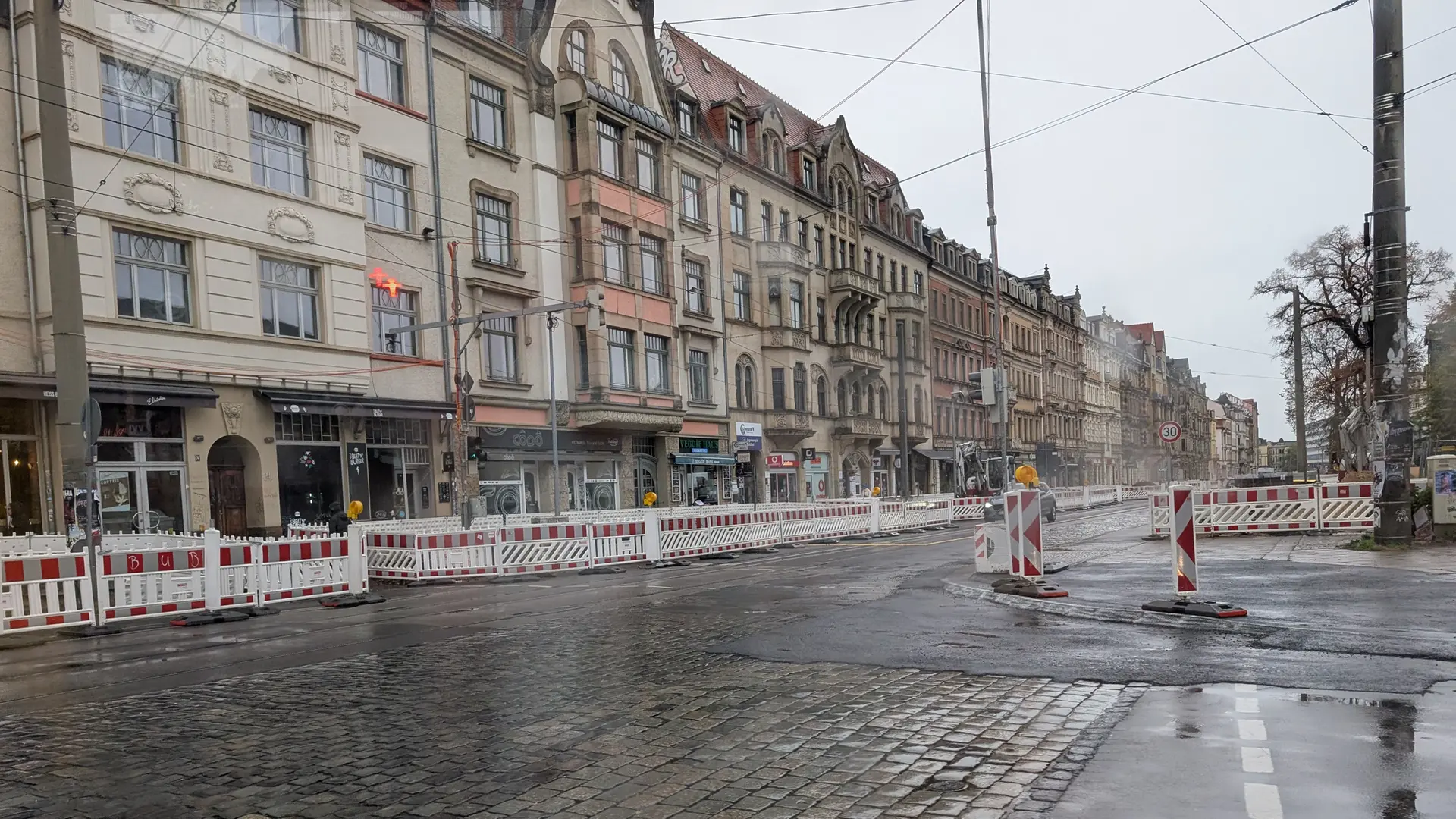
DRESDEN – A significant chapter in the long-gestating revitalization of one of Dresden’s most complex urban arteries has officially begun. City officials announced that, effective this Monday, specialized crews are initiating deep-bore drilling operations on the Königsbrücker Straße construction site. This phase marks the commencement of structural work for a high-tech, underground electrical substation, a critical component in the city’s broader strategy to modernize its public transportation network and infrastructure.
The project, which has been the subject of over three decades of political debate, planning revisions, and public scrutiny, is finally gaining momentum. As the city pushes toward the 2030 completion goals for the wider district, this specific power infrastructure project stands out as a feat of civil engineering designed to meet the demands of a growing, climate-conscious metropolis.
The Technical Scope: Engineering beneath the Surface
The drilling project is no minor undertaking. To install the new "Gleichrichterunterwerk" (GUW)—a rectifier substation—crews will be penetrating the earth to a depth of 13 meters. The site itself, located near the Eschenstraße, will occupy a footprint of approximately 110 square meters.
To accomplish this, the project managers have deployed a 28-meter-high, high-performance drilling rig. This massive piece of machinery is necessary to navigate the subterranean strata and create the reinforced concrete "bath" required for the electrical equipment. Once the drilling and excavation are complete, the subterranean vault will be outfitted to convert alternating current (AC) from the public grid into the direct current (DC) required to power the Dresdner Verkehrsbetriebe (DVB) tram network.

Why Underground?
The decision to place the substation entirely underground is driven by two primary factors: spatial constraints and environmental integration. In a dense, historic district like Dresden-Neustadt, surface-level industrial structures are often met with resistance due to their visual impact and noise profile. By placing the equipment beneath the street, the city preserves the aesthetic integrity of the neighborhood while ensuring the power supply remains robust and centrally located.
Chronology: A 30-Year Odyssey
To understand the weight of this week’s milestone, one must look back at the arduous history of the Königsbrücker Straße project.
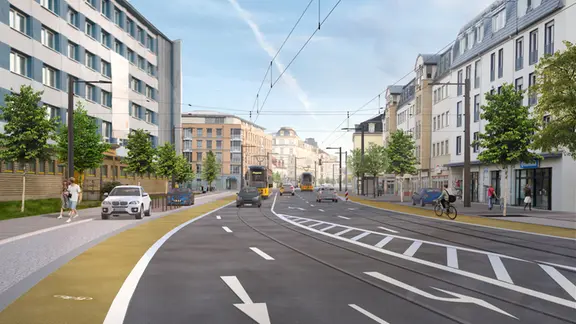
- 1990s–2010s: The Planning Deadlock: The reconstruction of Königsbrücker Straße has been a hallmark of local administrative struggle. For over 30 years, the project faced numerous legal challenges, protests from local residents, and disagreements regarding the balance between bike lanes, parking, tram infrastructure, and through-traffic.
- September 2026: Official Groundbreaking: After years of stalled progress, the formal expansion and reconstruction project, estimated to cost 88 million euros, officially kicked off last month. This signaled the transition from theoretical planning to physical implementation.
- October 26, 2026: Commencement of Substation Drilling: This week marks the first major specialized engineering phase. The start of the deep-bore drilling operations is a tangible sign that the project is moving steadily through its initial phase.
- 2028: The Targeted Completion of the Southern Section: The current focus is the southern stretch between Albertplatz and Bischofsweg. The city has set a firm deadline of spring 2028 to finish this section, which serves as a vital transit corridor for the city’s northern expansion.
- 2030: Full Project Horizon: While the southern section is the immediate priority, the vision for the entire corridor—including full landscape integration and finalized traffic management—is slated for completion by 2030.
Supporting Data and Technical Context
The need for a new substation is not merely a matter of convenience; it is a necessity driven by the electrification of modern urban transit. As the DVB continues to update its fleet with larger, more energy-efficient trams, the demand for stable, high-capacity DC power increases.
The model for this project is not unprecedented. The DVB has successfully operated a similar, larger-scale underground power facility beneath the Postplatz since 2005. The success of the Postplatz installation—which operates silently and without impact on the surface-level urban life—has provided the blueprint for the current installation at Königsbrücker Straße.

Power Conversion Metrics
- Input: High-voltage AC from the municipal grid.
- Output: Regulated DC, optimized for the DVB tram overhead lines.
- Site Area: 110 square meters (subterranean).
- Drilling Depth: 13 meters.
- Total Project Cost (Corridor): 88 million euros.
Official Responses and Stakeholder Interests
The city administration, alongside the DVB, has been proactive in addressing the concerns of local residents. The primary anxieties regarding the construction—noise, vibration, and dust—have been central to the project management strategy.
"Our goal is to ensure that this critical infrastructure functions seamlessly without becoming a nuisance to the people who live here," a spokesperson for the project management team stated.

Addressing Noise and Disruption
Local authorities have confirmed that, once completed, the subterranean power station will be virtually imperceptible. High-density soundproofing materials and advanced vibration-dampening foundations are being installed as part of the structure. Furthermore, the construction schedule for the drilling has been calibrated to minimize the disruption to the daily lives of the Neustadt community, with strictly monitored work hours to comply with local noise ordinances.
The DVB has emphasized that the long-term benefit of the project—a more reliable and efficient tram network—outweighs the short-term inconvenience of the construction. By increasing the efficiency of power delivery, the project also aligns with Dresden’s broader climate goals to promote public transit over individual vehicular transport.

Implications: The Future of Dresden-Neustadt
The construction of the Königsbrücker Straße is more than just a roadworks project; it is a fundamental reconfiguration of one of Dresden’s most vital public spaces.
Urban Planning and Mobility
The integration of this power station is a "silent" victory for urban planners. By burying the electrical guts of the tram network, the city opens up more space for cyclists, pedestrians, and greenery. This shift is part of a larger trend in European urban design: "the invisible city." By burying the technical infrastructure, the surface remains a space for humans rather than machinery.
Economic and Environmental Impact
The 88-million-euro investment is expected to ripple through the local economy. Beyond the direct jobs created during the four-year construction period, the improved transit infrastructure is expected to increase property values and commercial accessibility in the Neustadt area. Environmentally, the facility ensures that the DVB can support a greener fleet, reducing the city’s overall carbon footprint by ensuring that electricity delivery is optimized for the latest generation of electric tram engines.
A Test of Administrative Resilience
Finally, the project serves as a test of the city’s ability to execute complex, long-term visions. After decades of "planning fatigue," the fact that work is now proceeding on schedule is a signal to residents that the city government is capable of following through on its promises. The successful completion of the southern section by 2028 will likely serve as a catalyst for future municipal projects, proving that even the most contested infrastructure plans can be brought to fruition through persistent management and clear communication.

As the 28-meter drill begins its descent this Monday, it symbolizes the closing of a long chapter of debate and the opening of a new chapter of development. For the residents of Dresden, the sight of the construction barriers and the sound of the drills are now, for the first time in thirty years, the sounds of progress.