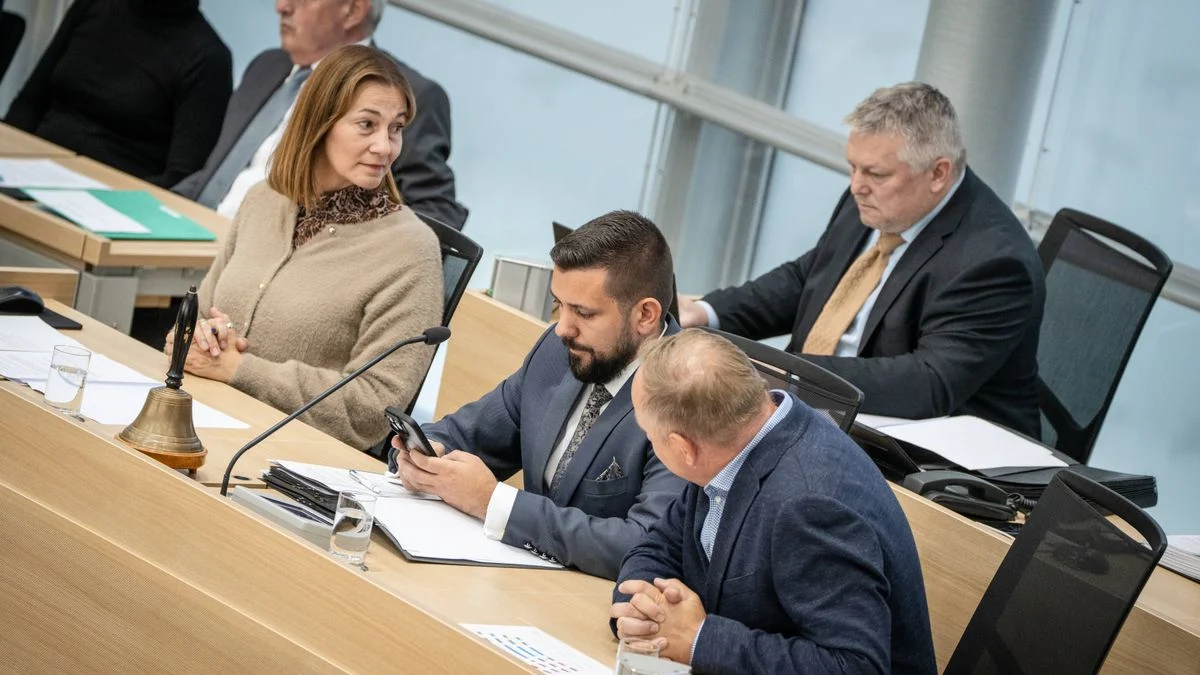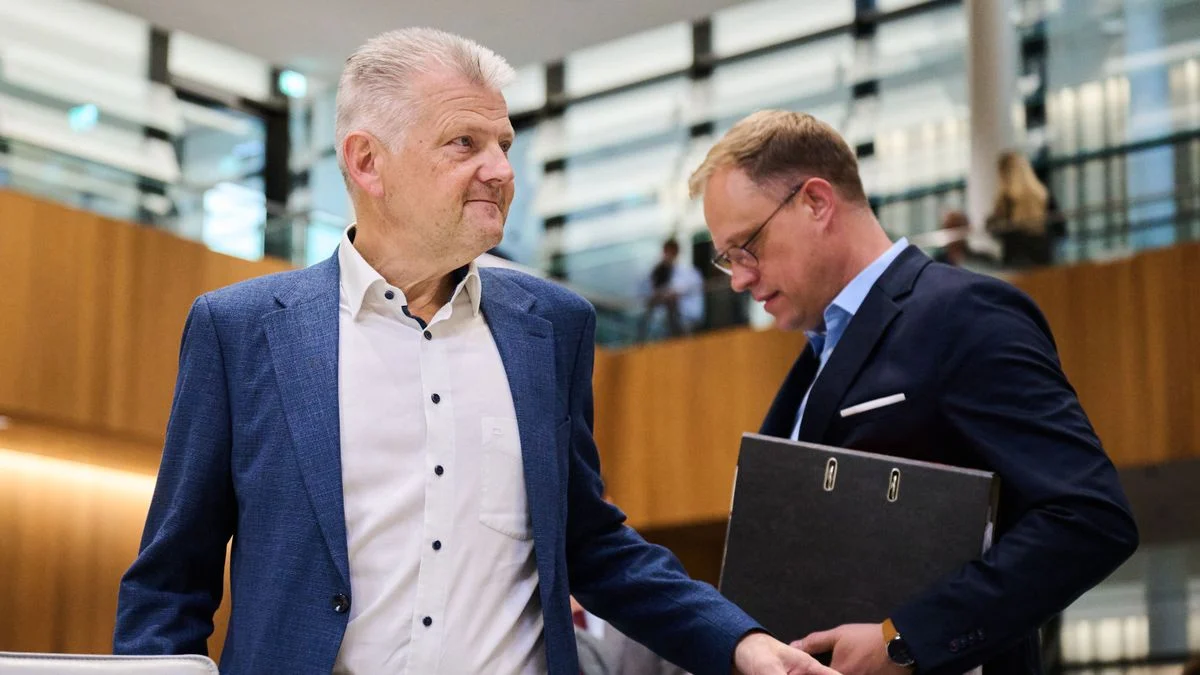
Hannover, Germany – In a significant move underscoring the principle of accountability for elected officials, the Lower Saxony state parliament (Landtag) has unanimously voted to lift the parliamentary immunity of Stefan Politze, the leader of the Social Democratic Party (SPD) parliamentary faction. The decision, confirmed by Politze himself following the vote, paves the way for a formal investigation into the 61-year-old politician, a procedure that commenced just a few days prior to the Landtag’s resolution.
The unanimous nature of the vote highlights a rare cross-party consensus on a matter of legal principle, allowing judicial authorities to proceed without political impediment. While the specific allegations prompting the investigation remain undisclosed to the public and, according to Politze, to him personally, the move signals a serious turn of events for one of Lower Saxony’s most prominent political figures.
Politze, who has served in the Landtag in Hannover since 2008 and holds a key leadership position within the ruling coalition, immediately affirmed his innocence and pledged full cooperation with the authorities. However, the shadow cast by the ongoing investigation raises profound questions about his political future and the stability of the SPD faction’s leadership in the state.
The Unanimous Decision: A Precedent-Setting Move
The unanimous vote by the Lower Saxony Landtag to strip SPD faction leader Stefan Politze of his parliamentary immunity represents a critical moment in the state’s political landscape. This rare display of unity across the political spectrum underscores the gravity of the situation and the parliament’s commitment to upholding the rule of law. Parliamentary immunity, enshrined in the German constitution, is designed to protect elected representatives from politically motivated prosecutions, thereby ensuring their ability to carry out their legislative duties without undue interference. However, it is not an absolute shield against justice. When credible allegations arise, parliaments are empowered to lift this protection, allowing investigative bodies to proceed with their work.
For the Landtag to reach such a unanimous decision indicates that the request from the public prosecutor’s office was deemed substantial enough to warrant a full legal inquiry. The lack of dissenting voices suggests that even Politze’s own party members, while expressing initial trust, recognized the procedural necessity of allowing the investigation to run its course unimpeded. This collective decision sends a clear message that no politician, regardless of their standing or party affiliation, is above the law.
Stefan Politze, a seasoned politician with a long career, now finds himself at the centre of an official probe. His immediate public statements, expressing a lack of knowledge regarding the specific reasons for the investigation while vehemently denying any wrongdoing, set the stage for a period of intense scrutiny. The decision by the Landtag, while purely procedural, marks the formal beginning of what could be a challenging chapter for Politze personally and for the SPD in Lower Saxony.
Chronology of Events Leading to the Vote
The process of lifting parliamentary immunity is a structured one, designed to balance the protection of elected officials with the demands of justice. While the exact timeline of events leading up to the Landtag’s unanimous decision remains partially obscured by the ongoing nature of the investigation, a general chronology can be pieced together.
The Initiation of Inquiry
The pivotal moment occurred "a few days ago," when an investigation procedure was initiated against Stefan Politze. This typically begins with a public prosecutor’s office receiving information or complaints that suggest potential criminal activity. This information could come from various sources: a private citizen, a whistleblower, another public authority, or even media reports. Based on an initial assessment of this information, if there is a "reasonable suspicion" of a criminal offense, the public prosecutor will formally open an investigation.
Once an investigation is initiated against a member of parliament, the public prosecutor’s office faces a procedural hurdle: the parliamentary immunity of the individual. To take any investigative steps that infringe upon the politician’s personal liberty or property (such as searches, seizures, or formal questioning that could lead to charges), the immunity must first be lifted. Consequently, the public prosecutor’s office would have formally requested the Lower Saxony Landtag to lift Politze’s immunity. This request would detail the nature of the allegations, even if broadly, to justify the need for further investigative measures.
Stefan Politze: A Profile
Stefan Politze is not an obscure figure in Lower Saxony politics. Born 1963, his political career spans decades, culminating in his current influential role as the leader of the SPD faction in the Landtag. He first entered the state parliament in 2008, representing the constituency of Hannover-Döhren. Over his tenure, he has built a reputation as an experienced parliamentarian, navigating complex legislative processes and party politics. As faction leader, Politze holds significant sway within the SPD, responsible for guiding his party’s legislative agenda, coordinating parliamentary work, and acting as a key spokesperson. This position places him at the heart of the state’s political decision-making, especially given the SPD’s role in the current governing coalition in Lower Saxony. His long-standing presence and leadership role make the current investigation particularly impactful, not just for him but for the stability and public image of his party.
The Parliamentary Process
Upon receiving the public prosecutor’s request, the Landtag typically refers the matter to a specialized committee, often the Committee for Rules of Procedure or a similar body responsible for parliamentary privileges. This committee reviews the prosecutor’s submission, assessing whether the request meets the legal requirements for lifting immunity. The committee’s role is not to prejudge guilt or innocence but to determine if there is a legitimate basis for allowing the investigation to proceed without hindering the politician’s parliamentary work unnecessarily.
Following the committee’s recommendation, the matter is brought before the full plenary session of the Landtag for a vote. In Politze’s case, the vote was unanimous, indicating a broad consensus among all parties that the legal process must be allowed to unfold. This unanimity is crucial, as it lends significant weight to the decision and minimizes any perception of political manoeuvring. It underscores the institutional belief that the integrity of the legal system takes precedence when serious allegations arise, even against a high-ranking official. The swiftness of the process, from the initiation of the investigation to the Landtag’s vote, suggests that the matter was treated with appropriate urgency and seriousness.
Understanding Parliamentary Immunity in Germany
The concept of parliamentary immunity is a cornerstone of democratic governance in Germany, designed to safeguard the independence and functioning of its legislative bodies. However, it is frequently misunderstood, often conflated with impunity. The case of Stefan Politze offers a timely opportunity to clarify its purpose and procedural nuances.
Constitutional Basis
Parliamentary immunity in Germany is primarily enshrined in Article 46 of the Basic Law (Grundgesetz), the country’s constitution. This article outlines specific protections for members of the Bundestag (federal parliament) and, by extension, for members of state parliaments (Landtage) through their respective state constitutions and parliamentary rules. The core principle is to prevent executive or judicial branches from harassing or intimidating parliamentarians through politically motivated legal actions, thereby ensuring their ability to freely exercise their mandate.
Purpose and Scope
The primary purpose of immunity is to protect the legislative process itself. It ensures that members of parliament can speak freely in debates, vote according to their conscience, and conduct their parliamentary duties without fear of arbitrary arrest or prosecution for actions related to their political work. For instance, statements made within parliamentary proceedings are generally covered by immunity.
However, it is crucial to understand what immunity does not entail. It does not provide a blanket exemption from the law. A parliamentarian is still subject to the same laws as any other citizen. Immunity merely means that certain investigative or judicial measures that would typically be undertaken by prosecutors or courts cannot be carried out without the explicit permission of the parliament. These measures include arrests, searches, seizures of documents, or the initiation of criminal proceedings. In essence, immunity is a procedural hurdle, not a substantive one. It delays judicial action until the legislative body has granted its consent, allowing it to determine if the legal action is indeed politically motivated or if it concerns a genuine breach of law that warrants investigation.
Procedure for Lifting
The process for lifting immunity is stringent and carefully defined. When a public prosecutor’s office believes there is sufficient evidence to initiate an investigation or take judicial action against a member of parliament, they must submit a formal request to the relevant parliament (Bundestag or Landtag). This request must detail the allegations and justify the necessity of lifting immunity for specific investigative steps.
Upon receiving the request, the parliament usually refers it to a specialized committee, such as the Committee for Rules of Procedure and Immunity. This committee examines the request, often consulting legal experts and, in some cases, the affected parliamentarian, although the committee does not investigate the alleged crime itself. Its role is strictly to assess whether the prosecutor’s request is legally sound and whether the lifting of immunity is necessary for the proper administration of justice. The committee then makes a recommendation to the full plenary session of the parliament.
The final decision rests with the parliament, which votes on whether to lift immunity. A decision to lift immunity allows the public prosecutor to proceed with their investigation as they would with any other citizen. If immunity is not lifted, the investigation cannot proceed beyond certain preliminary steps. The unanimous vote in the Lower Saxony Landtag for Stefan Politze signifies that all political parties agreed that the legal process should be allowed to run its course.
Precedents and Context
While each case is unique, the lifting of parliamentary immunity is not unprecedented in Germany. Over the decades, numerous politicians at both federal and state levels have had their immunity lifted, allowing investigations into a wide range of allegations, from financial irregularities and corruption to other criminal offenses. These cases, while often politically sensitive, reinforce the principle that the rule of law applies to everyone. The political culture in Germany generally supports allowing legal processes to unfold once credible allegations emerge, often viewing transparency and accountability as essential for maintaining public trust in democratic institutions. The current case involving Stefan Politze therefore falls within an established legal and political framework, albeit one that always draws significant public and media attention due to the high profile of the individuals involved.
Official Responses and Party Dynamics
The lifting of Stefan Politze’s parliamentary immunity has elicited carefully worded responses from the politician himself and his party, reflecting the delicate balance between upholding legal principles and managing political fallout.
Politze’s Vehement Denial and Pledge of Cooperation
Stefan Politze’s immediate reaction to the Landtag’s decision was a combination of professed ignorance regarding the specific allegations and a firm denial of any wrongdoing. "I currently know nothing about the reasons," Politze stated to the Nachrichtenagentur dpa, indicating a surprising lack of detail provided to him at this early stage of the process. This statement suggests that the formal request from the public prosecutor’s office to the Landtag, while sufficient for the Landtag to act, may not have been fully disclosed to Politze personally, or at least not in a way that clarified the precise nature of the charges.
Despite this lack of specific information, Politze emphatically asserted his innocence: "I have nothing to reproach myself for." This categorical denial is a standard first response for politicians facing investigation, aiming to preserve their reputation and maintain public trust. Crucially, he also pledged "full cooperation" with the authorities, stating his willingness to "provide all documents that are desired." This commitment to transparency is vital, as any perceived obstruction could further damage his standing. His decision to await "access to files" before making further statements is also a common legal strategy, allowing him to understand the full scope of the allegations before offering a detailed defense. This approach signals a careful, legally advised response rather than an immediate, emotional reaction.
The SPD’s Stance: Trust, but Verify
The SPD faction, through its spokesperson or other leading members like Siebels (mentioned in the original text, though without full name or specific position), has adopted a cautious but supportive stance. The question of whether Politze can remain faction leader despite the investigation was met with pragmatism: "That, I believe, depends essentially on the outcome of the investigation," Siebels stated. This position reflects the party’s dilemma: on one hand, there is a natural inclination to stand by a long-serving and prominent party member; on the other, there is an imperative to uphold ethical standards and the rule of law, especially for a party that champions social justice and integrity.
The SPD’s initial trust in Politze’s denial – "Politze has declared that he has done nothing wrong. We must initially trust that and now wait to see what the investigations reveal" – underscores this internal balancing act. This "trust, but verify" approach allows the party to avoid prematurely condemning its leader while simultaneously signaling that any findings of wrongdoing would have severe consequences. Internally, the SPD will likely be monitoring the investigation closely. Depending on the nature and severity of any potential charges, the party might face difficult decisions regarding Politze’s leadership role, potentially including calls for him to step down temporarily or permanently to protect the party’s image and focus on its political agenda. The party’s ability to maintain internal cohesion and project an image of steadfastness will be critical during this period.
The Role of the Public Prosecutor
While the original article does not quote the public prosecutor’s office, their role is central to this entire process. It was their request that triggered the Landtag’s decision. Public prosecutors in Germany operate independently of political influence, guided solely by the law and the evidence. Their standard operating procedure dictates that they typically do not comment on ongoing investigations to protect the integrity of the probe and the privacy of those involved, unless there is a compelling public interest reason to do so. Their silence, therefore, is not indicative of inactivity but rather adherence to professional protocols. The public awaits their findings, which will ultimately determine the legal fate of Stefan Politze.
Wider Political Reactions
The unanimous vote in the Landtag suggests that other political parties, including the opposition, also agreed on the procedural necessity of lifting Politze’s immunity. While this reflects a consensus on the principle of accountability, it does not preclude opposition parties from closely monitoring the situation. They will undoubtedly be scrutinizing the investigation’s progress and the SPD’s handling of the matter. Any perceived missteps or delays in clarification could become fodder for political criticism, potentially impacting the broader political discourse in Lower Saxony and trust in its institutions. The focus will remain on the due process and the integrity of the investigation, but the political implications will certainly be leveraged by various actors as developments unfold.
Implications: A Crossroads for Politze and the SPD
The lifting of Stefan Politze’s parliamentary immunity marks a critical juncture, carrying significant implications for his personal future, the standing of the SPD in Lower Saxony, and the broader political climate in the state.
Political Future and Reputation
For Stefan Politze, the immediate and most profound implication is the uncertainty surrounding his political future. Even if ultimately cleared of any wrongdoing, the initiation of a criminal investigation and the public nature of the immunity lifting process inevitably cast a shadow over his reputation. In politics, perception often rivals reality, and the mere existence of an investigation can erode public trust and confidence. His ability to effectively lead the SPD faction may be compromised, as colleagues and constituents alike will be watching closely. Depending on the nature of the allegations and the eventual outcome, Politze could face:
- Temporary Suspension or Stepping Down: If the investigation drags on or reveals serious initial findings, pressure might mount for him to temporarily step down from his leadership role to avoid distracting from the party’s work.
- Loss of Leadership: If charges are filed, or if the investigation uncovers unethical conduct even if not criminal, his position as faction leader would become untenable.
- Legal Consequences: Should the investigation lead to an indictment and conviction, he would face the full force of the law, potentially including fines, imprisonment, and the forfeiture of his parliamentary seat.
- Reputational Damage: Even an acquittal, while legally vindicating, might not fully restore his public image, as the initial suspicion can linger.
Impact on the SPD Faction
The SPD in Lower Saxony faces a significant challenge in managing the fallout from this development. As the leader of the parliamentary faction, Politze is a central figure, and an investigation into him affects the entire party.
- Leadership Vacuum/Succession: Should Politze step down or be forced out, the SPD would need to quickly address a potential leadership vacuum within the faction. This could trigger internal power struggles or a period of instability as a new leader is chosen and establishes themselves.
- Party Image and Public Trust: The incident could tarnish the party’s image, especially if the allegations relate to issues of integrity or corruption. The SPD, as a party committed to social justice and transparency, must demonstrate a clear and uncompromising stance against any form of misconduct to maintain public trust. Their handling of the situation will be crucial in shaping public perception.
- Distraction from Policy Agenda: The focus on Politze’s legal troubles could divert attention and resources from the party’s legislative priorities and policy agenda, potentially hindering their effectiveness in the Landtag and undermining their electoral prospects.
- Opposition Scrutiny: Opposition parties will undoubtedly use the situation to scrutinize the SPD’s ethics and leadership, potentially using it as leverage in future political debates or election campaigns.
Maintaining Public Trust
Beyond Politze and the SPD, this case has broader implications for the maintenance of public trust in democratic institutions. When high-ranking politicians are investigated, it tests the integrity of the political system and the impartiality of the justice system.
- Accountability: The unanimous decision to lift immunity reinforces the principle that no one, regardless of their position, is above the law. This demonstration of accountability is crucial for public confidence in the rule of law.
- Transparency: The demand for transparency, both from Politze and the investigative authorities, will be high. Clear communication, while respecting legal protocols, will be essential to avoid speculation and ensure the public feels informed.
- Fair Process: Ensuring a fair and thorough investigation, free from political interference, is paramount. The outcome of this case will be watched closely as a measure of the strength and impartiality of Germany’s legal and political systems.
The Principle of Accountability
This situation serves as a stark reminder of the delicate balance between protecting parliamentary independence and ensuring individual accountability. While immunity shields politicians from frivolous lawsuits, its lifting demonstrates that when serious allegations emerge, the legal process must take precedence. This principle is fundamental to democratic governance, assuring citizens that their representatives are subject to the same legal standards as everyone else, thereby upholding the foundational promise of equality before the law.
Conclusion
The unanimous decision by the Lower Saxony Landtag to lift the parliamentary immunity of SPD faction leader Stefan Politze marks a significant development in state politics. While Politze vehemently denies any wrongdoing and pledges full cooperation, the initiation of an investigation casts a considerable shadow over his political future and the stability of the SPD’s leadership in Hannover.
This case underscores the critical balance between protecting the independence of elected representatives and ensuring their accountability under the law. The swift and unanimous parliamentary action demonstrates a collective commitment to due process, affirming that even high-ranking officials are not immune to legal scrutiny when credible allegations arise.
As the public prosecutor’s investigation proceeds, all eyes will be on its findings. For Stefan Politze, the coming months will be a period of intense personal and professional challenge. For the SPD, navigating this situation with integrity and transparency will be crucial for maintaining public trust and cohesion within its ranks. The outcome will not only determine the fate of a prominent politician but also serve as an important reaffirmation of the rule of law within Germany’s democratic framework.