By Arts & Culture Correspondent
Published: September 30, 2026
In the modern landscape of German theater, few names command as much reverence and intrigue as Lina Beckmann. A powerhouse of the Hamburg Schauspielhaus ensemble and a familiar face to millions of television viewers via the long-running crime drama Polizeiruf 110, Beckmann has carved out a unique space in the performing arts. She is a performer who balances the gravity of Greek tragedy with the sharp, relatable wit of a local neighbor. To watch her on stage is to witness a raw, visceral transformation—a "primal force" that turns the unspeakable into palpable reality.
The Anatomy of an Actress: A Portrait of Intensity
When Lina Beckmann steps onto the stage as Medea, the atmosphere in the Hamburger Schauspielhaus shifts instantly. It is not merely an act; it is a manifestation of existential dread and unbridled fury. Her scream, described by critics as "nearly inhuman," cuts through the air, vibrating against the ribs of those in the front row. It is a performance that demands the audience confront the discomfort of betrayal and the horrific resolution of vengeance.
Beckmann admits that such roles do not come easily. The preparation for the character of Medea required a total surrender to the character’s psychological state. Under the guidance of director Karin Beier, Beckmann spent weeks "charging" herself with the character’s grief. "I didn’t know how to play it at first," she confesses. "I had to let go of the artifice and simply be blank until the moment arrived."
This ability to project the "unspeakable"—the raw, unvarnished truth of human trauma—is what distinguishes Beckmann from her contemporaries. She does not play Medea as a distant, mythological deity; she plays her as a contemporary woman, grounded in a reality that feels uncomfortably close to home.
Chronology: From the Ruhrgebiet to the National Stage
To understand the trajectory of Lina Beckmann is to understand a lifelong commitment to the craft of storytelling.
- Early Beginnings (1990s–2000s): Born and raised in the Ruhr region of Germany among four siblings, Beckmann’s theatrical DNA was formed early. The family’s deep connection to the arts culminated in 2009 when she and her siblings founded the independent theater ensemble "Spielkinder," a move that signaled her desire to move beyond traditional structures.
- The Cologne-Hamburg Axis (2005–2013): Her professional path became inextricably linked with the visionary director Karin Beier during their time at the Schauspielhaus Köln. It was here that she also met her future husband, the acclaimed actor Charly Hübner. In 2013, the triad of Beckmann, Hübner, and Beier made the pivotal move to Hamburg, cementing their reputation as the architects of a new, bold era in German theater.
- The "Anthropolis" Era (2023–2026): Beckmann’s recent work in the Anthropolis project—a marathon series of ancient Greek plays—has set a new benchmark for endurance and artistic range. Her solo performance in Laios earned her widespread critical acclaim, cementing her status as the heart of the Hamburger Schauspielhaus.
- Television Integration (2022–Present): Her transition to the mainstream spotlight came in April 2022, when she assumed the role of Commissioner Melly Böwe in the Rostock-based Polizeiruf 110, succeeding her husband, Charly Hübner. This role introduced her to a massive television audience, bridging the gap between high-brow theater and popular culture.
Supporting Data: A Career Defined by Excellence
Beckmann’s career is not merely one of popularity, but of sustained critical validation. Her mantle is filled with accolades, most notably the Alfred-Kerr-Darstellerpreis, which she received at the 2011 Berlin Theatertreffen.
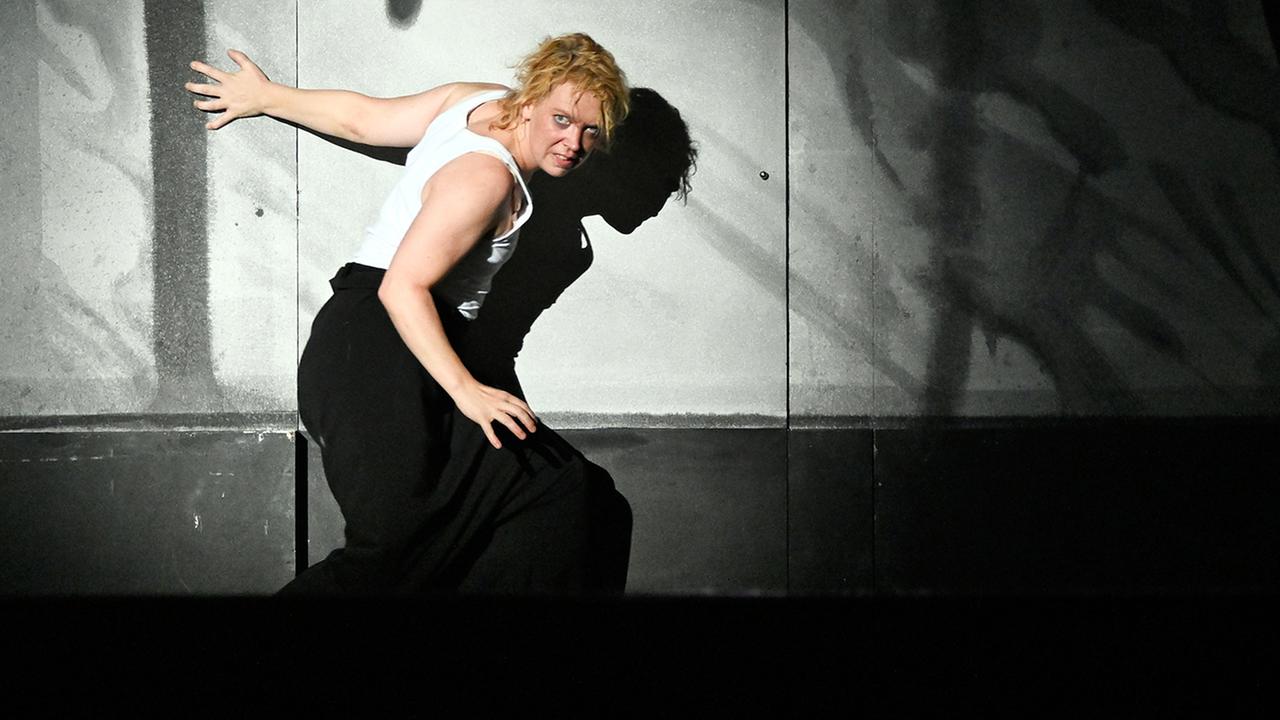
In her laudatory speech, the legendary actress Eva Mattes touched on the essence of Beckmann’s appeal: "She speaks to the audience as if she were not an artist, but the cashier at the corner shop." This down-to-earth persona serves as a strategic contrast to the intensity of her roles. Whether she is performing a harrowing Greek tragedy or a light-hearted comedic interlude—such as her memorable, meta-theatrical rants during the Fremde Sonne production—she maintains a direct, unmediated line of communication with the audience.
Collaboration as a Catalyst
The symbiotic relationship between Beckmann and director Karin Beier is one of the most productive partnerships in European theater. Beier, known for her surgical precision as an observer of human behavior, provides the framework, while Beckmann provides the kinetic energy. This partnership has allowed them to push the boundaries of what is possible in stage performance, turning the theater into a space where the audience feels personally implicated in the narrative.
Official Perspectives and Professional Dynamics
Working alongside her husband, Charly Hübner, has brought a unique dynamic to both the stage and the screen. Their recent collaboration in the film Spaziergang nach Syrakus (directed by Lars Jessen) showcased their ability to translate their intense chemistry into the intimate, nuanced language of film.
However, Beckmann is quick to note the differences in the mediums. "On set, you have to constantly re-evaluate," she notes. "What does it mean to look to the right? What is a subtle eye twitch versus a downward glance?" She finds that while film allows for a project to be "finished" after the final cut, the theater is a living, breathing entity. Each performance is a negotiation with a different audience, a different energy, and a different set of psychological stakes.
Implications: The Future of the "Beckmann Method"
Lina Beckmann’s influence on the German stage extends beyond her specific performances. She represents a shift away from the overly stylized, distant acting techniques of the late 20th century toward a more "truth-seeking" approach.
Implications for the Industry:
- Breaking the Fourth Wall: By engaging directly with the audience—often through improvisation or breaking character—Beckmann creates a community-based experience that makes theater feel vital rather than historical.
- Multidisciplinary Versatility: Her ability to transition between the high-octane demands of ancient Greek drama and the subtle, internal requirements of television crime dramas sets a new standard for modern actors.
- The "Ensemble" Resilience: By working with her siblings and long-term collaborators, she emphasizes the importance of trust in artistic risk-taking. Her career suggests that the most profound art is created within stable, long-term creative relationships.
As she looks toward the future, the question remains: what can an actress who has already tackled the greatest roles in Western literature do next? If her history is any indication, she will continue to seek out the uncomfortable, the "unspeakable," and the deeply human.
In an era where digital entertainment often replaces live interaction, Lina Beckmann stands as a defiant reminder of the power of the human presence. Whether she is the grieving mother of a tragedy or the no-nonsense commissioner of a police procedural, she remains, at her core, the "cashier at the corner shop"—a bridge between the extraordinary and the everyday, inviting the audience to join her in the pursuit of truth.