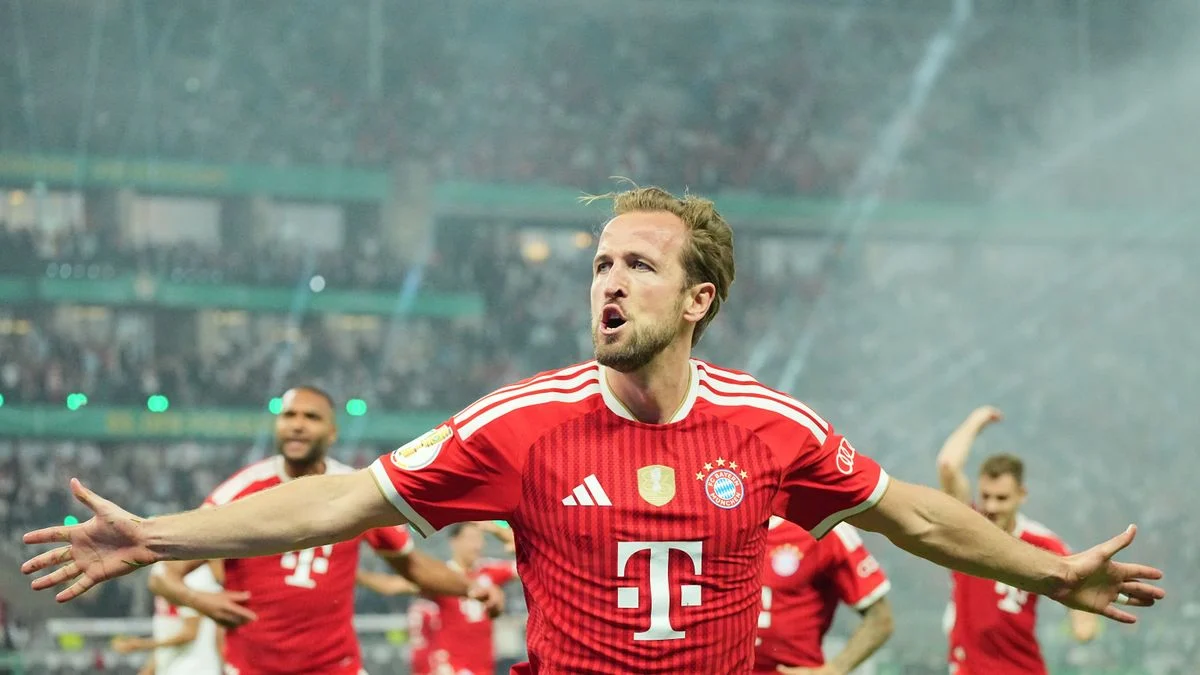
The FC Bayern Munich camp is grappling with a significant personnel crisis as key winger Luis Díaz has been diagnosed with a muscle tear. The injury, sustained during a high-stakes Champions League encounter, threatens to keep the Colombian international out of action for the remainder of the calendar year, dealing a severe blow to Vincent Kompany’s tactical plans as the season approaches its winter climax.
The Core Facts: A Significant Muscle Tear
In an official statement released on Thursday, October 22, 2026, FC Bayern Munich confirmed that Luis Díaz suffered a "minor muscle bundle tear" in the back of his left thigh. The injury occurred during the closing stages of Wednesday evening’s intense 2-2 draw against Arsenal in the UEFA Champions League.
While the term "minor" might initially suggest a swift recovery, the reality for professional athletes is often more complex. The medical staff at Säbener Straße has opted for a cautious approach, confirming that the player will be unavailable "for the time being." While the club has refrained from providing a definitive timeline for his return, industry experts and previous injury precedents suggest that a multi-week rehabilitation process is almost certain. In a worst-case scenario, the 2026 campaign could be effectively over for the winger, leaving Bayern to navigate a brutal schedule without one of their most explosive attacking assets.
The Chronology of a Worsening Issue
The timeline of the injury reveals a precarious situation that had been simmering for several days. According to reports, the issue was not a sudden, freak occurrence, but rather the escalation of a pre-existing muscular complaint.
The Warning Signs
Díaz had already been feeling the effects of a strenuous schedule leading up to the Arsenal clash. During the dominant 6-1 Bundesliga victory over RB Leipzig earlier in the week, the player reported discomfort in his thigh. Head coach Vincent Kompany, clearly aware of the risks, opted to bench the Colombian for the start of the Champions League match, hoping to protect his star player while still having the option to deploy him should the match situation demand it.
The Fatal Substitution
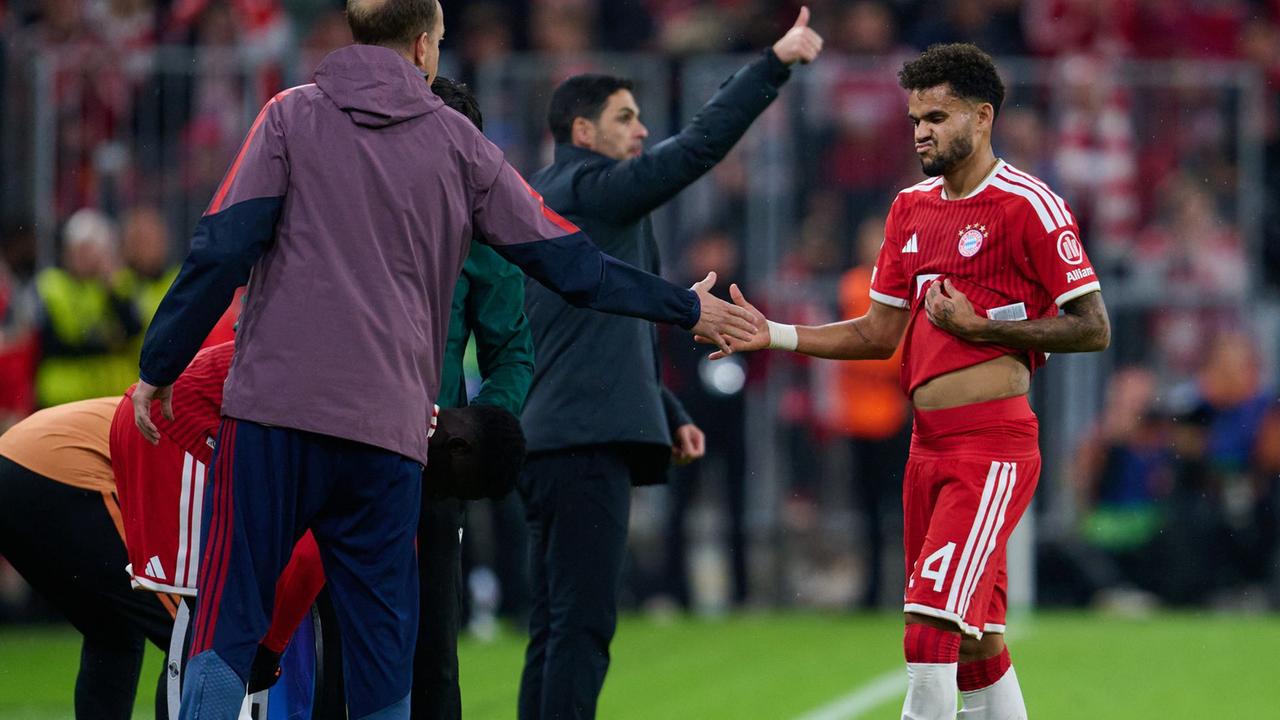
The tactical gamble appeared sound for over an hour. With the scoreline hanging in the balance, Kompany brought Díaz onto the pitch in the 68th minute, replacing Ismael Saibari. The intention was to inject pace and creativity to secure a win against the Gunners. However, the plan backfired as the physical demands of the match proved too much for the already compromised muscle. Just minutes before the final whistle, it became clear that Díaz could not continue. He was substituted off for Bara Sapoko Ndiaye, visibly hampered and clearly frustrated as he exited the field.
Official Responses and Tactical Implications
The narrative following the match was initially one of cautious optimism, which quickly shifted as clinical results became available.
Max Eberl’s Initial Assessment
In the immediate aftermath of the draw, Bayern’s Sportvorstand, Max Eberl, attempted to soothe concerns during post-match media interviews. "It was something muscular beforehand," Eberl admitted. "He felt it again slightly. We assume that it is nothing dramatic."
This assessment reflected the club’s initial hope that a few days of rest would suffice. However, the subsequent MRI scans painted a more sobering picture. The diagnosis of a muscle bundle tear—even a "small" one—is a clinical reality that forces a strict recovery protocol, rendering the initial optimism premature.
Vincent Kompany’s Balancing Act
For manager Vincent Kompany, the loss of Díaz is a tactical headache. Since his arrival, Kompany has relied on the Colombian’s ability to stretch defenses and provide width. With the team currently pushing for dominance on both domestic and European fronts, the manager must now shuffle his deck.
The injury forces a reliance on depth players. The promotion of youngsters and fringe players into the starting XI will be scrutinized, as the team cannot afford a dip in performance during this crucial stage of the season.
Comparative Analysis: The Precedent of Muscular Injuries
To understand the potential duration of Díaz’s absence, one must look at recent history at FC Bayern. Muscular injuries, particularly in the hamstrings and thighs, have been a recurring theme for the Munich squad in recent seasons.
When looking at the injury histories of players like Jamal Musiala and Lennart Karl, the recovery timelines for similar "minor" muscle tears have historically ranged from four to ten weeks. This variance depends heavily on the grade of the tear and the player’s biological response to rehabilitation.
If Díaz follows the four-week recovery path, he could return for the final matches of November. However, if the injury requires a more conservative six-to-ten-week approach—often preferred to avoid re-injury—Díaz will not see the pitch again until the Bundesliga resumes in early 2027. This potential long-term absence changes the outlook for Bayern’s winter strategy, potentially forcing the club to consider their depth in the upcoming transfer window.
The Imminent Challenges: A Schedule Without Mercy
The timing of this injury is particularly cruel, given the strength of the upcoming opposition. FC Bayern Munich is entering a "gauntlet" phase of their schedule, where every point is vital.
The Bundesliga Grind
This Sunday, the Bavarians face a high-pressure encounter against the SC Freiburg. With both teams currently level on points, the match is a direct contest for positioning at the top of the table. Losing a key offensive threat like Díaz shifts the burden onto the remaining forwards to break down a well-organized Freiburg defense.
Domestic and European Stakes
Beyond the league, the challenges mount:
- DFB-Pokal (Second Round): A midweek trip to face 1. FC Magdeburg. While Bayern will be the heavy favorites, cup matches are notorious for being potential banana skins, especially when a team is forced into tactical reshuffling.
- Der Klassiker: The showdown against Borussia Dortmund on October 31st is the crown jewel of the Bundesliga schedule. Preparing for such a fixture without the tactical versatility of Díaz limits Kompany’s options significantly.
- European Night in Madrid: Shortly after the Dortmund match, Bayern must travel to face Atlético Madrid on November 3rd. Playing in the Metropolitano Stadium requires intensity and stamina, qualities that are often provided by the very players currently sidelined.
Strategic Outlook: How Bayern Can Adapt
With the transfer window closed, Bayern’s solutions must come from within. The coaching staff is now tasked with reconfiguring the attack.
- Tactical Shift: Kompany may look to shift from a wide-heavy attack to a more narrow, possession-based approach, utilizing midfielders to overload the center of the pitch.
- Youth Integration: Players like Bara Sapoko Ndiaye, who replaced Díaz against Arsenal, will likely see an uptick in minutes. This is a "sink or swim" moment for the club’s academy graduates.
- Increased Burden on Veterans: The reliance on established stars will increase. Players like Harry Kane, Thomas Müller, and Leroy Sané will be expected to shoulder the offensive load, potentially playing more minutes than originally planned to compensate for the lack of rotation options.
Conclusion
The injury to Luis Díaz serves as a stark reminder of the physical toll modern football exacts on its elite participants. While Bayern Munich possesses a squad built for depth and success, the loss of an impact player of Díaz’s caliber is rarely seamless.
As the club navigates the next several weeks—filled with top-tier Bundesliga clashes and European battles—the focus will be twofold: ensuring Díaz receives the best possible medical care for a complete recovery, and maintaining the team’s momentum in a season that allows for very little margin of error. The "rest of the year" prognosis is a heavy cloud hanging over the Allianz Arena, but for the record champions, the mandate remains the same: adapt, overcome, and keep winning.