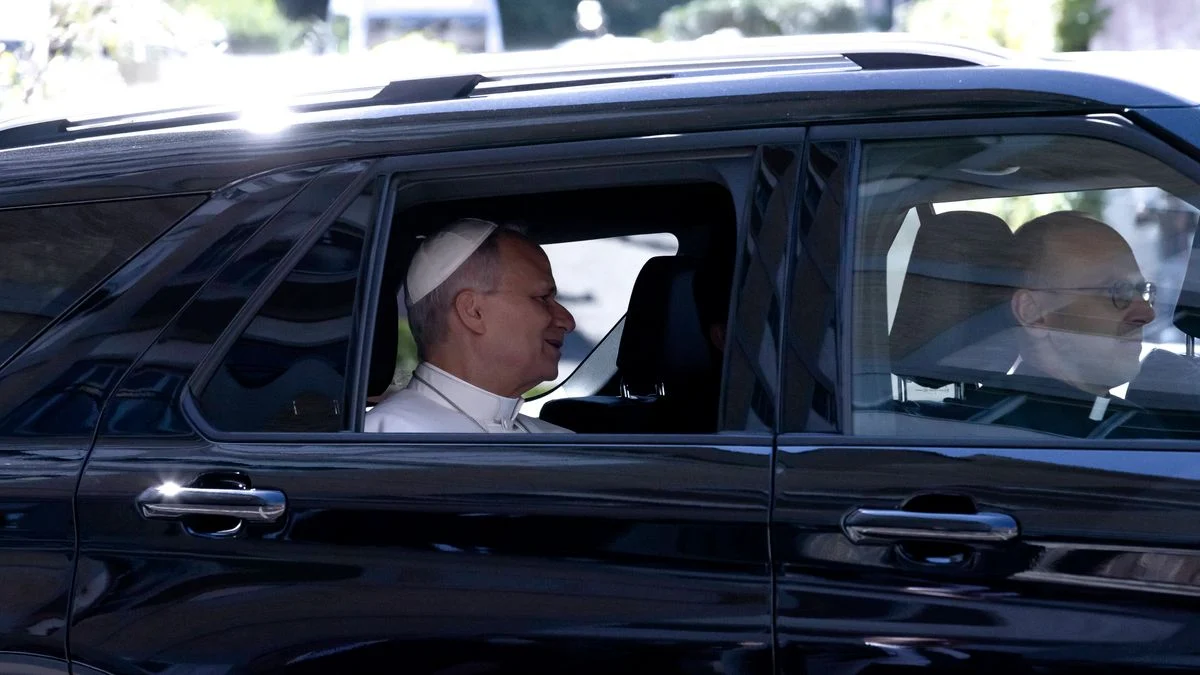
The Vatican’s medical team confirmed on Tuesday evening that Pope Leo XIV has undergone a successful surgical procedure to remove a malignant tumor from his lung. As the world watches, international leaders and religious figures have united in offering prayers and well-wishes for the pontiff’s recovery.
The news of the Pope’s diagnosis, which came just days after he revealed a routine check-up had identified a suspicious node, has sent ripples of concern through the global community. The surgery, conducted at the Gemelli Hospital in Rome, marks a significant moment for the Catholic Church as it confronts the health challenges facing its leader.
The Medical Procedure: Precision and Success
The surgical intervention, which lasted approximately three hours, was performed using a "video-assisted thoracic surgery" (VATS) technique. This minimally invasive method involves making several small incisions in the chest wall, through which a miniature camera and specialized surgical instruments are inserted. This allows surgeons to operate without the need to open the entire rib cage, significantly reducing recovery time and trauma to the patient.
Doctors confirmed that the procedure was "successful and without complications." The medical team successfully removed the lower lobe of the Pope’s right lung, where the growth was located. Post-operative pathology reports have since confirmed the diagnosis as a pulmonary adenocarcinoma—a form of non-small cell lung cancer.
Following the procedure, Pope Leo XIV was moved to the specialized papal suite on the tenth floor of the Gemelli Hospital, a facility with a long history of providing medical care to the papacy, including Popes John Paul II and his immediate predecessor, Francis. He is expected to remain hospitalized for at least a week to ensure proper recovery and to monitor for any potential complications.
Chronology of Events: From Discovery to Recovery
The timeline of the Pope’s health journey has been characterized by a level of transparency that represents a departure from historical Vatican protocol.
- Sunday: The Vatican unexpectedly announced that a routine medical examination had revealed a node in the Pope’s lung, prompting immediate further testing.
- Tuesday Morning: Pope Leo XIV was admitted to the Gemelli Hospital in Rome for the scheduled operation.
- Tuesday Evening: The medical team issued a formal statement confirming the successful removal of the tumor and identifying the nature of the condition as lung cancer.
- Wednesday: Official audiences and public events for the remainder of the week were cancelled, including a high-profile meeting with the Minister-President of Saarland, Anke Rehlinger, and a scheduled appearance at an international bishops’ conference on the family.
The Vatican has yet to issue a long-term prognosis, noting that future treatment plans—such as potential chemotherapy or immunotherapy—will depend on a detailed analysis of the pathology results and whether any further cellular traces of the disease remain.
A Legacy of Transparency
The openness with which Pope Leo XIV has handled his diagnosis is being noted by observers as a potential turning point for the Holy See. Historically, the health of a sitting Pope was treated as a sensitive, often guarded, matter of state. By choosing to communicate the nature of his condition directly, Leo XIV is seen as aligning his papacy with a more modern, accessible standard of leadership.
This transparency comes as public attention shifts toward the Pope’s family medical history, which has been the subject of recent reports in the United States. Media outlets, including CBS, have highlighted a history of cancer within the Pope’s family. His mother, Mildred, passed away at 78 following a battle with cancer, and his father, Louis Prevost, died at 77 after complications involving colon cancer and heart disease. Furthermore, the Pope’s brother, Louis, is currently undergoing treatment for multiple myeloma, an ordeal that has reportedly resonated deeply with the Holy Father.
Official Responses and Global Solidarity
The news of the diagnosis has elicited a swift and profound response from world leaders, who have set aside political divides to offer their support to the 267th successor of St. Peter.
Germany’s Federal President
German President Frank-Walter Steinmeier was among the first to express his solidarity. In a statement to the Catholic News Agency (KNA), Steinmeier spoke with concern and empathy, stating, "The voice of the Pope on the current questions and challenges of our time is of special importance and value for many people worldwide, including in Germany, far beyond denominational boundaries." Steinmeier also fondly recalled his personal meeting with the Pope in September 2025.
Ecclesiastical Support
The German Bishops’ Conference, led by Bishop Heiner Wilmer, expressed their commitment to supporting the Pope through faith. "We wish the Holy Father, above all, rest and strength for his recovery," the Conference posted on social media. "In the coming days, we will hold him especially in our prayers."
International Leaders
The global reach of the Catholic Church was underscored by the diverse range of leaders offering their well-wishes:
- United States: Secretary of State Marco Rubio took to the platform X (formerly Twitter) to share his support. "May the Lord give him strength and may the Holy Spirit guide the medical professionals caring for the Holy Father," he wrote, noting that he and his wife, Jeanette, are keeping the Pope in their prayers.
- Peru: President Keiko Fujimori issued a poignant statement expressing the prayers of the nation of Peru. The Pope’s ties to the country are strong, stemming from his years of service there as a missionary and bishop, a tenure that even granted him honorary Peruvian citizenship.
- Italy and Austria: Reports confirmed that Italian Prime Minister Giorgia Meloni and Austrian President Alexander Van der Bellen have both reached out to offer their best wishes for a swift and full recovery.
The Implications: A Papacy in Transition
The medical crisis presents immediate challenges for the Vatican’s diplomatic and pastoral schedule. With all audiences cancelled through mid-next week, the immediate focus is on the Pope’s recovery. However, the long-term calendar is already facing uncertainty.
A significant two-week diplomatic journey to Uruguay, Argentina, and Peru is scheduled for November. Given the nature of the surgery and the necessity of post-operative recuperation, questions regarding the feasibility of this trip are already circulating among Vatican analysts. The trip is of high personal importance to the Pope, given his historical ties to the region, but medical advisors will likely prioritize his long-term health over immediate travel requirements.
Furthermore, the cancellation of the participation in the final mass of the international bishops’ conference on marriage and family highlights the immediate impact on the Church’s administrative and social agenda. The coming weeks will be critical, as the Vatican balances the Pope’s need for recuperation with the demands of his global leadership.
Conclusion: A Moment of Reflection
As Pope Leo XIV recovers in his suite at the Gemelli Hospital, the world remains in a state of quiet expectation. The outpouring of sympathy from across the political and religious spectrum underscores the unique position the papacy holds in the 21st century—not merely as a religious office, but as a moral anchor for millions.
The success of the surgery has provided a glimmer of optimism, yet the reality of an adenocarcinoma diagnosis remains a serious matter. Whether the Pope will return to his full duties within the next few weeks or require a more extended period of rest remains to be seen. For now, the focus remains on the medical team’s expertise and the global community’s collective hope for the restoration of the health of a man who, for many, serves as a vital voice in an increasingly fragmented world.
The Vatican has promised to continue providing updates as the Pope’s condition evolves, ensuring that the faithful are kept informed as the Holy Father begins his journey toward healing. In the meantime, prayer vigils continue outside the walls of the Gemelli Hospital, a testament to the enduring influence of the pontiff’s ministry.