Berlin, Germany – July 21, 2026 – The German film industry, after navigating a turbulent period marked by global pandemics, soaring production costs, and international labor disputes, is experiencing a cautious resurgence. Buoyed by a recent surge in global recognition for German-made productions, the federal government has introduced a comprehensive package of measures, colloquially dubbed the "Filmbooster," aimed at revitalizing the domestic production landscape. At its core is a groundbreaking investment obligation for streaming services and broadcasters, coupled with a significant, albeit potentially fleeting, increase in state funding. While the industry welcomes the renewed political attention, many voices within the sector warn that these initiatives, particularly in the absence of a robust tax incentive model, may fall short of truly cementing Germany’s position as a globally competitive filmmaking hub.
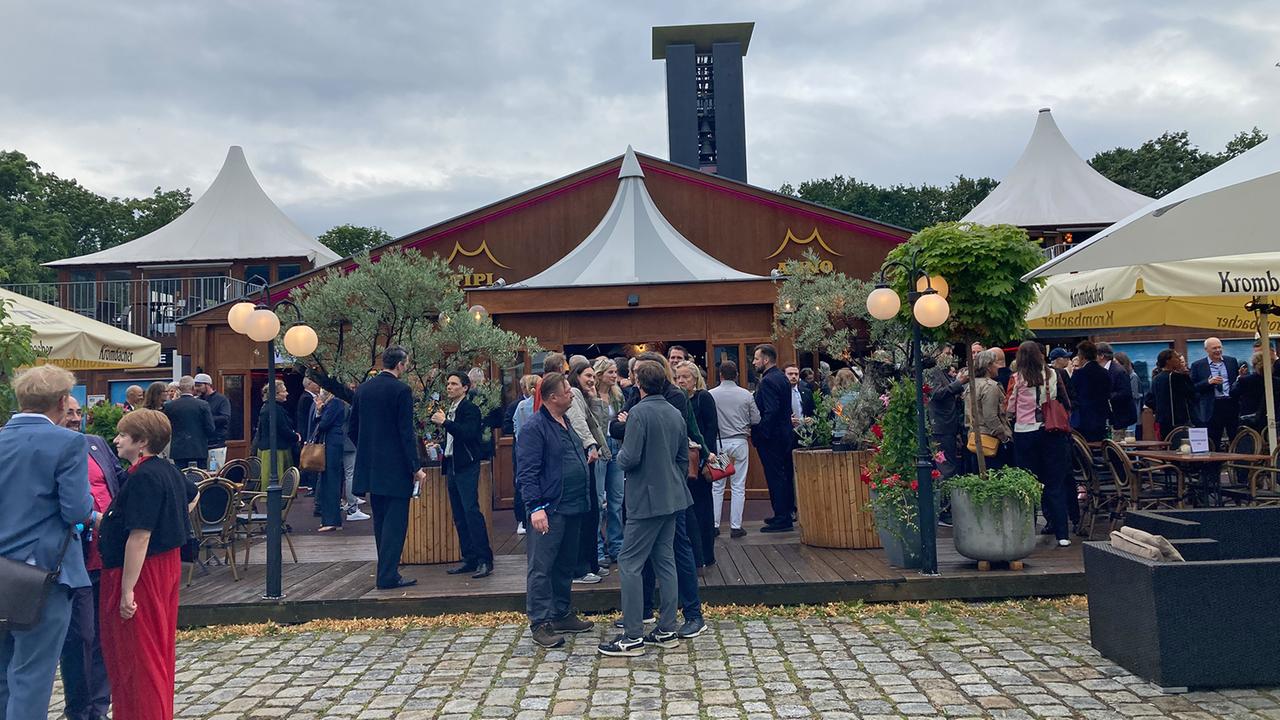
The atmosphere at the Tipi am Kanzleramt, a prominent event venue in Berlin, was notably upbeat on a recent July evening. Despite a summer storm lashing outside, the Alliance of German Producers hosted its annual summer reception, drawing a who’s who of German cinematic talent. The prevailing sentiment was one of cautious optimism, a stark contrast to the gloom that had pervaded the industry just a few years prior. After a prolonged period of uncertainty, characterized by production shutdowns and financial strain, the gears of the German film and television machine are slowly but surely turning again.
Navigating a Period of Unprecedented Challenges
The path to this fragile recovery has been fraught with significant obstacles. The initial shockwave of the COVID-19 pandemic brought global film production to an abrupt halt, severely impacting Germany’s vibrant ecosystem of studios, production companies, and freelance professionals. As the world grappled with the health crisis, the industry faced immense financial pressures, including increased safety protocols, logistical nightmares, and a general disruption of the supply chain. Many companies resorted to short-time work (Kurzarbeit) to survive, highlighting the precariousness of the sector.
No sooner had the industry begun to find its footing than it was hit by another major disruption: the protracted Hollywood strikes of 2023. For months, members of the Writers Guild of America (WGA) and later the Screen Actors Guild – American Federation of Television and Radio Artists (SAG-AFTRA) staged historic walkouts, demanding better pay, improved working conditions, and safeguards against the encroaching influence of artificial intelligence. While primarily an American phenomenon, these strikes had profound global repercussions. International co-productions stalled, highly anticipated projects were delayed indefinitely, and the flow of capital and creative talent across borders dwindled. Germany, a significant player in international co-productions and a popular location for foreign shoots, felt the ripple effects keenly, contributing to what was widely described as a "film slump."
Compounding these external shocks were internal pressures. Germany’s film funding mechanisms, while foundational, had long been criticized for their complexity and insufficient scale compared to international competitors. Production costs, driven by general inflation and rising labor costs negotiated through collective bargaining agreements, continued their upward trajectory, making it increasingly challenging for German producers to compete on a global stage without substantial support. The cumulative effect of these challenges underscored the urgent need for structural reforms and robust government intervention to safeguard and foster the future of German filmmaking.
The "Filmbooster": Government’s Response and Key Measures
In response to these pressing concerns, the federal government has unveiled its "Filmbooster" initiative, a package designed to inject vital capital and ensure a more stable future for the industry. At the heart of this legislative effort is the "Mediendienste-Investitionsverpflichtungs-Gesetz" – the Media Services Investment Obligation Act. Michelle Müntefering, the CEO of the Alliance of German Producers, expressed her appreciation for the government’s commitment during her welcoming address at the summer reception, highlighting the significance of political support in the industry’s positive trajectory.
The core tenet of the Media Services Investment Obligation Act mandates that streaming services and television broadcasters operating in Germany must invest a minimum of eight percent of their annual revenue generated within the country back into German film and television productions. This represents a significant shift, particularly for major global streaming platforms such as Netflix, Amazon Prime, Wow, Disney+, and Apple TV. These companies have historically generated substantial profits in the German market without a commensurate reinvestment into the local production infrastructure, often choosing to produce in countries with lower costs or more generous existing state subsidies. The new law aims to compel these platforms to produce, edit, and dub their content within Germany, rather than outsourcing to traditionally cheaper locales like the Czech Republic or Hungary.
Alongside this groundbreaking investment obligation, the government has also substantially increased direct film funding. For the current year, the federal film funding budget has been doubled to an unprecedented €250 million. This boost is seen by many in the industry as long overdue, providing much-needed capital to kickstart stalled projects and enable new ones. Culture State Minister Wolfram Weimer, a key architect of the "Filmbooster," remains optimistic about the initiative’s impact. Although the Media Services Investment Obligation Act is yet to be formally passed by the Bundestag, Weimer anticipates its enactment in 2027. He confidently predicts that investments will begin flowing even earlier, as "media service providers can exceptionally fulfill the obligation for the coming year 2027 with investments already made this year." Weimer’s vision is clear: to systematically produce "film hits ‘made in Germany’," positioning the country as a consistent creator of high-quality, internationally successful content.
Studio Babelsberg: A Case Study in Recovery
The impact of a revitalized production environment is already being felt in some corners of the industry. The venerable Studio Babelsberg in Potsdam, one of the world’s oldest large-scale film studios and a cornerstone of German cinematic history, has experienced a tangible upturn in recent months. Just three years ago, the studio barely survived through periods of short-time work, a testament to the severity of the industry downturn. Today, the situation is remarkably different. Approximately 200 people are employed in the workshops alone, a strong indicator of renewed activity.
In the past few months, Studio Babelsberg has played host to three major international series productions for streaming giants. These include "The Boys from Brazil" for Netflix, a project supported by Medienboard Berlin-Brandenburg, and "Berlin Noir" for Apple TV, co-produced by Studio Babelsberg itself. This surge in activity demonstrates the enduring appeal of Germany’s skilled workforce, state-of-the-art facilities, and rich cinematic heritage.
However, it is crucial to note that Studio Babelsberg’s current resurgence is not yet a direct consequence of the proposed Media Services Investment Obligation Act. Jörg Bachmaier, CEO of Studio Babelsberg, clarifies that the studio’s recovery is primarily attributed to its proactive investments in infrastructure, technology, and talent, which have created optimal working conditions for major international productions. While the studio fundamentally welcomes the investment obligation as a positive development for the entire production landscape in Babelsberg, it remains cautiously critical of the "Filmbooster" being touted as a grand triumph by the Culture State Minister.
Industry Concerns and the Call for Predictability
Despite the positive momentum, a significant undercurrent of apprehension persists within the German film industry regarding the long-term effectiveness and sustainability of the "Filmbooster." The concerns are multifaceted, ranging from the perceived inadequacy of the investment obligation to the troubling volatility of state funding and, most critically, the absence of a comprehensive tax incentive model.
One primary point of contention revolves around the mandated eight percent investment obligation for streaming services. While a step in the right direction, many industry stakeholders argue that this figure is relatively modest when compared to international benchmarks. France, for instance, requires a substantial 20 percent investment from media service providers and offers significantly higher state subsidies for productions. This disparity raises questions about Germany’s ability to truly compete for major international projects, which often gravitate towards countries offering the most attractive financial incentives.
Perhaps the most pressing concern is the perceived unreliability of government funding. The doubling of film funding to €250 million for the current year, while celebrated, is overshadowed by ominous signals from the draft federal budget for 2027, which reportedly allocates only €200 million for film support. This proposed cut, a mere year after a significant increase, is met with strong disapproval and a sense of betrayal within the industry. Jörg Bachmaier articulates this sentiment forcefully: "The current step backward is not only disappointing but also endangers investments, jobs, and the future of many filmmakers and service providers. One cannot speak of a real ‘Filmbooster’ if funds are immediately cut again." He emphasizes that the industry desperately needs "reliability and predictability." Film productions are inherently complex, long-term endeavors, often involving a multitude of international partners and intricate financial planning. Such fluctuations in funding, Bachmaier warns, act as "poison" to the stability required for successful projects.

The cinema sector, while indirectly benefiting from a thriving production industry (through flourishing production sites and trained professionals), also expresses a desire for more direct and substantial support. Janine Jackowski of Komplizen Film and spokesperson for the cinema division of the Producers’ Alliance, admits that she had hoped for much more. The "first-come, first-served" principle (Windhundprinzip) governing the allocation of capped funding, even with the nominal increase in the subsidized production cost share from 20 to 30 percent, remains a source of frustration. Given years of rising production costs due to general inflation and significant collective bargaining agreements, a stable and predictable funding environment is paramount.
The Unanswered Call for a Tax Incentive Model
The consensus among industry leaders is clear: for Germany to truly become a globally competitive production hub, it needs a robust tax incentive model. Countries like Spain, England, and Hungary have successfully implemented such schemes, offering incentives that can cover more than 40 percent of production costs. These models are significantly more attractive to production companies than traditional state grants, which often involve lengthy application processes and uncertain outcomes. Tax incentives provide a clearer, more predictable return on investment, making these countries preferred destinations for large-scale international productions.
The aspiration for a German tax incentive model is not new. It was, in fact, intended to be a cornerstone of the film funding reform under the previous "Ampel" coalition government. However, the initiative reportedly stalled due to ideological differences, with then-Culture State Minister Claudia Roth (Alliance 90/The Greens) clashing with FDP Finance Minister Christian Lindner, who staunchly opposed this form of subsidy. With the subsequent change in government to a Grand Coalition, discussions about tax incentives largely faded from the political agenda.
The topic remains a heated point of discussion at industry gatherings, including the recent summer reception. Filmmakers universally view the absence of such a model as a critical misstep. Maria Furtwängler, a celebrated actress and an experienced film producer, articulates this forcefully: "As long as we don’t have a tax incentive model, Germany as a production location is not competitive. No one should be surprised if productions go abroad."
Janine Jackowski further underscores the economic imperative, arguing that Germany is losing out on significant revenue. She cites a 2022 study by Bitkom, Germany’s digital association, which found that every euro invested in a tax credit for film production generates an impressive €6.60 in overall societal gain, including a boost to the gross domestic product, higher income tax revenues, and increased trade tax revenue, ultimately creating thousands of jobs across various sectors. This highlights the film industry not merely as a cultural endeavor but as a powerful economic engine with far-reaching benefits.
The Road Ahead: A Long Journey to Robust Competitiveness
The "Filmbooster," with its investment obligation for TV and streaming providers and increased, albeit fluctuating, film funding, is undoubtedly a step in the right direction. It signals a recognition by the federal government of the strategic importance of the film industry, not just culturally but also economically. It provides a much-needed injection of capital and a framework to ensure that global players contribute to the local ecosystem from which they profit.
However, the prevailing sentiment among those celebrating at the Producers’ Alliance summer reception is that while the journey has begun, the destination of a truly successful, robust, and internationally competitive German film industry remains distant. The path ahead requires not just incremental steps but a fundamental rethinking of Germany’s approach to film funding, particularly the adoption of a reliable and substantial tax incentive model. Without such a mechanism, coupled with long-term, predictable state support, Germany risks remaining a strong but ultimately secondary player in the global cinematic arena, continually watching valuable productions and talent gravitate towards more financially attractive shores. The "Filmbooster" has ignited hope, but the real work of securing Germany’s cinematic future is still very much in progress.