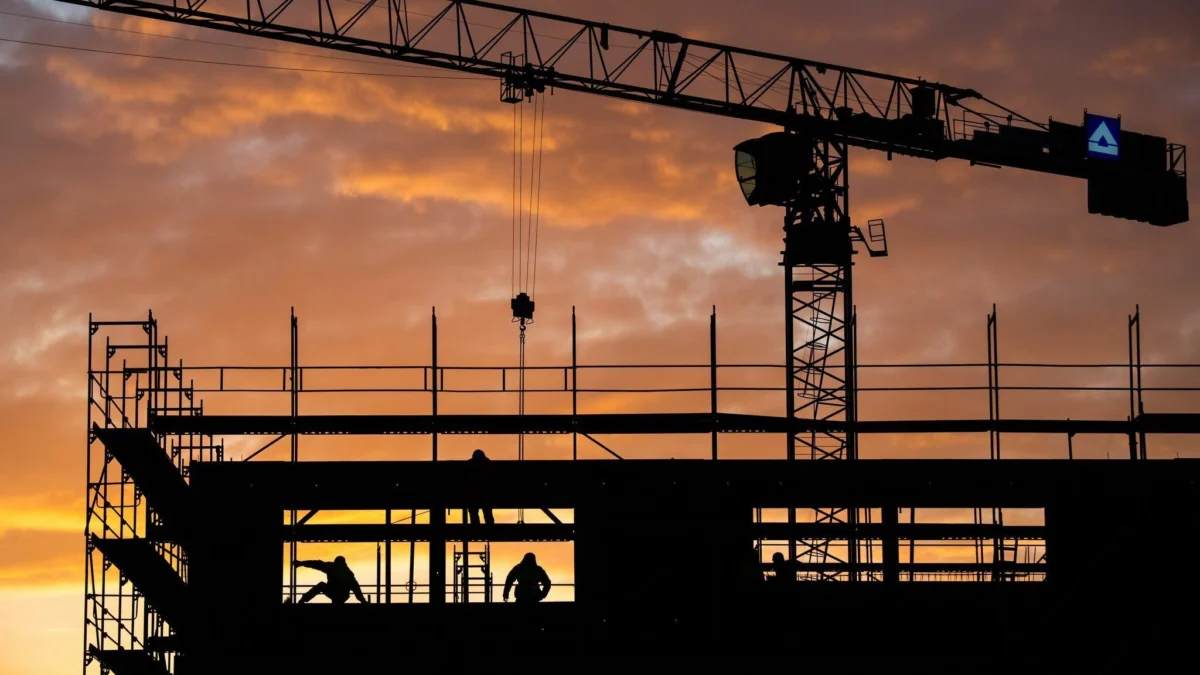
Berlin, Germany – The German construction industry recorded an unprecedented boom in new orders in August, achieving its highest month-on-month increase since records began in 1991. Data released by the Federal Statistical Office on Friday revealed a staggering 23.0 percent surge in order intake within the main construction sector compared to the previous month, seasonally adjusted. This remarkable uptick, primarily attributed to several large-scale projects, offers a glimmer of hope for an industry grappling with persistent challenges and for the broader German economy seeking robust growth drivers.
While the single-month figure represents a significant anomaly in its magnitude, a more stable three-month comparison from June to August also indicates a robust recovery, with order intake climbing by 7.6 percent above the level of the preceding three months. This suggests that the August surge may not be an isolated incident but rather a powerful acceleration within an already improving trend, albeit one driven by specific, substantial investments. The news comes as a crucial development for Germany, which has been navigating a complex economic landscape marked by inflation, energy price volatility, and geopolitical uncertainties.
Decoding the Surge: Main Facts and Figures
Unpacking the Month-on-Month Growth
The 23.0 percent increase in new orders for the German main construction sector in August is an extraordinary statistic, representing the most significant seasonally adjusted monthly rise since the time series commenced in 1991. This record-breaking performance was explicitly linked by the Federal Statistical Office to "several large orders," which injected substantial capital and activity into the sector. While the specific nature of these large orders was not detailed, they likely encompass major infrastructure projects, large industrial expansions, or significant commercial developments that often involve substantial public or corporate investment. Such large-scale projects can significantly skew monthly figures, but their presence nonetheless signals renewed confidence and investment capacity, at least from certain key players.
The magnitude of this increase highlights a powerful, albeit potentially concentrated, injection of demand. For an industry that has faced considerable headwinds, including rising material costs, supply chain disruptions, and labor shortages, such a surge is not merely a statistical anomaly but a vital psychological and economic boost. It suggests that despite prevailing uncertainties, there remains a fundamental need and willingness to invest in Germany’s built environment, particularly in areas that can accommodate substantial capital outlay.
A Stable Trajectory: The Three-Month Perspective
Recognizing that single-month data can be volatile, economic analysts often turn to longer-term averages for a more reliable indicator of underlying trends. In this context, the 7.6 percent increase in order intake over the June-August period compared to the preceding three months provides critical corroboration. This less-fluctuation-prone metric confirms that the construction sector’s recovery is not merely a one-off event but reflects a more sustained, albeit perhaps slower-moving, positive momentum.
The three-month comparison smooths out the impact of sporadic large orders, revealing a more consistent upward trajectory. This suggests that the foundations for growth are becoming more solid, indicating a broader, if less dramatic, improvement across the sector. It implies that beyond the headline-grabbing August figures, there’s an underlying current of increasing demand that could support continued expansion in the coming months, provided other economic conditions remain stable or improve.
Sectoral Performance: Building vs. Civil Engineering
The robust growth in new orders was not uniformly distributed across all segments of the construction industry. A granular look reveals distinct patterns:
- Building Construction (Hochbau): This segment, which encompasses residential, commercial, and industrial buildings, saw orders increase by a respectable 12.4 percent in August. This rise suggests a renewed appetite for investment in private and commercial property development, which has been particularly sensitive to interest rate hikes and financing costs. While positive, the growth here is less dramatic than in other areas, reflecting perhaps the ongoing caution in the private housing market.
- Civil Engineering (Tiefbau): This segment emerged as the primary powerhouse, reporting an impressive 31.6 percent increase in new orders. Civil engineering is predominantly characterized by public contracts for critical infrastructure projects such as road construction, bridge building, railway networks, and utility installations. The significant surge here strongly indicates increased government spending and investment in public infrastructure. This aligns with the federal government’s stated goals for modernizing Germany’s infrastructure and underscores the direct impact of state-backed initiatives on the sector. The substantial difference in growth rates between Hochbau and Tiefbau highlights the current divergence in demand drivers, with public sector investment playing a disproportionately larger role in stimulating the overall order intake.
Historical Context and Recent Challenges
A Look Back: Pre-Pandemic to Present Day
To fully appreciate the significance of the August 2023 figures, it’s essential to contextualize them within the recent history of the German construction sector. Before the COVID-19 pandemic, the industry enjoyed a prolonged period of robust growth, driven by low interest rates, strong demand for housing, and significant public investment in infrastructure. This era saw sustained job creation and rising turnover, making the construction sector a reliable pillar of the German economy.
The pandemic initially introduced disruptions, particularly in supply chains and labor availability, but government stimulus packages and the inherent long-term nature of construction projects helped cushion the blow. However, the post-pandemic recovery brought new and more complex challenges.
Navigating Economic Headwinds
The period leading up to August 2023 has been particularly arduous for the German construction industry. Several macroeconomic factors combined to create a challenging operating environment:
- Soaring Material Costs: The global supply chain crisis, exacerbated by geopolitical events like the war in Ukraine, led to unprecedented increases in the cost of essential building materials such as steel, timber, concrete, and energy-intensive products. This squeezed profit margins and made project planning more uncertain.
- Inflationary Pressures: Broader inflationary trends across the German and European economies led to higher operating costs, including wages and transportation, further eroding profitability.
- Rising Interest Rates: In an effort to combat inflation, the European Central Bank (ECB) embarked on a series of aggressive interest rate hikes. This significantly increased borrowing costs for developers, particularly in the residential sector, making new projects less financially viable and dampening investor confidence. Many projects were put on hold or cancelled due to escalating financing expenses.
- Skilled Labor Shortages: A persistent structural issue, the shortage of skilled workers, from bricklayers to engineers, continued to hamper the industry’s capacity to undertake new projects efficiently and cost-effectively.
- Energy Crisis: Germany’s vulnerability to energy price fluctuations, particularly following disruptions to Russian gas supplies, also impacted energy-intensive construction processes and material production.
Against this backdrop of formidable challenges, the August surge in new orders stands out as a remarkable testament to the sector’s resilience and the enduring demand for construction services, especially when significant public funds are deployed.
Broader Economic Indicators and Workforce Dynamics
Revenue Growth and Inflationary Pressures
Beyond new orders, other key indicators also painted a positive picture for August. Turnover in the construction sector increased by 10.1 percent compared to the same month last year, reaching 10.9 billion Euros. While this nominal growth is substantial, it’s crucial to consider the impact of inflation. When adjusted for price increases, the real growth in turnover stood at 4.9 percent. This distinction is vital: while the industry is generating more revenue in absolute terms, a significant portion of this increase is absorbed by higher costs, meaning the real volume of work or profitability growth is more modest, though still positive. This highlights the ongoing battle against inflationary pressures that continue to affect the sector’s financial health and purchasing power.
Employment Boost and Persistent Labor Concerns
The positive trend also extended to the labor market. The number of people employed in the main construction sector increased by 1.5 percent, reaching approximately 548,000 individuals. This growth in employment is a welcome development, suggesting that the industry is not only attracting new business but also expanding its workforce to meet demand. It reflects a potential easing of immediate labor constraints, at least at the aggregate level.
However, it’s important to note that this figure represents the "main construction sector" and refers specifically to companies with 20 or more employees. Smaller firms, which constitute a significant portion of the industry, might be experiencing different trends. Furthermore, despite this increase, the structural issue of skilled labor shortages is likely to persist. Germany’s aging workforce and insufficient influx of young talent into manual trades mean that even with a 1.5% increase, the long-term demand for qualified professionals across various construction disciplines remains high. The industry will need to continue investing in training, attracting diverse talent, and potentially leveraging technological advancements to address these demographic challenges sustainably.
Government Initiatives and Industry Demands
The Promise of Public Funds: Infrastructure and Climate Neutrality
A significant factor underpinning the recent surge, particularly in civil engineering, is the federal government’s commitment to substantial investment through its special fund for infrastructure and climate neutrality. This fund, designed to modernize Germany’s foundational assets and drive the transition to a greener economy, represents a colossal allocation of public resources aimed at stimulating economic activity and achieving strategic national goals. Projects funded by this initiative could range from expanding renewable energy infrastructure and upgrading transportation networks to improving digital connectivity and climate-resilient urban development.
However, despite the promising potential of these funds, industry associations have voiced considerable criticism. They argue that the allocated means have, to date, barely reached the sector on a broad scale. This sentiment suggests a disconnect between the government’s intentions and the practical implementation of funding mechanisms. Common criticisms often revolve around bureaucratic hurdles, lengthy planning and approval processes, and a lack of clarity regarding disbursement procedures. Such delays prevent projects from moving from conception to execution, thereby stifling the desired economic stimulus. For the industry, the mere existence of a fund is insufficient; its effective and timely deployment is paramount.
The Crucial Role of Housing Construction
While civil engineering saw the most dramatic increase, the broader economic associations, including the Central Association of the German Construction Industry (ZDB), have consistently emphasized the critical need to boost residential construction. Felix Pakleppa, Chief Executive of the ZDB, recently articulated this position, stating, "Housing promotion is the cheapest way for the federal government to stimulate the economy."
Pakleppa’s argument is multi-faceted and compelling:
- Economic Stimulus: Investment in housing construction has a significant multiplier effect across numerous industries, from material suppliers and manufacturers to architects, engineers, and service providers. It creates jobs, generates tax revenue, and drives demand for a wide array of goods and services.
- Rental Market Relief: Germany’s major cities and economic hubs are experiencing severe housing shortages and rapidly rising rents. Increasing the supply of new homes is the most direct way to alleviate pressure on strained rental markets, making housing more affordable and accessible for citizens.
- Strengthening the Domestic Economy: Prioritizing domestic housing construction supports local businesses, fosters innovation within German industry, and reduces reliance on foreign markets for essential goods and services.
- Citizen Trust: By actively promoting homeownership and addressing housing shortages, the government demonstrates that it takes the concerns of its citizens seriously. This can enhance public confidence in government policy and foster a sense of stability.
Industry associations are therefore calling for specific political reforms to unlock the potential of the residential sector. These demands typically include:
- Streamlined Permitting Processes: Reducing bureaucratic delays and accelerating the approval of construction projects.
- Tax Incentives: Implementing measures like accelerated depreciation or tax breaks for developers and homeowners.
- Availability of Land: Making more public and private land available for construction at reasonable prices.
- Reduced Regulatory Burdens: Revisiting building codes and standards to ensure they are cost-effective and do not unnecessarily inflate construction costs.
- Targeted Subsidies: Providing financial support for specific types of housing, such as affordable housing or energy-efficient buildings.
Bridging the Gap: Policy Expectations vs. Reality
The current government has set ambitious targets, including the construction of 400,000 new homes annually, a goal that has largely remained out of reach. The gap between these policy expectations and the reality of construction rates highlights a fundamental challenge. The August data, while positive for overall new orders, does not necessarily indicate a significant breakthrough in residential construction that would close this gap. It underscores the urgent need for a more comprehensive, coherent, and effectively implemented strategy that goes beyond headline figures and addresses the systemic issues hindering the sector’s full potential, particularly in the critical area of housing.
Implications and Future Outlook
Economic Resilience or Fleeting Spike?
The record surge in new orders in August undoubtedly injects a dose of optimism into the German economic narrative. It suggests that despite a challenging global and domestic environment, significant investment continues to flow into key sectors. This could be interpreted as a sign of underlying economic resilience, indicating that Germany’s industrial base and public sector are capable of driving growth even when other sectors, like manufacturing or exports, face headwinds. The construction sector has a considerable multiplier effect, meaning that activity here can stimulate demand in related industries, from raw materials and machinery to financial services and logistics, potentially contributing to overall GDP growth.
However, the question remains whether this is a sustainable trend or primarily a fleeting spike driven by a few exceptionally large projects. A sustained recovery would require continued investment, both public and private, and a more widespread improvement in market conditions, particularly in the residential segment which remains crucial for long-term stability.
Enduring Challenges Beyond the August Boom
Despite the encouraging August figures, the German construction industry continues to grapple with a formidable array of challenges that will shape its future trajectory:
- High Interest Rates: The persistent high interest rate environment remains a significant deterrent for new private investments, especially in housing and commercial real estate. Until interest rates stabilize or decline, financing costs will continue to exert downward pressure on project viability.
- Material Costs Volatility: While some material prices have eased from their peaks, volatility remains a concern. Geopolitical events, energy price fluctuations, and supply chain bottlenecks can quickly reverse any positive trends.
- Regulatory Complexity and Slow Permitting: The bureaucratic burden and protracted planning and approval processes in Germany are frequently cited by industry as major obstacles to faster project realization. Reforms in this area are critical for unlocking potential.
- Sustainability Mandates: Increasing demands for sustainable building practices, energy efficiency, and circular economy principles, while necessary for the future, often entail higher initial costs and require new expertise and technologies, posing challenges for adaptation.
- Skilled Worker Drain: The demographic challenge of an aging workforce and a shortage of new entrants into skilled trades remains a long-term structural problem that could constrain growth even with strong demand.
- Digital Transformation: The industry still lags behind some others in adopting digital technologies, from Building Information Modeling (BIM) to automated construction processes. Investing in digitalization is crucial for efficiency and competitiveness.
Sustaining Momentum: What Lies Ahead?
The future outlook for the German construction sector hinges on several critical factors. Continued government investment, particularly in civil engineering and green infrastructure, will be a key driver, provided the special funds are disbursed efficiently. Private sector confidence, influenced by interest rate developments, economic stability, and clear policy signals, will determine the revival of residential and commercial building construction.
The industry’s ability to adapt to new technologies, embrace sustainable practices, and attract and retain skilled labor will be paramount for long-term competitiveness. While August’s record-breaking performance offers a much-needed morale boost and a strong signal of potential, it must be viewed as a catalyst for sustained reform and investment, rather than an end in itself. The long-term vision for a modernized, efficient, and sustainable German construction sector will depend on a concerted effort from both industry stakeholders and policymakers to address systemic challenges and capitalize on moments of positive momentum like the one witnessed in August.