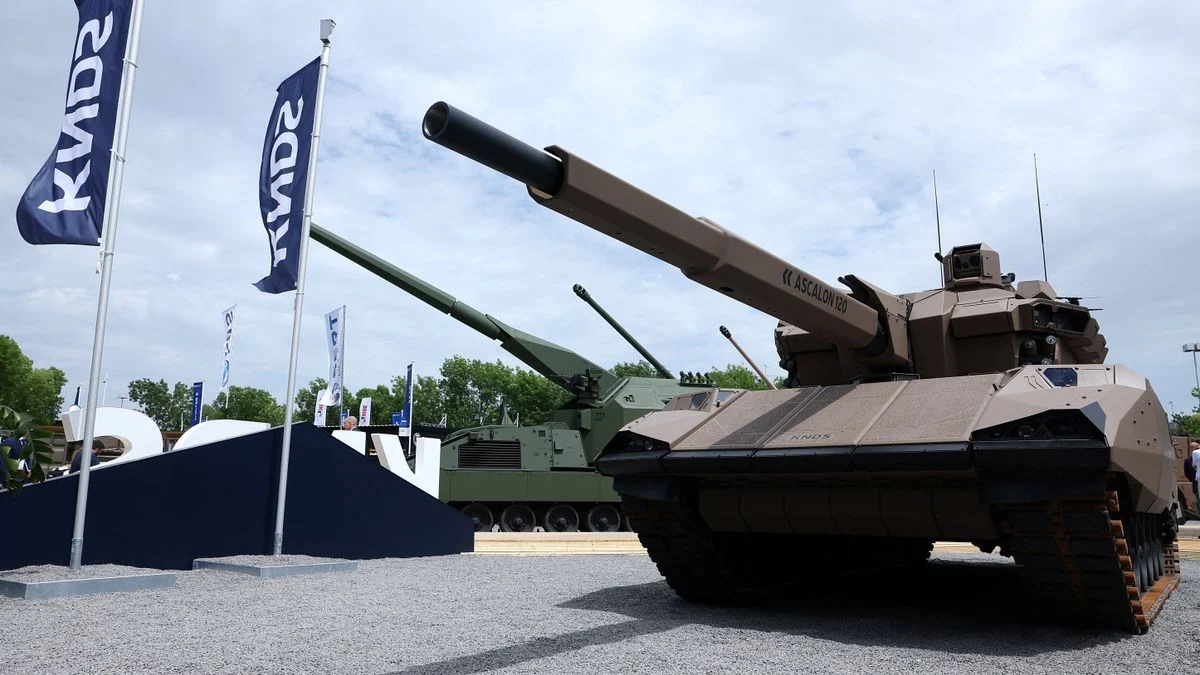
Berlin, Germany – In a pivotal decision echoing through the corridors of power and across the European defense landscape, the German Bundestag this past Wednesday approved a landmark state investment in KNDS, the Franco-German defense giant. The vote, a culmination of months of intense debate and strategic considerations, sees the German government acquire a significant, albeit minority, equity stake in the company. This move is heralded by proponents as a crucial step to safeguard national security interests, bolster the domestic defense industrial base, and solidify Germany’s commitment to collaborative European defense initiatives, particularly the ambitious Main Ground Combat System (MGCS) project.
The decision underscores a profound shift in German industrial policy, driven by the escalating geopolitical complexities and the imperative to ensure sovereign capabilities in critical defense technologies. With an initial investment package estimated to run into the high hundreds of millions of euros, the state’s entry into KNDS aims to secure key manufacturing capacities, accelerate research and development in next-generation land systems, and guarantee Germany’s long-term access to strategic defense assets. While the precise percentage of the state’s share has not been publicly disclosed, sources close to the negotiations suggest it provides the government with a strategic voice without assuming majority control, striking a delicate balance between public interest and private enterprise autonomy. This development marks a new chapter for Germany’s role in European defense, signaling a more assertive posture in securing its industrial foundations against a backdrop of renewed global insecurity.
Main Facts: A New Era of State Involvement in Defense
The German Bundestag’s approval of a strategic state investment in KNDS (KMW+Nexter Defense Systems) represents a significant policy departure, elevating national security concerns to the forefront of economic strategy. The move, championed by the ruling coalition, aims to directly address vulnerabilities exposed by recent global conflicts and supply chain disruptions. KNDS, formed from the merger of Germany’s Krauss-Maffei Wegmann (KMW) and France’s Nexter Systems, is a cornerstone of European land defense, producing some of the world’s most advanced armored vehicles, including the Leopard 2 main battle tank and the PzH 2000 self-propelled howitzer.
The core objective of this state participation is multifaceted. Firstly, it seeks to guarantee Germany’s sovereign access to critical defense manufacturing capabilities. By securing a stake, the government aims to prevent hostile takeovers, influence strategic decisions related to production lines, and ensure the availability of essential equipment for the Bundeswehr. This is particularly pertinent given the current rearmament efforts and the need to replenish stockpiles and modernize forces in response to the war in Ukraine.
Secondly, the investment is designed to accelerate the development of future land combat systems, notably the Main Ground Combat System (MGCS). This ambitious Franco-German project, intended to replace the Leopard 2 and Leclerc tanks by 2035, has faced numerous hurdles, including technological coordination and industrial leadership disputes. The state’s involvement in KNDS is expected to provide a stable financial backbone for the German side of the MGCS consortium, fostering greater cooperation and streamlining decision-making processes, thereby mitigating risks and speeding up its realization.
Thirdly, the government emphasizes the economic stability and job security this investment will bring to the German defense sector. KNDS employs thousands across its German sites, and the state’s commitment is seen as a safeguard for these high-skill manufacturing and engineering positions. Furthermore, it aims to strengthen the broader defense industrial ecosystem, including numerous small and medium-sized enterprises (SMEs) in the supply chain.
The financial contours of the deal, while not fully public, involve a substantial commitment of taxpayer money. Initial reports suggest an investment in the range of several hundred million euros, positioning the German state as a minority shareholder. This non-controlling stake is intended to provide strategic influence without burdening the state with the full operational liabilities of a private company. The investment framework includes provisions for representation on KNDS’s supervisory board, ensuring governmental oversight on key strategic and technological decisions. The Bundestag’s vote, largely along coalition lines, indicates a broad consensus within the government that the economic benefits and national security imperatives outweigh concerns about state intervention in a traditionally private industry.
Chronology: A Path Paved by Geopolitics and Industrial Strategy
The idea of increased state involvement in Germany’s defense industry, particularly regarding key players like KNDS, is not entirely new but gained significant momentum following Russia’s full-scale invasion of Ukraine in February 2022. This event served as a stark awakening for Europe, highlighting critical deficiencies in defense readiness, industrial capacity, and supply chain resilience.
Early 2022 – The "Zeitenwende" Catalyst: Chancellor Olaf Scholz’s declaration of a "Zeitenwende" (turning point) and the subsequent commitment of a €100 billion special fund for the Bundeswehr immediately brought the state of Germany’s defense industrial base into sharp focus. Discussions began within the Ministry of Defence and the Ministry of Economic Affairs about how to ensure that this massive investment translated into tangible, domestically controlled capabilities. The question of strategic autonomy in defense production quickly became paramount.
Mid-2022 – Initial Assessments and Policy Brainstorming: Expert committees and inter-ministerial working groups were established to identify critical technologies and companies requiring strategic support or direct state involvement. KNDS, given its pivotal role in land systems and its Franco-German structure, naturally emerged as a prime candidate. Initial proposals considered various forms of state aid, from subsidies for R&D to direct equity participation.
Late 2022 – Cabinet Discussions Intensify: As the geopolitical situation continued to deteriorate, the concept of a direct equity stake in KNDS began to gain traction within the federal cabinet. Proponents argued that mere contractual relationships or subsidies were insufficient to guarantee long-term strategic control and influence over critical production decisions, especially concerning export policies and technology transfers. The Ministry of Finance, initially cautious, recognized the strategic imperative, balancing fiscal responsibility with national security demands.
Early 2023 – Formal Proposal and Legislative Drafting: By early 2023, a concrete proposal for state participation in KNDS was presented to the cabinet. It outlined the rationale, the proposed financial commitment, and the legal framework for acquiring a minority stake. The draft legislation emphasized the "special national security interest" as the primary justification, bypassing traditional market-liberal objections. Legal experts from the Ministries of Justice and Finance worked to ensure compliance with German and EU competition laws.
Spring 2023 – Parliamentary Committee Review: The draft bill underwent rigorous review by several Bundestag committees, including the Defence Committee, the Budget Committee, and the Committee on Economic Affairs. Hearings involved defense industry representatives, security experts, and trade union leaders. While the ruling coalition (SPD, Greens, FDP) generally supported the initiative, the FDP, traditionally more market-oriented, initially voiced concerns about state intervention, but ultimately aligned with the coalition’s strategic vision. Opposition parties, particularly the CDU/CSU, while acknowledging the strategic need, questioned the specifics of the deal and the transparency of negotiations.
Summer 2023 – Public Debate and Stakeholder Consultations: The proposed investment sparked a broader public debate about the role of the state in strategic industries. Industry associations largely welcomed the move, viewing it as a necessary measure to stabilize the sector and secure long-term contracts. Environmental groups and some left-wing factions, however, raised concerns about increased arms production and the potential for public funds to subsidize private profits.
Fall 2023 – Bundestag Deliberations and Final Vote: The bill progressed through its readings in the Bundestag. Heated debates focused on the balance between national security and economic principles, the potential impact on the Franco-German partnership, and the precedent this investment might set. After intense negotiations and minor amendments to address transparency concerns, the final vote took place this past Wednesday. The bill passed with a comfortable majority, reflecting the urgency and strategic consensus within the ruling coalition, albeit with some dissent and abstentions from opposition benches. This decisive vote cemented a new chapter in Germany’s industrial defense strategy.
Supporting Data: KNDS, MGCS, and the European Defense Imperative
The decision to invest in KNDS is underpinned by a compelling array of data highlighting the company’s strategic importance, the urgency of the MGCS project, and the broader context of European defense needs.
KNDS’s Strategic Position:
KNDS is a formidable player in the global land defense market. Formed in 2015, it brings together KMW’s expertise in heavy armored vehicles (Leopard 2, Dingo, PzH 2000) and Nexter’s strengths in artillery (Caesar), light and medium armored vehicles (VBCI, Griffon, Jaguar), and ammunition. The combined entity boasts:
- Revenue: Annual revenues typically exceeding €3 billion.
- Workforce: Over 15,000 employees across Germany and France.
- Production Capacity: State-of-the-art manufacturing facilities capable of producing hundreds of main battle tanks and thousands of other armored vehicles annually.
- R&D Prowess: Significant investment in research and development, particularly in areas like active protection systems, advanced materials, robotics, and digitalization for future land combat.
- Global Reach: A strong export footprint, supplying defense forces worldwide.
The state’s investment aims to anchor these critical assets firmly within German strategic control, ensuring that production priorities align with national security and Bundeswehr requirements.
The Main Ground Combat System (MGCS): A Flagship Project in Peril?
The MGCS project is arguably the most ambitious European defense initiative in land systems. Conceived as a replacement for the Leopard 2 and Leclerc tanks, it envisions a networked "system of systems" rather than a single platform, integrating manned and unmanned elements, advanced sensors, and artificial intelligence. Its estimated cost is in the tens of billions of euros, with a planned operational date around 2035.
- Challenges: The project has been plagued by industrial sharing disputes, differing operational requirements between Germany and France, and complex technological coordination. Industrial leaders often cite the need for stable, long-term funding and clearer governmental direction to overcome these hurdles.
- Rationale for Investment: By securing a stake in KNDS, Germany aims to provide financial stability and strategic impetus to its contribution to MGCS. This direct involvement can facilitate clearer communication, streamline decision-making, and ensure that German industrial interests and technological contributions are fully realized within the consortium. It also signals a firm commitment to France, aiming to reinvigorate a project that is crucial for European strategic autonomy.
German Defense Spending and the NATO 2% Target:
Germany’s defense budget has seen a dramatic increase following the "Zeitenwende."
- €100 Billion Special Fund: This one-off fund is dedicated to modernizing the Bundeswehr, with significant portions earmarked for new equipment, including land systems where KNDS is a primary supplier.
- Annual Budget Increases: Beyond the special fund, Germany has committed to consistently increasing its regular defense budget, aiming to meet NATO’s target of spending 2% of its GDP on defense. This sustained investment creates a long-term demand for defense products and services, making KNDS an even more critical national asset.
The state investment ensures that a portion of these increased funds directly supports domestic capabilities and industrial capacity, rather than flowing exclusively to external suppliers.
Economic Impact and Supply Chain Resilience:
The defense sector, while specialized, has significant economic multipliers.
- Job Creation/Retention: KNDS directly supports thousands of highly skilled jobs in engineering, manufacturing, and R&D. The investment helps secure these jobs and potentially create new ones through expanded production and accelerated R&D.
- SME Ecosystem: A vast network of small and medium-sized enterprises forms the supply chain for KNDS, providing components, specialized services, and technological innovations. State involvement at the prime contractor level offers stability to this broader ecosystem.
- Technological Sovereignty: In an era of increasing geopolitical competition, maintaining control over critical defense technologies is paramount. The investment reduces reliance on foreign suppliers for essential military hardware, enhancing Germany’s strategic autonomy and resilience against supply chain disruptions. This also applies to securing access to intellectual property and preventing critical know-how from falling into potentially adverse hands.
The data collectively paints a picture of a strategic industry vital for national security and economic well-being, facing unprecedented demands and requiring proactive governmental support to thrive and meet future challenges.
Official Responses: A Spectrum of Support and Scrutiny
The Bundestag’s decision to invest in KNDS elicited a range of responses from various political factions, government officials, and industry stakeholders, reflecting both broad strategic alignment and nuanced concerns.
Government Spokespersons – Unified Message of Strategic Imperative:
Official statements from the Chancellor’s Office and the Ministries of Defence and Finance were largely unified in their message. A spokesperson for Chancellor Olaf Scholz emphasized the decision as a "cornerstone of Germany’s Zeitenwende," highlighting its dual importance for national security and the strengthening of European defense cooperation.
- Minister of Defence (Boris Pistorius): Hailed the investment as "a decisive step towards securing our defense capabilities and ensuring the Bundeswehr has access to state-of-the-art equipment." He stressed the importance of a robust domestic industrial base for maintaining operational readiness and advancing projects like MGCS. "This is not merely an economic investment," Pistorius stated, "but a strategic imperative to safeguard our sovereignty and contribute effectively to NATO and European security."
- Minister of Finance (Christian Lindner): While typically advocating for fiscal prudence and minimal state intervention, Lindner underlined the "extraordinary geopolitical circumstances" justifying the move. He affirmed that the investment was "carefully calculated to provide strategic influence without burdening the taxpayer with undue risk," emphasizing the non-controlling nature of the stake.
Parliamentary Group Leaders – Coalition Support, Opposition Scrutiny:
- SPD (Social Democratic Party): Leaders lauded the investment as a pragmatic approach to industrial policy. "We are ensuring that critical defense technology remains under national control and that skilled jobs in Germany are protected," said a prominent SPD defense expert. "This is a forward-looking decision for our security and our economy."
- Alliance 90/The Greens: While historically cautious about defense spending, the Greens largely supported the measure, framing it within the context of European strategic autonomy and responsible security policy. A Greens spokesperson stated, "In these turbulent times, we must ensure our ability to defend ourselves and our allies. This investment helps secure the industrial base needed for a credible European defense."
- FDP (Free Democratic Party): Despite their liberal economic principles, the FDP parliamentary group ultimately backed the bill. Their leadership emphasized the temporary and strategic nature of the intervention. "This is a targeted measure to address a specific national security vulnerability," an FDP MP clarified, "not a general embrace of state-led industrial policy. Our goal remains a strong, competitive private sector."
- CDU/CSU (Christian Democratic Union/Christian Social Union): As the main opposition bloc, the CDU/CSU expressed conditional support for the strategic goal but raised concerns about transparency and execution. "While the need to strengthen our defense industry is clear, the government must ensure full transparency regarding the terms of this investment and how it will genuinely accelerate projects like MGCS," stated a CDU defense policy expert. They also questioned whether the minority stake would provide sufficient influence.
- Die Linke (The Left Party) and AfD (Alternative for Germany): Both parties largely opposed the measure, albeit for different reasons. Die Linke criticized the use of public funds for arms manufacturers, advocating for disarmament and diplomatic solutions. The AfD, while generally favoring a strong national defense, questioned the wisdom of investing in a Franco-German entity, preferring a purely national approach, and echoed concerns about financial transparency.
KNDS Management and Industry Associations – Cautious Optimism:
- KNDS Leadership: Issued a statement welcoming the German government’s commitment, viewing it as a "strong signal of confidence" in the company’s capabilities and its role in European defense. They expressed optimism that the investment would provide greater stability for long-term planning, particularly for R&D-intensive projects like MGCS.
- German Defense Industry Association (BDSV): Praised the decision as a "necessary and overdue step" to strengthen the German defense industrial base. The BDSV highlighted the importance of securing strategic capabilities and supporting the industry during a period of significant geopolitical upheaval and increased demand.
The varied responses underscore the complex nature of the decision, balancing immediate security needs with long-term economic principles and political ideologies.
Implications: Reshaping Germany’s Defense and European Cooperation
The German state’s strategic investment in KNDS carries profound implications that extend beyond the immediate financial transaction, potentially reshaping Germany’s defense posture, its industrial policy, and the future trajectory of European defense cooperation.
For KNDS and the German Defense Industrial Base:
- Enhanced Stability and R&D: The direct state involvement provides KNDS with a layer of financial and strategic stability that can de-risk long-term investments, particularly in cutting-edge R&D. This could accelerate the development of critical technologies for future land systems, ensuring KNDS remains at the forefront of innovation.
- Secured Production Capacity: The government’s stake offers a mechanism to influence production priorities, ensuring that the Bundeswehr’s needs for equipment and spare parts are met promptly, especially during times of crisis. It also helps secure critical supply chains within Germany.
- Strategic Direction: With a seat on the supervisory board, the German government gains a direct voice in KNDS’s strategic planning, potentially influencing export policies, international partnerships, and the allocation of resources towards projects deemed nationally critical.
- Precedent for Future Interventions: This move could set a precedent for similar state interventions in other strategically vital industries within Germany, particularly those deemed critical for national security or technological sovereignty. It signals a more active, less purely market-driven industrial policy.
For German Defense Policy:
- Active Industrial Policy: The investment marks a definitive shift towards a more proactive and interventionist industrial policy in the defense sector. Germany is moving beyond being merely a buyer of defense equipment to becoming a direct stakeholder in its production.
- Long-Term Planning: It facilitates long-term planning for the Bundeswehr, assuring access to a domestic industrial partner for maintenance, upgrades, and future procurements, thereby reducing reliance on potentially volatile international markets.
- Credibility of Zeitenwende: The investment reinforces the credibility of Chancellor Scholz’s "Zeitenwende," demonstrating a tangible commitment to rebuilding and modernizing Germany’s defense capabilities through concrete industrial measures, not just increased budgets.
For European Defense Integration and Franco-German Cooperation:
- Reinvigorating MGCS: Perhaps one of the most significant implications lies in the potential to breathe new life into the stalled Main Ground Combat System (MGCS) project. By stabilizing the German side of the KNDS consortium, the investment can provide a clearer, more unified voice and financial backing, potentially resolving some of the industrial and political impasses that have plagued the project. This could set a positive precedent for other complex Franco-German defense initiatives.
- Strengthening KNDS as a European Champion: The state investment further solidifies KNDS’s position as a leading European defense systems provider. With direct governmental backing from one of its parent nations, KNDS gains greater leverage and stability in the highly competitive global defense market.
- Model for EU Defense: This bilateral state investment in a binational defense company could serve as a model for other European nations seeking to strengthen their defense industrial base and foster greater integration. It highlights a pragmatic approach to pooling resources and expertise while maintaining national strategic interests.
- Challenges of Dual Ownership: While strengthening the German side, the move also brings potential challenges. Ensuring that the German state’s influence does not inadvertently complicate the existing Franco-German industrial balance within KNDS will be crucial. French counterparts will closely watch to ensure the partnership remains equitable and mutually beneficial.
Geopolitical and Economic Ramifications:
- Signal to Allies and Adversaries: The investment sends a clear signal to allies within NATO and the EU about Germany’s renewed commitment to defense and its determination to control its strategic industrial assets. To potential adversaries, it underscores Germany’s resolve to bolster its defensive capabilities and industrial resilience.
- Debate on State Capitalism: Economically, the move will reignite debates about the role of the state in market economies, particularly in critical sectors. While justified by national security, it could draw scrutiny from free-market advocates concerned about potential distortions of competition or inefficiencies associated with state ownership.
In conclusion, the German Bundestag’s decision to invest in KNDS is a multi-layered strategic maneuver. It represents a pivot towards a more assertive defense industrial policy, a concrete step towards bolstering national security, and a potentially transformative catalyst for Franco-German and broader European defense cooperation. Its long-term success will depend on effective governance, continued cross-border collaboration, and the ability to navigate the complex interplay of national interests and European aspirations.