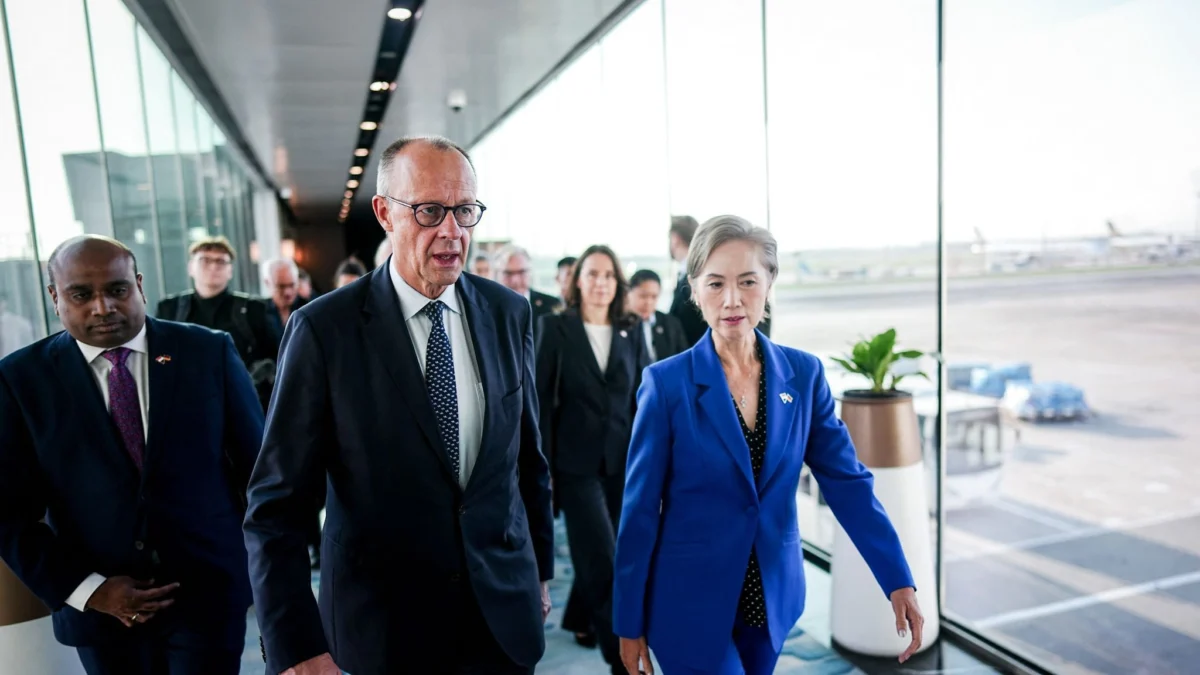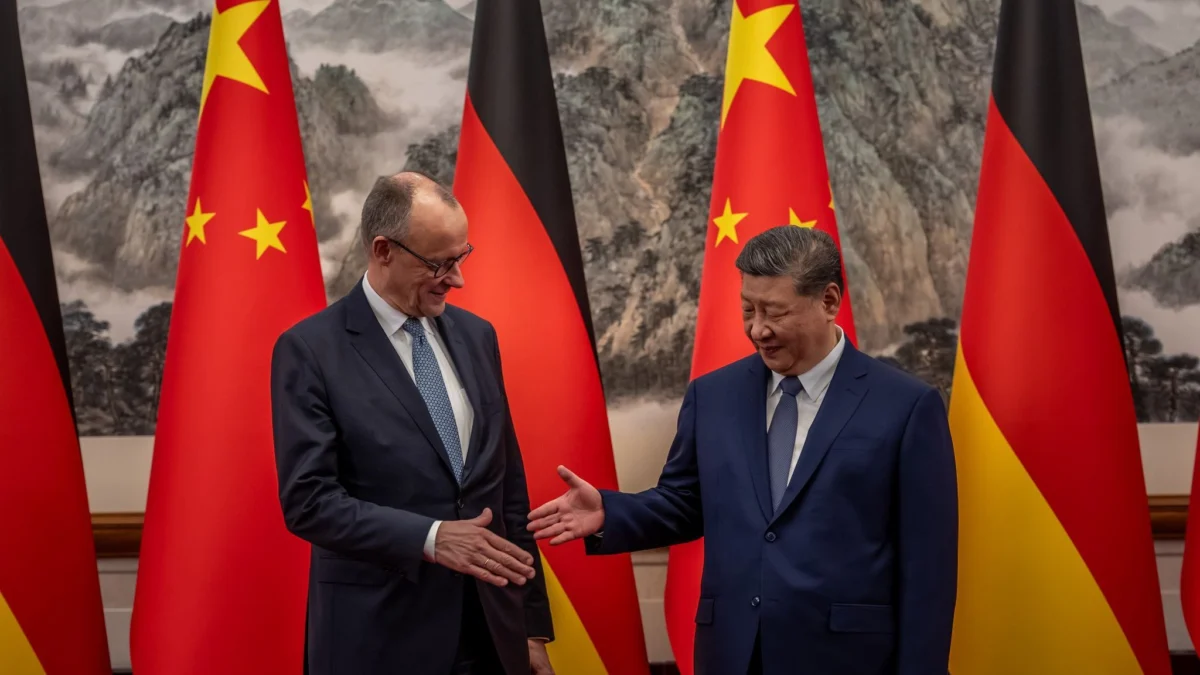
Berlin, Germany – As Germany’s governing coalition convenes for a crucial committee meeting this Wednesday, the agenda is packed with pressing domestic issues, from bureaucracy reduction to long-awaited reforms in taxation and the labor market. Yet, overshadowing these critical internal deliberations is a far more contentious and externally driven challenge: the urgent need for a tougher trade policy against China. This shift marks a profound re-evaluation of Germany’s economic relationship with its largest trading partner, driven by mounting evidence of unfair competition and its devastating impact on German industry.
A Pivotal Coalition Meeting
The coalition meeting, bringing together the leaders of Germany’s ruling parties, is not merely a forum for policy adjustments; it represents a moment of reckoning. While topics like easing bureaucratic burdens and overhauling the tax system are designed to invigorate the domestic economy, a growing consensus within the government and industry dictates that these measures alone are insufficient to counter the formidable headwinds emanating from Beijing. The discussion about a more assertive China policy, initially a sensitive side topic, has now ascended to a mandatory point of debate.
The Alarming Resurgence of the "China Shock"
For months, an unsettling reality has permeated Berlin’s political and economic circles: the "China shock" is not merely a relic of the past but a renewed, more potent threat to German industry. Chinese manufacturers, once primarily known for low-cost production, have rapidly closed technological gaps across an increasing number of key sectors. Bolstered by extensive state subsidies, they are unleashing overcapacities and employing aggressive pricing strategies to flood global markets, fundamentally altering the competitive landscape.

Chancellor Friedrich Merz, initially a proponent of strengthening Germany’s domestic competitiveness through structural reforms, has become increasingly convinced of the need for European unity in resisting these unfair trade practices. His resolve was notably solidified following recent meetings with industry leaders and labor representatives at the Chancellery, where the gravity of the situation was laid bare. Europe, Merz now asserts, must actively defend itself against predatory competition.
Deepening Industrial Distress and the Call for a New China Policy
The warning signs from Germany’s industrial heartland are stark and undeniable. Iconic German companies, once symbols of global engineering prowess, are feeling the squeeze. Volkswagen, for instance, has announced plans for a staggering 100,000 job cuts, with up to four plants in Germany facing potential closure. These aren’t isolated incidents but symptoms of a broader industrial malaise attributed directly to the Chinese competitive onslaught.
Germany’s Industrial Heartbeat Under Threat
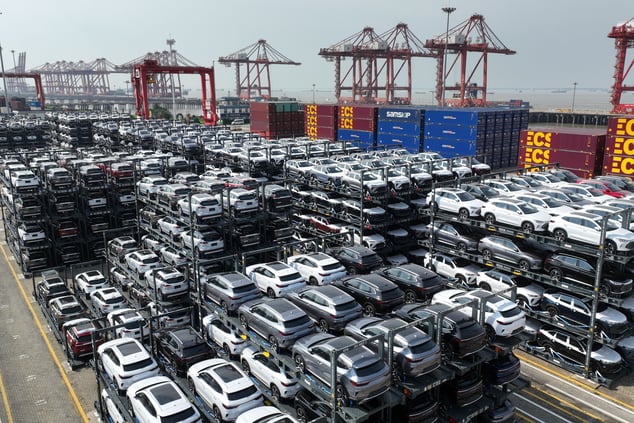
The automotive sector, a cornerstone of the German economy, is particularly vulnerable. China’s rapid advancements in electric vehicle (EV) technology, combined with significant state backing, allow its manufacturers to offer highly competitive products at prices European counterparts struggle to match. This pressure extends beyond car manufacturing to other critical industries like machinery, chemicals, and renewable energy, where German firms face an increasingly uphill battle against state-sponsored rivals. The long-term implications are profound: not just job losses, but a potential erosion of Germany’s technological leadership and innovation capacity.

Domestic Reforms Insufficient Against External Pressure
A government insider starkly articulated the prevailing sentiment: "Without a different China policy, the other reforms won’t help us much." This statement underscores a growing frustration that internal adjustments, however well-intentioned, cannot counteract a systemic external challenge. Another senior official echoed this concern, stating, "Striking a public holiday won’t save the economy if the industrial base of the country is eroding." This highlights the perception that minor domestic tweaks pale in comparison to the existential threat posed by China’s industrial strategy.
Economists have coined the term "second China shock," drawing parallels to the early 2000s when China’s burgeoning export machine first put significant pressure on Western industrial jobs and prices. At that time, the United States bore the brunt of the impact. Today, however, Germany finds itself disproportionately affected, its export-oriented economy uniquely exposed to China’s evolving competitive dynamics. The initial "China shock" was characterized by China serving as a cheap exporter, disrupting low-skill manufacturing. The "second shock" is far more sophisticated, targeting high-value, technologically advanced sectors where Germany traditionally excelled, from precision engineering to advanced materials. This new phase is not just about cheaper goods, but technologically equivalent or even superior products subsidized into global markets.
Unpacking China’s Unfair Trade Practices
A recent analysis by the employer-affiliated Institute of German Economy (IW), shared with Handelsblatt, provides compelling data. It estimates that approximately 400,000 jobs in German industry have been lost between 2019 and 2025 solely due to China-related competition. This stark figure amplifies the policy dilemma confronting Chancellor Merz. While he advocates for sweeping domestic reforms to bolster Germany’s competitiveness, the IW analysis suggests that Germany’s competitive disadvantage is not universal but acutely concentrated against China.

The Mechanism of State Subsidies
According to the OECD, roughly 60 percent of the global market share gains by Chinese companies over the past 25 years can be directly attributed to state subsidies. Germany’s industry has been the primary victim of these practices. These subsidies manifest in various forms:
- Cheap Credit: Chinese companies receive preferential access to financing from state-owned banks, often at interest rates significantly below market levels. This reduces their capital costs, allowing them to invest aggressively in R&D and production expansion without the same financial constraints faced by their international rivals.
- Subsidized Land and Resources: Access to inexpensive land, energy, and raw materials further lowers production costs. Local governments often provide land at nominal prices to favored industries, creating an artificial cost advantage.
- Research and Development Support: Massive state investment in R&D programs, coupled with intellectual property transfer requirements for foreign companies operating in China, has accelerated technological catch-up and innovation within Chinese firms.
- Export Subsidies and Tax Breaks: Direct export subsidies, coupled with favorable tax regimes, make Chinese goods even more attractive on international markets.
- Lax Environmental and Labor Standards: While not a direct subsidy, less stringent environmental regulations and labor protections in some sectors can also contribute to lower production costs, albeit at a social and environmental price.
These state-backed advantages enable Chinese firms to aggressively undercut competitors on price, effectively pushing German and European producers out of their own markets and third-country markets alike.
Currency Manipulation: A Silent Competitor
IW researcher Jürgen Matthes argues that the OECD figures likely underestimate the true extent of competitive distortion. He points out that the OECD analysis may not capture all forms of Chinese subsidies and, crucially, overlooks the significant undervaluation of the Yuan.

China’s central bank maintains a "managed" exchange rate regime, which Matthes contends keeps the Yuan artificially low. This policy effectively makes Chinese exports cheaper on the global stage, while simultaneously making imports into China more expensive. Matthes’s analysis indicates that German industrial products have become approximately 40 percent more expensive relative to Chinese industrial goods between early 2020 and early 2026 due to this currency dynamic.
This persistent undervaluation grants China a substantial, often unseen, competitive edge. Matthes argues that if all these factors are considered, "not much remains of fair explanatory shares for China’s global market success over the last two decades."
The Magnitude of the Impact: Conflicting Economic Views
The IW study highlights a critical distinction: Germany’s price competitiveness has deteriorated "very strongly" against China, but not to a comparable extent against its other major trading partners. For instance, the Bundesbank’s competitiveness indicator against selected industrial nations worsened by only two percent between 2019 and 2025. OECD data also shows Germany’s relative export prices against competitors rising by a modest three percent since 2019. This suggests that the core problem is not a broad-based decline in German competitiveness, but a highly specific, profound disadvantage when competing with China.
This finding stands in contrast to a recent study by the Kiel Institute for the World Economy (IfW), which concluded that the "China shock" was largely "homemade." The Kiel researchers argued that Germany had lost competitiveness against other industrialized nations as well, implying that domestic structural issues were the primary culprits.
Matthes, however, strongly refutes the Kiel Institute’s interpretation. He asserts that his figures do not support the notion of a broadly "homemade" problem. Instead, the "second China shock" is driving significant de-industrialization and job losses. Drawing on analyses from Goldman Sachs and the Bundesbank, Matthes estimates that China’s unfair trade practices have cost Germany approximately 1.4 percent of its economic growth between 2019 and 2025, primarily due to a collapse in exports.
Given that industry accounted for 21.6 percent of Germany’s total value creation in 2019, Matthes’s analysis implies a 5.2 percent decline in industrial value creation. Applied to the 7.77 million industrial employees in 2019, this translates to a loss of around 400,000 jobs directly attributable to China. Overall, approximately 520,000 jobs were lost in German industry during this period, suggesting that the vast majority of this de-industrialization is linked to Chinese competition. While Matthes acknowledges the difficulty of precise quantification, he concludes: "The bulk of de-industrialization since 2019 is likely attributable to – in large part unfair – Chinese competition."

Germany and the EU’s Shifting Stance: A Path Fraught with Risk
Faced with such compelling evidence and the visible strain on German industry, Chancellor Merz has indeed adopted a more assertive stance towards China. At the recent G7 summit, he publicly criticized currency manipulation in surprisingly unambiguous terms, though without explicitly naming China. Crucially, the German government is now actively supporting the European Commission’s efforts to push back against China’s unfair trade practices.
Chancellor Merz’s Evolving Position
Merz’s shift reflects a broader awakening in Europe to the systemic nature of China’s economic challenge. For years, Germany, with its strong export focus, pursued a policy of engagement, hoping that economic interdependence would foster political convergence and fair play. This approach is now widely seen as having failed to address the fundamental imbalances in trade relations. The Chancellor’s increasingly vocal criticism signals a recognition that a purely domestic reform agenda is insufficient and that robust external measures are necessary. This aligns Germany more closely with the EU’s "de-risking" strategy, which seeks to reduce critical dependencies on China and counter economic coercion.
The Specter of Trade Tariffs and Retaliation
This pivot, however, carries significant risks. A tougher stance would likely involve the EU imposing punitive tariffs on Chinese imports, potentially triggering a full-blown trade war. Such a scenario could be particularly costly for the German economy, which remains deeply intertwined with China through extensive supply chains and as a major export market for high-value German goods. Industries like luxury cars, specialized machinery, and chemicals could face retaliatory tariffs from Beijing, severely impacting their profitability and market access.

The EU Commission has already initiated several anti-subsidy investigations, notably into Chinese electric vehicles, with preliminary tariffs a real possibility. This move has been met with strong warnings from Beijing, signaling its readiness to retaliate. The European Council recently stopped short of announcing concrete measures, instead issuing mandates for further investigation, reflecting the internal divisions and apprehension among member states about the potential fallout.
Navigating Dependencies and Diplomacy
A key concern in Berlin is Germany’s significant reliance on China for critical raw materials, essential for its own industrial production and green transition technologies. Any escalation in trade tensions could jeopardize these supply chains, causing further disruption and potentially driving up costs. This dependency creates a delicate balancing act for the German government: how to defend its industries without inflicting self-harm or provoking an unmanageable economic conflict.
Therefore, a definitive decision on Germany’s new China policy is not expected at the current coalition committee meeting. Instead, government circles indicate that Germany’s concrete position regarding potential EU-level measures is likely to emerge within the next two to three weeks. This timeline suggests intense internal negotiations are still underway to forge a unified and cautious, yet firm, approach.

Conclusion: Awaiting a Defining Moment
The path forward for Germany and the EU is complex and fraught with uncertainty. The economic data clearly points to the severe, and largely unfair, pressure exerted by China on German industry. While domestic reforms are undoubtedly necessary to enhance Germany’s overall competitiveness, they cannot, on their own, address the systemic distortions created by China’s state-backed industrial policies and currency management.
The Road Ahead for Berlin and Brussels
The coalition government must now reconcile the urgent need to protect its industrial base with the significant risks associated with confronting a powerful economic player like China. The decision will not merely be about imposing tariffs but about defining the future of Germany’s, and indeed Europe’s, economic sovereignty and strategic autonomy. It requires a nuanced strategy that combines defensive measures with efforts to diversify supply chains and strengthen domestic innovation. The outcomes of the ongoing deliberations in Berlin and Brussels will shape not only Germany’s industrial landscape but also the broader geopolitical balance of trade for years to come. The "second China shock" demands a comprehensive, coordinated, and courageous response.
First published: June 30, 2026, 04:04 AM.