By Financial News Desk
Updated: September 25, 2026
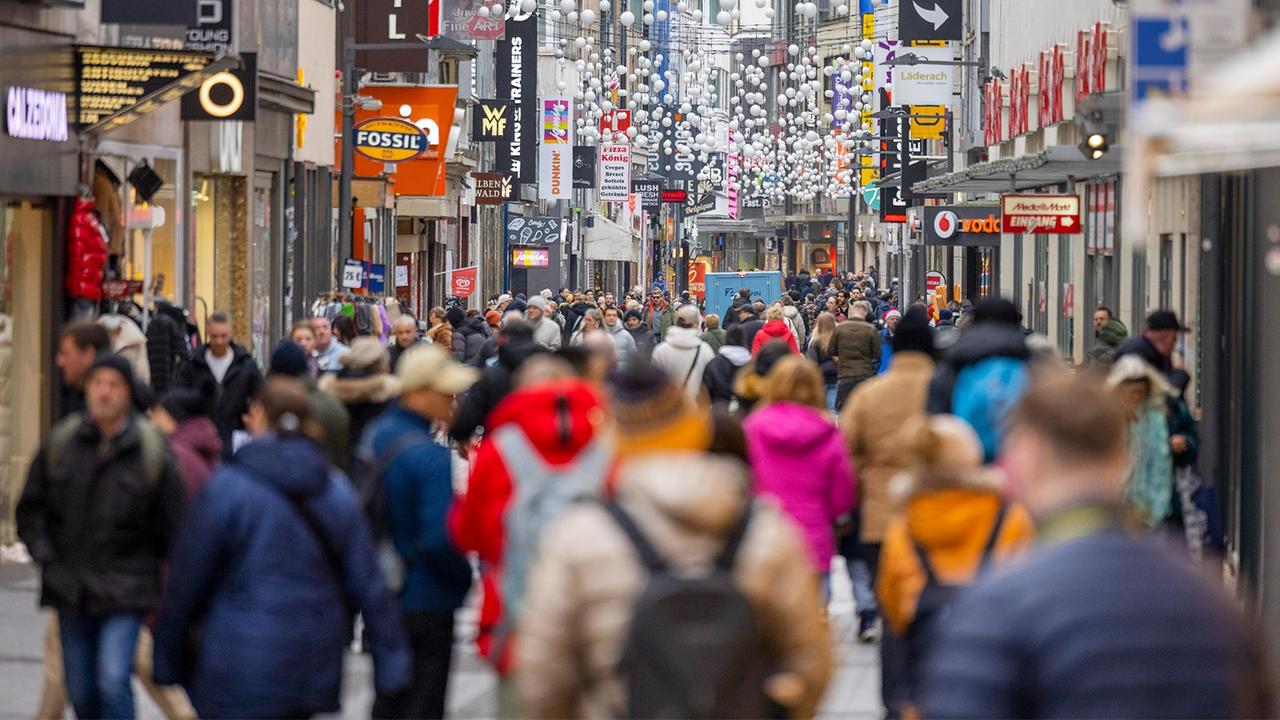
The German economic landscape is currently navigating a period of profound turbulence. According to the latest data from the Nuremberg Institute for Market Decisions (NIM) and the GfK, consumer sentiment in Germany has deteriorated to its lowest point in months, casting a long shadow over the nation’s retail sector. As households grapple with the dual pressures of persistent inflation and geopolitical instability, the prevailing mantra across the country has shifted from consumption to caution: save, don’t shop.
The Shrinking Confidence: Key Facts
The latest consumer climate study for October 2026 paints a grim picture. The index has suffered a significant decline, falling by 3.8 points to reach -30.6. Rolf Bürkl, an expert at NIM, described the reading as the second-worst performance of the year, surpassed only by the dismal figures recorded in May.
"The majority of households are anticipating that high energy prices will continue to erode their purchasing power," Bürkl noted. This sentiment is not merely anecdotal; it is backed by a tangible shift in behavior. The fear of rising costs—specifically regarding fuel, diesel, and home heating—has been exacerbated by the ongoing conflict in the Middle East, which has driven energy prices to record highs in recent weeks.
Chronology of a Crisis: From Stability to Anxiety
To understand the current malaise, one must look at the recent trajectory of the German economy.
- Early 2026: Initial optimism surrounded the resilience of the German export sector and government-led infrastructure investments.
- May 2026: Consumer sentiment reached a nadir as the full impact of early-year inflationary pressures hit household budgets.
- Mid-Summer 2026: A brief period of stabilization occurred, buoyed by hopeful signals in the labor market.
- September 2026: The onset of autumn has brought a renewed sense of urgency. With the prospect of a cold winter, the "precautionary motive" for saving has reached levels not seen since the 2008 global financial crisis.
The decline in the income indicator—which has plummeted by 16.7 points to -15.0—marks the lowest level since April 2026, signaling that citizens are not only worried about today’s prices but are actively bracing for a future defined by lower disposable income and potentially higher unemployment.
Supporting Data: The Rise of the "Spar-Mentality"
The most striking feature of the current economic climate is the dramatic rise in the "propensity to save." While lower-income households are saving out of necessity to cover future utility bills, the NIM study highlights a fascinating trend among affluent households.
Even those with significant financial cushions are choosing to hoard capital rather than spend it. Analysts suggest this is a defensive reaction to the "inflationary tax" on savings. By putting money away, these households are attempting to offset the loss of purchasing power caused by the devaluation of their existing cash holdings.
When combined with the overall market index, the propensity to save has climbed to 21.5 points. Economists at Bank Bethmann HAL, led by Chief Economist Alexander Krüger, emphasize that this behavior is deeply rooted in the fear of the upcoming winter. "The high cost of energy, with oil prices consistently hovering above $100 per barrel, acts as a permanent brake on consumer activity," Krüger noted.
The Paradox: Economic Robustness vs. Consumer Fear
A significant contradiction exists in the German economy today: while the consumer is retreating, the macroeconomic indicators are showing surprising resilience.
On September 24, leading economic research institutes revised their GDP growth forecasts upward. For 2026, the economy is now expected to grow by 1.3%, followed by 1.1% in 2027. This growth is primarily fueled by:
- Export Strength: Despite global headwinds, German industrial products remain in high demand.
- Strategic Government Spending: Substantial investments in infrastructure and defense have provided a floor for the economy.
However, ING Chief Economist Carsten Brzeski warns against premature celebration. "The current downward trend in consumer sentiment is a bad omen for private consumption in the coming months," Brzeski cautioned. He argues that while government spending can mask structural weaknesses, the absence of robust private demand could lead to a "growth cliff" by 2028, where projections drop to a stagnant 0.4% without meaningful structural reforms.
Implications: The Global Bond Market and Financial Stability
The pessimism in Germany is mirrored by broader concerns in global financial markets. As the U.S. Federal Reserve and other major central banks continue their struggle to tame inflation, the "higher for longer" interest rate environment has triggered a global sell-off in government bonds.
The yield on the 10-year German Bund—the benchmark for the Eurozone—hit 3.6114% on Thursday, a level not witnessed since June 2009. Simultaneously, U.S. 30-year Treasury yields climbed to their highest levels since 2004 (5.5016%). This rise in yields is a direct response to the market’s realization that central banks will not pivot to lower interest rates as quickly as previously hoped.
For the German consumer, this is a double-edged sword: higher rates make saving more attractive, but they also increase the cost of credit, mortgage servicing, and business expansion, further dampening the economic climate.
Official Responses and Diplomatic Hopes
The only "ray of sunshine" currently piercing the gloomy economic clouds is the potential for diplomatic progress regarding energy prices. Reports emerged today that the Iranian government has submitted a new proposal to the United States regarding the resumption of negotiations to stabilize the conflict in the Middle East.
While the White House has remained cautious, describing the ongoing indirect talks as "positive and constructive," the mere hint of a de-escalation has provided a momentary reprieve for oil prices. This dip in energy costs provided the necessary relief for the DAX, which rose 0.6% to 25,427 points in midday trading.
Conclusion: A Precarious Path Forward
Germany finds itself at a crossroads. The government’s fiscal interventions have prevented a recession, but the psychological impact of sustained high inflation has fundamentally altered the behavior of the German consumer.
The path forward requires a delicate balance: the government must continue to support infrastructure and defense to maintain GDP growth, while simultaneously addressing the structural inflationary pressures that are scaring households into extreme austerity. As the nation approaches the winter months, the resilience of the German consumer will be the ultimate test of the country’s economic health. If the "save, don’t shop" mentality persists, the optimism currently found in macroeconomic forecasts may soon give way to a more sober reality.
For now, the markets remain tethered to the twin narratives of geopolitical energy security and the long-term impact of high-interest rates. Whether this "robust" economy can survive the winter of consumer discontent remains the defining question for the remainder of 2026.