


Paris, France – October 14, 2026 – France’s National Assembly has commenced its arduous deliberations on the upcoming national budget, a process fraught with economic peril and intense political maneuvering. Finance Minister Roland Lescure has unveiled a stark austerity plan, aiming to rein in the nation’s ballooning debt, but faces a formidable challenge: a government lacking an absolute majority and a deeply divided political landscape, exacerbated by the looming shadow of presidential elections.
The stakes are exceptionally high. France’s public debt is teetering on the brink, nearing an alarming 120% of its Gross Domestic Product (GDP). The sheer weight of servicing this debt is evident, with nearly €80 billion earmarked solely for interest payments in the current fiscal year. This precarious financial standing has forced the government’s hand, necessitating a rigorous belt-tightening across various sectors.
The Urgency for Fiscal Rectification
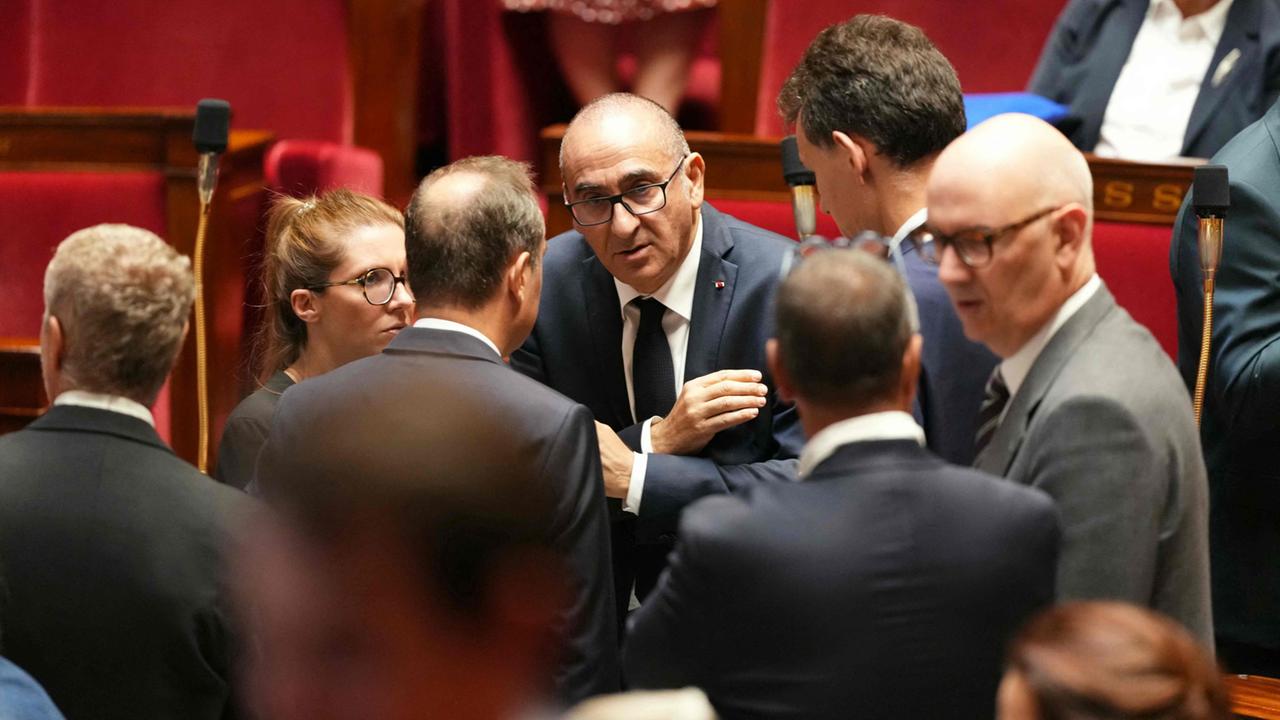
Finance Minister Lescure, in a sparsely populated plenary hall on a late Tuesday evening, painted a sobering picture of France’s economic reality. "2026 is not yet over – and the year has been marked by an accumulation of crises," he declared, underscoring the volatile global environment impacting national finances. His central message was clear: a return to fiscal balance is paramount. "Therefore, in 2027, we will once again embark on a path of consolidation," Lescure vowed, signaling a determined, albeit politically challenging, commitment to fiscal responsibility.
The minister’s plea for fiscal prudence was not merely rhetorical. "We cannot accept this situation," he insisted, directly addressing the implications of unchecked borrowing. "To prevent ourselves from having to borrow more and more money, and to preserve our room for maneuver, there is only one way: to reduce our budget deficit." The government’s ambitious target is to slash the deficit from its current 5.4% of GDP to a more manageable 5.0%. This seemingly incremental reduction requires significant fiscal adjustments, setting the stage for a contentious parliamentary battle.
Austerity Measures: Sacrifices Across the Board
To achieve its deficit reduction goals, the government has outlined "consolidation measures" totaling over €40 billion in its draft budget. The proposed cuts are wide-ranging, targeting areas such as development aid and employment policies. Notably, pensions and housing benefits are slated to be excluded from the customary inflation adjustments, a move that is certain to elicit strong opposition from affected demographics and their political representatives.
In stark contrast to these cuts, defense spending is earmarked for a substantial increase. This allocation reflects a shifting geopolitical landscape and a renewed emphasis on national security, but it also highlights the difficult choices being made in the budget, where resources are being re-prioritized at the expense of other social programs.
Political Opposition: A Chorus of Discontent
The government’s austerity proposals have been met with fierce resistance from across the political spectrum. Éric Coquerel, a prominent figure from the far-left La France Insoumise (LFI) party and chair of the finance committee, has vehemently denounced the government’s narrative. He characterized the administration’s warnings as "fear-mongering" and accused them of economic mismanagement. "Those who say we have no money left are not in a position to give lessons!" Coquerel retorted, signaling a deep ideological divide on the path forward.
Coquerel’s critique extends to what he perceives as the government’s failure to deliver on its promises. He argued that the administration has faltered on multiple fronts: "They have not reduced the budget deficit, unemployment is rising again and stands at over eight percent." For LFI and its allies, the current austerity policy is not a necessary evil but a destructive force that is "ruining the country."
The Socialist Stance: A Preemptive Strike
The Socialist Party, a traditional player in French politics, has adopted a confrontational stance, even before the substantive debate on the budget’s content began. Their parliamentary group introduced a motion to reject the government’s budget proposal outright. Estelle Mercier, a Socialist deputy, articulated the party’s rationale: "This budget proposal is not characterized by reason – but by injustice." She argued that a "reasonable budget law in a parliament without a majority, in a divided country, must be a just one. It must be one that involves everyone in the savings efforts, according to their abilities – and that would therefore be capable of compromise."
While the Socialists’ motion ultimately failed, it underscored the precariousness of the government’s position. The previous budget was navigated through parliament largely due to negotiations with the Socialists. Their current pivot towards confrontation signals a significant shift in the political dynamics, leaving Prime Minister Sébastien Lecornu with fewer avenues for compromise.
Marine Le Pen’s Strategic Calculus
Marine Le Pen, the presidential candidate for the far-right Rassemblement National (RN), is employing a different, yet equally strategic, approach. Speaking at a Politico event, she outlined her intention to influence, rather than outright reject, the budget. "I want to ensure that the budget is less bad," Le Pen stated. "Not to wave it through – but to be able to change it when I am President."
Le Pen, like the government, has an interest in seeing a budget passed before the end of the year. Failure to do so would necessitate a "special law" – a provisional measure that would roll over the previous year’s budget, offering no scope for new policy initiatives or austerity measures. This interim solution, while practical, would stifle any potential for significant fiscal reform or political maneuvering in the crucial months leading up to the presidential election.
The Perilous Path Ahead: Article 49.3 Looms
Prime Minister Lecornu faces a daunting task. Securing a regular parliamentary vote of approval for the austerity-laden budget appears increasingly improbable. This reality may compel him to resort to a controversial constitutional tool: Article 49.3 of the French Constitution. This article allows the government to pass legislation, including the budget, without a vote in the National Assembly, thereby circumventing parliamentary deadlock.
However, the use of Article 49.3 carries significant political risks. It opens the door to no-confidence votes, potentially leading to the government’s downfall. This high-stakes gambit reflects the extraordinary challenges the current administration faces in navigating a fragmented parliament and a polarized electorate, all while attempting to impose unpopular fiscal discipline.
The government’s ability to push through this budget will be a litmus test of its political resilience and its capacity to forge consensus in a deeply divided nation. The ongoing debates in the National Assembly are not merely about fiscal figures; they are a microcosm of France’s broader political and economic struggles, with the upcoming presidential election casting a long and influential shadow over every decision. The coming weeks will undoubtedly be a period of intense negotiation, political brinkmanship, and potentially, significant constitutional recourse, as France grapples with its fiscal future.


