


Tirana, Albania – October 14, 2026 – The Albanian capital, Tirana, has been engulfed by escalating unrest as student-led protests against the government’s education policies and broader governance issues turned violent for the second consecutive day. Reports from various media outlets indicate a significant escalation, with demonstrators resorting to Molotov cocktails and the setting of fires near government buildings. The demonstrations, initially focused on educational reforms, have now broadened to encompass widespread discontent over alleged corruption and poor economic prospects, reflecting a deepening political crisis in the Balkan nation.
The Spark Ignites: Day Two of Violent Confrontation
The most recent wave of unrest saw a dramatic surge in intensity on Wednesday, October 14, 2026. Eyewitness accounts and photographic evidence, widely circulated by local and international news agencies, depict scenes of chaos in the heart of Tirana. Demonstrators reportedly hurled Molotov cocktails at the Ministry of Education, igniting a fire that eyewitnesses described as originating from a first-floor window. While Albanian news site a2news.com reported that law enforcement swiftly intervened to disperse the crowd and extinguish the blaze, the act signifies a significant escalation in the protesters’ tactics.
Earlier in the day, student protesters had already set fire to numerous trash bins, their flames illuminating the streets as a stark symbol of their anger. They also reportedly dismantled barriers erected in front of the Ministry of Education, a clear challenge to the authorities’ attempts to contain the demonstrations. Adding to the growing momentum, high school students joined the ranks of the protesters, abandoning their classes to express solidarity and amplify their grievances. The opposition Democratic Party, led by former President and Prime Minister Sali Berisha, reportedly postponed a parliamentary faction meeting to demonstrate support for the student movement, indicating a potential broadening of the political opposition to the current government.
A Chronology of Growing Dissatisfaction
The current unrest is not an isolated incident but rather the culmination of simmering discontent that has been building for months. Tuesday, October 13, 2026, marked the initial outbreak of significant violence. What began as a peaceful demonstration by several hundred individuals in front of the Ministry of Education, as reported by a2news.com, rapidly devolved into widespread disturbances across the city center. Reports from that day detailed significant property damage, with businesses and banks bearing the brunt of the vandalism. The headquarters of the city administration was reportedly stormed by protesters, highlighting the depth of public anger and frustration.
In response to the escalating violence, the police deployed water cannons, tear gas, and batons. However, these measures have not been without controversy. Reports have emerged alleging instances of excessive force and mistreatment of individuals who were not directly involved in the protests. In the aftermath of Tuesday’s events, the portal euronews.al reported that five police officers have been suspended, suggesting an internal acknowledgement of potential misconduct within the security forces.
The grievances fueling these protests are multifaceted. Students have voiced deep concerns regarding poor future career prospects, the burden of tuition fees, and the perceived deteriorating conditions within Albanian universities. These educational concerns have become intertwined with broader societal frustrations, creating a potent cocktail of dissent.
The "Flamingo" Movement: A Catalyst for Wider Discontent
The current student protests have found a powerful resonance with the burgeoning "Flamingo" movement. This movement, which has been actively campaigning since May, demands the resignation of Prime Minister Edi Rama’s government, citing widespread allegations of corruption. The "Flamingo" movement’s origins can be traced to a controversial luxury resort project spearheaded by Jared Kushner, former President Donald Trump’s son-in-law. This project, slated for development in a protected nature reserve, has become a focal point for public outrage, symbolizing for many the unchecked influence of powerful foreign investors and alleged government complicity in corrupt practices.
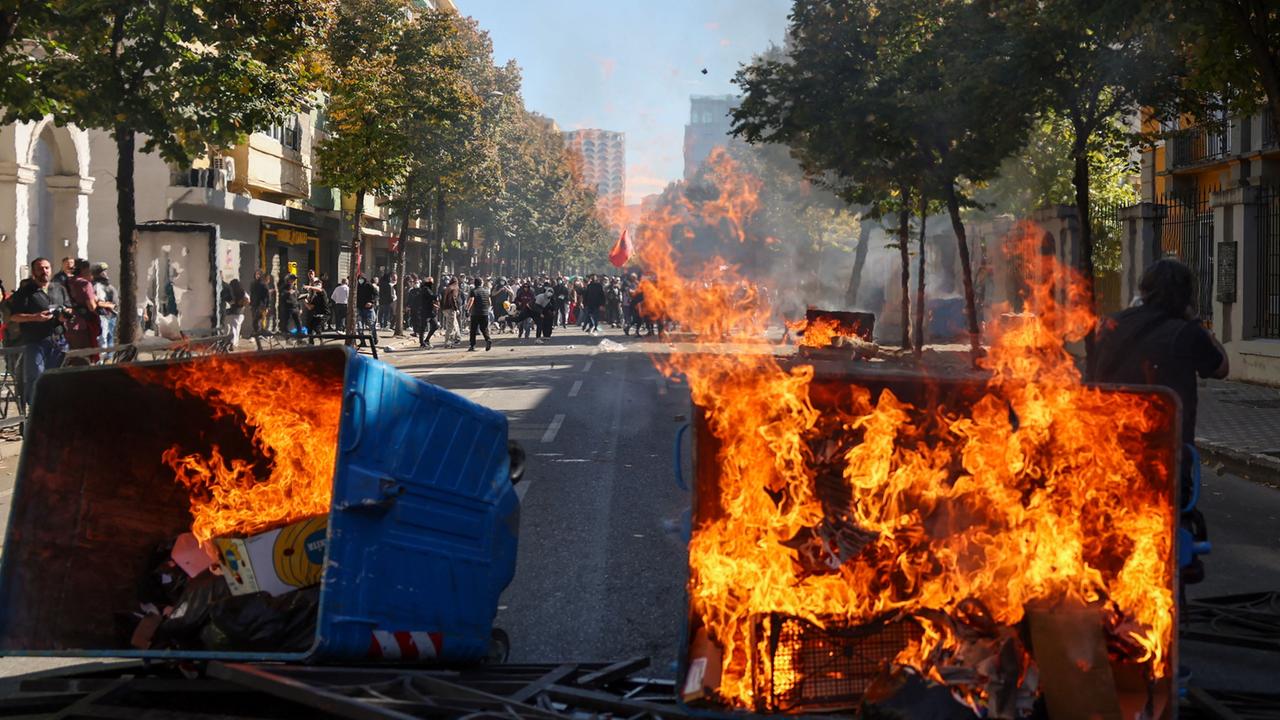
On Tuesday, the "Flamingo" movement also organized a rally in Tirana, further amplifying its anti-government message and drawing parallels between its core demands and the specific grievances of the student body. This convergence of disparate protest groups suggests a growing unified front against the incumbent administration, potentially posing a more significant challenge than isolated demonstrations.
Supporting Data and Underlying Factors
The unrest in Albania is not occurring in a vacuum. It is underpinned by a complex interplay of socio-economic and political factors that have contributed to a climate of disillusionment.
- Economic Stagnation and Limited Opportunities: Albania, like many Balkan nations, has struggled with economic development. High unemployment rates, particularly among young people, and a perception of limited upward mobility create fertile ground for discontent. The exodus of young Albanians seeking better opportunities abroad is a visible testament to these challenges.
- Allegations of Systemic Corruption: Corruption remains a pervasive issue in Albania, impacting various sectors of public life. The perception that political elites are enriching themselves at the expense of the general populace fuels widespread public anger and erodes trust in institutions. The "Flamingo" movement’s focus on corruption allegations highlights this deep-seated concern.
- Educational System Deficiencies: Beyond the immediate trigger of protest, the Albanian education system faces structural challenges. Critics point to outdated curricula, insufficient funding, and a disconnect between academic training and the demands of the job market. This leads to graduates facing significant hurdles in finding meaningful employment, exacerbating the sense of a bleak future.
- Political Polarization: The Albanian political landscape is characterized by deep divisions. The opposition often portrays the government as authoritarian and corrupt, while the ruling party frequently accuses its opponents of attempting to destabilize the country for political gain. This entrenched polarization hinders constructive dialogue and exacerbates tensions during periods of public protest.
- The Influence of International Projects: Controversial international development projects, such as the Kushner resort, can become lightning rods for public anger, especially when perceived as benefiting elites at the expense of environmental protection or local communities. These projects often draw scrutiny regarding transparency and the potential for illicit dealings.
Official Responses and International Scrutiny
The Albanian government has yet to issue a comprehensive, unified response to the escalating protests. While law enforcement has taken action to quell the disturbances, official statements from the Prime Minister’s office or relevant ministries have been characterized by a focus on maintaining public order and condemning the violence. There has been little indication of a willingness to address the core demands of the protesters, particularly concerning systemic corruption or significant policy shifts in education.
The suspension of five police officers, as reported, could be interpreted as an attempt to mitigate accusations of excessive force and to project an image of accountability. However, critics argue that such measures are insufficient without broader investigations into alleged misconduct and a commitment to systemic reform.
Internationally, the situation in Albania is likely being closely monitored by European Union officials and other international bodies. Albania’s aspirations for EU membership often hinge on its progress in areas such as rule of law, good governance, and the fight against corruption. The current unrest could potentially complicate these aspirations if the government is perceived as failing to manage internal dissent effectively or address underlying systemic issues.
Implications for Albania’s Future
The escalating protests in Tirana carry significant implications for Albania’s political stability, economic development, and international standing.
- Deepening Political Instability: The prolonged and increasingly violent nature of the protests signals a profound crisis of confidence in the current government. If the underlying grievances are not addressed through meaningful dialogue and reform, the unrest could persist, further destabilizing the political landscape.
- Economic Repercussions: Ongoing street protests and a climate of uncertainty can deter foreign investment and disrupt economic activity. Businesses may be hesitant to operate in an environment of instability, potentially hindering Albania’s economic growth prospects.
- Erosion of Public Trust: The repeated cycles of protest and perceived government inaction further erode public trust in political institutions. This can lead to increased cynicism and disengagement, making it more challenging for any government to govern effectively in the long term.
- Impact on EU Accession: As mentioned earlier, Albania’s path towards EU membership requires adherence to democratic norms and the rule of law. Persistent social unrest and unresolved issues of corruption could become significant obstacles in this process.
- Potential for Broader Social Upheaval: If the current protests fail to yield tangible results, there is a risk that the discontent could spread and manifest in other forms of social activism, potentially leading to further unpredictable outcomes.
The events unfolding in Tirana are a stark reminder of the deep-seated challenges facing Albania. The coming days and weeks will be crucial in determining whether the government can de-escalate the situation through dialogue and reform, or if the current trajectory of escalating unrest will continue to define the nation’s political and social landscape. The demands for accountability, improved governance, and a brighter future are echoing loudly in the streets of Tirana, and their resolution will undoubtedly shape the course of Albania’s future.


