Paris, France & Rome, Italy – October 20, 2026 – Following a weekend marred by widespread and violent unrest, France and Italy have responded with a series of stringent measures aimed at quelling further public disorder and preventing a recurrence of the destructive scenes witnessed across major cities. From deploying anti-terrorism units to imposing curfews and strengthening law enforcement powers, both nations are signaling a firm stance against the escalating protests, which were initially sparked by concerns over the rising cost of living and perceived governmental shortcomings.
The gravity of the situation has prompted a significant mobilization of state resources, with authorities in both countries acknowledging the need for a robust and visible security presence. The unrest, which saw widespread looting, vandalism, and attacks on public infrastructure, has raised critical questions about the preparedness and effectiveness of security forces, as well as the underlying socio-economic factors fueling public discontent.
The Spark and the Fire: Understanding the Roots of the Unrest
The protests, which erupted across France and Italy over the past weekend, were initially characterized by widespread demonstrations against the escalating cost of living and, in France, discontent within the education system. However, these legitimate grievances quickly spiraled into widespread violence, transforming peaceful assemblies into scenes of chaos and destruction.
In France, the scale of the disarray was particularly alarming. Thousands of businesses were reportedly looted, while municipal buildings and police stations faced direct attacks. The flames of destruction consumed multiple structures and vehicles, leaving a trail of devastation. The French government has largely attributed the extreme violence to the infiltration of extremist elements, particularly those on the far-left. The historic town hall in Limoges, a central French city, was nearly completely destroyed by fire, underscoring the destructive potential unleashed. As a direct response, night curfews were implemented in several major French cities on Monday, with further protests already announced for Saturday.
Italy, too, experienced its share of turmoil. In Milan, initially peaceful protests against the government’s legislative plans and the cost of living devolved into significant clashes. The iconic Duomo square and its surrounding areas became focal points for destruction, with predominantly masked and black-clad youths smashing shop windows and looting stores and supermarkets. The scale of the violence was described by the Milanese prosecutor’s office as "rare in its intensity."
France’s Multi-pronged Response: Reinforcements, Restrictions, and Repercussions
France’s strategy to regain control and prevent future outbreaks of violence is multifaceted, involving a significant increase in security personnel, strategic deployment of military assets, and the imposition of targeted restrictions.
H2: Increased Security Deployment and Anti-Terror Unit Mobilization
Prime Minister Sébastien Lecornu announced a "massive" deployment of security forces for the upcoming Saturday protests, though specific numbers were not disclosed. This surge in personnel aims to ensure a more comprehensive and effective response to any potential disturbances.
A key element of this enhanced security posture involves the strategic deployment of soldiers from the elite anti-terrorism unit, Sentinelle. This unit, which has been a visible presence in French cities since the Paris and Saint-Denis terror attacks, will be tasked with guarding sensitive locations. According to Interior Minister Laurent Nuñez, this redeployment will free up a larger contingent of police and gendarmes to focus on crowd control and maintaining order during demonstrations.
H3: Parliamentary Inquiry and Examination of Security Measures
In a move reflecting the seriousness with which the government is treating the events, the French Parliament has initiated the establishment of a special investigative commission. This commission will be tasked with thoroughly examining the causes and circumstances that led to the widespread unrest witnessed last weekend. Crucially, it will also scrutinize the efficacy of the measures taken by authorities to uphold public order, aiming to identify any systemic failures or areas for improvement.
H3: Le Monde’s Revelations and the Scale of Force
Investigative reporting by the newspaper Le Monde has shed light on potential shortcomings in the security response. The publication suggests that an insufficient number of security personnel were deployed, leaving certain neighborhoods vulnerable and potentially contributing to an increased reliance on forceful measures. According to Le Monde‘s findings, police in the four major cities of Paris, Marseille, Lyon, and Bordeaux deployed over 19,000 tear gas and stun grenades in response to the disturbances. This figure highlights the intensity of the confrontations and the significant use of crowd-control agents.
H3: Extended Curfews and Assembly Bans
The nightly curfews implemented in Paris and several other cities have been extended. In Paris, restrictions are in place from Tuesday night until Wednesday morning, specifically around the Place de la République and the Les Halles shopping district. Similar measures have been enacted in other major urban centers. Lyon has imposed a curfew in its city center until Wednesday morning, while Marseille has implemented a night-time curfew for minors in specific districts until Friday.
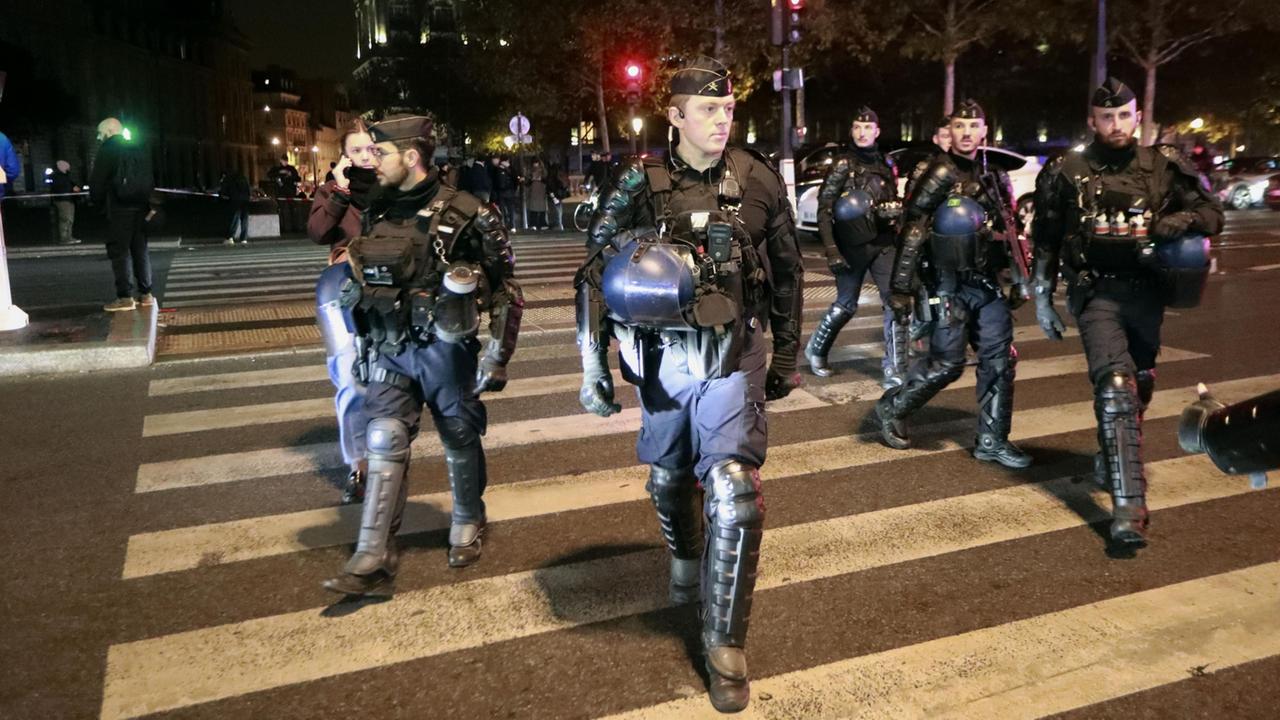
Furthermore, non-registered gatherings in designated areas of Paris are banned from Tuesday evening to Wednesday morning. The police have explicitly prohibited demonstrations on the Champs-Élysées, near major train stations, in several central squares, and in the vicinity of the presidential palace, government headquarters, parliament, and the Interior Ministry. Several Metro stations will also remain closed from 10:00 PM onwards, further restricting movement and potential assembly points.
Italy’s Firm Hand: Military Reinforcements and Enhanced Penalties
Italy is adopting a similarly robust approach, focusing on bolstering its security presence with military personnel and strengthening legal deterrents against future rioters.
H2: Deployment of 500 Additional Soldiers to Milan
Following the weekend’s unrest, the Italian government has authorized the deployment of an additional 500 soldiers to Milan. This deployment, initially for a three-month period, aims to prevent a repeat of the disturbances in the city’s downtown area. Prime Minister Giorgia Meloni announced this decision after an emergency cabinet meeting, signing a decree to facilitate the troop movement.
H3: Strengthening the "Strade Sicure" Mission
This reinforcement is an augmentation of the existing "Strade Sicure" ("Safe Streets") mission, which has been in operation since 2008. This long-standing initiative involves soldiers assisting regular police forces in monitoring urban centers and at-risk properties. The increased presence in Milan signifies a heightened focus on maintaining public order in the city.
H3: Harsher Penalties for Group Offenses and Extended Detention
Beyond military deployment, Italy is also looking to toughen its legal framework. Discussions are underway to allow the police to detain suspected rioters for longer periods. Furthermore, penalties for offenses committed by groups of five or more individuals are set to be significantly increased, with potential prison sentences of up to five years and fines reaching up to €15,000. This measure is designed to act as a strong deterrent against organized acts of vandalism and violence.
H3: Consideration of Curfews in Urban Centers
The possibility of implementing curfews in specific areas of city centers is also under active consideration. Prime Minister Meloni has vowed a tough response to the recent riots, not only in Milan but also in other affected cities, signaling a zero-tolerance policy towards such acts of disorder.
The Aftermath in Milan: A Glimpse of the Damage
The events in Milan were particularly concerning. What began as seemingly peaceful protests against the cost of living and government policies quickly escalated. On the Duomo square and its surroundings, predominantly masked and black-clad youths smashed shop windows and plundered stores and supermarkets.
In total, over 270 individuals were temporarily detained, with the majority being minors. Five teenagers were taken into pre-trial detention. Official reports indicate that at least 14 members of the security forces sustained injuries. The Milanese prosecutor’s office described the level of violence as "rare," and damage estimates run into the millions of euros.
Broader Implications and the Road Ahead
The unrest in France and Italy highlights a growing trend of public discontent across Europe, fueled by economic anxieties and a perceived disconnect between governments and their citizens. The responses from both nations, while seemingly robust, raise important questions about the long-term sustainability of such measures and their potential impact on civil liberties.
The deployment of military personnel onto civilian streets, while a clear signal of the authorities’ resolve, can be a sensitive issue, potentially exacerbating tensions or creating an atmosphere of heightened surveillance. The effectiveness of these measures in addressing the underlying socio-economic grievances that fuel such protests remains to be seen.
As both France and Italy brace for potential further demonstrations, the coming weeks will be crucial in determining whether these stringent measures can restore order without alienating segments of the population further. The challenge for European leaders lies in balancing the immediate need for security with the imperative to address the root causes of public anger and foster a sense of trust and stability. The events of this past weekend serve as a stark reminder of the fragile nature of social cohesion in the face of economic hardship and political polarization.