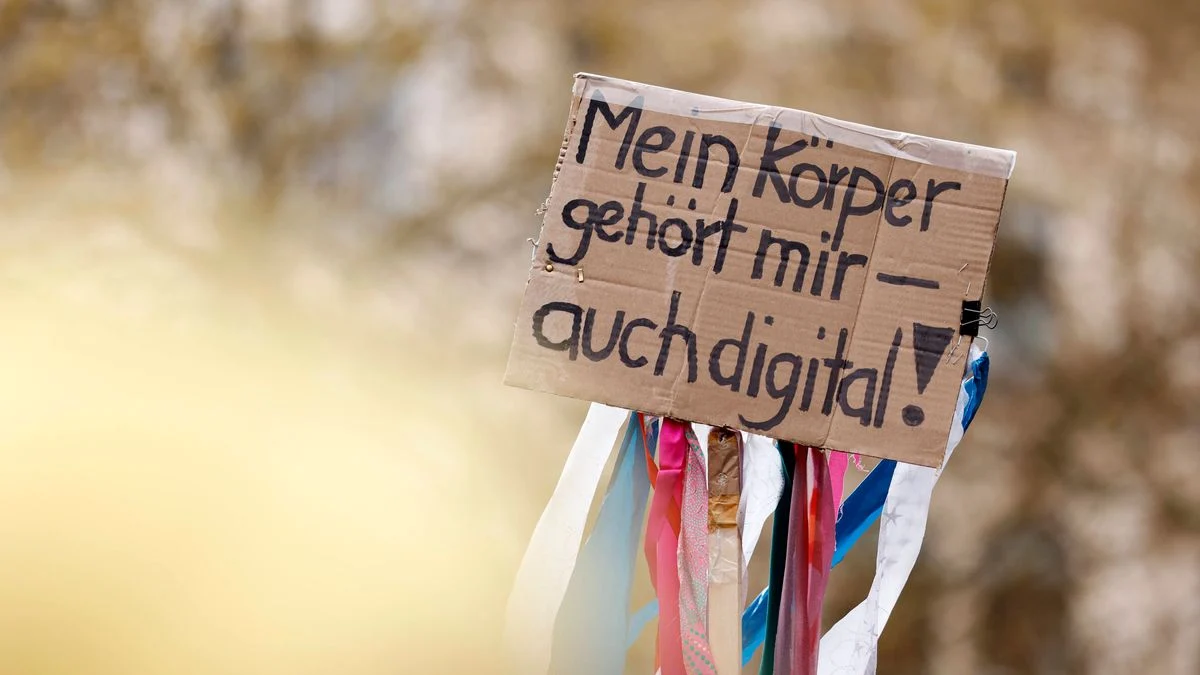
The German federal cabinet has officially approved a groundbreaking legislative draft aimed at curbing the rising tide of digital violence. Championed by Federal Justice Minister Stefanie Hubig (SPD), the bill represents a significant overhaul of the German criminal code, designed to address the unique, often harrowing challenges posed by the modern internet age. From the proliferation of non-consensual sexual imagery to the sophisticated manipulation of personal identities via artificial intelligence, the proposed law seeks to strip away the impunity that many perpetrators have enjoyed for far too long.
As the draft moves toward parliamentary deliberation in the Bundestag, it signals a definitive shift in the state’s stance: digital violence is no longer to be treated as a secondary concern, but as a severe societal threat capable of inflicting trauma as profound as physical assault.
Main Facts: A New Legal Framework
The core of the legislative proposal focuses on closing "protection gaps" that have left victims vulnerable in an era of ubiquitous connectivity. The bill introduces several new criminal offenses and expands existing protections to cover modern technological abuses.
The primary targets of the legislation include:
- Sexualized Deepfakes: Criminalizing the creation and distribution of AI-generated content that depicts real individuals in non-consensual sexual situations.
- Voyeurism and "Upskirting": Explicitly banning the filming of intimate body parts, such as the genitals or breasts, in private spaces like saunas or public spaces like beaches, regardless of whether the victim is aware of the recording.
- Rape Imagery: Closing a loophole where the mere possession or consumption of real-life sexual violence footage was not universally criminalized if the subjects were adults.
- Identity Theft: Penalizing the creation of fake profiles or accounts intended to ruin a person’s reputation or spread malicious misinformation.
- Cyberstalking: Modernizing the definition of stalking to include the misuse of smart technology, GPS tracking, and IoT-connected devices.
Chronology: From Impunity to Accountability
The momentum for this legislation did not emerge in a vacuum; it is the culmination of years of public outcry and high-profile legal failures.
The Early Warning Signs: For years, legal experts argued that the German Penal Code was lagging behind the rapid evolution of technology. While cyberbullying was recognized as a nuisance, the law lacked the teeth to handle the psychological and social devastation caused by viral, non-consensual imagery.
The "Sauna Incident" Catalyst: The public consciousness was significantly shaken by the case of two women in Leipzig who were secretly filmed in a sauna. Despite filing a criminal complaint, the women saw the case dismissed because the specific act of filming did not meet the previous, narrow definition of criminal voyeurism. The perpetrator was even permitted to keep his phone, which contained the illicit recordings. This case became a symbol of systemic failure and a rallying cry for legislative reform.
Ministerial Action: Throughout 2023 and early 2024, Justice Minister Stefanie Hubig engaged in intensive consultations with data protection experts, digital rights groups, and victim support organizations. The resulting draft, finalized in the spring of 2024, reflects a compromise between protecting personal rights and maintaining the functionality of the digital ecosystem.

Supporting Data and The Scale of the "Flächenbrand"
Minister Hubig has famously described digital violence as a Flächenbrand—a wildfire. The statistics support this assessment. While global figures vary, German law enforcement agencies have reported a consistent double-digit annual increase in digital hate crime, harassment, and the distribution of non-consensual intimate imagery.
The sheer accessibility of AI tools has lowered the barrier to entry for digital abuse. Deepfake technology, which was once the domain of professional visual effects artists, is now available to anyone with a smartphone. The result is an environment where anyone can be targeted. According to recent sociological studies, women are disproportionately the targets of such attacks, facing sexualized defamation that can effectively silence their participation in public discourse.
Furthermore, the "retention of evidence" gap has been a major hurdle. In many previous instances, by the time a victim could secure a court order to investigate a profile, the perpetrator had already deleted the evidence or wiped the digital trail. The new law aims to mandate the preservation of data (such as IP addresses and timestamps) upon "sufficient suspicion," ensuring that evidence remains available for law enforcement.
Official Responses and Political Debate
The government’s proposal has received broad support from social-liberal coalitions, though it faces nuanced scrutiny from various sectors.
The Government’s Stance: Minister Hubig’s position is firm: "No person should have to tolerate this." She argues that the state has a moral and legal obligation to provide victims with the tools to reclaim their agency. The government maintains that the proposed sanctions—ranging from fines to significant prison terms—are proportionate to the psychological harm inflicted on victims.
The Tech Industry’s Perspective: Internet service providers and social media platforms have expressed concerns regarding the burden of implementation. The requirement to provide user data to law enforcement involves complex legal hurdles regarding data privacy and the protection of anonymous speech. Industry representatives emphasize that they are willing to comply, but warn that the "unbureaucratic" access to user data requested by some lawmakers could risk the security of innocent users.
Civil Liberties Advocates: While digital rights groups largely welcome the protection of victims, some have raised concerns about the potential for "over-blocking." They fear that platforms, fearing legal repercussions, might preemptively remove content that is not actually illegal, potentially stifling satire or artistic expression in the process.
Implications: The Road Ahead
The passage of this law, should it clear the Bundestag, will have profound implications for the digital landscape in Germany.

1. The Legal Precedent
The law sets a firm precedent that digital space is not a "lawless zone." By equating the harm of digital sexual violence with physical assault, the judiciary is signaling a new era of enforcement. Prosecutors will be empowered to pursue cases that were previously deemed "un-prosecutable," potentially leading to a wave of new litigation.
2. Victim Empowerment
The most practical benefit of the new legislation lies in the improved Auskunftsverfahren (information retrieval procedure). By forcing platforms to cooperate with victims and law enforcement to identify perpetrators, the law removes the anonymity shield that often emboldens abusers. The ability to request a temporary account suspension for repeat offenders provides an immediate "emergency brake" for victims under active attack.
3. A European Blueprint?
Germany often sets the regulatory tone for the European Union. Similar to the GDPR (General Data Protection Regulation), this legislation could serve as a model for other EU member states. As the EU continues to debate the Digital Services Act (DSA), the German move provides a concrete framework for how individual states can tackle the "human side" of digital security—moving beyond mere content moderation to actual criminal prosecution of offenders.
4. Cultural Shift
Beyond the courts, the law is expected to drive a cultural shift. By formalizing these acts as crimes, the legislation reinforces the social norm that non-consensual digital behavior is unacceptable. It forces a conversation about digital etiquette and the weight of one’s actions behind a screen.
Conclusion
The German federal cabinet’s decision is a direct response to the reality that for millions of people, the digital world is not just a place of connection, but a site of potential trauma. By tackling the complexities of deepfakes, stalking, and voyeurism, the proposed law seeks to restore the balance of power between the victim and the abuser.
As the bill moves to the Bundestag, the focus will shift to the fine print—ensuring that while the law effectively protects the vulnerable, it maintains the fundamental freedoms that define a democratic society. However, the message from Berlin is already clear: the wildfire of digital violence is being challenged, and the era of impunity for digital abusers is coming to an end.