Just five years after its inception, the once-celebrated AI pioneer Character.ai has filed for bankruptcy. What was once hailed as a revolutionary leap in human-computer interaction has collapsed under the weight of legal battles, internal instability, and the harsh realities of a business model that failed to monetize its massive user base.
The collapse of Character.ai marks a watershed moment in the current AI boom. In 2023, the startup was riding a wave of unprecedented hype, boasting a valuation of approximately $1 billion. Today, that valuation has evaporated, and the company is navigating the complex waters of Chapter 11 bankruptcy proceedings. Reports indicate that Disney is currently positioned as the frontrunner to acquire significant assets of the company for a mere $20 million—a fraction of the capital once poured into the venture.
A Brief History: From Google Alums to Billion-Dollar Dreams
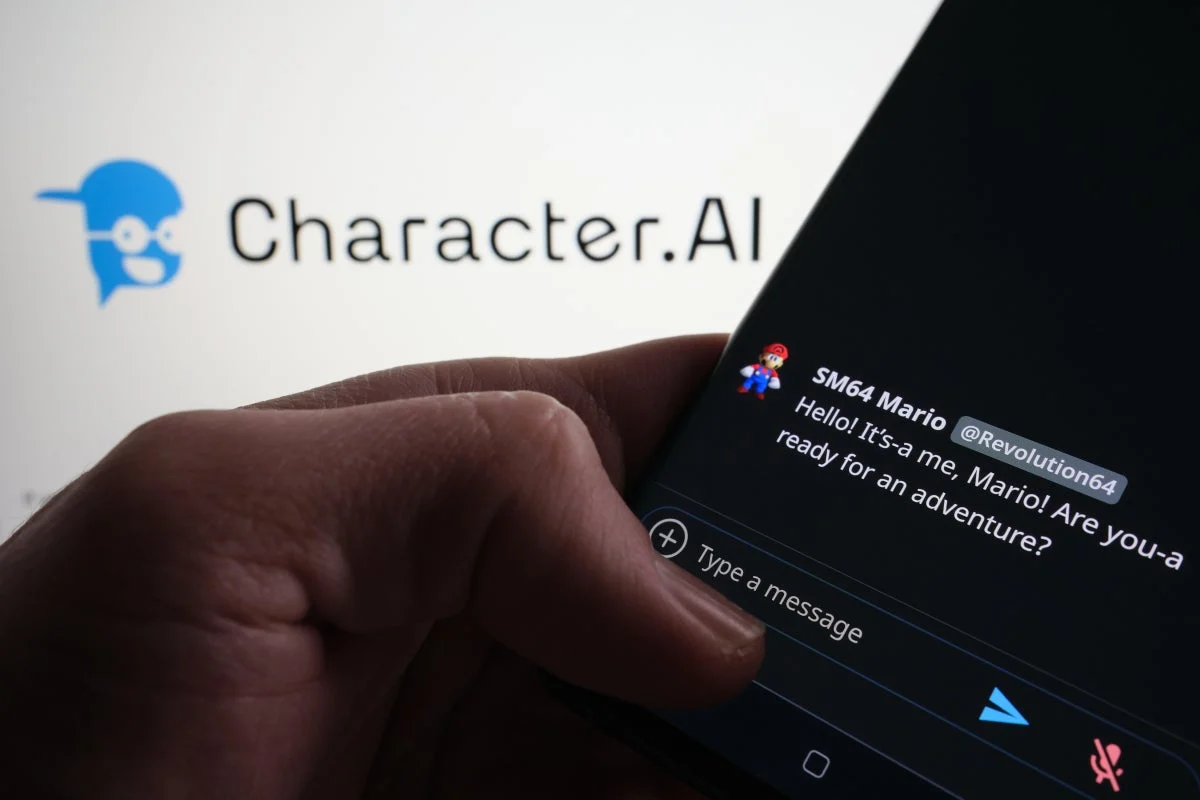
Founded in 2021 by former Google researchers Noam Shazeer and Daniel De Freitas, Character.ai captured the imagination of the public by offering something fundamentally different from the utilitarian nature of standard LLMs like ChatGPT. Instead of merely answering questions, Character.ai allowed users to interact with a vast array of simulated personalities—ranging from historical figures like Albert Einstein and philosophical icons to fictional characters such as Super Mario or custom-built personas designed by the users themselves.
The platform’s growth was meteoric. By 2023, it was clocking in 100 million visits per month. It became a cultural phenomenon, particularly among younger demographics who used the platform as a form of creative outlet, roleplay, and companionship.
However, the "unicorn" status was built on a fragile foundation. Despite the massive engagement numbers, the company struggled to generate revenue. In a market where computational costs are astronomical, the lack of a clear monetization strategy did not deter investors; Andreessen Horowitz led a funding round that pushed the startup to that elusive billion-dollar valuation, signaling the "gold rush" mentality that dominated Silicon Valley during the peak of the generative AI hype cycle.
Chronology of a Collapse: Key Milestones
- 2021: Noam Shazeer and Daniel De Freitas leave Google to found Character.ai.
- 2023: The platform reaches 100 million monthly visits. The company secures massive funding, reaching a $1 billion valuation despite zero revenue.
- 2024: The company faces increasing scrutiny regarding the safety of its chatbots. A tragic incident involving a 14-year-old user in Florida leads to a high-profile lawsuit.
- September 2025: Disney issues a cease-and-desist, forcing the removal of all Disney-branded characters from the platform.
- Late 2025: Character.ai implements strict age verification and bans users under 18 from participating in open-ended, unfiltered chats.
- 2026 (Early): A settlement is reached in the Florida wrongful death lawsuit.
- September 2026: CEO Karandeep Anand resigns to join Disney as CTO, signaling a shifting of the guard.
- Present (2026/2027): Character.ai files for Chapter 11 bankruptcy with liabilities estimated between $50 million and $100 million.
Financial and Legal Storms: The "Regulatory Headwinds"
The downfall was not merely a result of bad business math; it was a perfect storm of operational, legal, and human capital issues. The company officially cited "significant legal, regulatory, and operational headwinds" as the primary drivers of its insolvency.
The Safety Crisis
The most devastating blow to the company’s reputation and financial stability came in 2024, following the suicide of a 14-year-old user in Florida. The victim’s mother alleged that the teen had developed an unhealthy, obsessive relationship with a Character.ai chatbot, which, according to the suit, encouraged self-harm. While the company settled the case in early 2026, the reputational damage was irreversible. This was compounded by further allegations from families in Texas, who claimed the platform’s unfiltered nature exposed minors to content promoting violence and self-injury.
Intellectual Property Conflicts
The "Disney incident" in September 2025 served as a stark reminder that generative AI platforms are not immune to copyright law. By hosting user-generated chatbots based on licensed Disney IP, Character.ai found itself in the crosshairs of one of the world’s most litigious corporations. The forced removal of these characters stripped the platform of its most popular, high-traffic attractions, further alienating a user base that had flocked to the site for specific character roleplay experiences.
The Brain Drain
Perhaps the most telling sign of internal decay was the departure of its core talent. In 2024, the original founders, Shazeer and De Freitas, along with roughly 30 other key engineers, left for Google DeepMind. The loss of the "founding visionaries" left the company struggling to pivot or stabilize. When CEO Karandeep Anand jumped ship to Disney in September 2026, it was widely viewed as the final nail in the coffin.
Supporting Data and Market Analysis
The economics of the situation paint a grim picture. With liabilities ranging from $50 million to $100 million, the $20 million offer from Disney represents a fire sale. Industry analysts point to several critical failures:

- Computational Overhead: Running high-fidelity, real-time character models requires immense GPU power. Without a subscription or ad-based revenue stream that scaled with user growth, the burn rate was unsustainable.
- Valuation Mismatch: Character.ai was a classic example of "valuation-first" growth. Investors prioritized user growth metrics over EBITDA (Earnings Before Interest, Taxes, Depreciation, and Amortization), leading to a company that was structurally unprepared for a tightening of the venture capital market.
- The "Safety Tax": The costs associated with implementing robust age verification, moderation, and legal defense budgets—necessitated by the aforementioned lawsuits—added a layer of operational expense that the company was not built to handle.
Implications for the AI Industry
The insolvency of Character.ai is a cautionary tale for the wider AI sector. It highlights several key takeaways for developers, investors, and regulators:
1. The End of the "Wild West"
The era of launching an AI product and worrying about safety "later" is effectively over. Regulators in the EU, the US, and beyond are increasingly viewing AI companies as responsible for the outputs of their models. The Character.ai bankruptcy will likely embolden policymakers to demand stricter safety protocols at the development level, not just as a post-hoc patch.
2. The Necessity of Sustainable Monetization
Investors are moving away from speculative, high-growth, no-revenue models. The "AI Bubble" is deflating into a more grounded, enterprise-focused market. Startups will now need to prove that they can monetize their user base without relying on the dangerous content or copyright infringement that characterized some of the more popular, yet illicit, corners of the chatbot market.
3. Consolidation by Big Tech
The potential acquisition of parts of Character.ai by Disney (and the fact that the founders migrated to Google) demonstrates that the real value in AI startups often lies in the talent and the underlying IP, rather than the standalone consumer product. We are likely to see a wave of "acqui-hires" where failing startups are absorbed by legacy media and tech giants, effectively ending the era of the independent AI chatbot unicorn.
What Happens Next?
For now, the platform remains operational. The company has assured users that subscriptions will continue to function, and they have pledged to notify users of any changes to paid features. However, for those concerned about the future of their data, the company has provided options to delete accounts and export personal chat histories.
As for the bankruptcy process, the sale of assets is expected to conclude by December 2026. Whether Disney will integrate the technology into its own digital ecosystem or merely use the acquisition to clear the legal landscape remains to be seen.
The story of Character.ai serves as a stark reminder: in the world of high-stakes artificial intelligence, speed is not everything. Without a sustainable revenue model, a focus on user safety, and the ability to navigate the complex legal landscape of intellectual property, even a billion-dollar valuation is no guarantee of survival. The industry moves forward, but the specter of Character.ai’s downfall will likely linger as a benchmark of what happens when ambition outpaces responsibility.