By Editorial Staff
Updated: October 6, 2026
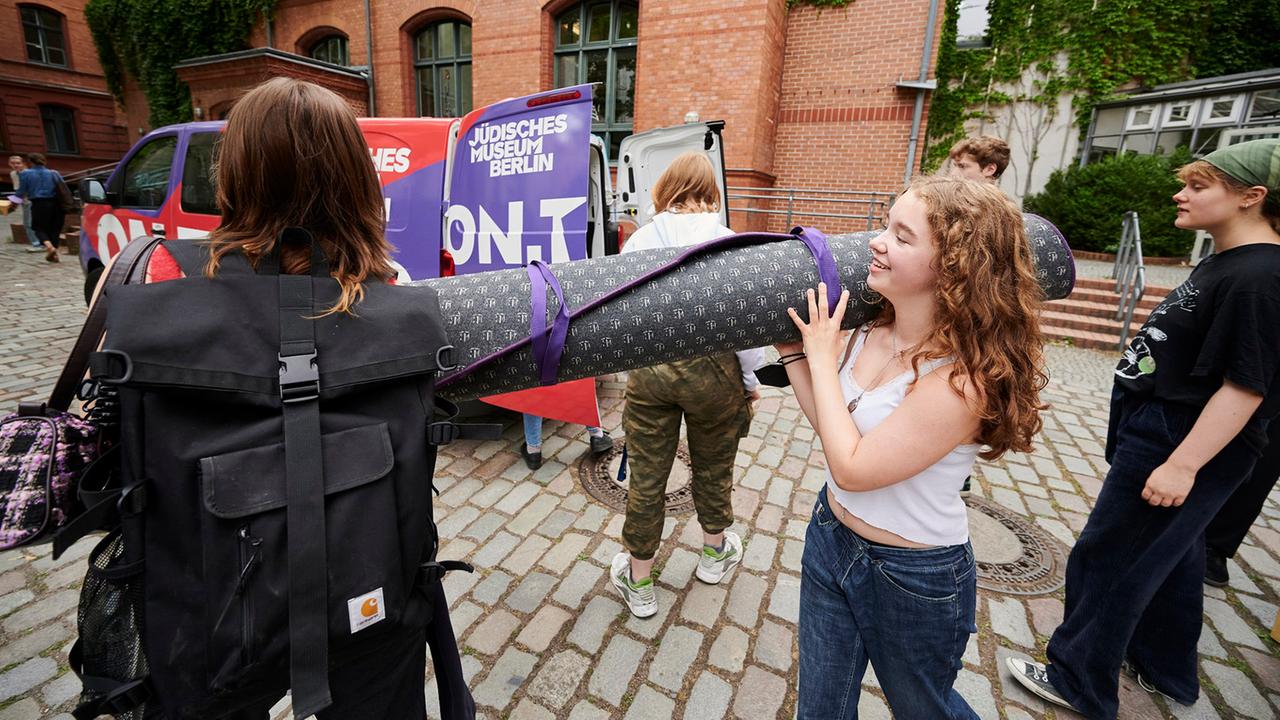
In classrooms across Germany, the static walls of history books are being replaced by a more tangible, interactive experience. For over 15 years, the Jewish Museum Berlin (JMB) has been operating a unique project known as "on.tour." By packing a curated collection of artifacts into mobile units and traveling to schools across the nation, the museum has transformed the way young people engage with Jewish culture, history, and the realities of modern democratic values.
The Core Concept: A Museum That Travels
The premise is simple but profound: if not all students can travel to the halls of the Jewish Museum in Berlin, the museum will travel to them. Project leader Sarah Hiron notes that the initiative was born from the vision of the museum’s founding director, W. Michael Blumenthal, who believed that every student should have the opportunity to engage with Jewish history at least once during their academic journey.
During a recent visit to the Theodor-Wuppermann-Schule in Leverkusen, North Rhine-Westphalia, the "on.tour" team transformed a standard classroom into a space of discovery. Students sat on floor cushions surrounded by flat wooden crates, which museum educator Johannes Schwarz jokingly referred to as a "shrunken museum." Inside these crates were items both ordinary and extraordinary: a kippah, a Stolperstein (memorial cobblestone), and, surprisingly, kosher gummy bears.
Sensory Education: From Gummy Bears to History
The power of the "on.tour" project lies in its tactile approach. By utilizing sensory engagement—smelling, tasting, and touching—the educators bridge the gap between abstract historical concepts and the students’ own lives. The inclusion of kosher gummy bears, often compared by students to halal or vegan alternatives, serves as a gateway to broader discussions about religious identity, dietary laws, and commonalities between different cultural traditions.
A Chronology of Outreach
- The Origins: Established over 15 years ago, the program was designed to democratize access to Jewish history, ensuring that rural and urban schools alike could benefit from the museum’s pedagogical resources.
- The Growth: Since its inception, the project has reached nearly 80,000 students across more than 600 schools.
- The Recent Tour: In the autumn of 2026, the team completed a significant circuit in North Rhine-Westphalia, including stops in Bonn, Duisburg, and Leverkusen.
- Future Outlook: Following the success of the recent tour, the team is scheduled to continue its mission in Baden-Württemberg starting October 19, 2026.
Integrating Personal Narratives: The Role of Student Contributions
A central feature of the workshops is the active participation of the students. They are encouraged to bring in personal objects from home, which the museum staff then carefully integrate into the exhibition’s temporary displays. This practice serves a dual purpose: it validates the students’ own backgrounds and highlights the shared human experience of migration, loss, and the search for home.
One poignant example occurred in Leverkusen when a 12-year-old student named Shahad shared gold earrings gifted to her by her grandmother. These earrings were among the few belongings her family could salvage during their escape from conflict in Iraq. For many of these students, terms like "refugee," "war," and "displacement" are not abstract concepts from a textbook but lived realities. By placing their own family artifacts alongside historical Jewish objects, the students create a powerful dialogue between different histories of migration.
Supporting Data and Social Context
The urgency of this project is underscored by current sociological trends. According to a 2026 report by the Bertelsmann Stiftung, there has been a measurable increase in antisemitic sentiments in Germany since 2021. The study highlights a troubling trend: the tendency among the younger generation to conflate Israeli government policy with Jewish identity. Among those under 40, 28% of respondents indicated that Israeli politics made them feel less sympathetic toward Jews, compared to 14% in 2021.
These findings make the work of the "on.tour" team more critical than ever. The museum’s educators—a diverse group including theater pedagogues and religious scholars—are trained to navigate these sensitive waters. They provide a safe space where students can express their views without fear of judgment, facilitating a process of "unlearning" prejudices.
Official Perspectives: The Institutional Stance
Hetty Berg, Director of the Jewish Museum Berlin, emphasizes that these school visits are an essential component of the museum’s civic duty. "The mobile exhibition is not just about showing history; it is about standing against the tide of rising antisemitism and ignorance," Berg stated.
The workshops go beyond just religious history. They encompass a broad spectrum of democratic values, addressing issues of homophobia, racism, and Islamophobia. The goal is to cultivate an environment where "no one is condemned for what they say," as project leader Sarah Hiron explains, allowing for the ventilation of difficult questions regarding the Middle East, identity politics, and social cohesion.
Implications: The Challenge of the Classroom
The reality of the classroom is rarely a monolith. The "on.tour" team encounters a wide spectrum of attitudes. In some instances, they are met with profound curiosity and intellectual openness. In others, they describe entering an "icy atmosphere" where students are initially resistant to the subject matter.
These moments of friction are perhaps where the most significant work occurs. When students challenge the educators—demanding, for instance, that they "take a side" on the Israel-Palestine conflict—the educators do not retreat. Instead, they use these moments to demonstrate the complexity of history and the importance of critical thinking. By refusing to offer simplistic, black-and-white answers, the team teaches the students how to hold space for nuance, a vital skill in a healthy, functioning democracy.
Conclusion: A Model for Future Pedagogy
The success of the Jewish Museum Berlin’s "on.tour" initiative serves as a blueprint for how cultural institutions can remain relevant in a rapidly changing social landscape. By moving out of the museum’s physical structure and into the everyday environment of the student, the project breaks down the "us versus them" dichotomy.
As the program continues to traverse Germany, its impact is measured not just in the number of students reached, but in the quality of the conversations sparked. Whether through the shared taste of a gummy bear or the shared weight of a family heirloom, the project is successfully fostering a generation that is more informed, more empathetic, and better equipped to handle the complexities of a diverse, modern society.
The tour is set to continue its vital work, ensuring that even in an era of digital isolation and rising political polarization, the human connection—fostered through storytelling and dialogue—remains the strongest tool against prejudice.