On September 8, 1966, the USS Enterprise first warped into the living rooms of American families. Six decades later, the franchise remains more than just science fiction—it is a cultural touchstone that has consistently held up a mirror to the societal fractures and aspirations of our own world.
The Genesis of an Interstellar Dream
When Star Trek premiered in 1966, the world was a vastly different place. The Cold War was reaching a fever pitch, the Civil Rights Movement was reshaping the American social fabric, and the space race was a fierce competition between superpowers. Against this backdrop, creator Gene Roddenberry introduced a vision of the future that was radical in its optimism: a post-scarcity, multi-ethnic, and multi-species coalition dedicated to exploration rather than conquest.
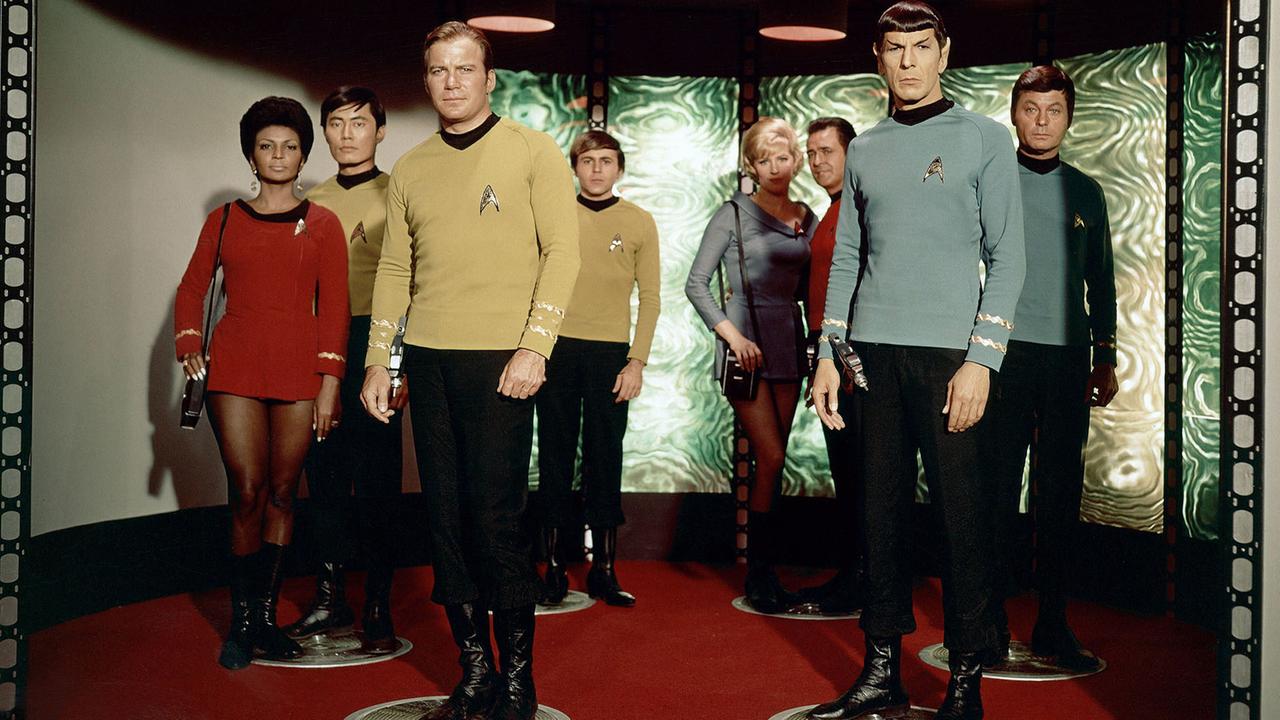
Three years before the Apollo 11 moon landing actually took place, the crew of the Enterprise was already navigating the cosmos. But the true genius of the series was not found in the phasers or the warp drive; it was found on the bridge. Roddenberry insisted on a cast that represented the diversity of humanity—a bold, often controversial choice in the television landscape of the 1960s.
Chronology: From Cancellation to Global Phenomenon
- 1966: Star Trek debuts on NBC with the episode "The Man Trap."
- 1968: The iconic, groundbreaking kiss between Captain James T. Kirk (William Shatner) and Lieutenant Uhura (Nichelle Nichols) airs, marking a historic moment for racial representation on television.
- 1969: Despite a devoted fan base, NBC cancels the series after 79 episodes due to modest ratings.
- 1972: The series reaches West Germany, retitled Raumschiff Enterprise, though the tone is significantly altered by a "flapsig" (flippant) dubbing style that obscures the show’s political gravity.
- 1979: Following massive fan-led letter-writing campaigns, Star Trek: The Motion Picture is released, signaling the start of the franchise’s cinematic era.
- 1990s: The franchise experiences a renaissance with The Next Generation, Deep Space Nine, and Voyager, finally allowing international audiences to view the series in its intended, serious context.
- 2026: Sixty years after its inception, the franchise remains a pillar of global pop culture, spanning dozens of films, series, and an unparalleled fan community.
Diversity as a Strategic Vision
The crew of the USS Enterprise was a microcosm of a better world. With a Japanese-American helmsman (Sulu), a Russian navigator (Chekov), and a Black communications officer (Uhura), the show challenged the xenophobia and nationalism of the mid-20th century.
Kulturwissenschaftlerin (cultural scientist) Rebecca Haar, who has extensively researched the impact of artificial intelligence and androids within the Star Trek canon, notes that the show has always positioned itself on the side of progress. "There is this Vulkanian concept of Infinite Diversity in Infinite Combinations (IDIC)," Haar explains. "It suggests that everyone can find their place in the universe, and we should approach the ‘other’ with curiosity rather than fear."
This was not merely symbolic. Nichelle Nichols, who played Uhura, famously intended to leave the show after the first season to pursue Broadway. She was persuaded to stay by none other than Dr. Martin Luther King Jr., who told her, "For the first time, the world sees us as we should be: as equals, as intelligent human beings."
The Cold War and the Klingon Allegory
One of the most profound ways Star Trek mirrored society was through its political metaphors. For decades, the Klingons served as the quintessential stand-in for the Soviet Union—a hostile, secretive power existing behind a "neutral zone" analogous to the Iron Curtain.
However, as the real-world geopolitical landscape shifted, so did the show. Following the collapse of the Soviet Union in the early 1990s, the Klingons transitioned from existential enemies to allies of the United Federation of Planets. This evolution demonstrated the show’s ability to act as a living document of human progress, constantly updating its narrative to reflect the cooling of international tensions.
The "German" Experience: A Different Enterprise
The reception of Star Trek in Germany offers a unique case study in how translation and cultural context shape perception. When Raumschiff Enterprise arrived in 1972, the dubbing was significantly more lighthearted than the original script.
"If you watch the original, the series is much less ‘funny’ than in the first German-language version," Haar notes. Because the German broadcaster (ZDF) omitted episodes dealing with sensitive topics—such as sexual orientation or heavy-handed Nazi allegories—the political depth of the show was largely lost on the German public for decades. It was not until the 1990s that German fans were able to access the unedited versions, finally grasping the true socio-political weight of the narrative.
The Birth of Modern Fandom
If Star Trek is the "Church of Sci-Fi," its followers are its most devoted parishioners. The concept of the "Trekkie" redefined how fans interact with media. The sheer tenacity of the original fans—who campaigned to save the show after its 1969 cancellation—effectively invented the modern convention culture seen today.
Today, the influence of the franchise is immeasurable. From Comic-Cons to the ubiquity of fan fiction and digital community building, Star Trek laid the blueprint for how a narrative property could transcend the screen and become a shared, participatory experience.
Official Responses and Cultural Legacy
Over the last 60 years, Star Trek has received praise not only from viewers but from scientists, astronauts, and politicians. NASA, for instance, has long acknowledged the show’s role in inspiring generations of engineers and explorers.
The core ethos of the show—"to seek out new life and new civilizations"—has become a rallying cry for those who believe that humanity’s destiny lies in cooperation. As Haar puts it, "Star Trek translates the society of today into the world of the day-after-tomorrow. It opens up new perspectives by asking: ‘What if we were better?’"
Implications: A Future Still Being Written
The lasting power of Star Trek lies in its insistence that humanity can grow out of its prejudices. Whether exploring the rights of artificial intelligence in Data, or the struggles of a refugee population in Deep Space Nine, the show has never shied away from the "hard" questions.
As we look toward the next 60 years, the challenges have changed. We are no longer just concerned with the Cold War, but with the ethics of climate change, the rise of synthetic consciousness, and the necessity of interplanetary cooperation. Star Trek remains the ultimate barometer for our collective conscience. It reminds us that while technology changes, the human condition—our need for connection, our fear of the unknown, and our capacity for empathy—remains the true final frontier.
As the franchise celebrates its 60th anniversary, the message remains as resonant as it was in 1966: Live long and prosper. It is not just a greeting; it is an invitation to build a future where every human being, regardless of origin, has a seat at the table.