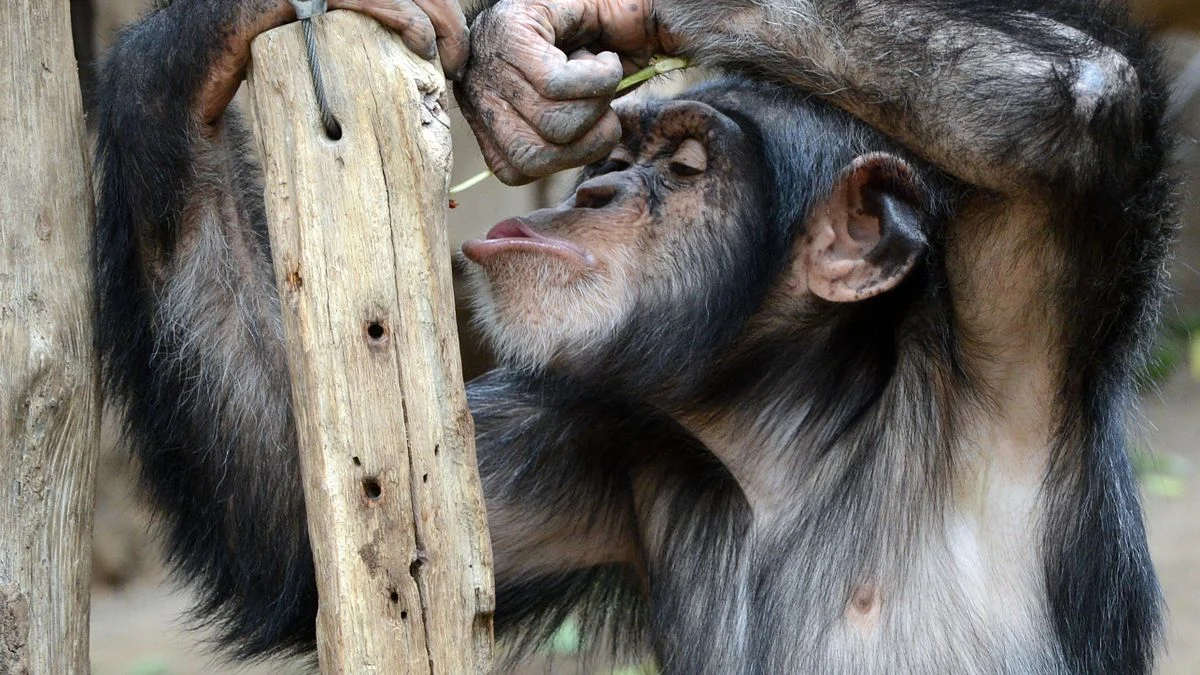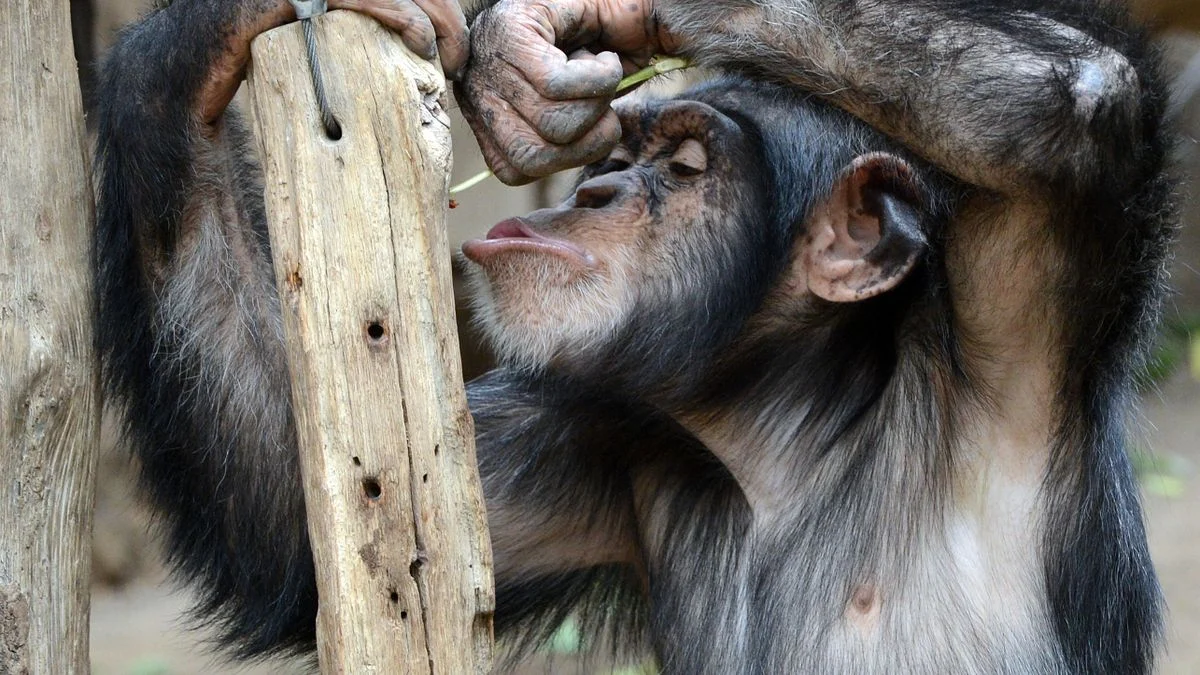
In the dense, sun-dappled forests near Dindefelo, Senegal, a quiet revolution in our understanding of animal cognition is taking place. For decades, the sight of a chimpanzee deftly stripping a twig to fish for termites has been hailed as one of the most compelling examples of animal intelligence. However, new research suggests that this mastery is not merely the result of solitary observation or trial-and-error—it is, in many cases, a product of active, pedagogical intervention by mothers and experienced peers.
A study published in the peer-reviewed journal Frontiers in Psychology provides compelling evidence that West African chimpanzees (Pan troglodytes verus) engage in deliberate behaviors to facilitate the learning process of their less experienced kin. By relinquishing tools, demonstrating techniques, and guiding the hands of their offspring, these primates exhibit a level of social intelligence previously thought to be the exclusive domain of humans.
The Evidence: 15 Hours of Field Observation
The research, conducted by an interdisciplinary team from the University of Barcelona and the Jane Goodall Institute Spain, centered on the Dindefelo region. To capture these elusive interactions, the team deployed a network of camera traps, amassing 15 hours of high-definition footage that provided a rare window into the social dynamics of tool use.
The study identified 33 distinct instances where chimpanzees—predominantly adults—transferred tools to other members of their troop. These interactions were not random; they were highly targeted, with the vast majority of "tool-sharing" events occurring between mothers and their offspring. These findings move beyond simple "social learning" (where an animal learns by watching another) and move toward "active teaching," where the instructor modifies their behavior to explicitly assist the learner.
Chronology of Discovery: From Gombe to Dindefelo
The scientific journey toward this discovery began in 1960, when Dr. Jane Goodall famously observed chimpanzees at Gombe Stream National Park in Tanzania using blades of grass to "fish" for termites. This observation shattered the long-held anthropocentric belief that tool use was a unique human trait.
In the decades that followed, primatologists identified a wide array of tool-based behaviors across different chimpanzee populations, from using stones as hammers to crack nuts to employing sponges made of leaves to soak up water. However, the mechanism of how these complex skills were passed down remained a subject of intense debate. Was it purely observational learning? Or was there a social component?
The recent Dindefelo study represents a milestone in this timeline. By focusing on the interaction rather than just the result, the researchers have provided the most granular evidence to date that tool mastery is a collaborative social endeavor. The data reveals that the "teaching" is not always a direct tutorial, but a series of facilitative steps that dramatically lower the barrier to entry for the younger generation.
Supporting Data: Mechanisms of Mentorship
The researchers categorized the observed behaviors into several distinct pedagogical strategies. Among the most common were:
- Tool Relinquishment: An adult would deliberately finish using a tool—such as a stick for extracting ants—and pass it directly to a nearby juvenile.
- Guided Demonstration: In one striking instance, a mother inserted a stick into an ant colony, waited for the ants to swarm, and then handed the "loaded" tool to her daughter, who immediately consumed the insects.
- Corrective Modeling: When a juvenile struggled to crack a baobab fruit on a rock, an older individual would intervene, demonstrating the specific percussive motion required before returning the fruit to the youngster for another attempt.
The data suggests that these interventions are highly effective. Juveniles who were the recipients of such "mentorship" showed a significantly higher success rate in obtaining food and a faster rate of mastery compared to those who learned entirely through independent trial-and-error.
Official Responses and Scientific Context
Dr. Susana Carvalho, a primatologist not directly involved in the study but familiar with the findings, noted that the research bridges a significant gap in evolutionary biology. "For years, we have searched for the precursors of human teaching in our closest relatives," she noted. "What this study suggests is that the ‘teacher-student’ dynamic is not an invention of human culture, but a biological imperative that evolved to ensure the survival of the next generation in complex environments."
The Jane Goodall Institute has hailed the findings as a testament to the cognitive depth of chimpanzees. In an official statement, representatives from the organization highlighted that the study reinforces the ethical necessity of protecting these habitats. "When we lose a generation of chimpanzees, we aren’t just losing individuals; we are losing a repository of cultural knowledge—a ‘school’ of tool use that has been passed down through generations," the statement read.
The researchers themselves emphasize that while these behaviors mirror human teaching, they are likely driven by a combination of kin selection and social bonding. The "teachers" are not necessarily altruistic in the human sense, but their actions maximize the fitness of their offspring, thereby ensuring the long-term viability of their genetic lineage.
Implications for Human Evolution
The implications of this research are profound, touching upon the very nature of human exceptionalism. If chimpanzees possess the capacity to modify their behavior to teach others, then the roots of "culture" and "education" run much deeper into the primate family tree than previously assumed.
1. The Cognitive Development Gap
Tool use is a cornerstone of cognitive development. By providing a "scaffold" for learning, adult chimpanzees allow their young to bypass the potentially lethal risks of trial-and-error. This accelerates the development of problem-solving skills, which are essential for navigating the complex ecosystems of the West African savanna.
2. The Cultural Transmission of Knowledge
The study suggests that chimpanzee groups possess "technological cultures." Because different populations use different tools—some use stone hammers, others use wooden probes—the fact that these techniques are taught rather than just observed implies that these populations have a form of cumulative culture. This cultural transmission is the bedrock upon which human civilization is built.
3. Conservation Strategies
If tool-using skills are socially learned, then conservation efforts must account for the social structure of the troop. Simply protecting an area is insufficient; if a critical number of knowledgeable adults are removed from the population (through poaching or habitat fragmentation), the "cultural memory" of the group can be lost, leading to a decline in the survival rate of the remaining offspring.
A New Frontier in Primate Studies
As we look toward the future, the work conducted at Dindefelo opens new questions. To what extent do chimpanzees learn from non-kin? Is there a hierarchy of teachers? And how do these social strategies shift as environmental pressures—such as climate change—alter the availability of food sources?
The study published in Frontiers in Psychology is more than just a collection of observations; it is a mirror. As we watch these primates guide their young, we see the echoes of our own ancestors, sitting around prehistoric campfires, passing down the skills necessary to survive. The line between "instinct" and "education" has become significantly more blurred.
Ultimately, this research invites us to re-evaluate our relationship with our closest living relatives. We are not the only species that values knowledge, nor are we the only ones that view the act of teaching as a vital investment in the future. In the forests of Senegal, the chimpanzees are demonstrating that, for the intelligent mind, survival is a group project—a lesson that humanity would do well to remember.