Introduction: The Unseen Lives of the Lone Star State
Dallas, Texas, is a city defined by its scale—sprawling highways, monumental glass towers, and a reputation for "bigger and better" that permeates every aspect of the Lone Star State. However, for those who exist in the interstices of this urban giant, the reality is far more subdued. During a week-long assignment covering local sports developments, I chose to bypass the sterile, homogenized environment of the corporate hotel circuit. Instead, I checked into an inexpensive Airbnb located in a nondescript residential neighborhood—a setting that would reveal the profound, often invisible social fissures of modern America.
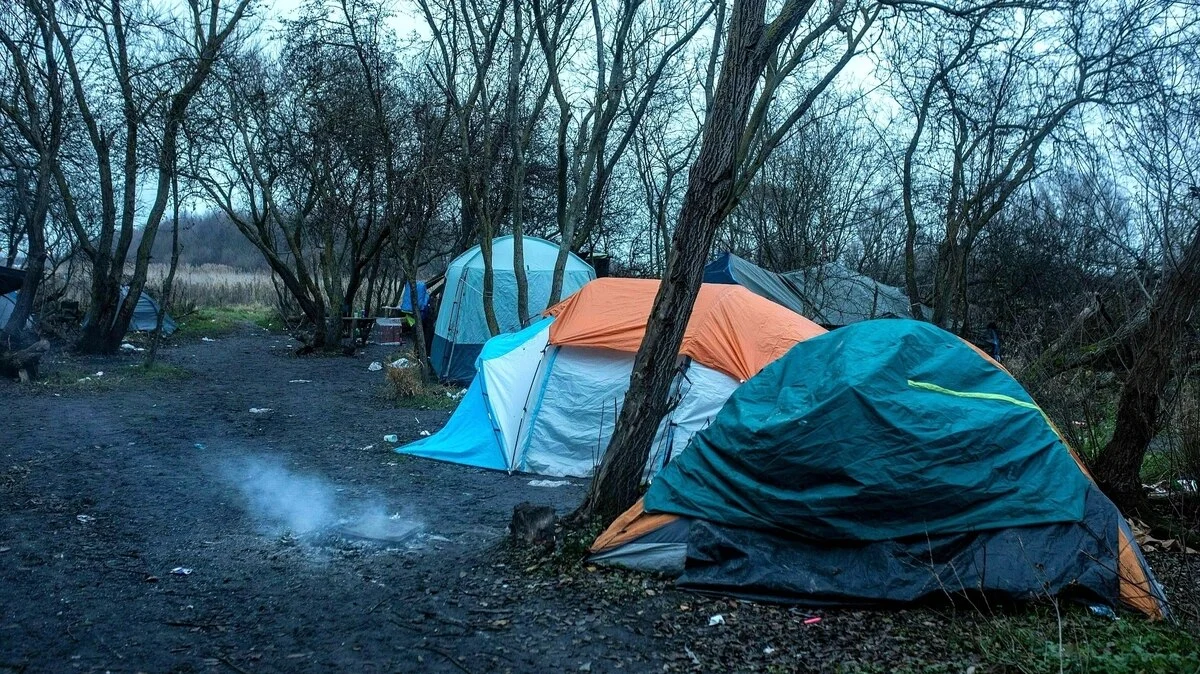
The house itself possessed a peculiar atmosphere. It was a space of transient souls, an assembly of men living in the shadows of the American Dream. It did not take long to notice a disquieting social norm among the residents: a persistent refusal to make eye contact. This wasn’t merely a lack of social grace; it was a symptom of a deeper, collective malaise.
Chronology of an Observation
The duration of my stay allowed for a slow, organic breakdown of the silence. My first few days were spent in the common area, where the silence was punctuated only by the rhythmic glow of smartphone screens. The residents were almost exclusively men, many of whom seemed to have settled into the house for the long term.

By the third day, the defensive walls began to crumble. A conversation struck up with a fellow guest, who observed the lack of eye contact. "Do you notice," he asked, "that people here don’t look you in the eye?"
He posited a theory that would color my understanding for the remainder of the trip: "It’s because they’re ashamed. They’re ashamed of their situation." This guest, notably, was the exception to the rule; he was articulate, unburdened by the same paralyzing reticence as his peers. He spoke of an impending legal battle and admitted to struggles with aggression—a candid admission that served as a microcosm for the hidden pressures of a precarious life.
Supporting Data: The American Paradox
The United States is frequently marketed to the world as the land of boundless opportunity, yet this narrative is perpetually checked by stark human rights crises and a widening wealth gap. To live in the margins of Dallas is to confront the reality that the "American Dream" is increasingly inaccessible for a significant segment of the population.

From the literary tradition of Jack Kerouac to the frenetic cynicism of Hunter S. Thompson, the American outsider has been romanticized for decades. Yet, as I sat in that quiet living room, I found the romanticization of the "white male rebel" to be profoundly exhausted. The intellectualization of these lives—whether through the lens of pop culture or the detached, sometimes elitist reports of liberal media—often fails to capture the raw texture of existence.
The environment surrounding our Airbnb was a textbook example of modern American urban planning:
- Infrastructure: Vast, empty sidewalks designed for cars rather than pedestrians.
- Economic Landscape: A glut of fast-food chains that often sat empty, illustrating a misalignment between supply and local purchasing power.
- Social Isolation: Massive, pristine golf courses standing in stark contrast to the dilapidated state of the housing in the immediate vicinity.
Personal Narratives from the Periphery
To understand the human cost of these systemic issues, one must listen to the stories that don’t make the evening news.

The Victim of the Warehouse Economy
One resident, a man who had spent his recent years toiling in the bowels of an Amazon fulfillment center, expressed a visceral contempt for the current economic order. His critique of capitalism was not born of theory but of exhaustion. He had never traveled outside the United States; his world view was filtered through the algorithm of TikTok, which had convinced him that Europe was a "dangerous" place. He was not looking for a revolution; he was simply waiting for an idea—a path to a better life that hadn’t yet materialized.
The Casino Nomad
Then there was the older gentleman from Las Vegas, a man whose life was dictated by the ebb and flow of the casino industry. He moved from one gaming hub to the next, a solitary figure chasing wages in a landscape of artificial excitement. His hands shook with a tremor that suggested either neurological decline or the immense, unspoken stress of a life without roots. I did not ask him about his health; in this house, some questions were too heavy to bear.
The Emigrant’s Silence
Perhaps the most poignant story came from a man who did not share the shame of the others. He hailed from an East African nation, having navigated the traumatic pipeline of a Catholic boarding school where physical violence was a tool for cultural erasure. He had been beaten for speaking his mother tongue, eventually losing the language entirely. Education became his only exit strategy, a ticket to the United States. Yet, the memories of that institutional violence ensured he would never return home.

Official Responses and Systemic Implications
While these stories are individual, they point toward broader, structural failures. The "liberal reportage" that often descends upon such communities—seeking to "uncover the sediment" of the American populace—frequently falls into the trap of melodrama. The residents I met were not archetypes of a political movement; they were people living through the consequences of a system that offers little in the way of a safety net.
The discourse surrounding these populations often misses the mark because it prioritizes the "story" over the humanity of the subjects. The challenge, as I found during my week in Dallas, is not just to report on these lives, but to do so without the requirement of a convenient narrative arc or a tidy, moralizing point.
Conclusion: The Need for Nuanced Narrative
As I prepared to leave Dallas, the silence of the house no longer felt like an indictment of the men living there. It felt like a protective mechanism. In a country that demands constant performance, self-promotion, and the curation of a "success story," silence is the only space left for those who have been left behind.

The experience served as a sobering reminder that the United States is not a monolith. It is a vast, complex, and often cruel tapestry. To truly understand it, one must be willing to sit in the uncomfortable silence of an Airbnb in a city that is simultaneously too large to grasp and too small to hide the suffering of its people. We must move beyond the "pop culture layer" that has thickened over the years and engage with the reality of the human condition in the margins, acknowledging that every life, no matter how quiet, holds a weight that is significant enough to be seen.
The task for journalists is clear: stop looking for the "point" and start looking at the people. In doing so, we might finally begin to see the eyes that have been looking away for so long.