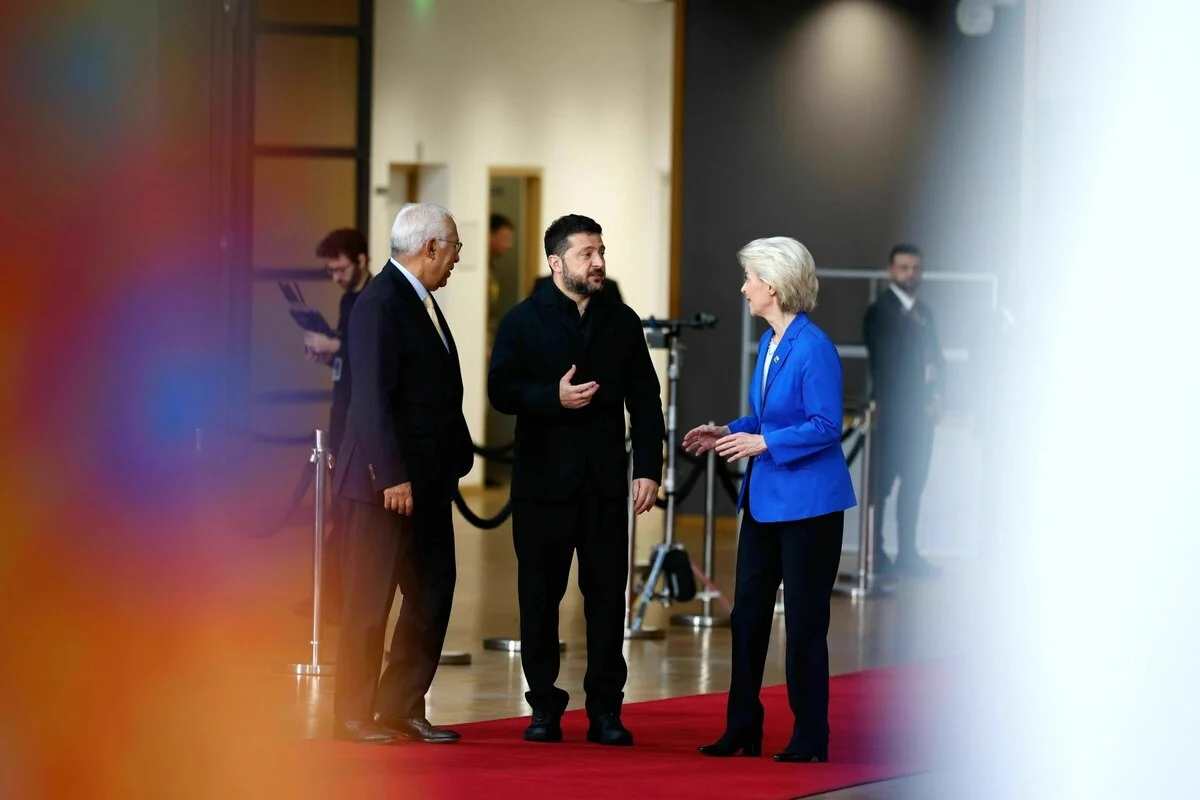
The war in Ukraine has entered a phase of grim, strategic stagnation. As the conflict grinds on, the international community finds itself at a crossroads where the survival of a sovereign nation is increasingly being weighed against the cold, transactional interests of global superpowers. Recent developments suggest that the future of Ukraine may not be decided on the battlefield, but rather in the boardrooms of Washington, Beijing, and Moscow—a prospect that poses an existential threat to the rules-based international order.
The Reality of the Stalemate: Beyond Symbolic Diplomacy
Despite the valiant efforts of the Ukrainian military and the diplomatic overtures of President Volodymyr Zelenskyy, the Kremlin’s position remains intransigent. Even if Kyiv were to offer significant territorial concessions—such as formalizing the loss of the Donbass—there is little evidence to suggest that the kleptocratic leadership under Vladimir Putin would seek a genuine peace.
The Kremlin’s strategy is built on the pursuit of maximalist goals, often claiming sovereignty over territories that remain outside of its military control. By refusing to engage in meaningful negotiations and instead favoring a prolonged war of attrition, Moscow is signaling that it views the continued bloodshed as a strategic asset. For the Kremlin, the conflict is not just about land; it is about the exhaustion of Western resolve and the systematic degradation of Ukraine’s statehood.
Chronology of Shifting Alliances and Power Dynamics
The geopolitical architecture of this conflict is currently undergoing a seismic shift. The following timeline outlines the key factors contributing to the current volatility:
- Initial Aggression: The full-scale invasion launched in February 2022 was met with a unified Western response, characterized by unprecedented sanctions and military aid.
- The War of Attrition: As the conflict extended into its second and third years, the initial shock gave way to a grinding war of attrition, testing the industrial and political capacities of the EU and the United States.
- The Emerging Triad: Reports of potential high-level coordination between Donald Trump, Vladimir Putin, and Xi Jinping have fueled concerns that Ukraine could become a bargaining chip in a new global "grand bargain."
- The Diplomatic Gap: While the EU has attempted to position itself as a mediator, the lack of political leverage—despite massive military and financial support—has left Brussels largely on the sidelines of the core negotiations.
The Paradox of Economic Sanctions: Are They Working?
A core tenet of European and American strategy has been the use of economic statecraft to drive up the "cost" of the war for Russia. Relying on behavioral economics, the West assumed that once the cost of the invasion exceeded the perceived utility, Moscow would be forced to the negotiating table. However, this logic has encountered significant friction.
The Leakage in the Sanctions Regime
The implementation of this strategy has been deeply flawed. While the European Union successfully navigated the transition away from Russian oil, the persistence of "shadow" trade routes—including the import of Russian uranium and diesel—has undermined the integrity of the sanctions regime. When Russian diesel reaches the United States via third-party intermediaries, or when global powers like India continue to purchase Russian energy at scale, the intended pressure is significantly diluted.

The Missing Equation
The strategy has focused almost exclusively on the "cost" side of the ledger. Policymakers in Berlin and Brussels have spent years debating price caps and trade restrictions without adequately addressing the "utility" side: how to strip the war of its strategic value for the Kremlin. Until the international community finds a way to ensure that the war brings negative value to Moscow—rather than simply an expensive but manageable cost—the cycle of violence will likely continue.
Official Responses and the Failure of Political Capital
Germany, currently the largest European donor to Ukraine, finds itself in a precarious position. Despite billions in military aid, Berlin has struggled to translate this material support into political influence. The lack of a coherent long-term strategy for the post-war security architecture has left Kyiv vulnerable to the whims of its allies’ domestic politics.
Meanwhile, the rhetoric emanating from Washington—particularly from the orbit of the incoming administration—suggests a pivot toward transactionalism. When US special envoys, such as Steve Witkoff, speak of "momentum for ending the war," the discourse often glosses over the fundamental rights of the Ukrainian people. This "realpolitik" approach, which views international borders as flexible lines on a map, risks rewarding aggression and dismantling the post-1945 consensus on territorial integrity.

The Implications: A World of "Paranoid Greise"
The central concern is the nature of the actors currently steering the global response. There is a growing consensus among analysts that the leaders involved—Putin, Trump, and Xi—operate within a framework that ignores human rights and international law. For these figures, the people on the ground in Ukraine are secondary to the grander project of projecting power and cementing domestic control.
If Ukraine is indeed "dismantled" between these spheres of influence, the implications for the EU will be catastrophic. It would signify the end of the post-Cold War dream of a Europe whole and free, replacing it with a reality of buffer zones and sphere-of-influence politics reminiscent of the 19th century.
A Path Forward: Is European Autonomy Possible?
If the EU is to avoid being rendered irrelevant, it must fundamentally recalibrate its approach. The current reliance on US-led security structures is insufficient if the United States pivots toward an isolationist or transactional foreign policy.

1. From Passive Supporter to Co-Negotiator
Europe must move beyond being a provider of hardware and become a primary architect of the peace framework. This requires a unified diplomatic front that can speak with the same weight as Washington or Beijing.
2. Redefining the "Utility" of the War
Diplomatic efforts must focus on rendering the continuation of the war a strategic liability for the Russian elite. This involves not only tighter sanctions but also a concerted effort to leverage global economic dependencies against the Kremlin, rather than merely punishing them.
3. Strengthening Regional Resilience
The European project must prioritize its own defense industrial base. The dependence on external actors for critical infrastructure—such as the vulnerabilities seen in the Starlink debate—demonstrates that sovereignty is as much a technological question as it is a military one.

Conclusion
The Ukraine war is more than a regional conflict; it is a stress test for the global order. As the winter sets in and the political climate in the West grows increasingly uncertain, the temptation to "freeze" the conflict at the expense of Ukrainian sovereignty will grow.
However, peace at the cost of justice is rarely sustainable. If the international community allows the interests of three major powers to supersede the basic tenets of international law, the resulting stability will be a mirage. For Europe, the challenge is clear: it must decide whether it wants to be a player on the global stage or a bystander to its own decline. The era of comfortable, consensus-driven foreign policy is over. The new reality demands a bold, strategic, and unified European response—one that recognizes that the cost of inaction will, in the long run, be far greater than the price of defending the principles upon which the modern order was built.
The future of Kyiv is not just a matter of Ukrainian security; it is the litmus test for whether the 21st century will be governed by the rule of law or the whim of the powerful. The time for warm words has passed; the time for strategic clarity has arrived.