Vienna, Austria – December 5, 2016 – After a seemingly interminable and drama-laden electoral journey, Austria has a confirmed president-elect. Alexander Van der Bellen, an independent candidate supported by the Green Party, emerged victorious in the rerun of the presidential election’s second round held this past Sunday. The culmination of this protracted electoral saga, marked by legal challenges, administrative blunders, and intense campaigning, brings a degree of closure to a political process that has tested the resilience of Austrian democracy.
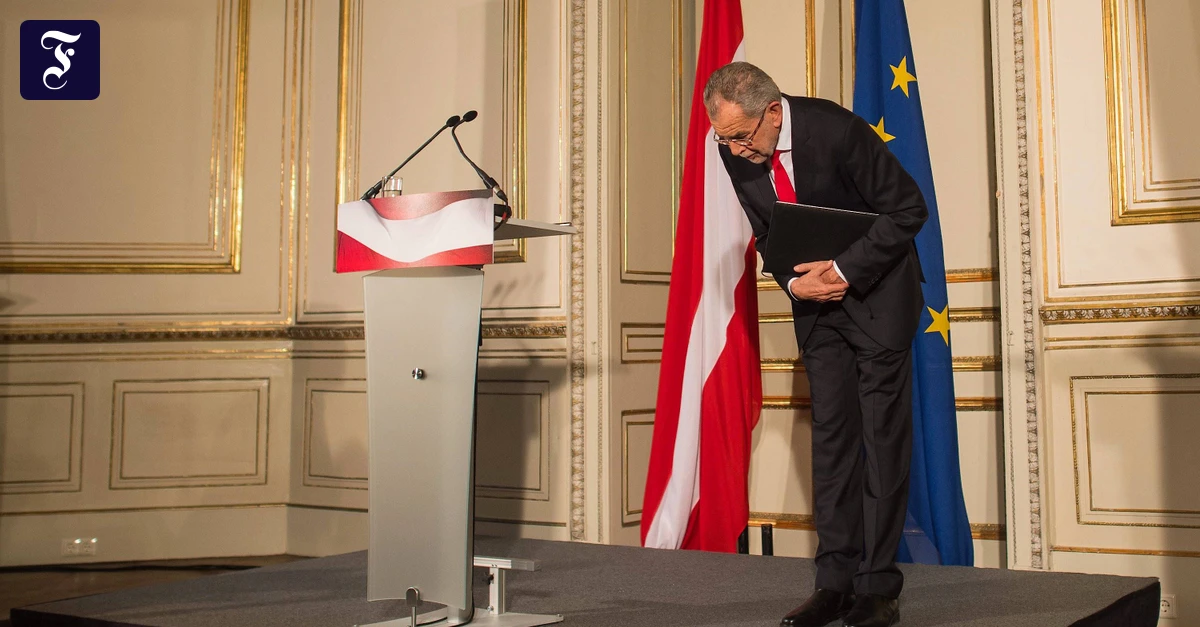
The atmosphere surrounding Van der Bellen’s victory address was palpable with a profound sense of relief, a sentiment echoed by many across the nation. Addressing a subdued but attentive audience, the newly elected president recounted the arduous path to this moment. His speech was a concise yet poignant summary of the electoral marathon: the initial campaign, the first round of voting, further campaigning, the runoff election, its subsequent challenge and annulment, the rescheduling of the runoff, a peculiar “sticky label problem,” another postponement, renewed campaigning, and finally, the decisive second runoff held just days ago.
While preliminary results on election night indicated a comfortable lead for Van der Bellen, the final confirmation hinged on the meticulous counting of postal ballots. This very process, which had been conducted pragmatically but irregularly in previous years and, crucially, during the first runoff in May – leading to its annulment by the Constitutional Court – now held the key to the final outcome. The memory of these irregularities, which had cast a long shadow of doubt over the electoral integrity, underscored the importance of this final tally.
A Chronology of Electoral Turmoil
The path to this hard-won victory was anything but straightforward, characterized by a series of unprecedented events that have captivated and, at times, frustrated the Austrian public. The initial presidential election, held in April 2016, saw the established political parties falter, with the candidates of the two major parties, the Social Democratic Party of Austria (SPÖ) and the Austrian People’s Party (ÖVP), failing to reach the runoff. Instead, the contest narrowed to Alexander Van der Bellen, representing a more progressive, Green-leaning electorate, and Norbert Hofer, the candidate of the right-wing populist Freedom Party of Austria (FPÖ).
April 24, 2016: First Round of Voting
The first round saw Van der Bellen narrowly lead, securing 50.3% of the vote, with Hofer close behind at 35.1%. The significant showing for both candidates, particularly for the FPÖ, signaled a shifting political landscape in Austria.
May 22, 2016: First Runoff Election
The much-anticipated runoff election resulted in an extremely close contest. Van der Bellen was initially declared the winner by a wafer-thin margin of approximately 31,000 votes, securing 50.35% to Hofer’s 49.65%. This razor-thin victory was immediately met with challenges.
July 1, 2016: Annulment of the First Runoff
The Austrian Constitutional Court, responding to a legal challenge filed by the FPÖ, annulled the results of the May 22 runoff. The court cited significant procedural irregularities in the handling of postal ballots, including premature counting in some districts and instances where ballots were opened before the official commencement of counting. While the court found no evidence of widespread fraud, the procedural flaws were deemed substantial enough to undermine the legitimacy of the election. This decision plunged Austria into an unprecedented electoral crisis, forcing a rerun of the runoff election.
September 2016: Postponement Due to Defective Ballot Envelopes
The planned rerun of the runoff election for October 2, 2016, was abruptly postponed just weeks before the scheduled date. The cause of this second delay was a logistical and administrative failure: the adhesive on the postal ballot envelopes was found to be defective, meaning they would not seal properly, raising concerns about potential tampering and the integrity of the vote. This “sticky label problem,” as it became colloquially known, further fueled public frustration and skepticism.
December 4, 2016: Second Runoff Election
A new date was set for December 4, 2016. The campaigning leading up to this final runoff was intense, with both candidates making final appeals to voters. Van der Bellen emphasized stability, European integration, and a presidential role focused on consensus-building. Hofer, on the other hand, campaigned on a platform of greater national sovereignty, stricter immigration policies, and a more direct, populist approach to governance.
Supporting Data and Election Results
The final results of the December 4, 2016, runoff election provided a clearer mandate than the previous, contested outcome. Alexander Van der Bellen secured 53.6% of the vote, while Norbert Hofer received 46.4%. This represents a more substantial victory margin, offering a degree of reassurance regarding the legitimacy of the outcome.
Key Observations from the December 4th Election:
- Turnout: Voter turnout for the rerun was robust, indicating continued engagement from the electorate despite the previous disruptions. Precise figures are still being compiled, but initial reports suggest a turnout comparable to or slightly higher than previous rounds.
- Postal Ballots: The careful and regulated counting of postal ballots this time around was crucial. The irregularities that plagued the first runoff were addressed, ensuring that this segment of the vote was handled with the utmost adherence to electoral law. This contributed significantly to the overall confidence in the results.
- Regional Variations: While national trends are important, regional voting patterns often reveal deeper societal divisions. Detailed analysis of the results by state (Bundesland) will likely show variations in support for both candidates, reflecting differing socio-economic and cultural priorities across Austria.
- FPÖ’s Strong Performance: Despite the loss, Norbert Hofer’s performance, securing a significant portion of the vote, underscores the continued strength and appeal of the FPÖ. This signals that the political forces driving Hofer’s candidacy remain influential within the Austrian electorate.
Official Responses and Reactions
The conclusion of the electoral process has elicited a range of responses from political figures and institutions.
Alexander Van der Bellen: In his victory speech, Van der Bellen expressed gratitude to the voters and acknowledged the arduous nature of the campaign. He pledged to serve as a president for all Austrians, emphasizing unity and a commitment to democratic values. He stated, "Today is a victory for a pro-European, liberal, and democratic Austria. I want to be a president for all Austrians, not just those who voted for me." His tone was conciliatory, aiming to bridge the divides that had been exposed during the campaign.
Norbert Hofer: Hofer conceded defeat in a dignified manner, acknowledging the outcome of the election. He thanked his supporters and reiterated his commitment to serving Austria. While expressing disappointment, he emphasized the importance of respecting the democratic process. His concession, delivered without rancor, was seen as a crucial step in restoring confidence in the electoral system.
Government Officials: The Austrian government, having navigated the unprecedented challenges of the electoral process, expressed relief at the conclusion of the election. Chancellor Christian Kern (SPÖ) congratulated Van der Bellen and praised the resilience of Austrian democracy. He highlighted the importance of learning from the disruptions and ensuring the integrity of future elections.
The Constitutional Court: The Constitutional Court, whose intervention was pivotal in annulling the first runoff, played a critical role in ensuring the legitimacy of the final outcome. The court’s insistence on strict adherence to electoral procedures, while initially disruptive, ultimately served to reinforce the rule of law and democratic principles.
Implications for Austria and Europe
The protracted and contentious presidential election in Austria carries significant implications, both domestically and on the broader European stage.
Domestic Implications:
- Political Stability: The resolution of the presidential election is expected to bring a period of greater political stability to Austria. The uncertainty surrounding the presidential office had created a climate of apprehension, and Van der Bellen’s clear victory provides a definitive outcome.
- Future of the Green Movement: Van der Bellen’s success, as an independent candidate backed by the Green Party, signifies a growing influence of progressive and environmentally conscious politics in Austria. This could encourage similar movements across Europe.
- Challenges for Major Parties: The continued struggle of the traditional major parties (SPÖ and ÖVP) to connect with voters, as evidenced by their absence from the runoff, poses an ongoing challenge for their leadership and future electoral prospects.
- Rise of Populism: The significant vote share for Norbert Hofer and the FPÖ underscores the persistent appeal of right-wing populist sentiment in Austria. This indicates that the underlying issues driving this sentiment – such as concerns about immigration, national identity, and economic anxieties – will continue to shape the political discourse.
European Implications:
- Signal to the EU: Van der Bellen’s victory is widely viewed as a positive signal for the European Union. His pro-European stance contrasts sharply with the Eurosceptic undertones of Hofer’s campaign. In a period of significant challenges for the EU, including Brexit and rising populism across the continent, Austria’s choice of a pro-integration president is seen as a vote of confidence in the European project.
- Counter-Narrative to Populism: Van der Bellen’s triumph can be interpreted as a counter-narrative to the wave of populist victories seen in other European countries. It demonstrates that a message of liberalism, internationalism, and reasoned discourse can still resonate with a significant portion of the electorate.
- Focus on Democratic Processes: The entire saga has inadvertently placed a spotlight on the robustness and potential vulnerabilities of democratic electoral processes. The annulment and rerun have served as a stark reminder of the importance of meticulous administration and adherence to legal frameworks.
In conclusion, the election of Alexander Van der Bellen marks the end of a tumultuous chapter in Austrian political history. While the process was fraught with challenges, the ultimate outcome, achieved through a rerun and a clear victory, reinforces the fundamental principles of democratic governance. The nation now looks to its new president to lead with a vision of unity and stability, navigating the complex domestic and international landscapes that lie ahead. The lessons learned from this protracted electoral journey will undoubtedly shape Austrian politics for years to come, serving as a case study in resilience, the importance of democratic institutions, and the enduring power of the popular vote.