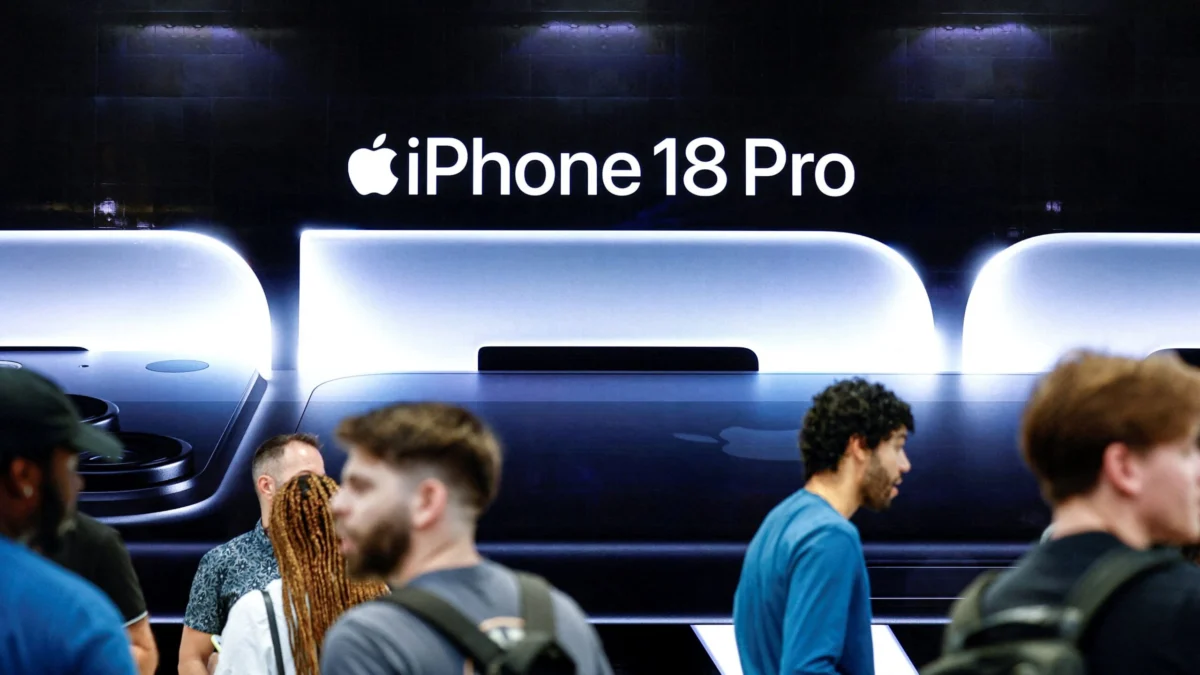
DÜSSELDORF – The global technology landscape is reacting to reports that Apple Inc. is significantly scaling back production orders for its latest flagship smartphones. According to reports emerging from the Asian supply chain, the Cupertino-based tech giant has moved to curtail orders for the iPhone 18 Pro and iPhone 18 Pro Max, citing a cooling in consumer demand that has caught industry analysts off-guard.
As the global smartphone market faces a complex macroeconomic environment, this development serves as a critical indicator of shifting consumer sentiment and the broader challenges currently facing high-end electronics manufacturers.
The Core Development: A Sharp Reduction in Orders
The latest intelligence, first reported by Nikkei Asia on Friday, highlights a notable discrepancy between Apple’s initial production targets and the current market reality. Citing anonymous sources deeply embedded within Apple’s manufacturing ecosystem, the report indicates that order volumes for the month of October have been slashed by approximately 15 percent compared to the company’s original forecasts.
The supply chain, which is often a bellwether for the health of the broader consumer electronics sector, is already feeling the reverberations. One high-ranking executive within the component supply chain told the publication, "We are seeing order declines of 15 to 20 percent for both premium models in October alone. We have no visibility on what the trajectory will look like moving forward."
This reduction suggests that the initial launch enthusiasm, which typically sustains high-volume manufacturing in the months immediately following an iPhone release, may be hitting a ceiling.
Chronology: From Launch Hype to Strategic Adjustment
To understand the current situation, it is necessary to examine the timeline of Apple’s recent commercial activities and the internal strategic pivots that have defined this product cycle.
The Launch Strategy
Apple’s 2024 product rollout deviated from its historical norms. In a move designed to segment its market more aggressively, the company opted to launch three distinct "Pro" tier models earlier in the cycle. Conversely, the standard iPhone 18 and the highly anticipated, entry-level-premium "iPhone Air" were pushed back to a spring 2025 release schedule.
The August Inflection Point
According to industry insiders, the cooling of demand was not an overnight phenomenon but a trend that became visible as early as late August. While Apple had anticipated a robust cycle, the sales volume immediately following the launch period proved to be softer than the performance of previous generations.
The October Correction
By October, the disparity between internal targets and actual consumer uptake became significant enough to trigger a formal reduction in component procurement. This correction is a standard operational procedure for Apple, which maintains a highly calibrated just-in-time manufacturing process to avoid excess inventory costs; however, a 15–20 percent cut is substantial enough to suggest a structural challenge rather than a minor fluctuation.
Economic Drivers: The "Memory Crunch" and Rising Costs
A central factor contributing to the current friction is the skyrocketing cost of production, driven by a global shortage of high-performance memory chips.
The Rechenzentrum (Data Center) Boom
The current boom in artificial intelligence and the massive expansion of global data centers have created a supply-side bottleneck. These massive infrastructure projects consume vast quantities of specialized memory, effectively competing with smartphone manufacturers for the same semiconductor output.
The Cost Pass-Through
In response to these increased procurement costs, Apple opted to raise the retail price of the iPhone 18 Pro and Pro Max by $100 compared to their predecessors. While this strategy aims to protect profit margins, it has seemingly created a barrier for consumers who are already navigating inflationary pressures and a cost-of-living crisis. The price sensitivity of the consumer base is increasingly evident, as the premium tier of the market appears less resilient to price hikes than it was in previous years.
Official Responses and Corporate Silence
At the time of writing, Apple has remained characteristically silent regarding the reports. The company declined to provide an official comment when approached for clarification.
Historically, Apple does not comment on supply chain rumors or specific manufacturing adjustments. However, investors and analysts will be closely monitoring the company’s next quarterly earnings call, where management typically provides guidance on "unit sales" and "average selling price" (ASP) trends. The market is now looking for confirmation on whether this supply chain cut is a temporary inventory recalibration or a sign of a broader cooling in the premium smartphone market.
Implications: What This Means for the Tech Industry
The implications of these production cuts extend far beyond Apple’s balance sheet. They serve as a macro-level indicator for the entire consumer electronics sector.
1. Market Saturation and Upgrade Cycles
The smartphone industry has struggled with lengthening upgrade cycles. As hardware improvements become more incremental, consumers are finding fewer compelling reasons to upgrade their devices every 12 to 24 months. The performance gap between an iPhone 16/17 and the new 18 series may not be perceived by the average user as justifying a significant price increase.
2. The Fragility of the Supply Chain
The reliance on a highly synchronized global supply chain is both a strength and a weakness. When demand fluctuates, the entire ecosystem—from chip fabricators to screen manufacturers—experiences a "bullwhip effect." A 15 percent cut at the top ripples down to thousands of smaller suppliers, potentially impacting employment and revenue across the tech manufacturing hubs in Asia.
3. The Future of the "iPhone Air"
With the Pro models showing signs of weakness, all eyes are now on the upcoming spring launch of the iPhone 18 and the new "iPhone Air." If the premium segment is struggling due to price sensitivity, the success of these mid-range devices will be critical for Apple’s fiscal year performance. If these devices also face sluggish demand, it could signal that the global smartphone market has finally entered a period of structural stagnation.
4. Competitive Dynamics
Competitors like Samsung, Google, and various Chinese manufacturers will be observing these developments closely. If Apple, the dominant player in the premium space, is struggling to maintain its pricing power, competitors may decide to hold their own prices steady or offer more aggressive trade-in incentives to capture market share from disenfranchised Apple customers.
Conclusion: A Turning Point?
The reported reduction in iPhone 18 Pro production orders is a clear signal that the "premium-at-any-price" strategy is facing market resistance. While Apple remains a financial powerhouse with unparalleled brand loyalty, the confluence of high component costs, a shifting release schedule, and a cautious consumer base has created a challenging environment.
As we look toward the end of the year, the technology sector will be looking for signs of stabilization. Whether this is a momentary dip or the beginning of a long-term recalibration of the smartphone market remains to be seen. For now, the "iPhone 18" story is one of caution, reflecting a global economy that is increasingly wary of the cost of innovation.