By Editorial Staff
Updated: October 21, 2026
In a Champions League encounter that lived up to its billing as a potential dress rehearsal for the June 2027 final at the Estadio Metropolitano, Paris Saint-Germain delivered a statement of intent, defeating FC Barcelona 4-2 in a pulsating contest at the Parc des Princes. The victory not only halted Barcelona’s flawless start to the season—a run that had seen the Catalans notch 11 consecutive victories—but also re-established PSG as the team to beat in Europe as they hunt for an unprecedented third consecutive Champions League title.
However, the win came at a staggering cost. The French giants confirmed on Wednesday morning that their star attacker, Khvicha Kvaratskhelia, suffered a torn anterior cruciate ligament during the match, ruling him out for the remainder of the season.
A Clash of Titans: The Tactical Landscape
Heading into the fixture, the narrative was clear: the reigning European champions against the Spanish juggernaut under Hansi Flick. Barcelona arrived in Paris riding a wave of unprecedented domestic dominance, while PSG, under the guidance of Luis Enrique, looked to solidify their dynasty.
The tactical battle was intense from the outset. In a move that caught many observers off guard, Hansi Flick opted to bench the metronomic Rodri in favor of youngster Marc Bernal. It was a gamble that ultimately backfired. PSG’s midfield, characterized by superior physicality and rapid transitions, exploited the space left behind by the Barcelona pivot, forcing the visitors into uncharacteristic errors in their own half.
The Chronology of an Instant Classic
The First Half: A Storm in Paris
The game began at a breakneck pace. Barely 80 seconds had elapsed when Kvaratskhelia, finding space on the edge of the box, rattled the woodwork with a thunderous strike. The early pressure was relentless. Barcelona’s goalkeeper, Joan Garcia, was immediately forced into a flurry of saves, denying Ousmane Dembélé and Désiré Doué in quick succession within the first five minutes.
By the 38th minute, the pressure finally translated into a goal. A loose pass from Lamine Yamal in midfield allowed PSG to launch a surgical counter-attack, which Désiré Doué finished clinically from 18 meters out. While Barcelona had their own moments—most notably through Fermin Lopez, who was thwarted by Matvey Safonov—the Parisians headed into the break with a deserved 1-0 lead, having forced a record-breaking eight saves from Garcia in the first half alone.
The Second Half: Tactical Adjustments and Seesaw Drama
Luis Enrique adjusted his team’s shape after the interval, moving to a lower block to invite Barcelona forward while preparing for lethal counter-attacks. Despite the change in approach, Barcelona found an equalizer in the 55th minute through Xavi Espart, a standout product of the La Masia academy, who caught Safonov off guard at the near post.
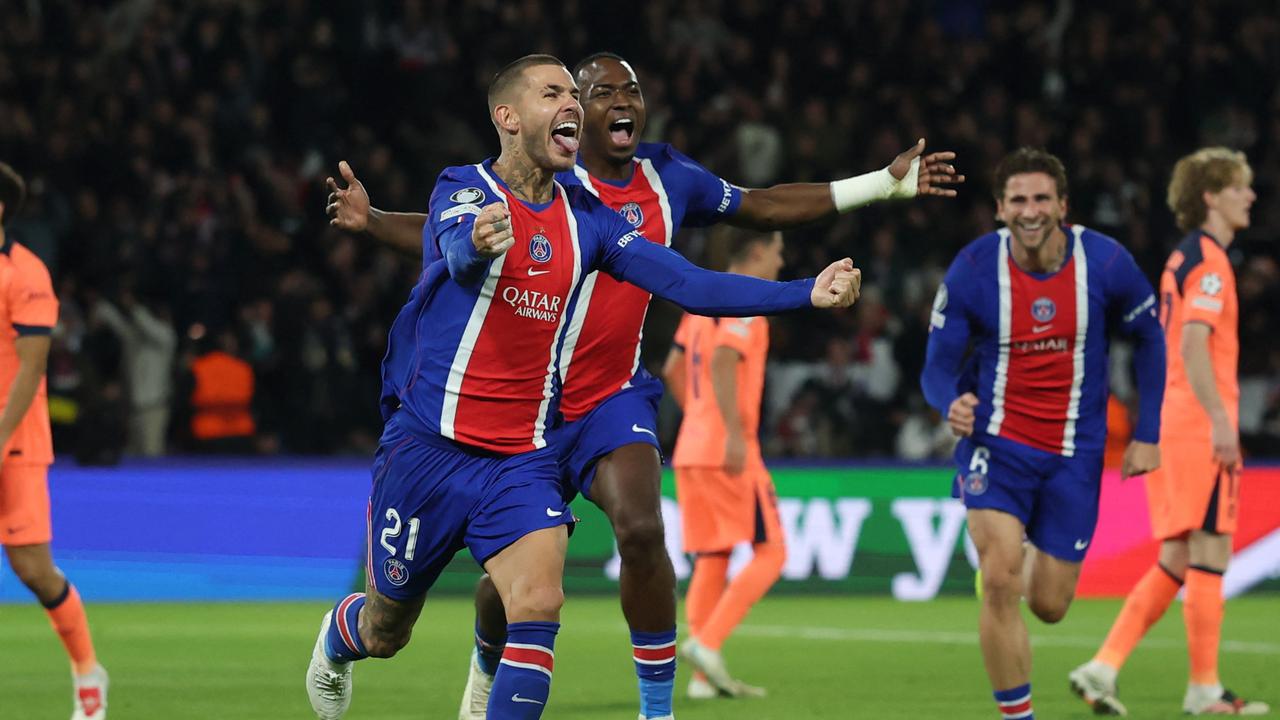
The game then devolved into an end-to-end tactical duel. Raphinha missed a golden opportunity for the visitors, and Ferran Torres—who had replaced the injured Dembélé early on—struck the post in the 71st minute. The ensuing corner kick saw PSG reclaim the lead through Lucas Hernandez, who outmuscled his marker to power home a header.
Barcelona responded through a moment of individual brilliance from Lamine Yamal, who danced past Warren Zaire-Emery before poking the ball home in the 79th minute. But the parity was short-lived. Just two minutes later, Vitinha restored the lead with a sublime volley, and Fabian Ruiz sealed the 4-2 victory in the 87th minute, silencing any doubts regarding PSG’s resolve.
Medical Crisis: A Heavy Price for Victory
The euphoria of the win was tempered by a catastrophic injury update. Paris Saint-Germain’s medical department released a statement confirming that three key players—Ousmane Dembélé, Marquinhos, and Khvicha Kvaratskhelia—had been sidelined.
The most devastating blow is the loss of Kvaratskhelia. The Georgian international, who has been the heartbeat of PSG’s attack, faces months on the sidelines following his ACL tear. Additionally, club captain Marquinhos and Dembélé are set to miss several weeks of action due to severe muscular injuries sustained during the high-intensity clash. This leaves Luis Enrique with a significant squad depth challenge as the group stages progress.
Post-Match Analysis and Official Responses
Hansi Flick, while disappointed with the result, remained composed during his post-match press conference. "It was a magnificent test for us, and we must learn from this," the Barcelona manager stated. "In October, you don’t win titles, but this match shows us exactly where we stand. There are still many areas we need to improve upon, especially with the Clásico against Real Madrid coming up this Sunday."
Flick also addressed the fitness concerns surrounding his squad, confirming that playmaker Dani Olmo was forced off in the first half with an injury, casting doubt on his availability for the upcoming showdown in Madrid.
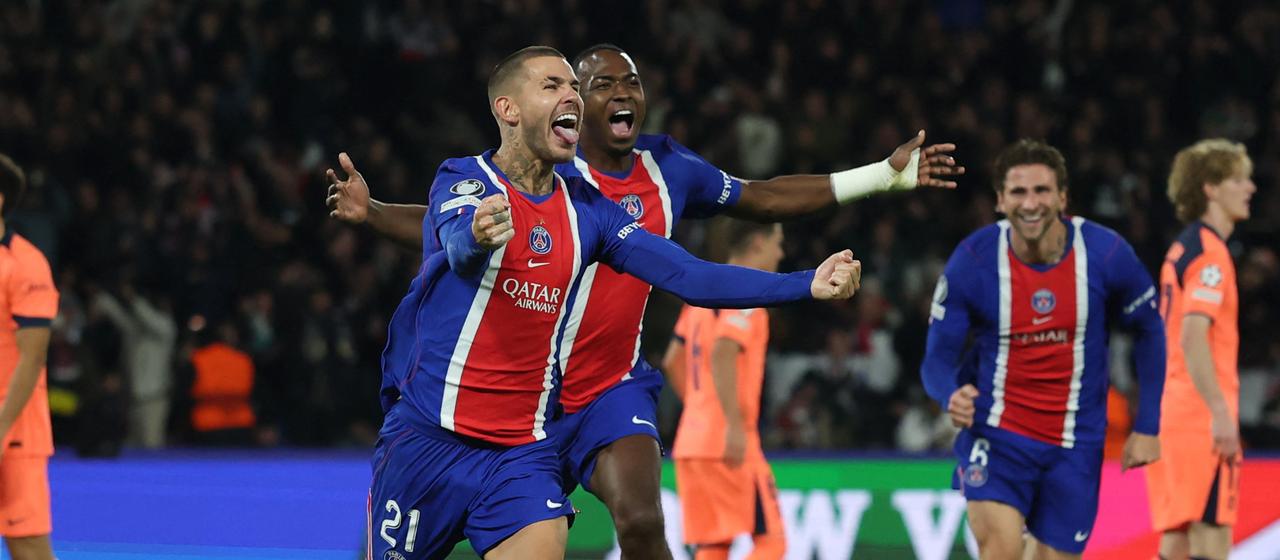
On the Parisian side, Luis Enrique praised the resilience of his squad. "We showed why we are champions. Even when we were pegged back to 2-2, the reaction was immediate. That is the mentality of a side that wants to make history."
Implications for the Season
This match serves as a crucial turning point in the 2026/27 campaign. For Barcelona, the defeat is a reality check. While their domestic form remains exemplary, the tactical vulnerability shown against a high-pressing, high-transition side like PSG highlights the work required for Flick to translate domestic dominance into European glory. The reliance on young talents like Bernal and Espart is a testament to the club’s youth policy, but the necessity of experienced leaders like Rodri became glaringly apparent under the bright lights of the Parc des Princes.
For PSG, the win confirms their status as the dominant force in Europe. They have now extended their unbeaten run in the Champions League to 13 consecutive matches. However, the path to a third consecutive title just became significantly steeper. The loss of Kvaratskhelia, in particular, forces a total reconfiguration of their offensive structure. Whether the squad has the depth to sustain their European ambitions without their Georgian talisman will be the defining narrative of their season.
As the tournament progresses, both clubs now look toward the next set of fixtures with altered perspectives. Barcelona must find a way to integrate their tactical discipline against elite-level pressure, while PSG must prove that their identity as a team is greater than the sum of their individual star parts—especially when those parts are sidelined.
The road to the June final in Madrid remains long, but if the events of October 21 are any indication, the path will be fraught with tactical ingenuity, high-stakes drama, and, inevitably, the heartbreak of injury. For now, Paris reigns supreme, but the European season is only just beginning.