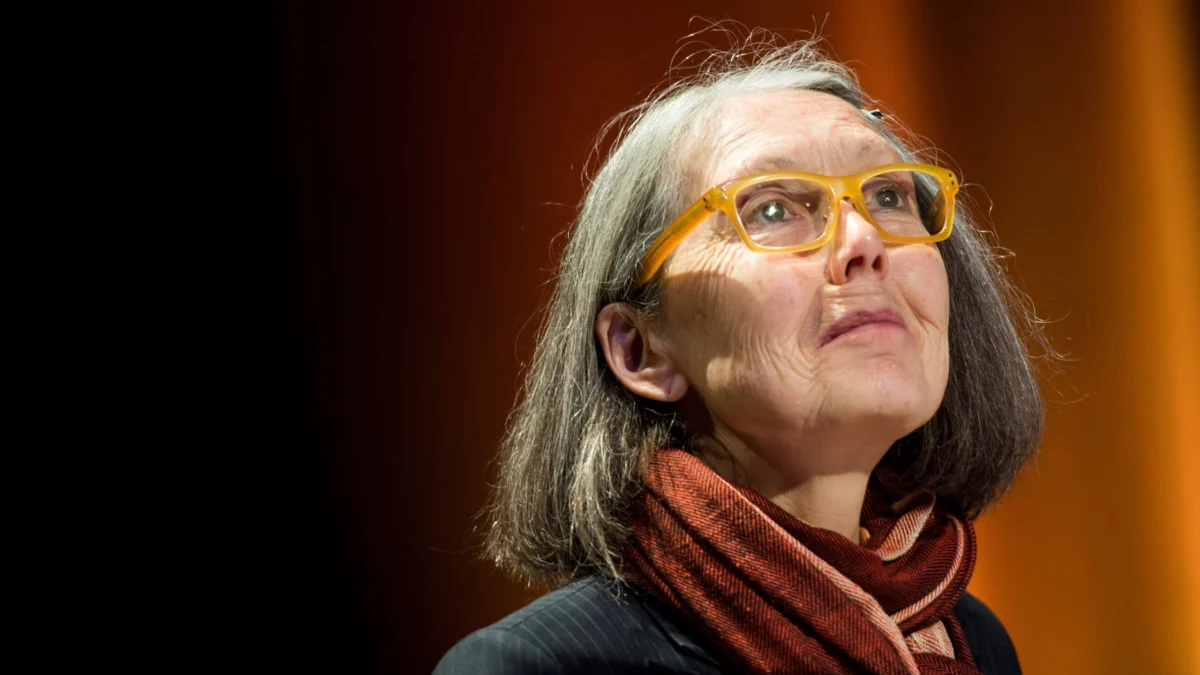
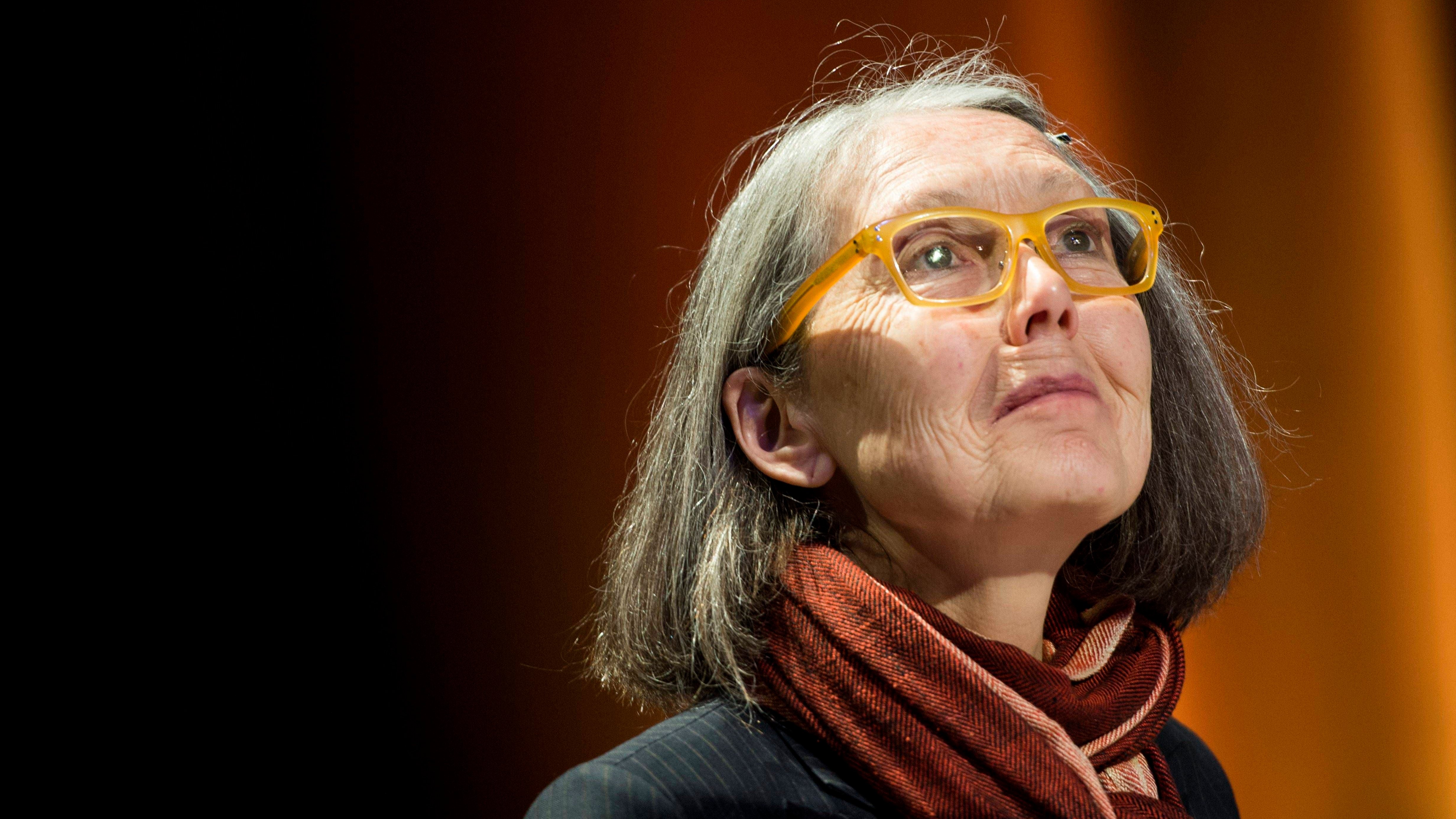
STOCKHOLM – The Swedish Academy has announced that the prestigious Nobel Prize in Literature for 2024 has been awarded to the esteemed Canadian poet, essayist, and classicist Anne Carson. At 76, Carson is recognized for her "bold and inventive body of work," which the Nobel committee praised for its unique ability to engage in a playful, intellectual dialogue with classical traditions while simultaneously forging entirely new forms for contemporary literature.
The announcement, delivered by the Permanent Secretary of the Swedish Academy, Ingrid Carlberg, marks a significant moment in the literary world, highlighting an author whose work often defies categorization, blending poetry, prose, and scholarly investigation into a singular, hybrid aesthetic.
The Moment of Discovery: Listening to the Wind in Iceland
In a poignant revelation during the press conference in Stockholm, Ingrid Carlberg shared the brief, surreal nature of the notification call placed to the laureate. "She was very surprised," Carlberg noted, describing the scene of the announcement. "We didn’t have much time to speak, but she told me that she is currently in Iceland, listening to the wind."
This detail, characteristic of Carson’s own lyrical sensibility, has resonated with literary critics worldwide, who often view her work as an atmospheric, elemental exploration of the human condition. Isolated in the rugged landscapes of the North Atlantic, Carson—a scholar of ancient Greek—seems perfectly aligned with the mythic and primordial themes that have defined her career.
A Career Defined by Re-invention
Anne Carson’s selection as the 2024 laureate is widely seen as a recognition of her lifelong project: the dismantling of boundaries between the ancient and the modern. Born in Toronto in 1950, Carson has spent decades as a professor of classics, a background that permeates every facet of her writing.
Her seminal works, such as Autobiography of Red—a novel-in-verse that reinterprets the Greek myth of Geryon through a contemporary lens—and Eros the Bittersweet, have become touchstones for a generation of writers. She is known for her economy of language, her startling juxtapositions, and her willingness to utilize academic rigor as a foundation for deeply emotional, often fragmented, poetic expression.
The Nobel committee’s citation highlighted her "inventive" nature, a nod to how Carson frequently incorporates visual art, historical documents, and philosophical treatises into her literary compositions. Her work does not merely tell stories; it invites the reader to participate in the act of creation, demanding a high level of engagement that has earned her a cult-like following among poets and scholars alike.
Chronology of the Nobel Prize in Literature
The Nobel Prize in Literature, first awarded in 1901, remains the most coveted accolade in the world of letters. The selection process is a marathon of deliberation, involving a committee of experts who sift through approximately 200 nominations annually. By mandate, the names of these nominees are kept strictly confidential for 50 years, ensuring that the deliberations remain insulated from external political or public pressure.
Recent History of the Prize
- 2023: The prize was awarded to the Hungarian author László Krasznahorkai for his "visionary oeuvre," which the committee lauded for its ability to affirm the power of art amidst "apocalyptic terror."
- 2022: The French author Annie Ernaux received the honor, recognized for her unflinching, autobiographical examinations of memory and social inequality.
- 2019: Peter Handke, the Austrian novelist and playwright, was the last German-speaking author to receive the award, a choice that sparked significant international debate regarding his political views.
- Historical Context: The list of past German-language laureates includes heavyweights such as Herta Müller (2009), Günter Grass (1999), and Heinrich Böll (1972).
For many observers, the choice of Carson—following the 2023 recognition of Krasznahorkai—reflects a pivot by the Academy toward honoring voices that challenge the traditional structures of narrative. After the 2023 selection of a European male, there had been widespread speculation among literary circles that the committee would seek to broaden the geographic and gendered representation of the prize. Carson’s selection fulfills the hope of many who advocated for a North American voice that operates at the intersection of high scholarship and avant-garde experimentation.
Supporting Data: The Value of Excellence
The 2024 Nobel Prize in Literature comes with a financial award of 12 million Swedish kronor. This represents a significant increase—one million kronor more than in the previous years—reflecting the Academy’s effort to maintain the prestige and purchasing power of the award in an inflationary global economy. In current conversion rates, this equates to more than one million euros.

While the financial incentive is substantial, the true value of the prize lies in the immediate global canonization of the author. Historically, the "Nobel bump" leads to an immediate surge in translations, academic analysis, and public readership, effectively securing the author’s place in the global literary history books.
Implications and Context: A Broader Geopolitical Landscape
The Nobel season is a barometer for the intersection of culture and politics. While the Literature prize is intended to honor artistic achievement, the atmosphere surrounding the Nobel announcements is rarely divorced from the state of global affairs.
The Shadow of the Peace Prize
As the Nobel week progresses, attention shifts toward Friday’s announcement of the Peace Prize. In 2023, the choice of Venezuelan opposition leader María Corina Machado proved to be a highly polarizing decision. Machado’s controversial act of dedicating her prize to former U.S. President Donald Trump—and symbolically handing the medal to him—created a media firestorm.
Trump, who has frequently positioned himself as a global peacemaker, has historically been a vocal proponent of his own candidacy for the Peace Prize, citing his involvement in various international negotiations. The backlash to the 2023 decision has led many experts to speculate that the Norwegian Nobel Committee may opt for a more traditional, less overtly political recipient this year to steer the conversation back toward humanitarian efforts and away from partisan controversy.
The Economics of the Prize
The final act of the Nobel season occurs on the following Monday with the awarding of the Prize in Economic Sciences. It is an anomaly in the Nobel canon; created in 1969, it is the only category not included in the original testament of Alfred Nobel, the Swedish industrialist and inventor of dynamite. Unlike the other prizes, it is funded by the Swedish Central Bank, though it is awarded alongside the others at the grand ceremony on December 10th—the anniversary of Nobel’s death.

The Legacy of Anne Carson
Anne Carson’s win serves as a powerful reminder of the enduring relevance of classical literature in a hyper-modern world. By translating the concerns of antiquity—grief, desire, power, and silence—into the language of the 21st century, she has bridged a gap that many thought was unbridgeable.
Her work challenges the reader to find stillness in a chaotic age. As she told the Academy, she is currently "listening to the wind." In an era where the noise of the world is at an all-time high, the Swedish Academy has chosen to honor a voice that encourages us to stop, listen, and translate the unseen forces that shape our lives.
As the literary world begins to dissect her vast bibliography, the focus will undoubtedly shift toward how her specific form of "inventiveness" changes the future of the novel and the poem. Whether through the stark, fragmented beauty of Nox—her elegy for her brother—or the sharp, satirical edges of her essays, Carson has proven that literature is not a static artifact of the past, but a living, breathing, and ever-evolving dialogue with the truth.
The international community now looks toward the formal ceremony in Stockholm, where the poet from Canada will take her place among the pantheon of literary giants, solidifying her legacy not just as a writer, but as a bridge between the ancient spirits of the past and the uncertain, windy future of our modern world.