The political landscape of Brazil has shifted beneath the feet of former President Luiz Inácio Lula da Silva. In a result that sent shockwaves through the international community and deeply unsettled the center-left coalition, the initial round of the presidential election saw Flávio Bolsonaro—son of the incumbent president and a representative of the nationalist right—secure a two-percentage-point lead over the veteran socialist leader.
For the Workers’ Party (PT), the results were nothing short of a systemic blow. Beyond the presidential lead, the right-wing Liberal Party (PL) solidified its dominance in the legislature, capturing five governorships and securing 99 new seats in the Chamber of Deputies. This political earthquake occurred despite aggressive fiscal maneuvering by the Lula campaign, including the expansion of social welfare programs and adjustments to the tax-free income threshold, intended to bolster the administration’s standing among the working class.
The Mirage of the "Heilsbringer": A Shift in Voter Sentiment
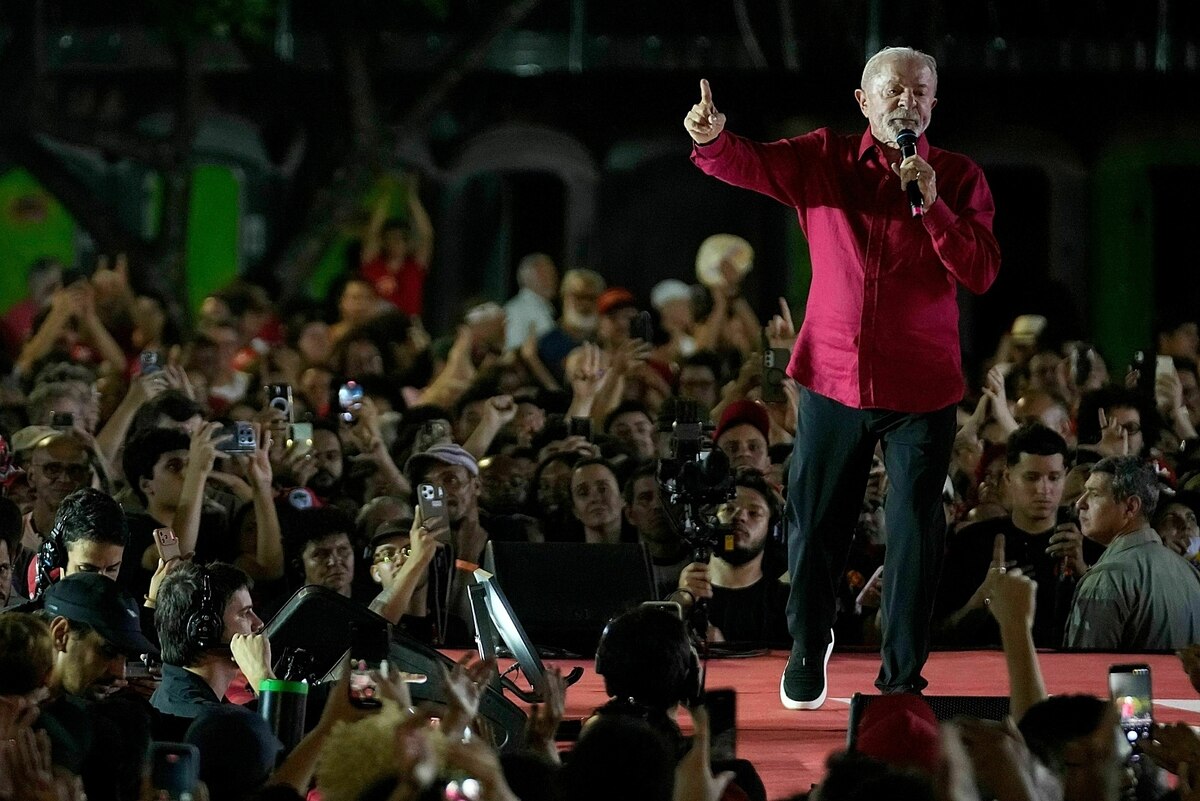
Lula, once the undisputed "Heilsbringer" (savior) of the Brazilian left, finds himself fighting a different battle than the ones he won in the early 2000s. A significant portion of the electorate has become detached from the historical memory of the prosperity and social mobility afforded by his previous administrations. The establishment of new universities, the reduction of extreme poverty, and the rise of the middle class—cornerstones of the PT’s legacy—are increasingly overshadowed by a pervasive narrative of institutional decay.
The current political environment is defined by a fatigue regarding corruption scandals. Despite evidence suggesting that members of the right-wing PL have been implicated in more instances of graft than those of the PT, the narrative has successfully been flipped. The opposition has managed to paint the PT as the sole architect of Brazil’s systemic corruption, a perception that remains resilient even in the face of contradictory data.

Chronology of a Disrupted Campaign
The trajectory of this election cycle reflects a broader global trend where digital narratives often supersede empirical reality.
- The Pre-Election Surge: Lula entered the race with high polling numbers, fueled by nostalgia for the economic boom of the early 2000s and a desire for stability following Jair Bolsonaro’s tumultuous term.
- The Digital Battlefield: The Bolsonaro camp effectively utilized social media platforms to disseminate narratives that proved immune to traditional fact-checking. By framing the election as a moral battle rather than an administrative one, the right created an "avatar" for their candidate—a symbolic figure representing "God, family, and tradition" that remained untarnished by the candidate’s actual record or character flaws.
- The First Round Shock: On election night, the realization dawned that the "silent" support for the right had been significantly underestimated. The legislative gains for the PL signaled that the ideology championed by the Bolsonaros had permeated deep into the state-level power structures.
- The Current Impasse: As of the latest polling, the momentum remains precarious. The first post-election survey shows Flávio Bolsonaro maintaining a four-point lead, setting the stage for a high-stakes runoff.
The Power of the "Avatar" and the Myth of the Moral Candidate
A critical aspect of the opposition’s success lies in the cultivation of an idealized candidate image. For his supporters, Flávio Bolsonaro’s personal indiscretions—ranging from his ties to paramilitary organizations in Rio de Janeiro to his controversial public statements—do not diminish his standing. In the eyes of his base, he functions as a symbol.

This phenomenon, described by political observers as an "avatar-based politics," allows the candidate to remain detached from the consequences of his actions. Whether he is defending controversial figures or expressing regressive views on gender, his supporters interpret these through the lens of a broader "culture war." This creates a hermetic seal against traditional political criticism; facts that would normally sink a campaign are dismissed as partisan attacks by the "corrupt establishment."
The Strategic Imperative: The Non-Voters
Lula’s path to victory in the runoff hinges on a singular, massive demographic: the non-voters. Approximately 20% of the eligible electorate abstained in the first round. This group is heterogeneous, consisting of those physically unable to reach polling stations in remote regions, the disillusioned who believe "all politicians are the same," and those who stayed home under the mistaken assumption that a Lula victory was a foregone conclusion.

The Lula campaign’s strategy is now focused on "mobilization through anxiety." To win, the campaign must convince these individuals that the potential loss of social benefits and the subsequent decline in their quality of life under a continued right-wing administration is not just a theoretical risk, but an immediate threat. The challenge is to translate abstract concepts like "democracy" and "sovereignty" into the tangible realities of bread-and-butter politics.
Supporting Data and Institutional Risks
The legislative shift is perhaps the most dangerous aspect for the future of Brazilian governance. With the PL becoming the strongest force in Parliament, the incoming executive will face immediate hurdles. Bolsonaro junior has already signaled intentions to pursue constitutional amendments and radical reforms to the judiciary.

The threat is not merely electoral; it is institutional. Recent incidents, such as the suspected arson at the Federal University of Pernambuco (UFPE), have been interpreted by many as a harbinger of a broader wave of political violence. If the rhetoric of the campaign continues to escalate, the risk of civil unrest post-election becomes a primary concern for international observers.
Implications for the Future of Brazil
The implications of this election extend far beyond the immediate executive power. We are witnessing a fundamental realignment of the Brazilian state. If the current trajectory holds, the country faces:

- Judicial Overhaul: Potential attempts to reshape the Supreme Court and other judicial bodies to align with the legislative majority.
- Erosion of Environmental Protections: A likely acceleration of the policies that have already led to increased deforestation in the Amazon.
- Polarization and Violence: A deepening of the social divide that could manifest in street-level violence, as the discourse of "us versus them" becomes institutionalized.
Conclusion: A Race Against Time
For Lula, the next three weeks represent the most critical period of his political career. He must pivot from a campaign of nostalgia to one of urgent mobilization. The task is to prove to a fractured, exhausted, and often cynical public that the stakes of this election are not about the survival of a party, but the survival of the democratic framework itself.
The struggle in Brazil is a microcosm of a global crisis in democracy, where the battle for the truth is fought not in the halls of government, but on the screens of smartphones and in the minds of the disillusioned. Whether Lula can successfully bridge the gap between his base and the disillusioned abstainers will determine whether Brazil enters a new era of consolidation or a period of profound democratic recession. The clock is ticking, and for the proponents of the status quo, the window to turn the tide is closing rapidly.