The Scottish Highlands, with their mist-covered peaks, sprawling peat bogs, and iconic deer-dotted hills, serve as the quintessential image of "wild" Britain. For millions of tourists annually, this landscape represents the pinnacle of natural beauty—a rugged, untouched wilderness. However, behind the aesthetic appeal lies a stark ecological reality: the Highlands are a man-made construct. Far from being a pristine, primeval wilderness, the current landscape is a product of centuries of exploitation, economic shifts, and aggressive land management.
A recent, groundbreaking study conducted in the Cairngorms National Park has shed new light on this history and, more importantly, has provided a roadmap for how Scotland might begin the long, arduous process of rewilding its ancient forests.
The Myth of the Wilderness: A Historical Perspective
To understand the current ecological deficit in Scotland, one must look back nearly 5,000 years. Around 3,000 BCE, the Highlands were not the barren, grassy moorlands we see today; they were lush, dense woodlands. Experts estimate that between 50 and 80 percent of the Scottish landmass was covered by a mosaic of temperate rainforests and Caledonian pine forests.
The decline of this forest cover began slowly, driven by early agricultural expansion, but accelerated dramatically during the Middle Ages. As population centers grew, timber was extracted for housing, shipbuilding, and fuel. However, the most profound transformation occurred during the 18th and 19th centuries, fueled by the burgeoning Industrial Revolution and the global demand for wool.
Large-scale estate owners, seeking to maximize profits from the booming textile industry, cleared vast swathes of native woodland to create open grazing pastures for sheep. This "Great Clearing" effectively wiped out the forest canopy, leaving behind a denuded landscape that has struggled to recover for centuries. Today, only roughly 4 percent of the original native forest remains. Much of what is left is either fragmented old-growth or commercial conifer monocultures, which fail to support the complex biodiversity of a true, functioning ecosystem.
The Cairngorms Study: High-Tech Regeneration
In a major attempt to reverse this trend, researchers recently turned their attention to the Cairngorms National Park—the largest and most ambitious conservation project in the United Kingdom. The study aimed to quantify the pace of forest regeneration by tracking the survival of young trees, both those planted by conservationists and those that have naturally "self-seeded" in the wild.

The methodology was as impressive as it was complex. Scientists utilized LiDAR (Light Detection and Ranging) technology mounted on light aircraft, flying at an altitude of 600 meters over the rugged terrain. The task was initially fraught with technical hurdles; early data sets struggled to distinguish between dense bracken and emerging tree saplings. Through iterative machine-learning algorithms, the team eventually trained the scanners to identify the specific canopy signatures of young trees. By the conclusion of the survey, the team could reliably map young trees between 0.5 and 5 meters in height across a 569-square-kilometer area.
The findings were staggering: the researchers identified over 6 million trees, of which 2.65 million were classified as young, growing saplings. This indicates a significant shift in the biological trajectory of the region.
The Conflict: Deer and the Battle for Survival
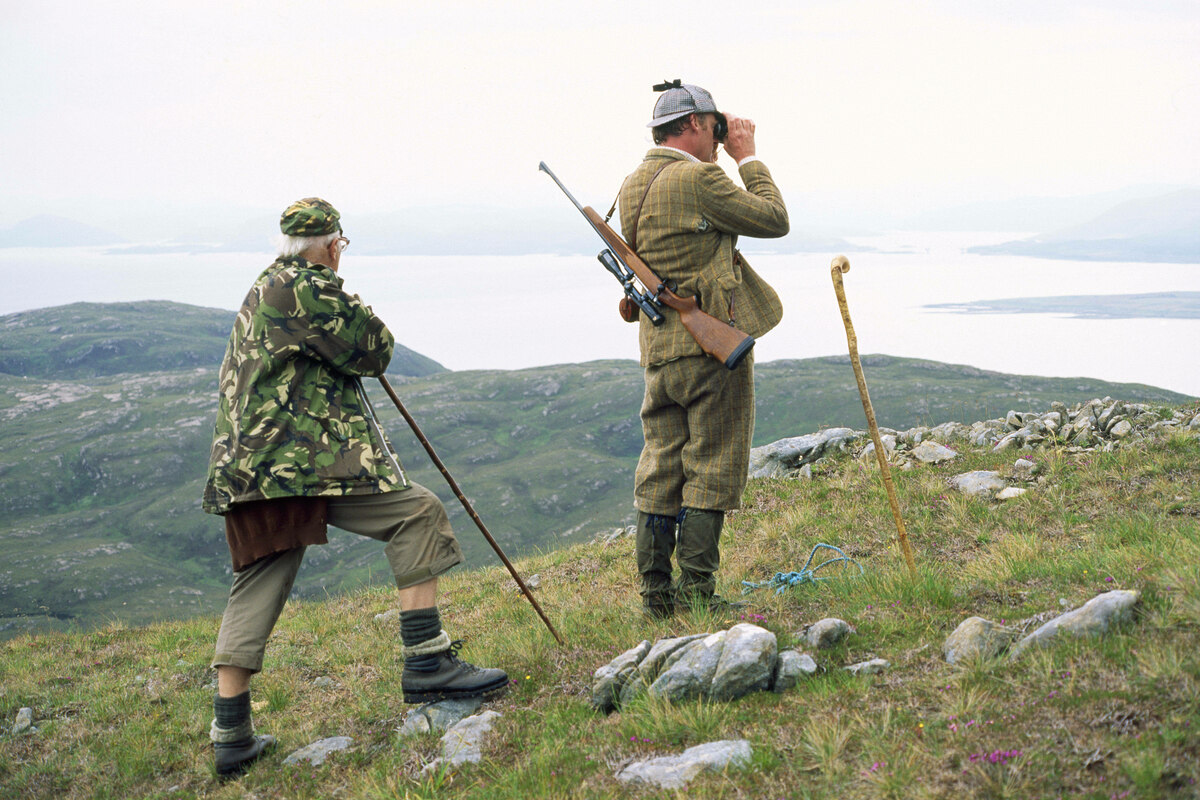
The primary obstacle to forest regeneration in the Highlands is not lack of soil fertility or climate, but rather the overpopulation of deer. Red deer, which thrive in the open, degraded landscape, act as a massive grazing pressure. They possess an insatiable appetite for fresh, nutrient-rich tree shoots, effectively "pruning" the forest to death before the saplings can reach maturity.

For years, the National Park authority has implemented a controversial but necessary strategy known as "deer management." In plain language, this involves the systematic culling of deer populations to allow the ecosystem to breathe. The results of the recent study justify this hard-line approach.
Within the surveyed region of the Cairngorms, the average density of deer has been reduced to just four animals per square kilometer. This is significantly lower than the legal maximum of ten, providing the forest with the "breathing room" required for mass recruitment of new trees. The evidence suggests that when grazing pressure is kept under strict control, the forest is not just surviving; it is actively reclaiming territory.
Official Responses and Economic Implications
The success of the Cairngorms project has ignited a national debate regarding the future of land use in Scotland. While conservationists celebrate the return of native birch, rowan, and Scots pine, there is an economic reality that cannot be ignored. Renaturating land is an expensive endeavor. Unlike commercial forestry, which provides a steady, albeit ecologically damaging, revenue stream, a self-sustaining native forest does not provide immediate financial returns.

However, public sentiment appears to be shifting. According to a recent survey by Forest Research, over 90 percent of the Scottish public supports the use of taxpayer funds to support reforestation efforts. There is a growing recognition that the "natural capital" of a healthy, biodiverse forest—including carbon sequestration, flood mitigation, and tourism—far outweighs the short-term profits of grazing land.
Government officials are now faced with the challenge of balancing the interests of traditional landowners, farmers, and environmentalists. The Scottish government has signaled a willingness to incentivize "green" land management, moving away from subsidies that favor sheep farming toward those that promote biodiversity and ecosystem services.
The Implications: A New Era for Scotland’s Landscape
The implications of this study reach far beyond the borders of the Cairngorms. It offers a blueprint for how nations can tackle the "hidden" degradation of their landscapes.

- Carbon Sequestration: The restoration of millions of trees provides a tangible, scalable solution to sequestering atmospheric carbon, playing a crucial role in Scotland’s net-zero targets.
- Biodiversity Corridors: A regenerating forest creates critical habitats for species that have been pushed to the brink, such as the Scottish wildcat, the capercaillie, and the golden eagle.
- Resilience to Climate Change: As Europe faces an increasing frequency of "mega-fires" and extreme weather events, the restoration of diverse, mixed-species forests provides a natural buffer against the volatility of the climate crisis.
The story of the Scottish Highlands is a lesson in humility. It demonstrates that while humans have the power to dismantle complex ecosystems in a matter of generations, we also possess the capacity to facilitate their recovery. The transition from an exploited, barren moor to a thriving forest is not merely a matter of planting seeds; it is a matter of managing the entire ecosystem—including the wildlife that shapes it—with wisdom and restraint.
Moving Forward: The Future of the Highlands
As Scotland looks toward the next century, the "Highland Rebirth" stands as a symbol of hope. It serves as a reminder that the status quo is not inevitable. By leveraging technology to monitor progress, employing science-based management to handle wildlife populations, and securing strong public consensus for conservation, Scotland is carving out a new path.
The Highlands of the future may not look like the pristine, untouched forests of 3,000 BCE, but they are on their way to becoming something perhaps more profound: a landscape that reflects a society that has finally learned to value the living world over the quick profit. The struggle to save the forest is, ultimately, a struggle to redefine our relationship with the land itself—moving from exploitation to stewardship.

For those wandering the moos-covered hills of the Cairngorms, the message is clear: the greening of the Highlands is not just a dream, but a measured, data-backed reality unfolding one sapling at a time. The forest is returning, and for the first time in centuries, the humans are helping, rather than hindering, its path.