Introduction: A Ghost from the Past
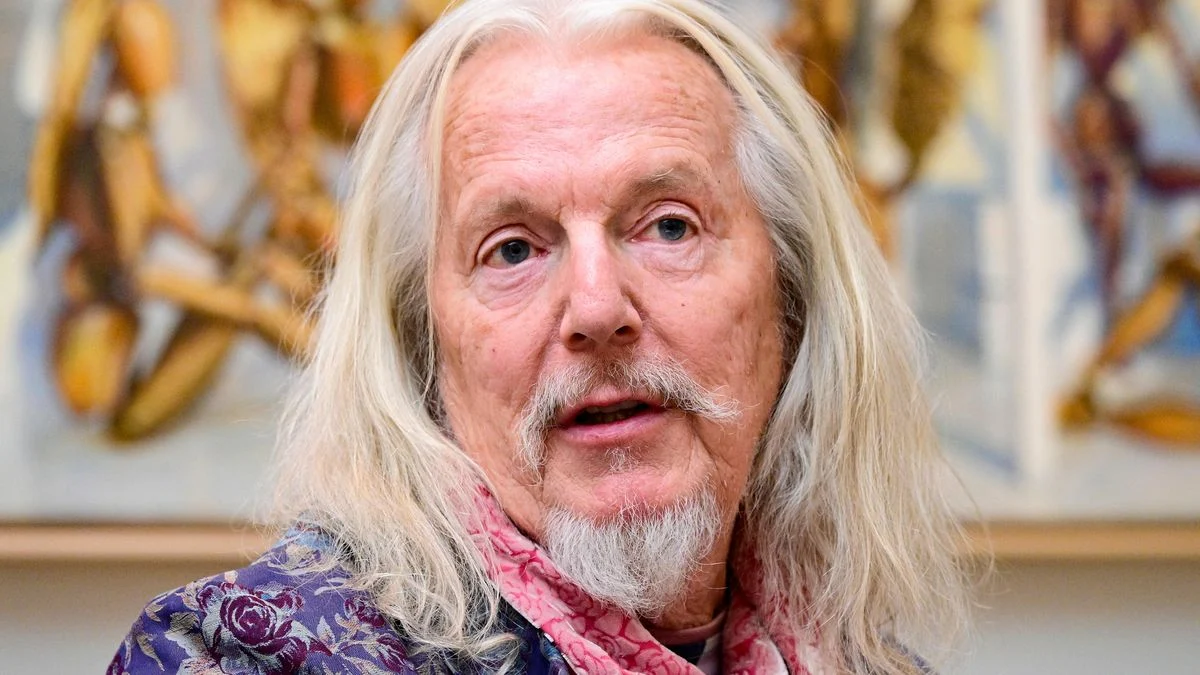
The art world, an industry built on provenance, authenticity, and the nebulous concept of value, is currently holding its breath as a relic of its most embarrassing chapter returns to the courtroom. Wolfgang Beltracchi, the man who orchestrated one of the most significant art forgery scandals in post-war history, is currently locked in a high-stakes legal battle before Germany’s Federal Court of Justice (Bundesgerichtshof, BGH).
The object of this dispute is not a masterpiece by an Old Master, but rather a forgery of his own creation: "Rotes Bild mit Pferden" (Red Picture with Horses). The painting, which once fetched nearly 2.9 million euros at auction, sits at the center of a legal conundrum that forces the highest court in Germany to grapple with the ethics of ownership, the mechanics of the art market, and the lingering consequences of a deception that spanned decades.
The Genesis of a Scandal: How the Art World Was Deceived
To understand the current legal proceedings, one must look back to the mid-2000s, a time when Wolfgang Beltracchi and his wife, Helene, were successfully pulling the wool over the eyes of the global art establishment.
Beltracchi’s method was as meticulous as it was audacious. Rather than creating "fake" versions of existing, well-known paintings, he created entirely new works in the style of famous expressionists like Heinrich Campendonk, Max Ernst, and Fernand Léger. He claimed these were "lost" works from a fictitious family collection, the "Sammlung Knops."
The Anatomy of the Fraud
Beltracchi’s operation was comprehensive:
- Historical Accuracy: He sourced authentic period canvases and frames from flea markets to ensure the physical substrate of the painting matched the purported era.
- Provenance Fabrication: He created elaborate backstories and forged gallery stickers, which he meticulously aged to lend the works a sense of historical legitimacy.
- Market Manipulation: By introducing these "newly discovered" pieces into the market, he exploited the greed and hubris of auction houses and experts who were all too eager to authenticate the works to secure a commission.
For years, the art market "greedily soaked up the fresh art supply," as experts failed to spot even glaring contradictions. It wasn’t until 2010 that the bubble burst. A scientific analysis of "Rotes Bild with Pferden" revealed the presence of titanium white—a pigment that did not exist in 1914, the year the painting was supposedly created. This single chemical anomaly brought the entire house of cards tumbling down.
Chronology of the Disputed Painting
The path that led "Rotes Bild mit Pferden" to the Federal Court of Justice is as convoluted as the forgery itself.

- 2006: Beltracchi enters the painting into an auction. He retains ownership, entrusting the auction house to facilitate the sale.
- The Sale: A Maltese company purchases the painting for approximately 2.9 million euros.
- The Discovery: Following the 2010 exposure of the forgery ring, the buyer initiates a rescission of the contract.
- The Settlement: A legal dispute ensues between the buyer and the auction house. They reach a settlement, the terms of which result in the auction house reclaiming the painting.
- The Resale: In a move that continues to rankle Beltracchi, the auction house subsequently sells the painting to a third-party collector.
- The Current Litigation: Beltracchi, asserting that he never relinquished ownership rights to the auction house, is now suing the current owner to have the painting returned to him.
The Legal Battlefield: Property Rights vs. Contractual Reality
The Fifth Civil Senate at the BGH in Karlsruhe, led by presiding judge Bettina Brückner, is now tasked with untangling the property rights. During preliminary hearings, the court signaled that the outcome might be unfavorable for the artist.
The Question of Legal "Loophole"
Beltracchi’s legal team argues that the current situation represents a fundamental gap in the law. Their position is that the artist never intended to transfer ownership to the auction house, merely to sell the work. By the auction house keeping the painting after the settlement and selling it again, they claim the house effectively "acquired" an asset they never truly owned, creating an outcome that is "utterly unsatisfactory."
The defense, representing the current owner, maintains a starkly different view. Their argument hinges on the technicalities of German civil law:
- The Transfer Principle: Under German law, the mere sale of an item does not transfer ownership; it is the physical handover of the object that solidifies the change in property rights.
- Lack of Precedent: The defense argues that there is no legal requirement for property to "revert" to the original owner upon the rescission of a contract if the subsequent chain of custody and sales has been handled as it was here.
In short, the defense contends that if Beltracchi wanted a specific mechanism for the return of the painting in the event of a sale cancellation, he should have enshrined that in his contract.
Implications for the Art Market
The outcome of this case, expected on January 15, carries significant weight for the art world.
The "Forger’s Right"
If the court were to rule in favor of Beltracchi, it would create a precedent where the creator of a fraudulent work could potentially reclaim their work even after it has passed through multiple hands. This could trigger a wave of litigation from other convicted forgers, creating chaos in the secondary art market.
Professional Responsibility
Conversely, the case highlights the extreme vulnerabilities of the art market. The fact that an auction house was able to move a painting—even after it was flagged as a forgery—raises questions about the ethics of auction houses and their responsibility to "clean" the market of known fakes. Critics of the current system point out that forgers often thrive because the market prefers a "profitable truth" over a "costly reality."

The "Artist" Today
It is a profound irony of the 21st century that Wolfgang Beltracchi, once the scourge of the art establishment, has reinvented himself as a successful, legitimate artist. After being sentenced to prison in 2011 and released on parole in 2015, he began painting under his own name. His works now sell for substantial sums, not because they mimic a master, but because they are "Beltracchis."
When asked by reporters why he wants the painting back—a work he himself admitted to forging—his lawyers remained silent. Does he wish to destroy it to "cleanse" his record? Does he want it as a trophy of his past conquests? Or does he view it as a piece of his own history that, regardless of its illicit origins, belongs to him?
Conclusion: A Final Verdict Awaits
The upcoming decision in Case Az. V ZR 242/24 is more than a dispute over a canvas. It is a collision between the cold, rigid logic of property law and the chaotic, emotional, and often dishonest world of high-stakes art.
For the BGH, the ruling must balance the protection of current owners—who may have acted in good faith—against the claims of the original creator, regardless of that creator’s criminal history. As the art world waits for the January 15 announcement, one thing is clear: even fifteen years later, the ghost of the "Rotes Bild mit Pferden" continues to haunt the institutions that once failed to see it for what it truly was.
The case serves as a poignant reminder that in the world of high art, the difference between a masterpiece and a forgery often lies not in the paint or the pigment, but in the legal framework that defines value and ownership. Whether the painting remains with its current owner or returns to the man who birthed it, the "Red Picture with Horses" will forever remain a symbol of a time when the art world looked, but refused to see.