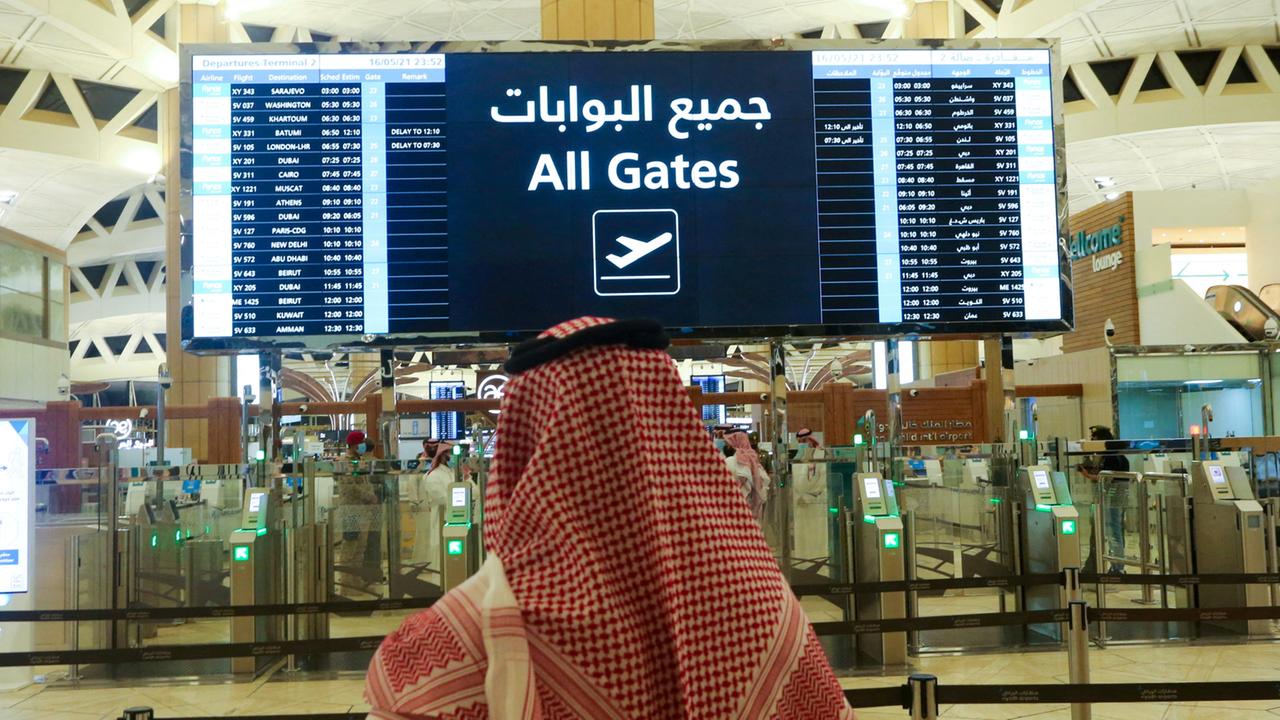
Riyadh, Saudi Arabia – October 11, 2026 – A devastating missile attack on King Khalid International Airport (KKIA) in the Saudi capital, Riyadh, has resulted in the deaths of at least twelve individuals and left over 300 wounded, many critically. The assault, which struck a domestic flight terminal, marks a significant escalation in regional tensions, with Saudi authorities swiftly blaming the Iran-backed Houthi militia in Yemen and vowing a resolute response to what they termed a "war crime." The incident has prompted immediate international travel warnings and sparked discussions about potential shifts in global diplomatic and military strategies concerning the protracted conflict in Yemen.
The attack comes amidst a sustained campaign of cross-border strikes by the Houthi movement against Saudi infrastructure, though this latest incident stands out for its high civilian casualty count and the specific targeting of a bustling international aviation hub. As emergency services worked through the night to assist the injured and secure the sprawling airport complex, the international community braced for potential retaliatory actions and a further destabilization of the already volatile Arabian Peninsula.
Main Facts: Deadly Strike on Riyadh Airport Shakes Region
The tranquility of King Khalid International Airport, a vital gateway handling approximately 40 million passengers annually, was shattered early on October 11, 2026, when a missile struck a domestic flight terminal. The impact caused widespread destruction and chaos, leading to a confirmed death toll of twelve people. Among the deceased, the Saudi General Authority of Civil Aviation reported four Saudi nationals and two Bangladeshi citizens. Additionally, victims included one individual each from the United States, Egypt, Jordan, Syria, Sudan, and the Palestinian territories, underscoring the cosmopolitan nature of the airport’s clientele and the indiscriminate horror of the attack.
In addition to the fatalities, a staggering 309 people sustained injuries, with authorities indicating that a significant number remain in critical condition, fighting for their lives in Riyadh hospitals. The scale of casualties immediately drew sharp condemnation from Riyadh, with the Saudi-led military coalition operating in Yemen pointing fingers directly at the Houthi militia. Diplomats and security analysts echoed this sentiment, suggesting the attack bore the hallmarks of previous Houthi operations.
In the immediate aftermath, airport operations were suspended indefinitely, leading to widespread flight cancellations and significant disruptions to regional air travel. Several nations, including Germany, Spain, and Canada, issued urgent travel advisories, cautioning their citizens against using KKIA and warning of the potential for further aerial assaults across Saudi Arabia. The gravity of the situation also prompted an immediate and high-level response from Washington, with US President Donald Trump indicating a swift decision would be made regarding potential military support for Saudi Arabia, a notable shift from previous US reluctance.
Chronology of Terror: A Night of Chaos in Riyadh
The attack unfolded with terrifying speed and precision. According to eyewitness accounts, the missile struck a domestic flight terminal, specifically impacting an area near Gate 401. A male passenger, recounting his harrowing experience to Agence France-Presse (AFP), described the scene: "I was at Gate 403. I saw 401 get hit, I saw injured people right before my eyes. Everyone was running." His testimony painted a vivid picture of the immediate pandemonium as travelers and airport staff scrambled for safety amidst the destruction.
Emergency sirens wailed across the sprawling airport complex as security forces, medical teams, and fire brigades converged on the scene. Initial reports indicated a direct hit on a passenger area, explaining the high number of civilian casualties. Rescue efforts commenced swiftly, with paramedics attending to the wounded on site before transporting those with more severe injuries to nearby medical facilities. The immediate focus was on securing the area, accounting for all personnel and passengers, and beginning the grim task of identifying the victims.
The Saudi General Authority of Civil Aviation confirmed the attack hours later, providing the initial casualty figures and detailing the nationalities of the deceased. The swift attribution to the Houthi militia by the Saudi-led coalition indicated a readiness to assign blame and set the stage for a strong official response. While the Houthis had not, at the time of reporting, issued a formal claim of responsibility, the coalition’s unequivocal stance left little doubt about Riyadh’s perspective on the perpetrators. The incident plunged the region into a fresh wave of anxiety, highlighting the persistent and escalating threat posed by the Yemen conflict to Saudi civilian infrastructure.
Supporting Data: The Strategic Vulnerability of Saudi Infrastructure
King Khalid International Airport is not merely a transport hub; it is a symbol of Saudi Arabia’s ambitious modernization and a crucial component of its economic diversification strategy, Vision 2030. Its annual passenger traffic of approximately 40 million underscores its importance as a regional and international aviation nexus. The targeting of such a vital civilian installation, therefore, carries significant symbolic weight and aims to inflict maximum disruption and psychological impact.
This attack is far from an isolated incident. For years, the Houthi militia, with alleged backing from Iran, has routinely launched rockets, ballistic missiles, and armed drones towards Saudi Arabian territory. Previous targets have included other international airports, such as Abha and Jizan, critical oil installations like the Aramco facilities at Abqaiq and Khurais in 2019, and even residential areas. While Saudi Arabia boasts sophisticated air defense systems, primarily US-made Patriot batteries, the sheer volume and varied nature of Houthi projectiles – from cruise missiles to drones – have made comprehensive protection a persistent challenge.
Experts note that the Houthis have significantly advanced their missile and drone capabilities throughout the Yemen conflict, transitioning from rudimentary rockets to more sophisticated, longer-range weaponry. These advancements allow them to strike deep into Saudi territory, threatening key economic centers and demonstrating a capacity to bypass existing defenses. The repeated breaches of Saudi airspace, even if many projectiles are intercepted, expose a persistent vulnerability that Riyadh is keen to address, often by seeking advanced military support from its allies. The economic implications are severe, not only in terms of direct damage and operational shutdowns but also in the erosion of investor confidence and the perception of security, which is paramount for the success of Vision 2030.
Official Responses: Condemnation, Blame, and Vows of Retribution
The international response to the Riyadh Airport attack was swift, though varied in its specific condemnations. The Saudi-led military coalition, a formidable alliance supporting the internationally recognized Yemeni government against the Houthis, wasted no time in assigning blame. In a strongly worded statement, the coalition accused the Iran-backed Houthi militia of orchestrating the "deadly terrorist attack," labeling it a "war crime." They pledged to respond "with determination" to ensure the perpetrators were held accountable and to prevent future assaults on civilian targets. This declaration signaled an almost certain escalation of military operations against Houthi strongholds in Yemen.
Notably, while the Saudi coalition was unequivocal in its attribution, the Houthi militia itself had not, at the time of this report, issued a formal claim of responsibility. This absence of a public claim, while not unprecedented, could indicate several possibilities: a tactical decision to avoid direct international backlash, a delay in internal communication, or even an attempt to gauge the international reaction before making a statement. However, given their history of claiming similar attacks, a future declaration remains a possibility.
Beyond the immediate belligerents, several nations and international bodies voiced their concerns. The German government, through its Foreign Office in Berlin, issued an "urgent" travel warning against using King Khalid International Airport, advising citizens that "further aerial attacks and disruptions to air traffic must be expected in Saudi Arabia." Similar warnings were echoed by the Spanish and Canadian governments, highlighting the widespread concern for civilian safety. Kuwait Airways, a major regional carrier, promptly announced the cancellation of two flights to and from Riyadh, citing the airport’s closure and the prevailing "security situation."
The United Nations Secretary-General, while not directly attributing blame, issued a statement expressing grave concern over the attack, emphasizing the need to protect civilian infrastructure and calling for an immediate de-escalation of hostilities. Other international organizations and human rights groups condemned the targeting of civilian areas, irrespective of the perpetrator, reiterating calls for a peaceful resolution to the devastating conflict in Yemen.
Implications: A Potential Shift in US Policy and Escalation of Regional Tensions
The missile strike on King Khalid International Airport carries profound implications, most notably signaling a potential pivot in US foreign policy regarding the Yemen conflict. US President Donald Trump’s declaration that his administration would make a decision "very quickly" regarding military support for Saudi Arabia represents a significant shift. Previously, the US had shown reluctance to provide direct military assistance against Houthi threats, often emphasizing diplomatic solutions and humanitarian concerns.
This potential change in stance could be influenced by several factors: the direct targeting of a major international airport with high civilian casualties, including an American citizen; growing concerns over regional stability and the security of vital shipping lanes; and the long-standing strategic alliance between Washington and Riyadh. A more active US role, potentially involving enhanced intelligence sharing, advanced air defense systems, or even direct military intervention against Houthi missile and drone sites, could fundamentally alter the dynamics of the Yemen war. However, such a move would also risk deepening US involvement in a complex and widely criticized conflict, potentially drawing the ire of human rights organizations and segments of the international community.
The attack also threatens to further inflame regional tensions, particularly between Saudi Arabia and Iran. Riyadh and Washington consistently accuse Tehran of supplying the Houthis with advanced weaponry, thereby fueling the conflict and prolonging the humanitarian crisis. Any direct US military support to Saudi Arabia could be perceived by Iran as an escalation, potentially leading to a broader proxy confrontation across the Middle East.
The Yemen War: A Deeper Dive
Roots of a Protracted Conflict
The conflict in Yemen, often dubbed the world’s worst humanitarian crisis, began in earnest in late 2014 when the Houthi movement, a Zaidi Shia group, seized control of the capital, Sanaa, and subsequently ousted the internationally recognized government. In March 2015, a Saudi-led coalition, comprising several Arab states, intervened with the stated aim of restoring the legitimate government and curbing what they perceived as growing Iranian influence on their southern border.
Since then, the war has devolved into a brutal stalemate, characterized by widespread displacement, famine, and a collapsed healthcare system. Millions are on the brink of starvation, and numerous reports have documented violations of international humanitarian law by all parties to the conflict. The Saudi intervention, despite its overwhelming military superiority, has largely failed to dislodge the Houthis from their strongholds, instead leading to a protracted and devastating proxy war.
The Proxy War Narrative: Iran’s Alleged Influence
Central to the regional dynamics is the narrative of a proxy war between Saudi Arabia and Iran. Riyadh and its allies, along with the US, consistently accuse Iran of arming, training, and financing the Houthi militia. Evidence, including UN expert reports and seized weapons, has often pointed to Iranian-made components in Houthi missiles and drones. Iran, however, vehemently denies direct military support, asserting its assistance is purely political and humanitarian.
Regardless of the precise nature of Iran’s involvement, the perception of an Iranian-backed force on Saudi Arabia’s border has driven Riyadh’s assertive military strategy. The targeting of Saudi infrastructure by Houthis is viewed by the coalition as a direct challenge to Saudi sovereignty and a manifestation of Iranian regional ambitions. This perception fuels the cycle of violence and makes de-escalation exceedingly difficult.
Economic Repercussions and Vision 2030
For Saudi Arabia, repeated attacks on its vital infrastructure, particularly economic hubs like King Khalid Airport and oil facilities, pose a significant threat to its long-term development plans. Crown Prince Mohammed bin Salman’s ambitious Vision 2030 aims to diversify the kingdom’s economy away from oil, attracting foreign investment and boosting tourism. Such initiatives rely heavily on a stable and secure environment. Frequent missile and drone strikes undermine investor confidence, disrupt international travel, and force the kingdom to divert substantial resources towards defense, potentially slowing down economic reforms and development projects. The targeting of an international airport directly impacts the perception of safety for tourists and business travelers, vital for the success of Vision 2030’s non-oil sectors.
The Path Forward: Diplomacy or Escalation?
The latest attack on Riyadh Airport forces the international community and regional powers to confront a stark choice: pursue renewed and intensified diplomatic efforts to end the Yemen conflict, or risk a dangerous escalation that could engulf the wider Middle East. The UN, along with various European nations, has long advocated for a political solution, but peace talks have repeatedly faltered due to entrenched positions and a lack of trust between the warring parties.
For Saudi Arabia, the pressure to respond decisively is immense. The targeting of its capital’s main airport, with such a high civilian toll, is a direct challenge to its security and prestige. A strong military retaliation against Houthi targets in Yemen is highly probable, potentially leading to further civilian casualties in Yemen and exacerbating the humanitarian crisis there.
The potential for increased US military involvement adds another layer of complexity. While it could bolster Saudi defenses, it also raises the specter of Washington being drawn deeper into a conflict that has defied easy solutions for years. The intricate web of alliances, proxy interests, and humanitarian imperatives makes the path forward fraught with peril. Without a concerted and unified international push for a comprehensive political settlement, the cycle of violence and retaliation is likely to continue, with devastating consequences for the people of Yemen and the stability of the entire region. The attack on King Khalid International Airport serves as a chilling reminder of the urgent need for peace.