For generations, the "Star Wars" saga has been more than a cinematic franchise; it has been a cultural bedrock, a modern mythology that redefined the landscape of science fiction and global pop culture. Now, the tangible artifacts that breathed life into George Lucas’s galaxy far, far away are transcending their roles as film props to become some of the most coveted—and expensive—assets in the global art and collectibles market.
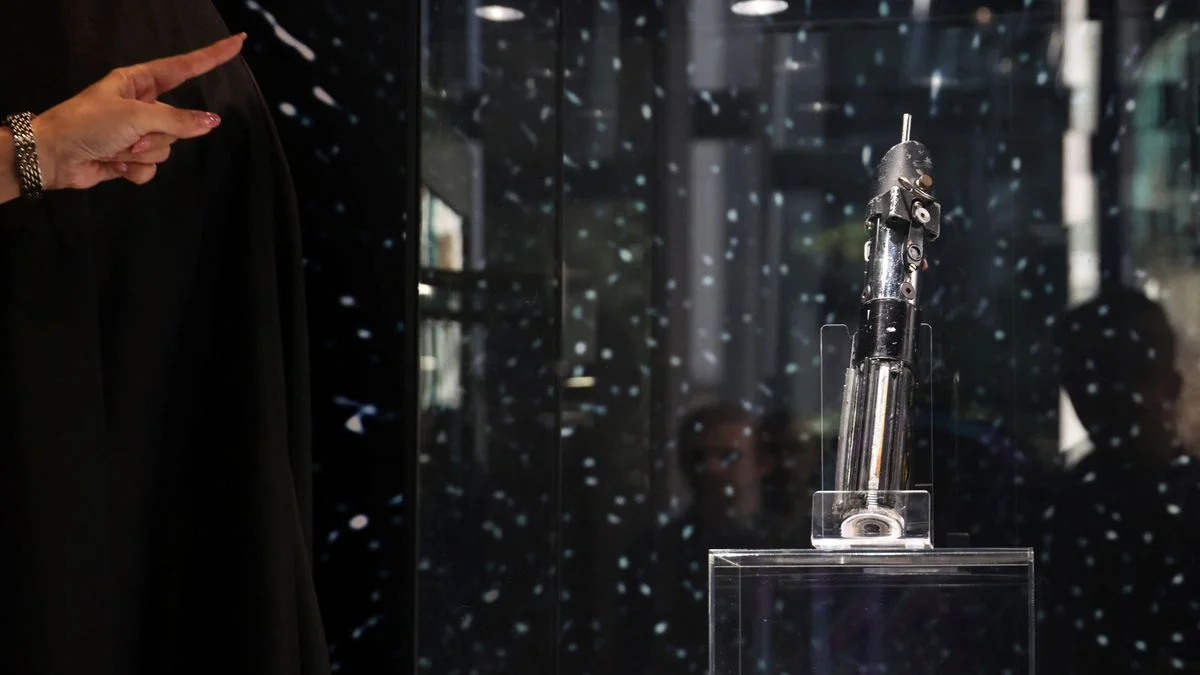
As the "Ultimate Star Wars Auction" approaches on November 12, hosted by Heritage Auctions in Dallas, Texas, the industry is bracing for a historic event. Among the treasures slated to go under the hammer is the iconic lightsaber wielded by Darth Vader—a weapon that, in the lore of the franchise, severed Luke Skywalker’s hand in the climatic showdown of The Empire Strikes Back. With expectations of reaching seven-figure sums, this auction serves as a stark reminder that for the most dedicated collectors, the "Force" is now measured in millions of dollars.
The Evolution of the Prop Market: From Set Dressing to Blue-Chip Asset
To understand the astronomical valuation of these items, one must look back at the trajectory of film memorabilia. For decades, props were often discarded, recycled for future productions, or relegated to dusty studio warehouses. Today, however, they are treated with the same reverence as rare manuscripts or impressionist paintings.
The shift reached a fever pitch this past July, when a lightsaber prop—famously associated with the scene where Luke Skywalker loses his hand—sold for a staggering $3.75 million. This sale did more than just break a record; it fundamentally altered the market’s perception of "Star Wars" artifacts. It validated the notion that items used in the original trilogy are not merely nostalgic toys, but historical documents of the medium.
Now, all eyes are on Darth Vader’s weapon. Used in both The Empire Strikes Back and Return of the Jedi, the lightsaber is not just a prop; it is a piece of cinematic history. Heritage Auctions anticipates a starting bid in the seven-figure range, though industry insiders speculate that competition among private collectors and institutions could drive the final price significantly higher.
A Chronology of Iconic Warfare
The lightsaber is the defining symbol of the Star Wars universe—a "more elegant weapon for a more civilized age." Its prominence in the upcoming auction is not incidental; it reflects the deep psychological connection fans have with the choreography of these films.
The conflict between Luke Skywalker and Darth Vader remains perhaps the most scrutinized duel in cinema history. It was here, on the floating platform of Cloud City, that the foundation of the Skywalker saga was laid bare with the revelation: "I am your father." The lightsaber being auctioned is the instrument of that transformation, a physical manifestation of the tragedy and destiny inherent in the plot.
The auction also pays tribute to the broader scope of the franchise’s history:
- The Prequel Era: The auction features the lightsabers used by Ewan McGregor (Obi-Wan Kenobi) and Hayden Christensen (Anakin Skywalker) in Revenge of the Sith. While expected to fetch a more accessible $10,000 each, these items represent the pivotal transition of the protagonist into the villain, a narrative arc that cemented the legacy of the modern trilogy.
- The Original Trilogy: Beyond the lightsabers, the auction includes an original EE-3 carbine blaster used by Boba Fett in The Empire Strikes Back. As one of the most beloved side characters in the franchise, Fett’s gear is expected to exceed $100,000, illustrating how even non-Jedi weaponry commands massive premiums.
- Behind the Scenes: Perhaps most fascinating to historians is the inclusion of a Yoda puppet hand used by Frank Oz during the production of The Empire Strikes Back. This object represents the intersection of technology and artistry—the tactile, analog ingenuity that defined the practical effects era before the digital revolution took hold.
Supporting Data: The Anatomy of the Auction
The "Ultimate Star Wars Auction" is not a mere collection of items; it is a curated exhibition of the Lucasfilm archive. The catalogue spans the entirety of the Skywalker Saga, from A New Hope (1977) to the modern entries in the franchise.
Key items to watch include:
- The Anthony Daniels Archive: Among the most personal items is a signed, early-draft script of the original 1977 film, owned by Anthony Daniels, the man behind C-3PO. Such provenance—the history of ownership by a lead actor—often acts as a multiplier for auction prices.
- Rogue One and Beyond: The auction also honors the modern era of the franchise, featuring a TIE-Fighter pilot helmet from Rogue One. This inclusion confirms that the "collectability" of Star Wars is not limited to the original 1970s and 80s films, but is expanding to include the new generation of content.
- Volume and Scale: With over two dozen lightsabers alone, the sheer volume of high-quality items ensures that the auction will be a barometer for the market’s health. If these items sell for well above their estimates, it will confirm that the appetite for "Star Wars" memorabilia is effectively recession-proof.
The Human Element: Why We Collect
Why are people willing to spend the price of a luxury home on a plastic and metal prop? Psychologists and collectors suggest that the value of these items is derived from "associative memory."
For the generation that grew up in the late 70s and 80s, Star Wars was a formative experience. Owning the actual object held by the actor on screen provides a direct, tangible link to the magic of their childhood. It is a way of "owning" a piece of the myth.
Furthermore, as the creators of these films—George Lucas, the original actors, and the legendary crew—begin to reach the later stages of their lives, the scarcity of these objects is becoming more pronounced. Collectors are not just buying props; they are acting as curators of a legacy that has fundamentally shaped global consciousness.
Official Responses and Market Implications
Heritage Auctions has framed this event as a milestone for entertainment collecting. "This is about preserving the history of a cultural phenomenon," a spokesperson noted, emphasizing that many of these items have been held in private collections for decades and are now entering the public domain for the first time.
The implications for the art world are significant. As the boundaries between "fine art" and "pop culture collectibles" continue to blur, major auction houses are increasingly allocating space to film memorabilia. This professionalization of the market brings with it stricter requirements for authentication, provenance, and condition reports. The "Ultimate Star Wars Auction" is setting a new standard for how these items are documented and sold.
However, some critics argue that the soaring prices threaten to lock away these items in private vaults, keeping them out of the hands of museums or public archives. There is a tension between the private ownership of these "sacred" objects and the public desire to view them. For now, the momentum is firmly in the hands of the private collector, as the market for film history continues to reach for the stars.
Looking Ahead: The Future of the Force
As November 12 approaches, the focus is on the numbers. Will Darth Vader’s lightsaber break the $3.75 million record set by Luke’s? Will the auction generate enough revenue to signal a new "Golden Age" for film memorabilia?
Regardless of the final figures, the event serves as a testament to the endurance of George Lucas’s vision. Whether it is a weathered TIE-Fighter helmet or a finely crafted lightsaber, these artifacts remind us that the stories we tell matter. They define our shared values, our hopes, and our fears. And for a select few, they offer the chance to hold a small, glowing piece of that distant galaxy in their own hands.
The lightsabers may be props, the blasters may be fiberglass, and the puppets may be foam, but the value they hold is undeniably real. As the gavel falls in Dallas, the world will be watching, confirming that in the case of Star Wars, the Force is not just strong—it is incredibly lucrative.