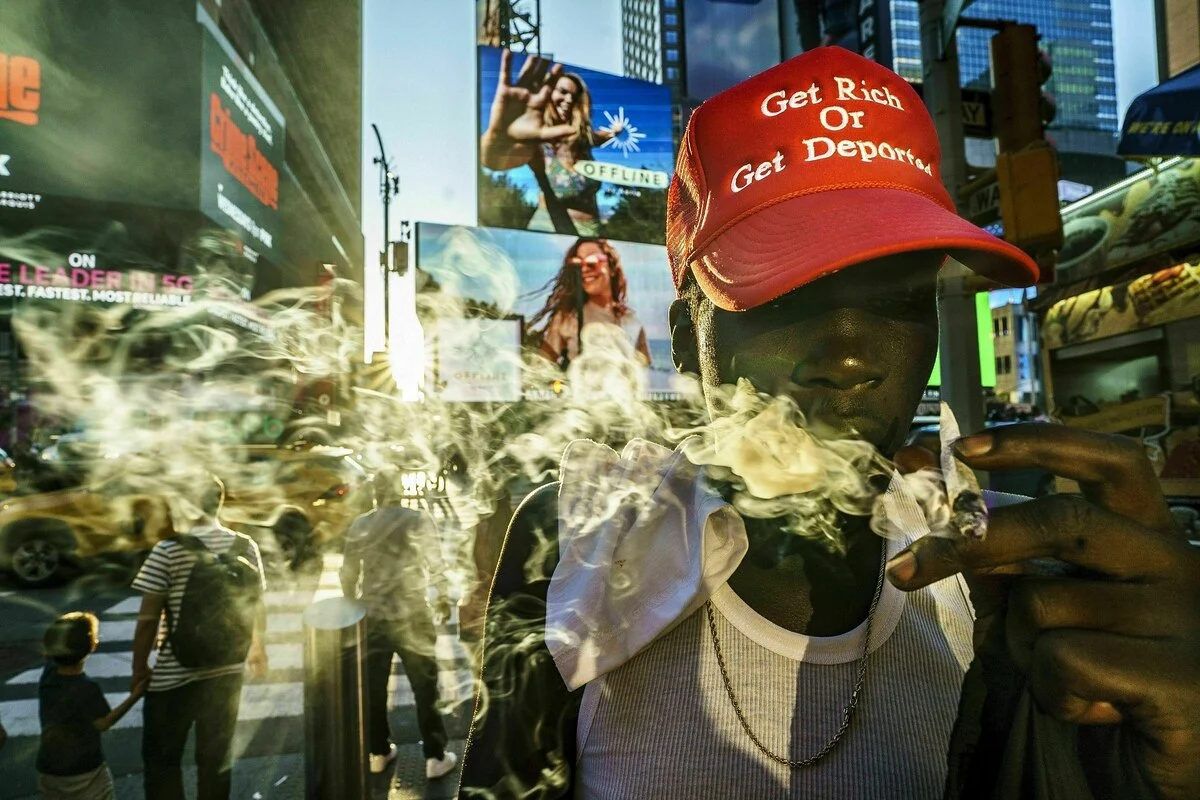
In an era defined by global instability, rising inflation, and the visible erosion of the middle class, the rise of right-wing populism and neo-fascist movements has become the defining political challenge of the West. While many analysts point to cultural anxieties or social media algorithms as the primary catalysts for this shift, economist Isabella Weber argues that we are overlooking a fundamental driver: the neoliberal economic order itself.
According to Weber, a professor at the University of Massachusetts and a key advisor to the German government during the 2022 energy crisis, the fight against fascism cannot be won through moral posturing alone. Instead, she advocates for a robust, "anti-fascist economic policy"—a framework designed to decouple human dignity from market success and to dismantle the structures of extreme wealth concentration that fuel authoritarian desires.

The Convergence of Neoliberalism and Social Darwinism
At the heart of Weber’s critique is the uncomfortable proximity between neoliberal economic dogma and the foundational logic of fascism. While they are distinct ideologies, they share a common ancestor: social Darwinism.
"The neoliberal worldview suggests that a person’s value is derived from their ability to compete in the market," Weber explains. In this paradigm, the wealthy are deemed "capable" and virtuous, while the poor are implicitly labeled as having failed. This creates a moral hierarchy where poverty is not viewed as a systemic failure but as a personal shortcoming. When this philosophy is combined with the existential pressures of economic crises, the transition to more radical, exclusionary politics becomes easier for the disenfranchised to swallow.

Fascism, by contrast, replaces the individualistic market competition of neoliberalism with a group-based hierarchy. The "strong" are no longer just the wealthy; they are the members of a specific, glorified "in-group" (often defined by race or nationality). The "weak"—those who do not fit this definition—are marked for exclusion or subjugation.
Chronology of a Crisis: From Shock Therapy to Modern Volatility
Weber identifies three critical "tipping points" in recent history that have accelerated the shift toward authoritarianism:

- The Post-Cold War "Shock Therapy": The rapid, often chaotic transition to market economies in Eastern Europe during the 1990s served as an early warning. The sudden privatization of industries and the stripping away of social safety nets led to mass unemployment and a sharp decline in life expectancy. This trauma created a fertile ground for movements that promised a return to national order and strength.
- The 2008 Global Financial Crisis: This was a pivotal moment for the West. When governments chose to bail out financial institutions while allowing ordinary households to suffer through foreclosure and austerity, the social contract was shattered. The perception that the system was rigged—protecting the elite while abandoning the many—fueled deep-seated resentment.
- The Poly-Crisis (Pandemic, Energy, Inflation): The post-2020 era, characterized by supply chain disruptions, energy price shocks, and inflation, has been the final catalyst. Crucially, this period saw a massive divergence: while working-class families struggled to afford basic necessities like bread and fuel, corporations and the ultra-wealthy recorded historic profits. This "inequality shock" provided the perfect narrative for "false prophets" who promise to restore a mythical, prosperous past.
Supporting Data: The Concentration of Power
The economic data supports Weber’s assertion that we are living through a period of unprecedented power concentration. In the United States, for instance, capital owners received 14 cents of profit for every dollar of value created before the recent inflationary cycle. By 2023, that figure had climbed to approximately 21 cents—the largest increase since data collection began in 1947.
This extreme accumulation of wealth among a tiny elite (e.g., tech moguls and massive conglomerate shareholders) is not merely a matter of economics; it is a matter of political stability. When the gap between the ultra-rich and the average citizen becomes a chasm, the ultra-rich often begin to view themselves as inherently superior beings, a mindset that aligns perfectly with the hierarchical, authoritarian rhetoric of modern right-wing movements.

A New Strategy: The "Sockel" and the "Deckel"
To counter this, Weber proposes a dual-pronged economic strategy: the "Sockel" (base) and the "Deckel" (ceiling).
The Sockel: Guaranteeing the Basics
Democracy requires a foundation of stability. If citizens are in constant fear of losing their homes, going hungry, or being unable to pay for heat, they are susceptible to any movement that promises to "take back control." Weber argues that the state must guarantee basic, affordable access to essential needs: housing, food, energy, transport, and healthcare.

"The first article of the German Constitution states that human dignity is inviolable," Weber notes. "But we often forget the second part: that it is the state’s duty to protect that dignity. Providing for these basic needs is the economic fulfillment of that constitutional mandate."
The Deckel: Preventing Extractive Power
The "ceiling" is intended to combat the extreme concentration of power that hollows out democracy. This involves more than just progressive taxation. It includes:

- Effective taxation of multinational corporations and large inheritances.
- Aggressive antitrust enforcement to ensure that no single entity can dictate prices or political outcomes.
- Public reserves: Weber suggests state-managed buffer stocks for essential goods. By stepping in to buy during times of oversupply and selling during times of shortage, the state can prevent price spikes that are often driven by corporate profiteering rather than true scarcity.
Implications for Future Political Strategy
The implications for mainstream political parties are stark. In places where candidates have focused on the "politics of affordability"—such as Manuela Schwesig in Mecklenburg-Vorpommern or progressive movements in Berlin—the appeal of right-wing extremists has been blunted.
The takeaway for center-left and democratic parties is that you cannot defeat fascism solely by warning against it. You must demonstrate that the democratic state is capable of acting in the interest of the common person. When the state provides a clear, effective alternative to the "survival of the fittest" mentality, the allure of authoritarianism—which promises to elevate the "in-group" by trampling on the "out-group"—loses its potency.

Conclusion: A Proactive Defense of Democracy
Isabella Weber’s vision for an anti-fascist economy is not about replacing the market, but about civilizing it. She maintains that the market is a useful tool for allocation, but it is a dangerous master. When the market fails to provide the essentials of life, and when it allows for the capture of political power by a billionaire class, it inevitably invites a backlash.
"There are no secret recipes," Weber admits. But by addressing the existential anxiety of the populace through tangible, material improvements, democratic governments can prove that they are not mere spectators in the lives of their citizens. By building a society where one’s basic needs are guaranteed, we remove the desperation that allows authoritarianism to thrive. In this view, economic policy is not just a spreadsheet of numbers—it is the ultimate defense against the dark turn of modern politics.